Explore jobs
Find specific jobs
Explore careers
Explore professions
Best companies
Explore companies
Job outlook for therapist and program managers in the United States
Therapist and program manager job growth summary. After extensive research, interviews, and analysis, Zippia's data science team found that:
The projected therapist and program manager job growth rate is 9% from 2018-2028.
About 64,000 new jobs for therapist and program managers are projected over the next decade.
Therapist and program manager salaries have increased 14% for therapist and program managers in the last 5 years.
There are over 87,397 therapist and program managers currently employed in the United States.
There are 184,998 active therapist and program manager job openings in the US.
The average therapist and program manager salary is $56,150.
Are therapist and program manager jobs in demand?
Therapist and program manager job and salary trends over time
Therapist and program manager jobs over time
Therapist and program manager job growth rate over time
| Year | # of jobs | % of population |
|---|---|---|
| 2021 | 87,397 | 0.03% |
| 2020 | 86,294 | 0.03% |
| 2019 | 90,619 | 0.03% |
| 2018 | 88,342 | 0.03% |
| 2017 | 86,699 | 0.03% |
Average therapist and program manager salary over time
Therapist and program manager salary by year
| Year | Avg. salary | Hourly rate | % Change |
|---|---|---|---|
| 2026 | $56,150 | $27.00 | +4.4% |
| 2025 | $53,764 | $25.85 | +4.0% |
| 2024 | $51,678 | $24.85 | +3.7% |
| 2023 | $49,846 | $23.96 | +1.3% |
| 2022 | $49,212 | $23.66 | +1.3% |
Therapist and program manager jobs by state
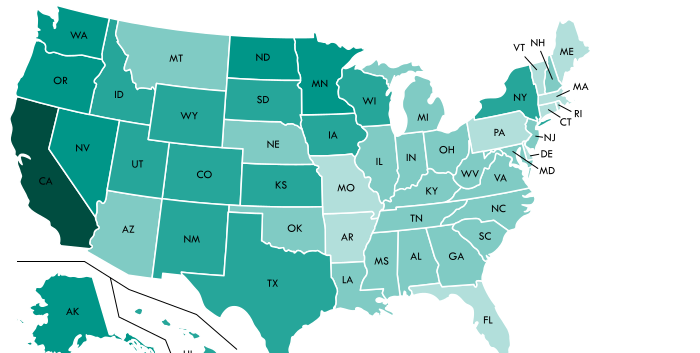
Most common states for therapist and program managers
| Rank | State | Population | # of jobs | Employment/ 1000ppl |
|---|---|---|---|---|
| 1 | District of Columbia | 693,972 | 609 | 88% |
| 2 | Washington | 7,405,743 | 3,792 | 51% |
| 3 | North Dakota | 755,393 | 337 | 45% |
| 4 | Delaware | 961,939 | 358 | 37% |
| 5 | Colorado | 5,607,154 | 1,826 | 33% |
| 6 | Maine | 1,335,907 | 435 | 33% |
| 7 | Montana | 1,050,493 | 342 | 33% |
| 8 | Virginia | 8,470,020 | 2,684 | 32% |
| 9 | Nebraska | 1,920,076 | 558 | 29% |
| 10 | Massachusetts | 6,859,819 | 1,953 | 28% |
| 11 | Oregon | 4,142,776 | 1,180 | 28% |
| 12 | Vermont | 623,657 | 167 | 27% |
| 13 | California | 39,536,653 | 10,106 | 26% |
| 14 | Maryland | 6,052,177 | 1,546 | 26% |
| 15 | Rhode Island | 1,059,639 | 277 | 26% |
| 16 | Utah | 3,101,833 | 785 | 25% |
| 17 | Georgia | 10,429,379 | 2,530 | 24% |
| 18 | Idaho | 1,716,943 | 410 | 24% |
| 19 | Wisconsin | 5,795,483 | 1,309 | 23% |
| 20 | Minnesota | 5,576,606 | 1,284 | 23% |
Most common cities for therapist and program managers
| Rank | City | # of jobs | Employment/ 1000ppl | Avg. salary |
|---|---|---|---|---|
| 1 | Bergenfield | 2 | 7% | $36,908 |
| 2 | Beverly Hills | 2 | 6% | $92,851 |
| 3 | Bloomfield | 2 | 4% | $37,335 |
| 4 | Allen | 2 | 2% | $48,868 |
| 5 | Clifton | 2 | 2% | $37,200 |
| 6 | Tacoma | 3 | 1% | $60,113 |
| 7 | Alexandria | 2 | 1% | $42,097 |
| 8 | Bellevue | 2 | 1% | $60,050 |
| 9 | Houston | 3 | 0% | $47,834 |
Therapist And Program Manager job outlook: Expert opinions
Our panel of therapist and program manager experts
Western Illinois University
Northeastern Illinois University
Florida Institute of Technology
Loyola University New Orleans
SUNY College at Oswego
San Francisco State University
Ohio State University
Adelphi University
Saint Xavier University
Western Illinois University
St. John Fisher College

Penn State College of Medicine
San Diego State University

University of Alabama in Huntsville
Lindsey Nichols
Associate ProfessorWhat general advice would you give to a Therapist And Program Manager?
Lindsey Nichols: Your career path is a journey not typically a single destination. You will be exposed to professions, organizations, people etc. all the time and that networking and those relationships are so important. Unfortunately, social media, movies, etc. give a false impression to viewers about what counselors (of many specialty areas like school counseling, mental health, addictions, etc.) actually do. If you know licensed/certified counselors follow-up with them, ask them questions about their day-to-day activities, and volunteer or work so you can get more exposure to the helping professions, I think about the Boys-and-Girls Club, substituting in your local school district, organizations that provide helping services to people at all ages.
What Therapist And Program Manager skills would you recommend for someone trying to advance their career?
Lindsey Nichols: Trauma skills will continue to be a major focus as our society continues to drastically change. Technology and being fluent working with someone using some type of technology will be increasingly important. Although they are foundational skills of counselors, flexibility, empathy, openness along with your ability to be reflective of yourself and others (aka a good listener) are important in the field. Of course there is much to counseling, and the learning process never ends!
What will help Therapist And Program Managers increase their earning potential?
Lindsey Nichols: Usually people interested in counseling are not thinking about money, but with rising costs, home prices, daycare etc. making sure you are diligent about knowing counseling rates it the area you want to live and work is the first thing. The U.S. Bureau of Labor Statistics is a great tool to give you a foundation and making connections with fellow counselors in your area. Starting your career, if you are preparing to be a Licensed Professional Counselor (LPC) in your state (specialties like school counseling don't require additional training upon graduation, but you have to confirm you have met requirements from the state Department of Education.) you will have to do additional training and supervision. Once you become an LPC, opportunities open up like choices to go into private practice etc., it is a long process, but for most, it goes by quickly!
What general advice would you give to a Therapist And Program Manager?
Dr. Vanessa Alleyne: It will be important to network and utilize professional organizations of which you are a member, such as the ACA (American Counseling Association), or the ASGW (Association for Specialists in Group Work), for example. Meet people, attend training for advanced skills in key areas, and present there when possible. Whether locally or nationally, these are valuable connections to make when starting out, and will also enhance your knowledge base as you begin and grow. Another valuable connection to be made can be found through your alma mater. Find professional affinity groups from your undergraduate program, and certainly maintain or build ties with your graduate program alumni. Finally, many people turn to social media such as Linkedin, which is fine, but can also be a bit overwhelming. Be deliberate in your choices about who to connect with, and don't get fomo! It's ok not to connect with everyone that pops up in your feed. Stay with one social media site at a time until you feel it's working the way you'd like, and then go on to another.
What will help Therapist And Program Managers increase their earning potential?
Dr. Vanessa Alleyne: Don't be afraid to negotiate! Nonprofits often pay less than corporate sites, but there is almost always wiggle room. Salary is important, but so is paid time off, family leave, mental health days, and professional time for conferences. Try to obtain certifications in areas that are valued, such as clinical supervision or co-occurring disorders.
Dr. Tiffany Bainter PhD LCPC NCC
Associate ProfessorWestern Illinois University
Clinical, Counseling And Applied Psychology
What general advice would you give to a Therapist And Program Manager?
Dr. Tiffany Bainter PhD LCPC NCC: Starting a career in counseling is a fulfilling journey but comes with its own set of challenges. My advice to graduates stepping into this field would be to prioritize self-care. It's crucial to maintain a healthy balance between your professional and personal life, especially when dealing with emotionally taxing situations. Seek supervision and mentorship regularly; having guidance from experienced professionals can provide invaluable insights and support as you navigate your counseling career. Additionally, stay open to continuous learning. The field of counseling is dynamic, with new research and techniques emerging constantly. Pursue opportunities for further education, attend workshops, and stay updated with the latest developments in the field. Cultivate empathy and cultural competence to better understand and connect with clients from diverse backgrounds. Building strong therapeutic relationships based on trust and empathy is at the core of effective counseling practice. Lastly, remember to advocate for mental health awareness and the importance of access to quality mental health services. Being a counselor goes beyond individual sessions; it involves being an advocate for your clients' well-being within the larger societal context.
What general advice would you give to a Therapist And Program Manager?
Dr. Pamela Fullerton: All the skills we need to do well in this field are important since we are dealing with people's lives and livelihoods. I believe anyone entering this field needs to recognize the significance and seriousness of our work. In the next 3-5 years, the ever-changing landscape of the population will require us to be continuously working on the competencies and ethical codes mandated through our identities as professional counselors. There is a wonderful counseling model by Ratts and Pederson (2014) called the Counselor-Advocate-Scholar model. I teach this to all my students and during my professional development workshops. This model highlights the three main areas in which we need to be constantly working on and growing in: (1) counseling work, skills, and competencies; (2) advocacy work, skills, and competencies; and (3) research to learn about best practices, recent scholarly innovations to the field, and adding more research to our field. This model can be used in the future as it adapts to whatever changes in the field and population may be occurring/prevalent in the future.
What Therapist And Program Manager skills would you recommend for someone trying to advance their career?
Dr. Pamela Fullerton: Find a site with great supervision and a diverse range of clients. New clinicians really need to lean into competent and compassionate supervisory experiences that will help them not only increase their counseling competencies but also support in their growth around professional counseling identity, personal development, and multicultural and social justice advocacy. Additionally, working with a diverse range of clients at the beginning of a career will also support in increasing competencies in all the various areas of our field from skills and interventions to diagnosing and treatment planning.
What general advice would you give to a Therapist And Program Manager?
Mariana Juras Ph.D.: Be attuned to your values, passion, skills, and abilities, and also to what market values.
What Therapist And Program Manager skills would you recommend for someone trying to advance their career?
Mariana Juras Ph.D.: I believe multiple language and cultural knowledges and experiences are great assets to have, and also to integrate human specific and technology integration with the mental health field, by also considering ethics, culture, and humane relevancy. Neuropsychology is also a developing field and integration with mental health treatment is increasing.
Kevin Foose
Professor of PracticeLoyola University New Orleans
Rehabilitation And Therapeutic Professions
What Therapist And Program Manager skills would you recommend for someone trying to advance their career?
Kevin Foose: As our graduates enter the field of counseling and psychotherapy, the guidance that I provide is generally threefold. First I suggest that they develop a niche practice which they are passionate about. I encourage them to specialize rather than 'generalize' their practice. Towards that end I advise that they find a clinical supervisor and mentor with whom they share a theoretical and philosophical foundation. I encourage them to surround themselves with talented, experienced and inspiring professionals. And to follow their curiosity and cultivate the capacity to become highly competent clinically and theoretically with a specific population and modality of treatment (such as working with couples & relationships, adolescence, social justice & advocacy, play therapy etc).
What will help Therapist And Program Managers increase their earning potential?
Kevin Foose: Lastly, I encourage them to focus on developing capacities that can't be replicated by technology. AI and ubiquitous technology is here to stay, and that's okay. The more people interface with these technologies, the more essential the capacity to engage with actual humans will become. I guide them towards being relationally focused, culturally competent and emotionally regulated as opposed to emotionally reactive. We can't out-machine a machine. See John Henry for relevant reference. And I always leave them with a bit of wisdom from George Carlin, 'eat right, breathe deep'. And to that I add, get plenty of sleep and try and have a bit of fun along the way.
What general advice would you give to a Therapist And Program Manager?
Jodi Mullen PhD LMHC RPT-S: What do people like- counseling is always improv. You never really know what someone is going to share in their sessions. It's also relational, so as a counselor you get to connect with people you might not otherwise or who have never experienced healthy connection. It is an honor and awesome responsibility. Dislike- People who show up to counseling to talk about the good things going on, so there's a lot of exposure to people's pain.
What Therapist And Program Manager skills would you recommend for someone trying to advance their career?
Jodi Mullen PhD LMHC RPT-S: The bulk of the work a mental health counselor does is clinical, meaning you meet with clients and provide counseling. There is also record keeping, preparation, and administrative responsibilities. New and seasoned counselors alike spend some time in supervision and consultation with other counselors. Supervision is a time to discuss cases with a more experienced professional where there are opportunities for growth professionally and personally. Consultation involves either meeting with others connected to your clients, like parents of children clients, or with professionals in mental health and other fields that can help the counselor sort out a challenge. In that case it may be an attorney or a trauma specialist.
What will help Therapist And Program Managers increase their earning potential?
Jodi Mullen PhD LMHC RPT-S: There are so many opportunities for mental health counselors entering the field. The need for our services is at an all time high. Recently, there has been a great deal of focus on self-care for professional counselors to ward off compassion fatigue. There is much more being offered for counselor self-care than when I entered the field three decades ago.
What general advice would you give to a Therapist And Program Manager?
Elif Balin: As we have witnessed since the pandemic, there is a fast transition to virtual mental health counseling practices. Beyond the virtual/video setting, counselors now have the option to collaborate with multiple stakeholders and networks to deliver their services. Some of these systems are more structured and expect counselors to shape their practices according to their delivery modalities (e.g., text messaging, online chat, learn and use a specific evidence-based therapy/counseling framework), while others involve counselors in the creation of new modalities (e.g., psychoeducational programs, phone applications). Thus, counselors should consider developing skills to understand and navigate changing technologies, devices, and program designs. They will need more skills to set and maintain boundaries against dysfunctional multitasking with new demands for availability/accessibility. They will also need to keep their own career planning and job application skills updated in case they need more transitions between jobs, roles, and settings due to the unpredictable nature of changes to their settings.
What Therapist And Program Manager skills would you recommend for someone trying to advance their career?
Elif Balin: Being informed and realistic about what kind of employers or sectors offer your desired salary levels is important. For example, a counseling position at a public university (which is not a research university or R1) or non-profit organization system will likely remain underpaid (unless there is a prominent political economy shift in the country). If your passion and values are grounded in such a setting, you can still do your research about the salaries (which are usually publicly available) and understand what you want to negotiate for based on your experience. Learn about salary negotiation skills, practice with people who have experience in hiring or at least salary negotiation, and especially reflect on your values around money and what you need the money for, as well as any potential internal or socially imposed biases on talking about money. You can also negotiate for extra benefits such as professional development funds and inquire about the possibility of additional work (e.g., a side job in private practice or paid consultant roles) according to your job contract. If you need a higher salary and open to explore alternative sectors or settings than what you initially considered, then educate yourself about the salary ranges in those settings and ask for tips from more experienced people. In any setting, identify the strengths and unique value you bring to a potential employer and negotiate for a higher salary by clearly articulating those strengths and values you will add.
What will help Therapist And Program Managers increase their earning potential?
Elif Balin: As prospective counselors, it's essential to recognize that your career journeys begin when you start exploring and applying for training programs. The curriculum, faculty expertise areas, availability of training opportunities (e.g., internship sites), diversity of an active alumni network, and other aspects of these programs will significantly influence your career readiness and transition to jobs. After graduation, I strongly suggest you stay connected to your training programs, mentors, and alumni networks. This will help you access the hidden job market (e.g., potentially upcoming job openings and priorities for hiring criteria) in your areas of interest or work settings and make you feel supported and part of a community. In case you think your training program did not adequately prepare you for the job market, keep searching for mentors, which can be a one-time meeting or email exchange to learn about what helped them find employment or a longer-term connection that provides you with more insight and feedback about your ongoing areas of growth. Remember that your first job is most likely the first stepping stone toward the following opportunities. Even if you feel discontent with some aspects of a first job, it can lead to meaningful connections and happenstances to create future opportunities. Be aware of your most important needs and values that you can’t sacrifice for your physical and mental well-being, and aspire for a job that gets you what you need to continue growing and making connections toward more desirable next steps. When possible, self-advocate and seek additional resources (e.g., family, community, local or regional professional development grants, additional jobs) that may help you get started with some meaningful first experience and sustain your ongoing career planning.
What Therapist And Program Manager skills would you recommend for someone trying to advance their career?
Donna Sheperis PhD, LPC, NCC, CCMHC, ACS, BC-TMH: There are so many different employment positions that a mental health counselor could take that a day could be incredibly different depending on their area of specialty. A private practitioner could have a full day of hour long individual sessions. A hospital based counselor might spend time running groups or doing crisis stabilization. A home-based counselor might travel from site to site providing family therapy or assessing living situations for child placement. Someone working in a substance use rehabilitation facility might find themselves Providing individual, group, and family therapy all within the span of several hours. In other words, a mental health counselor is going to be very flexible and able to provide a number of different services depending on the type of work that interests them and that they find themselves seeking specialty training and credentialing in.
What will help Therapist And Program Managers increase their earning potential?
Donna Sheperis PhD, LPC, NCC, CCMHC, ACS, BC-TMH: When I talk to my former students as well as my friends and colleagues in the profession, they all tell me how richly rewarded they are providing a service to people who struggle with aspects of mental health. Being part of someone’s treatment, watching them find their way through trauma that has been burdening them, helping people leave behind a pass that no longer serves them, helping them find a way through genetically predisposed illness, or to overcome thoughts of death or suicide… These are all remarkable journeys to embark on with clients. To have the privilege to be part of healing when people are in crisis and pain and at their most vulnerable is really an awesome honor. Those experiences keep us hopeful and.buoyed throughout our career. When working in such an interpersonally intense profession, carrying that weight can be challenging itself. Some of the more routine tasks of the work that we do can also be burdening. As mental health counselors, we find ourselves making sure that we seek to do our own work in order to be able to do this work for others.
What will help Therapist And Program Managers increase their earning potential?
Dr. Catherine Lounsbury Ed.D., LCPC: Hello Alex, Attached please find my answers to your questions. Please let me know if anything else would be helpful. Thank you, Cathy
What general advice would you give to a Therapist And Program Manager?
Samantha Bates PhD, LISW-S: Now more than ever, mental health counselors are needed in our schools and communities. Many agree we are experiencing a behavioral health workforce shortage where the demand is greater than the number of professionals hired in agencies to provide mental health services. From my perspective working with schools, adolescents are experiencing heightened risks post-COVID with a 40% increase in mental health symptomology noted across the country (as reported by the CDC). It is a great time to get a social work or counseling degree to help those most in need and make an impact in one's community. Wages and benefits are improving for those in the mental health sector because of the demand and the nuanced skills, knowledge, and competencies practitioners bring to the table.
What Therapist And Program Manager skills would you recommend for someone trying to advance their career?
Samantha Bates PhD, LISW-S: One of the best things about being a mental health practitioner is supporting someone during a time of immense need. The human spirit is beautiful to witness, and the role of a mental health provider is to use the vulnerability and time spent together to empower someone to see their strengths, utilize new skills, and decide what the future holds for them. I think the best day of my professional career was when a young woman told me that had I not been in her life at the time she might not be here today. Knowing you were a support for someone, and the time you spent together made an impact, is incredibly rewarding and fulfilling. One thing that is challenging in the mental health profession is the lack of coordinated services and supports. Access and equity continue to challenge the profession and are issues we must address to tackle the mental health crisis.
What Therapist And Program Manager skills would you recommend for someone trying to advance their career?
Katherine Stavrianopoulos Ph.D.: Digital Literacy and Teletherapy Skills: With the continued integration of technology in mental health care, counselors will need to enhance their proficiency in digital platforms and teletherapy modalities. This includes utilizing secure video conferencing tools, managing electronic health records (EHR), and maintaining ethical standards in online therapy settings. Cultural Competence and Diversity Awareness: As awareness of cultural diversity and social justice issues grows, counselors must deepen their understanding of intersectionality and cultural humility. Competence in working with diverse populations and addressing systemic barriers to mental health care will from an antiracism lens will be essential for providing inclusive and culturally responsive services. Trauma-Informed Care: Given the prevalence of trauma and its impact on mental health, counselors will need to adopt trauma-informed approaches across various settings. This includes recognizing the signs of trauma, creating safe environments for disclosure, and integrating trauma-sensitive interventions into counseling practice. Resilience-Building and Positive Psychology: In addition to addressing mental health challenges, there will be a greater emphasis on promoting resilience and well-being. Counselors will incorporate positive psychology principles, such as strengths-based interventions and mindfulness techniques, to empower clients and enhance their coping skills. Collaborative and Interdisciplinary Care: With the recognition of the interconnectedness of physical and mental health, counselors will collaborate more closely with other healthcare professionals in integrated care settings. Strong communication skills and the ability to work collaboratively within multidisciplinary teams will be essential for providing holistic and comprehensive care to clients. Data Literacy and Outcome Measurement: Increasing emphasis on evidence-based practice and outcome measurement will require counselors to develop skills in data collection, analysis, and outcome evaluation. Ethical Decision-Making in Complex Situations: As counseling scenarios become increasingly complex, counselors will face ethical dilemmas that require nuanced decision-making. Strengthening skills in ethical reasoning, consultation, and ethical sensitivity will enable counselors to navigate challenging ethical issues with integrity and professionalism.
What will help Therapist And Program Managers increase their earning potential?
Katherine Stavrianopoulos Ph.D.: Continued Learning and Development: Stay committed to lifelong learning by attending workshops, pursuing advanced certifications, and staying updated on the latest research and therapeutic techniques. Supervision and Mentorship: Seek out supervision and mentorship opportunities from experienced professionals in the field. Consider participating in a peer supervision group where you can support one another and be open to constructive criticism as part of your development. Engage in regular self-reflection for personal growth. Prioritize Self-Care: Establish healthy boundaries between work and personal life, engage in activities that recharge you and help prevent burn out. Cultural Competence and Diversity: Cultivate cultural humility and strive to understand the diverse backgrounds and perspectives of your clients. Continuously educate yourself on multiculturalism and antiracism to provide competent and inclusive counseling services. Ethical Practice: Adhere to ethical guidelines and professional standards in your practice. Strive to Build Strong Therapeutic Relationships: Establish rapport, demonstrate empathy, and create a safe and trusting environment where clients feel comfortable exploring their thoughts and feelings. Evidence-Based Practice: Stay informed about research findings and utilize interventions that have been empirically validated for specific client populations and presenting issues. Networking and Collaboration: Build professional connections within the counseling community. Attend conferences, join professional organizations, and participate in networking events to expand your professional network. Collaboration with colleagues can lead to referrals, consultation opportunities, and mutual support. Consider doing some pro bono work: Pro bono services help bridge the gap to access mental health services for individuals who cannot afford them.
Errol Rodriguez Ph.D., MAC, CRC
Assistant Dean & Program Director, Master's programs in General Psychology and Mental Health CounselingAdelphi University
Mental And Social Health Services And Allied Professions
What general advice would you give to a Therapist And Program Manager?
Errol Rodriguez Ph.D., MAC, CRC: In the next few years, counselors will benefit from developing skills in emerging technology such as artificial intelligence (AI) and how such technology is being used by clients through various social media applications that might lead to clinical concerns (.e.g., dating, gambling, pornography). Integrating some of these new technologies into therapeutically sound interventions will be one way to address these concerns both in traditional therapy settings, as well as virtually (e.g., avatar therapy).
What general advice would you give to a Therapist And Program Manager?
Kristen Toole: Remember that this is a marathon, not a sprint. Personal and professional development are
lifelong processes that are never really finished. So, it is essential to pace yourself and establish a
foundation of healthy practices from the outset. Creating habits and routines in the beginning
with the end in mind can be a good strategy for success and sustainability.
Keep work-life balance and boundaries in mind from the start because breaking bad habits can
be tricky once established. Think about where you ultimately want to be and build toward that
future one step at a time. Also, it is okay if plans change! You never know where open-
mindedness and willingness to learn may take you.
What general advice would you give to a Therapist And Program Manager?
Emily Yowell Ph.D.: A practicing counselor's day is often full of sessions with clients. These sessions may be individual therapy, couples/families, or groups of individuals with some shared presenting issue. Counselors also have to complete paperwork associated with these sessions throughout the day. Some counselors also provide supervision to newer practitioners as a part of their work roles.
What will help Therapist And Program Managers increase their earning potential?
Emily Yowell Ph.D.: Psychologists should be aware of what others in their field are making for similar positions. It is important to ask for what your work is worth in an initial position to assure raises are based on a solid starting salary. Newer psychologists may also consider asking for an early review that prompts an early conversation around potential raises, bonus, or other job benefits.
Leigh Ann Tipton-Fisler, PhD, BCBA
Associate Professor and Program Coordinator of Specialist in School Psychology and Clinical/ Community Mental Health Graduate ProgramsWestern Illinois University
Clinical, Counseling And Applied Psychology
What Therapist And Program Manager skills would you recommend for someone trying to advance their career?
Leigh Ann Tipton-Fisler, PhD, BCBA: - The best I can give to graduates is to focus on taking small steps at first. Often the first year in the field can be exciting and overwhelming at the same time. The system we work in (the helping profession broadly) often has a lot of challenges, and new professionals want to re-envision a path for changes. This is tangible, but at first, it is important to understand the roles and functions in the workplace before flipping everything upside down. I suggest taking one small change at a time in an area that is important to you and build relationships and trust with your professional colleagues before overloading yourself with the new job and new goals.
John Kiweewa Ph.D.
Associate ProfessorSt. John Fisher College
Wegmans School of Nursing
What skills stand out on Therapist And Program Manager resumes?
John Kiweewa Ph.D.: There is widespread consensus within the mental health counseling field that counseling is much about the skills and techniques as it is about the dispositions or qualities that enable counselors to provide meaningful and effective services to clients. Therefore, responding to the question of what skills stand out on Mental Health Counselors' resumes requires an articulation of attributes, characteristics, variables, or qualities that an ideal mental health counselor would possess. Indeed, there is a copious body of counseling literature describing effective counselor variables. I have highlighted some of the most salient of these variables.
1. Respectfulness of & Responsiveness to Others, Including Diverse Populations: The ability of mental health professionals to provide effective and meaningful services to individuals from diverse backgrounds is of vital importance. More culturally responsive mental health providers tend to produce better outcomes with their clients. Such cultural competence of responsiveness is most evident when a practitioner consistently conveys an attitude of respect, in both verbal and non-verbal communication, for the capability and worth of others and seeks to understand them in terms of what makes them different. It means honoring individual differences such as culture, race, ethnicity, family structure, gender, age, socioeconomic status, and other individual differences without needing to always agree with what others do or say based on these differences.
2. Ability to Balance Multiple Life Expectations and Commitment to Wellness: Mental health professionals work in an environment that demands the ability to balance multiple responsibilities and life expectations. This work-life balance is often most challenging for new professionals, often leading to high rates of burnout. Agencies or organizations will look for a mental health counselor who is able to recognize and accept their capacity to handle multiple life responsibilities such as family, school, work, and avocational pursuits. This includes being realistic in setting limits on time spent in various roles, adjusting schedules to accommodate changes in responsibilities, eating healthily, and getting adequate sleep and exercise in order to function effectively.
3. Empathy, Genuineness, Warmth, and Caring: Empathy can be described as the ability to consistently communicate, in words and actions, an accurate understanding of what others feeling or thinking; when a professional counselor is truly "in tune" with others through verbal and nonverbal actions and reactions, and try to know what it is like to be in the other person's shoes. It includes the ability to consistently convey warmth, caring, and concern for others in interactions with them. Empathy, genuineness, and caring (unconditional regard) are considered the foundational skills and orientations in mental health counseling. In fact, these have long been described as a trio of qualities that are necessary, though insufficient, for positive therapeutic outcomes.
4. Effective Interpersonal Communication: There is broad consensus within the counseling field that effective communication is the cornerstone of successful client/counselor relationships. Broadly defined, interpersonal communication involves the ability for the mental health professional to elicit and appreciate client concerns, to provide a rationale for treatment decisions, and engage the client in the process of shared decision-making and goal setting. Such skills may be both verbal and non-verbal and include micro-level skills (active listening, paraphrasing, questioning, summarizing) and macro-level skills (crisis intervention, assessment, documentation, case conceptualization, use of self, immediacy, etc.). Employers are constantly looking for mental health counselors with the ability to maximize their communication skills and knowledge of human development to enhance their clients' growth and development.
5. Professional Integrity: This quality is most evident when a mental health professional is consistently honest and trustworthy in dealing with others and admits to shortcomings and limitations in knowledge and skills. More importantly, professional integrity requires that a mental health counselor abides faithfully by established professional codes of conduct, as well as agency policies and practices. Such professionalism manifests itself in the ability to set healthy boundaries with clients, as well as communicate clearly the nature and limits of the counseling relationship.
6. Capacity for Organization: The world within which a mental health professional operates has become more complex, and such increasing complexity has necessitated demonstrated capacity for organization. This skill is most evident when a mental health counseling professional is consistently planful and orderly in thinking about and performing tasks. They can prioritize efficiently and are disciplined and task-oriented. They impose the right kind of structure on themselves to be productive without being unreasonably obsessive about things.
7. Commitment to Excellence: Growing both personally and professionally requires openness to new learning and examining one's beliefs, values, assumptions, and effectiveness. When a gap in knowledge is discovered, or a deficit in a personal quality is uncovered, a mental health professional will take the initiative to acquire new information, improve and change. To be committed to excellence requires, in part, a great deal of self-reflection, an awareness that they are one of the primary instruments/tools in counseling.
8. Trauma-informed Care: The ability to appreciate the widespread and complex impact of trauma on clients' lives and develop and integrate trauma-responsive skills, knowledge, and awareness into one's practice has become essential to providing effective counseling services. Employers are, thus, keen on mental health counseling graduates with crisis and trauma intervention skills such as mindfulness techniques, breathing techniques, relaxation methods, grounding strategies, and other knowledge of trauma-specific treatment approaches (e.g., EMDR TF-CBT, animal-assisted therapy, etc.).
9. Assessment and Diagnostic skills: The ability to work collaboratively with a client to determine presenting concerns, desired goals and objectives, and therapy process is a core component of what mental health counselors do. To do so requires skills in selecting and administering assessment tools, formulating diagnostic/clinical impressions, and developing treatment plans/or strategies. Prospective employers, therefore, usually look for candidates with strong assessment and diagnostic skills, particularly knowledge of the DSM-V and/or ICD-CM and use of primary assessment instruments (e.g., Mental Status Exam, PHQ-9).
10. Technology Skills: Digital media and resources (e.g., email, smartphone apps, online forums, Web sites, DVDs, computer software, online social networks, telephone and televideo communication, and mobile devices are fast becoming essential to the work of mental health counseling. The COVID-19 pandemic has accentuated the need for competence in virtual communication or the ability to provide telehealth, in addition to familiarity with Electronic Medical/Health Records systems.
11. Bilingual: The growing diversity of the United States population means that mental health counselors live and work in a multicultural world. The reality is that mental health practitioners are now more and more likely to encounter clients from different cultural and linguistic backgrounds. While the counseling profession has long emphasized cultural competence as a necessary component of ethical and effective service delivery, there is evidence to suggest that the mental health field as a whole has not kept up with the demand for bilingual and multiculturally oriented counselors.
What soft skills should all Therapist And Program Managers possess?
John Kiweewa Ph.D.: Receptivity to Feedback: Openness to consistently accept feedback in a respectful way is a vital quality, especially for new graduates. Such openness is important not only to feedback from supervisors but from colleagues and clients. Agreeing to or feeling bound to act on the feedback received is not as important as communicating appreciation for the effort of others in giving feedback. In this case, display of behaviors such as anger, annoyance, frustration, defensiveness, excessive/exaggerated self-criticism, or withdrawal gets in the way of learning and/or being a member of a team.
Appropriate Self-Disclosure: The ability for mental health practitioners to 'use' themselves for the benefit of their clients is one of the cornerstones of effective counseling. Such a quality is most evident when one only shares information about themselves that fits the nature and purpose of the interaction with a particular client. When personal information is revealed, it is tasteful, relevant, and is not upsetting, distracting, or confusing to others. Prospective employers are keenly aware of the ways self-serving or self-aggrandizing disclosure of personal information can negatively impact the ability to provide meaningful services to clients.
Reliability and Follow Through: Mental health professionals work in a helping profession that requires the professional to be consistently dependable, reliable, and able to follow through with tasks and assignments in a timely and thorough manner. This includes meeting deadlines, being punctual to sessions with clients and for agency meetings, being prepared, and having a reputation as one who can be counted on to do their part when functioning as a team or project member.
Flexibility and Adaptability: This quality is most evident when a mental health counseling professional consistently demonstrates a willingness to change or compromise in the face of new information, circumstances, and contexts. Situations such as the COVID-19 pandemic, for instance, require mental health practitioners to have an openness to solutions that match the needs of their service recipients and organizations.
Sense of Humor: There is little to cheer about in the professional life of mental health professionals. We spend the majority of our working time listening to the most painful and vulnerable aspects of people's lives. This quality is most evident when a mental health counselor assumes an orientation to life that acknowledges to self and others the value of looking at the "lighter side" of life to maintain a balance; when they find enjoyment in laughing with others and recognize laughter as a way of reducing tension and as an important aspect of social discourse.
Confidence Balanced with Humility: Confidence in one's abilities (self-efficacy) is a general challenge for beginning mental health counselors. Some may appear over-confident as a way to compensate for lack of experience in the field and to project an image of competence. It is, therefore, important that new graduate is able to act with self-assurance by consistently expressing themselves in a clear, deliberate, and unassuming manner. It is not helpful to "put on airs" or flaunt knowledge or skills in order to bring attention to oneself. What is important is to convey appreciation for the privilege to partake in other people's life journeys and struggles.
Martha Peaslee Levine M.D.
Medical Director of the PHP and IOP, Director of the Office of Professional Mental HealthPenn State College of Medicine
Adolescent Medicine, Psychiatry
What soft skills should all Therapist And Program Managers possess?
Martha Peaslee Levine M.D.: Good communication skills are important. Working as a therapist involves interacting with someone. It will be important to demonstrate being able to listen effectively and being able to communicate clearly. Active listening is important in therapy and in an interview. Be engaged; listen to the interviewer so that you are clearly providing the information that they need. For example, I often ask interviewees to tell me about a case that they found rewarding or challenging. From this, I want to know how someone thinks through a clinical situation. I want to hear how they describe their client (anonymously, of course) and how they put together the important parts of the story. If it was challenging and they now recognize ways to handle it differently, that lets me know that they have thought about this. It also shows that they are willing to reflect on difficult situations and learn from them. If someone cannot relate a story or discuss a client with me, that makes me wonder about their skills as a therapist and their interest in their patients. These clinical interactions can come from your work in school, shadowing someone in training, or internships. It is recognizing and describing the important elements of the case. Another important skill is good written communication. Check your resumes for spelling mistakes. Reread any emails to make certain they are clear. Send thank-you notes. Keep things professional--use the interviewer's professional title when you write. Be on time and have a question or two to ask about the position or place of employment. Examples can be, what are they looking for in a counselor? What have they found the most rewarding working in this office? Find your own go-to question, but interviewers what to know that you are interested.
Dianne Ciro Ph.D.
Assistant ProfessorSan Diego State University
School of Social Work
What skills stand out on Therapist And Program Manager resumes?
Dianne Ciro Ph.D.: Formal training and/or experience using one or more evidence-based Interventions.
What soft skills should all Therapist And Program Managers possess?
Dianne Ciro Ph.D.: Clinicians need to be flexible, express empathy and warmth to their clients, have good communication skills, be self-aware, apply a social justice lens to their work with clients, and practice from a place of cultural humility.
What hard/technical skills are most important for Therapist And Program Managers?
Dianne Ciro Ph.D.: Clinicians need to have keen safety and clinical assessment skills. After COVID, we also learned that it's important for clinicians to navigate and adapt to providing services both in person and through telemental health.
What skills will help Therapist And Program Managers earn the most?
Dianne Ciro Ph.D.: All of the skills outlined above are important for clinicians to be effective in their jobs and earn a good wage.
Dr. Nathan Tenhundfeld Ph.D.
Assistant Professor of Human FactorsUniversity of Alabama in Huntsville
Psychology Department
What skills stand out on Therapist And Program Manager resumes?
Dr. Nathan Tenhundfeld Ph.D.: Strong analytical skills are a must. This includes both logic and reasoning skills, but also data analysis skills. For many jobs, the ability to collect and scientifically evaluate data will be vital, if not an absolute necessity. Similarly, a strong understanding of experimental methods can put a candidate in a great position to be able to help a company evaluate existing programs and chart a path forward for new ones. Finally, I would say that a strong ability to write is critical. Those graduates who are able to effectively and persuasively communicate in writing are setting themselves up for success at any company and allowing the company to leverage them for increasingly important tasks.
What soft skills should all Therapist And Program Managers possess?
Dr. Nathan Tenhundfeld Ph.D.: Students need to be able to read individual and group dynamics in order to act appropriately in any given situation. This includes not only the interactions with one's bosses but also peers and subordinates. Similarly, being comfortable with networking can help any company, but networking skills shine through in interviews.
What hard/technical skills are most important for Therapist And Program Managers?
Dr. Nathan Tenhundfeld Ph.D.: Technical skills like the ability to perform statistical analyses are critically important for most Psychology-related jobs. This allows a candidate to collect and analyze data but also to interpret and understand other existing data. A strong statistical background can also help set a candidate apart from their peers in the application process. This includes understanding when and how to use various parametric and nonparametric statistics to be able to answer questions regardless of the data one is working with.
What skills will help Therapist And Program Managers earn the most?
Dr. Nathan Tenhundfeld Ph.D.: An understanding of a programming language, like Python or Javascript, can be a huge advantage in the job market. It will allow candidates to handle not only large datasets but also do rapid prototyping (in cases of UX work, for example) or even simply design a way in which to collect data for a customer. A student who knows how to code and who can apply those skills in their chosen career field is likely to differentiate themself over the competition.