Explore jobs
Find specific jobs
Explore careers
Explore professions
Best companies
Explore companies
Job outlook for troopers in the United States
Trooper job growth summary. After extensive research, interviews, and analysis, Zippia's data science team found that:
The projected trooper job growth rate is 3% from 2018-2028.
About 20,600 new jobs for troopers are projected over the next decade.
Trooper salaries have increased 10% for troopers in the last 5 years.
There are over 6,528 troopers currently employed in the United States.
There are 1,565 active trooper job openings in the US.
The average trooper salary is $39,510.
Are trooper jobs in demand?
Trooper job and salary trends over time
Trooper jobs over time
Trooper job growth rate over time
| Year | # of jobs | % of population |
|---|---|---|
| 2021 | 6,528 | 0.00% |
| 2020 | 6,425 | 0.00% |
| 2019 | 6,527 | 0.00% |
| 2018 | 6,488 | 0.00% |
| 2017 | 6,498 | 0.00% |
Average trooper salary over time
Trooper salary by year
| Year | Avg. salary | Hourly rate | % Change |
|---|---|---|---|
| 2026 | $39,510 | $19.00 | +3.8% |
| 2025 | $38,069 | $18.30 | +2.9% |
| 2024 | $37,002 | $17.79 | +0.5% |
| 2023 | $36,803 | $17.69 | +2.3% |
| 2022 | $35,978 | $17.30 | +2.3% |
Trooper jobs by state
Most common states for troopers
| Rank | State | Population | # of jobs | Employment/ 1000ppl |
|---|---|---|---|---|
| 1 | Alaska | 739,795 | 18 | 2% |
| 2 | California | 39,536,653 | 253 | 1% |
| 3 | Virginia | 8,470,020 | 85 | 1% |
| 4 | North Carolina | 10,273,419 | 57 | 1% |
| 5 | Maryland | 6,052,177 | 56 | 1% |
| 6 | Washington | 7,405,743 | 45 | 1% |
| 7 | South Carolina | 5,024,369 | 38 | 1% |
| 8 | Arizona | 7,016,270 | 36 | 1% |
| 9 | Colorado | 5,607,154 | 35 | 1% |
| 10 | Hawaii | 1,427,538 | 17 | 1% |
| 11 | Utah | 3,101,833 | 16 | 1% |
| 12 | Kansas | 2,913,123 | 16 | 1% |
| 13 | New Mexico | 2,088,070 | 13 | 1% |
| 14 | Montana | 1,050,493 | 11 | 1% |
| 15 | Idaho | 1,716,943 | 9 | 1% |
| 16 | District of Columbia | 693,972 | 8 | 1% |
| 17 | Wyoming | 579,315 | 5 | 1% |
| 18 | Texas | 28,304,596 | 86 | 0% |
| 19 | Oregon | 4,142,776 | 17 | 0% |
| 20 | Nevada | 2,998,039 | 11 | 0% |
Trooper job outlook: Expert opinions
Our panel of trooper experts
University of Georgia
Governors State University
Murray State University
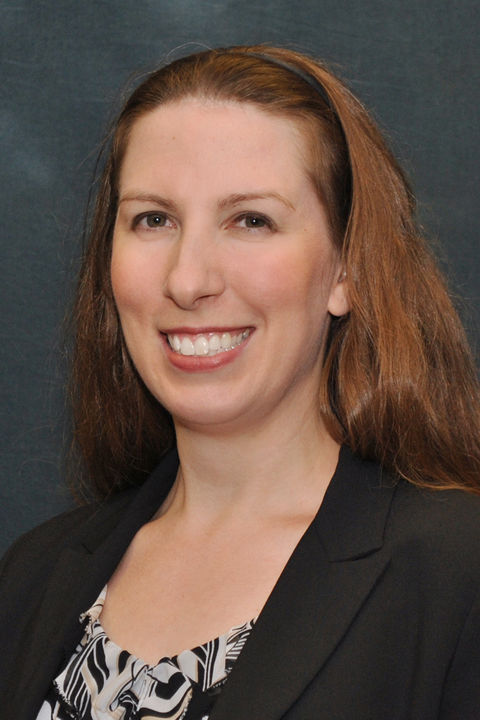
Pennsylvania State University - Harrisburg

Georgia Southern University

Georgia Southern University
University of Wisconsin - Oshkosh
Jill Myers
Director of the School of Law Enforcement and Justice AdministrationWhat general advice would you give to a Trooper?
Jill Myers: The more skill sets you have the better prepared you will be for future advancement and salary increases. Having a solid education, a bachelor of science degree in criminal justice and a masters degree will sometimes result in increased wages. Having federal certifications and competencies will enhance your opportunities and create potential marketability for your career. It is always a great skill set to have people skills, communication in both written and oral formats. It will enhance your ability to explain yourself in court, in the warrants one prepares, and with dealing with the public in all circumstances from victims and witnesses and suspects, to legislators, the funding sources like mayors and city council and the public at large.
What Trooper skills would you recommend for someone trying to advance their career?
Jill Myers: Law Enforcement is a much needed and distinguished profession. Going into the field you need a thorough background in the criminal justice system, state and federal, a working knowledge of the laws and Constitutional dictates, and the ability to communicate well both verbally and in writing. The job requires the ability to not just talk the part, but to critically think and apply the skills learned in the classrooms with real people in real situations. You will need to start the job with the ability to be a hero, to respond to real events on perhaps the worst days of someone's life. The job requires knowledge, ethical conduct, and compassion for everyone, even those who have committed unlawful actions.
What will help Troopers increase their earning potential?
Jill Myers: I believe that knowledge of the legal limits of technology usage will increase dramatically over the next few years and decades. There are few crimes that do not involve investigations impacted by technological and cyber transactions. The ability to conduct cyber investigations, not computer programing or computer systems security per se, will increase the success of an investigation. Additionally, as disasters are increasing more frequently than ever before, both natural disasters (tornadoes, floods, fires, biological like COVID) and human made ones (mass shootings, war, terrorism), all of public safety must understand emergency management protocols, NIMS, hazmat responses, search and rescue, etc.
Dr. Latarcia Barnes PhD
Chair of the Department of Criminal Justice and Sociology, Associate ProfessorWhat general advice would you give to a Trooper?
Dr. Latarcia Barnes PhD: Federal law enforcement is a great profession to enter. There is retirement after 20 years, great career advancement, and great benefits
What Trooper skills would you recommend for someone trying to advance their career?
Dr. Latarcia Barnes PhD: This question is difficult to answer because in federal law enforcement, there are different jobs a person can have. The underlying theme is to enforce the laws that the federal government has and to enforce the judgement of a federal judge.
What will help Troopers increase their earning potential?
Dr. Latarcia Barnes PhD: All skills can be beneficial in the criminal justice field because agencies are expanding job skills and qualifications to meet the changing needs of the world in relation to criminal justice. Many employed in this field hold degrees other than criminal justice. Federal criminal justice agencies are recruiting other majors because of those skill sets they possess. For example, accountants are being recruited for forensic accounting. Therefore with criminal justice majors, it is beneficial to make oneself more marketable by having a minor in another discipline.
What general advice would you give to a Trooper?
Todd Krohn: I think internship experience prior to applying maximizes your salary potential, as well as compiling a list of relevant volunteer experiences, and keeping a clean record. Every agency is going to run background checks, and increasingly many are running credit checks as well. A clean record going in definitely makes you a more marketable candidate.
What Trooper skills would you recommend for someone trying to advance their career?
Todd Krohn: Critical thinking skills, without a doubt. The ability to think critically and exercise discretion and awareness in this field are immeasurable, no matter whether you're in law enforcement, the courts, or corrections. With so many job openings currently, particularly in the correctional world, smart students with critical thinking skills are going be snapped up and promoted quickly. As well, work on your writing skills. The ability to communicate in writing is probably one of the most overlooked skills necessary to be successful in CJ.
What will help Troopers increase their earning potential?
Todd Krohn: I would definitely think about doing an internship before you graduate. For many students going into law enforcement or probation and parole, getting an internship while still in school could potentially lead to your first job offer. For those going into the legal world of prosecution or defense, internships in those worlds before law school will help you confirm those are the areas you want to study. Basically, any CJ graduate would benefit from doing an internship, dependent upon the area of the CJ system they are thinking about working in. While most of these are going to be unpaid in the CJ system, the benefits they carry later more than pay off the experience.
Dr. Janet Brewer
Assistant Professor of Criminal Justice & SociologyGovernors State University
Criminal Justice And Corrections
What general advice would you give to a Trooper?
Dr. Janet Brewer: Market yourself as someone who can increase revenue or decrease workload for that entity. Use your school's alumni network to its fullest.
What will help Troopers increase their earning potential?
Dr. Alaina Steele: Emotionally intelligent communication skills are vital in the criminal justice field. Roles in law enforcement, courts, and corrections all require the ability to successfully interact with community members in their most vulnerable and challenging moments. "Strong oral and written communication skills" has long been an essential job requirement in postings for CJ positions, but the ways in which people communicate-and how conflicts arise-are constantly changing. Tools for de-escalation and problem solving must evolve alongside them, requiring criminal justice professionals to be lifelong students of human behavior. Adaptability in communication style is especially crucial when working with members of marginalized populations that may have cultural, intellectual, or neurodevelopmental differences in the ways they give and receive information. The other thing is the ability to navigate technology. With the rapid expansion of AI across all sectors of society and unprecedented questions of privacy, legality, and the potential for malicious use following close behind, new challenges will require attention from legal professionals. Criminal justice actors will also need to be able to ethically evaluate and responsibly use the new and changing tools available to them in their own day-to-day work.
Jennifer Gibbs Ph.D.
Associate ProfessorPennsylvania State University - Harrisburg
School of Public Affairs, Criminal Justice Program
What skills stand out on Trooper resumes?
Jennifer Gibbs Ph.D.: Police officers need many skills to be successful on the job. The most important are written and oral communication skills and the ability to make ethical decisions with limited information quickly. Written communications skills are crucial. If a police report is poorly worded or incomplete, it can derail a criminal case. Police officers also need to talk to people of all ages from all walks of life in any circumstance. Often, police meet people on what may be the worst day of their lives when emotions are running high. Police need to be able to help calm a person while gathering information. Police need to be able to use their words and body language to empathize with someone who has been victimized, and they need to project authority, so people making poor decisions obey their commands.
This may be common sense, but research has demonstrated that communication and ethical decision-making skills are important for police officers. (See the research article published in 2017 in the Journal of Criminal Justice Education, entitled "An assessment of the relative importance of criminal justice learning objectives," by Baker and colleagues.) Baker and colleagues asked students, professionals, and college professors to rate the skills of hypothetical job applicants. These participants rated the following as the most important characteristics for criminal justice applicants (including law enforcement officers):
Ethics
Oral communication
Critical thinking
Sensitivity to diversity
Written communication skills
Logan Somers Ph.D.
Assistant ProfessorGeorgia Southern University
Criminal Justice and Criminology Department
What skills stand out on Trooper resumes?
Logan Somers Ph.D.: Skills and experiences that stand out on Law Enforcement Officer resumes are not too dissimilar from desirable qualities in other industries. First, even though the vast majority of police departments do not have an education requirement beyond high school, most recruits entering the academy do have at least some college experience. Therefore, having an associate's or bachelor's degree will make you competitive. Further, policing in today's society requires officers to be elite communicators, critical thinkers, and problem-solvers. Any prior work experience that can be used to demonstrate how you performed those skills under pressure should be highlighted. Lastly, any prior community service and or mentoring should be included. Having these experiences displays your commitment to improving your community and bettering the lives of those around you.
What soft skills should all Troopers possess?
Logan Somers Ph.D.: Officers are tasked with handling a wide range of service-oriented (e.g., providing directions, conducting wellness checks, assisting a citizen whose car has broken down) and order maintenance (e.g., attending to noise complaints, settling domestic disputes, directing traffic) duties that go beyond just crime enforcement. This necessitates that an officer must possess numerous intangible skills. These include the ability to communicate effectively and treat citizens in a respectful and courteous manner. Doing this will go a long way towards keeping situations from escalating and building positive community relationships. Officers also have a great deal of discretion, meaning that in most citizen interactions, they have numerous actions and inactions that they can choose from. For example, officers conducting traffic enforcement typically have the discretion to decide who to stop, where to stop them, and whether to give a citation or a warning. Given this great deal of power, having the ability to think critically and ethically are paramount.
What hard/technical skills are most important for Troopers?
Logan Somers Ph.D.: A significant portion of an officer's day can often be spent filling out paperwork. Every stop, citation, warrant, arrest, or use of force incident typically requires forms that need to be filled out and sent to supervisors for review. This makes the ability to write proficiently and provide a descriptive narrative of events crucial for day-to-day police work.
Amanda Graham Ph.D.
Assistant ProfessorGeorgia Southern University
Criminal Justice & Criminology
What soft skills should all Troopers possess?
Amanda Graham Ph.D.: Verbal Communication - The ability to talk to/hold a conversation with a stranger is essential in the human enterprise of policing. It is one of the best tools and officer has with them to address any situation.
Ethical Decision-Making (Using Discretion Appropriately) - The ability to make the best decision in a given situation is absolutely critical in policing. Not only do officers need to have sound and logical judgment, but also the capacity to make ethically sound decisions helps to prevent the introduction of bias into the criminal justice system.
Dr. Durmus Alper CAMLIBEL Ph.D.
Assistant ProfessorUniversity of Wisconsin - Oshkosh
Department of Criminal Justice
What general advice would you give to a Trooper?
Dr. Durmus Alper CAMLIBEL Ph.D.: They need to avoid being overzealous officers. They should not put their career at the center of their life. They need to spend quality time with their family. In law enforcement, good relations with the public and colleagues are essential. They need to develop good relationships with the people and their colleagues and expand their professional network. They always try to be a "problem solver officer" rather than a "problem creator officer." If someone asks for help from them, they should treat this person with dignity and respect. They should avoid being arrogant in their interaction with the public. Because arrogance is the worst plague, and Humility is the greatest virtue.