Explore jobs
Find specific jobs
Explore careers
Explore professions
Best companies
Explore companies
Job outlook for water purification chemists in the United States
Are water purification chemist jobs in demand?
Water purification chemist job and salary trends over time
Water purification chemist jobs over time
Water purification chemist job growth rate over time
| Year | # of jobs | % of population |
|---|---|---|
| 2021 | 61 | 0.00% |
| 2020 | 63 | 0.00% |
| 2019 | 64 | 0.00% |
| 2018 | 65 | 0.00% |
| 2017 | 64 | 0.00% |
Average water purification chemist salary over time
Water purification chemist salary by year
| Year | Avg. salary | Hourly rate | % Change |
|---|---|---|---|
| 2025 | $59,798 | $28.75 | +2.2% |
| 2024 | $58,539 | $28.14 | +1.0% |
| 2023 | $57,981 | $27.88 | +2.9% |
| 2022 | $56,359 | $27.10 | +1.4% |
| 2021 | $55,605 | $26.73 | +3.5% |
Water purification chemist jobs by state
Most common states for water purification chemists
| Rank | State | Population | # of jobs | Employment/ 1000ppl |
|---|---|---|---|---|
| 1 | Delaware | 961,939 | 26 | 3% |
| 2 | North Dakota | 755,393 | 25 | 3% |
| 3 | Massachusetts | 6,859,819 | 108 | 2% |
| 4 | Colorado | 5,607,154 | 87 | 2% |
| 5 | Minnesota | 5,576,606 | 84 | 2% |
| 6 | Utah | 3,101,833 | 61 | 2% |
| 7 | Montana | 1,050,493 | 17 | 2% |
| 8 | Vermont | 623,657 | 12 | 2% |
| 9 | Texas | 28,304,596 | 206 | 1% |
| 10 | Ohio | 11,658,609 | 102 | 1% |
| 11 | New Jersey | 9,005,644 | 88 | 1% |
| 12 | Virginia | 8,470,020 | 74 | 1% |
| 13 | Maryland | 6,052,177 | 66 | 1% |
| 14 | Washington | 7,405,743 | 62 | 1% |
| 15 | Michigan | 9,962,311 | 56 | 1% |
| 16 | Tennessee | 6,715,984 | 52 | 1% |
| 17 | New Hampshire | 1,342,795 | 20 | 1% |
| 18 | West Virginia | 1,815,857 | 18 | 1% |
| 19 | District of Columbia | 693,972 | 8 | 1% |
| 20 | Rhode Island | 1,059,639 | 7 | 1% |
Most common cities for water purification chemists
| Rank | City | # of jobs | Employment/ 1000ppl | Avg. salary |
|---|---|---|---|---|
| 1 | Indianapolis | 1 | 0% | $60,613 |
Water Purification Chemist job outlook: Expert opinions
Our panel of water purification chemist experts
College of Idaho

Ohio University Southern
Wake Forest University

University of Utah
Boston College

Brandeis University

University of Minnesota, Morris

High Point University

Georgia College and State University

University of California

Maryville University
Cleveland Community College
Elmira College
University of South Florida
University of the Sciences
Oral Roberts University

Norfolk State University

Ohio Dominican University

New Jersey Institute of Technology
Changqing Chen Ph.D.
Associate ProfessorWhat will help Water Purification Chemists increase their earning potential?
Changqing Chen Ph.D.: Try to develop some business skills on product marketing and sales. Try to apply your scientific and engineering skills to business and become an all-around player.
What general advice would you give to a Water Purification Chemist?
Bonnie Cantrell: Chemistry is the backbone to most protocols for the material, medical, and biological sciences.
Without chemistry, we would not know many of the things we know today. It will always be relevant in
helping change the scientific world as we know it. The advancements in science technology alone makes
chemistry today more exciting than ever. Just with balances from 1980's to now, we went from only
being able to weigh with counter balance weights to having a digital scale read accurately to 0.001
milligrams. Chemistry used to be more theoretical and only explainable from what we could make react
together. Now we have technology that can visualize the chemical composition and structure allowing
for us to create solutions to problems we could only dream of before. Whether you are wanting danger,
to save lives, or to help make this planet a better place to live, being a chemist can help you fuel your
passions.
Kyle Kemats Ph.D.
Assistant Professor of InstructionOhio University Southern
Chemistry Department
What skills stand out on Water Purification Chemist resumes?
Kyle Kemats Ph.D.: For industry/research positions, employers like to see that candidates have experience/training on certain instruments. HPLC (high-performance liquid chromatography) is a common instrument that I see in a lot of job postings, so experience with that can be especially helpful to a candidate.
What soft skills should all Water Purification Chemists possess?
Kyle Kemats Ph.D.: Communication skills are crucial, regardless of the type of position. Chemists need to be able to effectively communicate their findings, as well as communicate with their supervisors and colleagues. Additionally, chemists may be asked to train newer employees, further highlighting the importance of these communication skills.
What hard/technical skills are most important for Water Purification Chemists?
Kyle Kemats Ph.D.: As I mentioned in question 1, training/experience on various instruments is the most important for industry/research jobs. For teaching positions, experience with different pedagogical/education techniques will be helpful for a potential candidate.
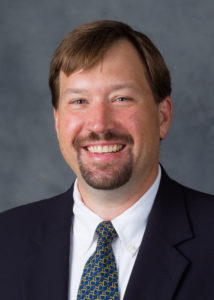
Brian Mendenhall
Associate Director and Career CoachWake Forest University
Office of Personal and Career Development
What skills stand out on Water Purification Chemist resumes?
Brian Mendenhall: Two things that stand out for me, regardless of whether the person is seeking employment in research or industry, are data analysis (Excel, Python, R) and presentation skills. Research specific skills would also include experimental design and specific relevant laboratory techniques & equipment experience.
What soft skills should all Water Purification Chemists possess?
Brian Mendenhall: In the past, the most important attributes have been leadership and problem-solving skills. If the pandemic has taught us anything, the most important attribute is the ability to work with others and get along in multiple virtual and in-person environments. The rest seem elementary and are all dependent on each other. To work well on a team, you need to problem-solve, both on the topic and on how to share information. To solve problems, you need to be analytical and quantitative. Certainly, to do this well, you need to communicate across diverse audiences and levels of understanding. The National Association of Colleges and Employers surveys employers on these priorities and updates the results frequently. (see below for your reference)
Ability to work in a team 81.0%
Problem-solving skills 79.0%
Analytical/quantitative skills 76.1%
Communication skills (verbal) 73.2%
Communication skills (written)
https://www.naceweb.org/about-us/press/the-key-attributes-employers-seek-on-college-graduates-resumes/
What skills will help Water Purification Chemists earn the most?
Brian Mendenhall: One very important skill that will help you achieve the most is emotional intelligence, knowing yourself and your environment, how your colleagues and team receive and deliver information most effectively. Sensing the culture, fit, the timing of the environment, and how the organization develops/awards employees can be pivotal for growth. Eventually, having enough EQ and experience to manage a team and maintain momentum will help you get to the top.
Shelley Minteer Ph.D.
Dale and Susan Poulter Endowed Chair in Biological Chemistry, Associate Chair of ChemistryUniversity of Utah
Department Of Chemistry
What skills stand out on Water Purification Chemist resumes?
Shelley Minteer Ph.D.: The skills that stand out are research experience, characterization instrumentation experience, and more recently, data science experience and coding experience, as machine learning and AI become more and more important in chemistry.
What soft skills should all Water Purification Chemists possess?
Shelley Minteer Ph.D.: The most important soft skills are communication and people management skills. It is critical to be strong in both oral and written communication.
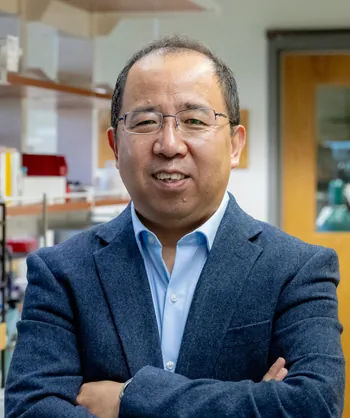
Dunwei Wang Ph.D.
Margaret A & Thomas A Vanderslice Chair in Chemistry, Professor of Chemistry, Chairperson of Chemistry DepartmentBoston College
Chemistry Department
What skills stand out on Water Purification Chemist resumes?
Dunwei Wang Ph.D.: Skills to identify and solve problems.
What soft skills should all Water Purification Chemists possess?
Dunwei Wang Ph.D.: Problem-solving skills. When presented with a problem, knowing where to go to find information to solve it.
What hard/technical skills are most important for Water Purification Chemists?
Dunwei Wang Ph.D.: Chemistry is a diverse field. As a foundational discipline, it enables several sub-fields and supports emerging new fields. As one example, our graduates become experts in medical research, health care, and scientists and engineers in many other fields. Depending on the different career goals, what is important can be drastically different. Generally speaking, doing bench work (either in the lab or on a computer) should be a good skill to have at graduation.
How do you envision technology impacting Water Purification Chemists in the next 5 years?
Dwight Peavey Ph.D.: Technology is the key to identifying environmental problems/hotspots. The drone will increase ecological data collections and routine monitoring of facilities, crops, or ecosystems. Remote sensors are cost-effective and timely in 24/7 monitoring. Technology is the key to pollution prevention. Fix the problem before the accident or release.
What experience really stands out on Water Purification Chemist resumes?
Alyssa Pirinelli Ph.D.: Research experience as an undergraduate, even literature-based research experiences where lab-based ones are not available. Preferably at least a year, if possible, including summer research, with the presentation of their work via a poster session or talk to their peers. Getting research experience can sometimes start with a simple conversation with their faculty members or mentors and a conversation with their advisors/mentors on what field/area of research may be appropriate/applicable for the student's career plan.
How do you envision technology impacting Water Purification Chemists in the next 5 years?
Alyssa Pirinelli Ph.D.: I think we will have more opportunities to work remotely, so I believe graduates will need experience working in teams on documents and related software. Scheduling synchronous meetings may become more challenging due to outside work or personal commitments/responsibilities. It is currently unclear when things may return to "normal" concerning having people in one physical room for a meeting. Therefore Zoom experience (both as an attendee and someone who runs their sessions with at least a few other people present) or similar will be essential. I also believe there will be more emphasis on the written word and conceptual drawings/artistic expression. There is no requirement for everyone to be in the room simultaneously, and the "workshopping an idea" is nowhere near as quickly done over Zoom. Software for creating images (from basic chemical line structures to creating and manipulating 3D drawings of macromolecules) may help mitigate some of these problems. In some cases, additional seats/site licenses may be needed for some software, depending on the demand.
More of our instrumentation can likely be run remotely, or the software may need to be easily remotely monitored. Still, in many cases, the required tech is either expensive or not invented yet (this may be a promising avenue for students who are analytical minded!). However, much of the leading technology we use on a daily/weekly basis is pretty standard. There may be more influx of new/cutting edge things at larger institutions, but for now, students need to know the basics of how to understand/run/troubleshoot standard instruments. Fancier buttons do not necessarily make for fancier instrumentation.
Dr. Brian Augustine Ph.D.
Professor of Chemistry and ChairHigh Point University
Department of Chemistry
What type of skills will young Water Purification Chemists need?
Dr. Brian Augustine Ph.D.: Students always need foundational technical skills. In addition to skills specific to chemistry and biochemistry, strong communication and interpersonal skills such as writing, speaking, and collaboration are vital, as are quantitative reasoning skills such as data analytics, statistical analysis, and programming.
What technology do you think will become more important and prevalent for Water Purification Chemists in the next 3-5 years?
Peter Rosado: Right now, with COVID-19, I feel that the field of medicinal chemistry/biotechnology is going to see a boom. Materials science is also on the rise with alternative energies and new restorative therapies. The area of chemistry is not a more extended purist and more integrated/interdisciplinary. No longer can you call yourself an "inorganic chemist" or an "analytical chemist"? Graduates should be aware that flexibility and eagerness to learn new things is critical here. These are the skills obtained from a college degree, which is not the only subject matter. But the ability to think through and solve problems, be flexible, adaptable, etc.
Will there be an enduring impact of the coronavirus pandemic on Water Purification Chemists?
Vicki Grassian Ph.D.: I think there will be an enduring impact of the coronavirus pandemic on new graduates, and everyone else for that matter, for some time to come. We will come out on the other side for sure in about the next year, but the impacts will linger on. What does that mean for graduates entering the job market in 2020? For our chemistry and biochemistry majors, I am very happy to say I have seen hiring! For example, I have seen one graduate student turn an internship into a job awaiting her when she finishes at the end of 2020, and I have seen an undergraduate student within a month of graduating last spring that applied for a position that was well aligned with her interests and skillset and was then hired for that position. These are just a couple of anecdotal examples, but I find them uplifting and encouraging for people who are entering the job market this year.
Will there be an enduring impact of the coronavirus pandemic on Water Purification Chemists?
Anuradha Vummenthala: I don't envision the significant enduring impact of the Coronavirus pandemic on graduates looking for jobs in the Chemistry field. I do acknowledge that the current scenario appears gloomy. It has undoubtedly impacted everyone's lives socially, economically, and psychologically. But we, as humans and especially as Americans, have remarkable resilience, and we are bound to bounce back more vital than ever before.
We managed through the Great Recession and the economic crisis of 2008. The graduates may face some short-term challenges due to a hiring freeze and delayed start date on new hiring. However, the economy is slowly opening up, and opportunities will soon start pouring in. This is not going to last forever! Graduates can efficiently utilize this time to broaden their skill sets, expand their network, and explore non-traditional career paths like scientific writings, patent drafting, federal jobs, etc
What general advice would you give to a Water Purification Chemist?
Lynn Monteith: Chemistry is one of the hardest majors to earn. If you have a chemistry degree, you have opened up the door to many rewarding opportunities. Find a field in chemistry you are passionate about and stick with it.
Will there be an enduring impact of the coronavirus pandemic on Water Purification Chemists?
Dr. Betsy Smith: I am sure the pandemic is going to have lasting effects on everything, chemistry included. I think all industries are going to continue allowing more working from home when it's appropriate. For bench chemists, that will rarely mean fully at-home because of lab work, but it might mean going in, setting up an automated reactor, and monitoring it from home while analyzing data. There will be a lot more research into coronaviruses and how to treat coronavirus infections. That seems like it would be more biological or medical, but there's a lot of chemistry involved in drugs and drug design, and a lot of overlap between chemistry and biology.
Will there be an enduring impact of the coronavirus pandemic on Water Purification Chemists?
Dr. James Leahy Ph.D.: I would say there will not be an enduring impact, though that answer is based on a return to primarily face-to-face instruction by this time next year. The use of online/virtual labs is not ideal, in a way that watching exercise videos does not give one six-pack abs or playing Madden does not make one a professional football player. We are already offering partial face-to-face labs to mitigate this, and a return to full face-to-face labs will allow students to pick up the skills they may not have perfected in earlier labs.
John Tomsho Ph.D.
Director, Graduate Programs in Chemistry, Biochemistry and Pharmacognosy Co-Director, Chemistry Core Facility NMR Facility Director Associate Professor of Chemistry and BiochemistryUniversity of the Sciences
Department of of Chemistry and Biochemistry
What general advice would you give to a Water Purification Chemist?
John Tomsho Ph.D.: Keep an open mind and consider all career options available to you. Also, seriously consider temp agencies and other short-term/contract employment opportunities. Many companies will hire their permanent employees from their ranks of contract workers. These short assignments can primarily serve the purpose of a 6-12 month interview period.
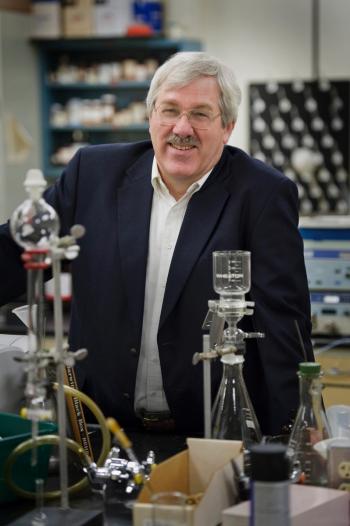
Dr. William Collier Ph.D.
Professor of ChemistryOral Roberts University
Chemistry and Biology
What general advice would you give to a Water Purification Chemist?
Dr. William Collier Ph.D.: Know where you want to go, and head in that direction. Be open to a lot of different starting positions; you are young and can change at this point in your career reasonably quickly. In short, if an exciting job comes up, it is not exactly what you are looking for, but you need a job. You might be surprised to find out what you do and do not like about it. You can always change a few years down the line. Work hard, be honest, treat others right, be a team person, and leave excellent impressions of yourself. You will live happier, and be surprised at how far your reputation (for good or ill) will travel. Verbal references to your work skill, talent, and work behavior can carry more weight than a resume.
What technology do you think will become more important and prevalent for Water Purification Chemists in the next 3-5 years?
Suely Black Ph.D.: We cannot predict what new technologies will emerge, so it is essential to be adaptable and comfortable with learning how to use all kinds of techniques, mostly those that connect people.
Will there be an enduring impact of the coronavirus pandemic on Water Purification Chemists?
Suely Black Ph.D.: I do not believe there will be a negative impact on graduates. On the contrary, there could be a positive one if graduates adapt, are resilient, and overcome. They will learn that there is no problem without a solution, if you just persist.
What general advice would you give to a Water Purification Chemist?
Dan Little Ph.D.: Due to the pandemic, it will likely be more complicated than usual to find a job right away in the current economic situation. Companies are probably weighing the pros and cons of remaining open at all right now, so the prospect of filling vacant positions is secondary. But don't panic! Keep in touch with as many contacts as possible. Personal connections can be the best path to unexpected career opportunities.
What general advice would you give to a Water Purification Chemist?
Kevin Belfield Ph.D.: Keep learning, and stay curious. New information and technologies are being generated at an unprecedented rate. A grad's new degree is a great foundation. It's essential to continue learning, both in your field and in others. Suppose you have a particular interest, unrelated to your degree (perhaps it's robotics, music, economics, web design, history, or science fiction, for example). It's not a bad idea to dedicate some time each week reading in or pursuing this area, as one never knows when there may be a convergence of your interests that can lead to an unexpected professional opportunity.
Will there be an enduring impact of the coronavirus pandemic on Water Purification Chemists?
Kevin Belfield Ph.D.: It depends on what is meant by the impact. The current COVID-19 pandemic affects most everyone's personal and professional lives in profound and unanticipated (mostly unwelcome) ways. Concerning the professional growth of recent graduates, the short-term impact may be substantial, yet the long-term impact, we hope, will not be as consequential. What do I mean by this? While seeing our recent graduates in the chemical sciences fare well thus far, it's reasonable to expect an attenuation of the start of recent graduate's professional career due to the severe economic disruption in so many business sectors. However, the continued societal and technological need for chemists' skills and contributions to so many critical technologies, sustainability, and human health are long-term needs and will present numerous opportunities for graduates.