
Automatically apply for jobs with Zippia
Upload your resume to get started.
Addiction therapist skills for your resume and career
15 addiction therapist skills for your resume and career
1. Patients
- Conducted psycho-educational support groups on addictive behaviors, patterns and relapse prevention and performed psycho-social assessments on patients.
- Provided individual and group therapy to chemically dependent and mental health patients in a residential setting.
3. Chemical Dependency
Chemical dependency is a medical condition where a person relies on a chemical or drug in order to continue day-to-day activities. The condition can begin as abuse - where a person displays a clear pattern of substance use, commonly drugs or alcohol - and continue to dependency in which the person continues abusing substances even after problematic events have occurred.
- Completed all aspects of chemical dependency evaluations including assessment, diagnosis, recommendation, and any necessary case management.
- Facilitated client orientation to chemical dependency programs.
4. Continuous Improvement
Continuous improvement is an ongoing process of improvement of products, services, and processes with the help of innovative ideas. It is an organized approach that helps an organization to find its weaknesses and improve them.
- Participate in professional supervision and education that supports continuous improvement of client care.
5. Client Care
- Coordinate with insurance companies for client care and reimbursement.
- Collaborated with colleagues in client care monitoring.
6. Crisis Intervention
- Provided intensive, in-patient individual and group counseling, along with crisis intervention services for adult substance abuse populations.
- Provided counseling, education, crisis intervention and case management services for Veterans in a 28-day inpatient rehabilitation program
Choose from 10+ customizable addiction therapist resume templates
Build a professional addiction therapist resume in minutes. Our AI resume writing assistant will guide you through every step of the process, and you can choose from 10+ resume templates to create your addiction therapist resume.7. Patient Care
Patient care entails the diagnosis, recovery, and control of sickness as well as the maintenance of physical and emotional well-being through the use of healthcare providers' services. Patient care is described as services provided to patients by health practitioners or non-professionals under guidance.
- Participate as a contributing member of an interdisciplinary team in coordination and delivery of patient care.
- Provide direct and indirect patient care to clients (Seniors, adults, adolescents, etc.)
8. Substance Abuse Treatment
- Provided case management to women participating in the Women in New Recovery Intensive Residential Substance Abuse Treatment (WINR) program.
- Initial experience contributing to the stabilization and growth of a start-up substance abuse treatment facility.
9. OASAS
- Maintained OASAS and HIPAA standard charts Co-faciliated trauma informed groups Entered data into Department of Human Services ARES system.
- Provide individual and group counseling in compliance with OASAS 822 Medically Supervised Chemical Dependence Outpatient Treatment license.
10. Mental Illness
- Provide psychotherapy for clients presenting with co-occurring mental illness and addictions.
- Coordinate direct services to adult felons with co-occurring mental illness & substance abuse issues in a residential setting.
11. Substance USE Disorders
- Facilitated individual, family and group counseling sessions for adults and adolescents with substance use disorders and co-occurring behavioral health issues.
- Provide individual therapy for patients affected by alcohol and/or substance use disorders.
12. Group Therapy Sessions
- Conducted group therapy sessions and created treatment plans for individual offenders.
- Facilitate OP/IOP group therapy sessions 1-3 times weekly.
13. Discharge Planning
- Coordinate discharge planning for veterans returning from residential treatment, in addition to providing their aftercare.
- Full understanding of assessment, treatment planning, case conferencing and discharge planning.
14. Family Therapy
- Provided counseling services to recovering alcohol and drug addicted members as well as provided services for family therapy.
- Group, individual and family therapy and casework services at inpatient program for chemically addicted.
15. Treatment Programs
- Provide for addiction assessments as part of intake into substance abuse outpatient and residential treatment programs.
- Planned or implemented follow-up or aftercare programs for clients to be discharged from treatment programs.
5 Addiction Therapist resume examples
Build a professional addiction therapist resume in minutes. Browse through our resume examples to identify the best way to word your resume. Then choose from 5+ resume templates to create your addiction therapist resume.

What skills help Addiction Therapists find jobs?
Tell us what job you are looking for, we’ll show you what skills employers want.
What hard/technical skills are most important for addiction therapists?
Kacie Blalock Ph.D.
Associate Professor; Director, Master of Counseling, Louisiana State University at Shreveport
List of addiction therapist skills to add to your resume
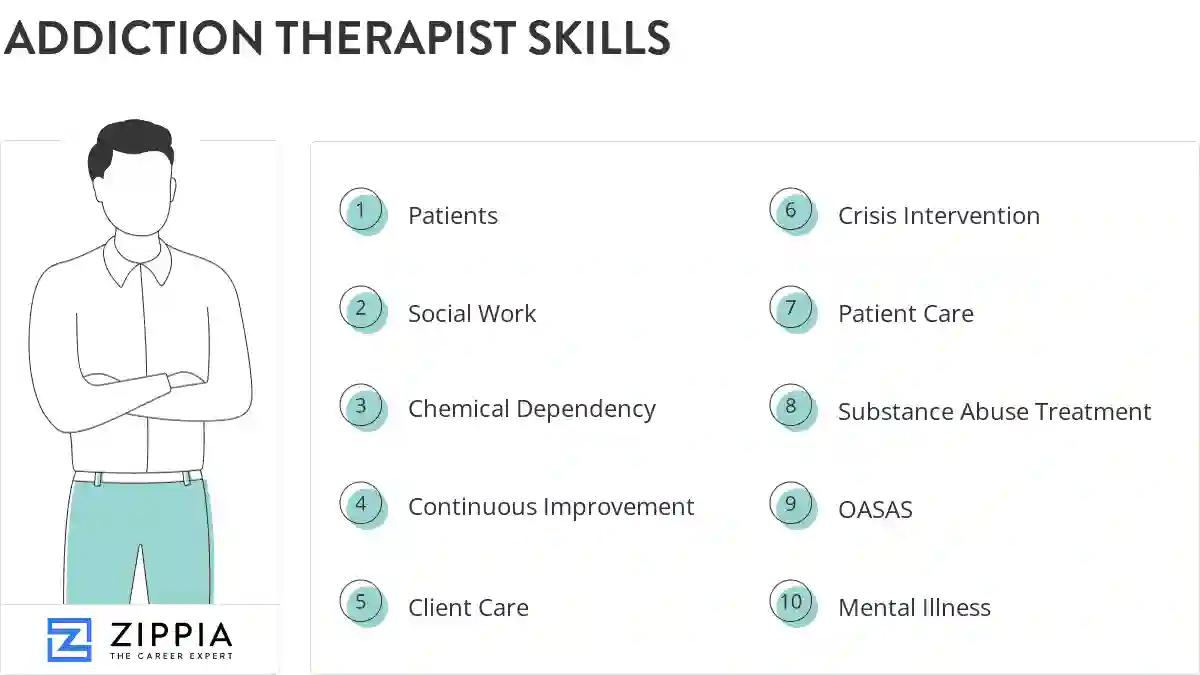
The most important skills for an addiction therapist resume and required skills for an addiction therapist to have include:
- Patients
- Social Work
- Chemical Dependency
- Continuous Improvement
- Client Care
- Crisis Intervention
- Patient Care
- Substance Abuse Treatment
- OASAS
- Mental Illness
- Substance USE Disorders
- Group Therapy Sessions
- Discharge Planning
- Family Therapy
- Treatment Programs
- Rehabilitation
- Intake Assessments
- Individual Therapy Sessions
- Relapse Prevention
- Addiction Treatment
- Community Resources
- Veterans
- Regulatory Standards
- Clinical Supervision
- IOP
- Substance Abuse Disorders
- Substance Abuse Issues
- Recovery Process
- Dual Diagnosis
- ASAM
- Residential Treatment
- Discharge Summaries
- Mental Health Issues
- Group Treatment
- Family Sessions
- Community Agencies
- Anger Management
- PTSD
- Intake Interviews
- Mental Health Disorders
- Outpatient Treatment
- Clinical Assessments
- Court System
- DUI
- Hippa
- Crisis Situations
- Community Services
Updated January 8, 2025

2. Social Work