- Interview Prep
- Star Method For Answering Questions
- Interview Preparation Checklist
- Star Interview Questions
- Words To Use In An Interview
- Mock Interview Preparation
- How To Make A Good Impression
- Bring Writing Samples
- How To Relax Before An Interview
- Interview Coaching
- Common Video Interview Mistakes
- Common Phone Interview Mistakes
- How To Ace Your Interview For A Remote Job
- Good Weaknesses For A Job Interview
- Good Strengths For A Job Interview
- How To Prepare For A Phone Interview
- Talk About Being Laid Off
- How To Decline An Interview
- How Early Should You Arrive For An Interview
- Interview Etiquette Tips
- Phone Interview Tips
- How To Ace A Phone Interview
- Onsite Interview Tips
- Types Of Interviews
- Open Interviews
- Video Interviews
- Promotion Interview
- Internal Interview
- Informational Interview
- Panel Interview
- Online Interview
- Third Round Interview
- Final Interview
- Skype Interview
- Zoom Interview
- Group Interview
- Interview Questions About Your Experience
- Remote Interview
- Interviews For Teen Jobs
- Lunch Interview
- Panel Interview Tips
- Communication
Find a Job You Really Want In
Summary. To excel in your onsite interview, prepare for common interview questions, research the company and your interviewers, and dress appropriately. Arrive 10 to 15 minutes early, armed with all necessary materials, and have insightful questions ready to ask.
Receiving an invitation for an onsite interview is an exhilarating milestone in your job search journey, allowing you to connect face-to-face with prospective colleagues and explore the company’s environment.
As an onsite interview is a vital opportunity to demonstrate your fit for the role, thorough preparation is essential. Below, we provide a set of modernized tips to help you succeed.
Key Takeaways
-
Effective preparation is crucial for a successful onsite interview.
-
Make a positive impression through your demeanor, attire, and enthusiasm.
-
Remember, the onsite interview is also your chance to evaluate if the company aligns with your values and career goals.
-
Follow up with a thank-you note to reinforce your positive impression.
11 Tips for a Successful Onsite Interview
-
Plan Your Travel Arrangements Ahead of Time
Prior to your onsite interview, ensure you have well-thought-out travel plans. Whether flying across the country or driving locally, it’s important to have your itinerary set.
Expect potential delays such as traffic or last-minute changes, so provide yourself ample time to reach your potential workplace calmly and punctually. Arriving late can create a negative first impression.
The ideal interview etiquette suggests arriving about 15 minutes early, allowing time to review your materials and collect your thoughts. Utilize a GPS for directions and check traffic conditions on the day of your interview.
-
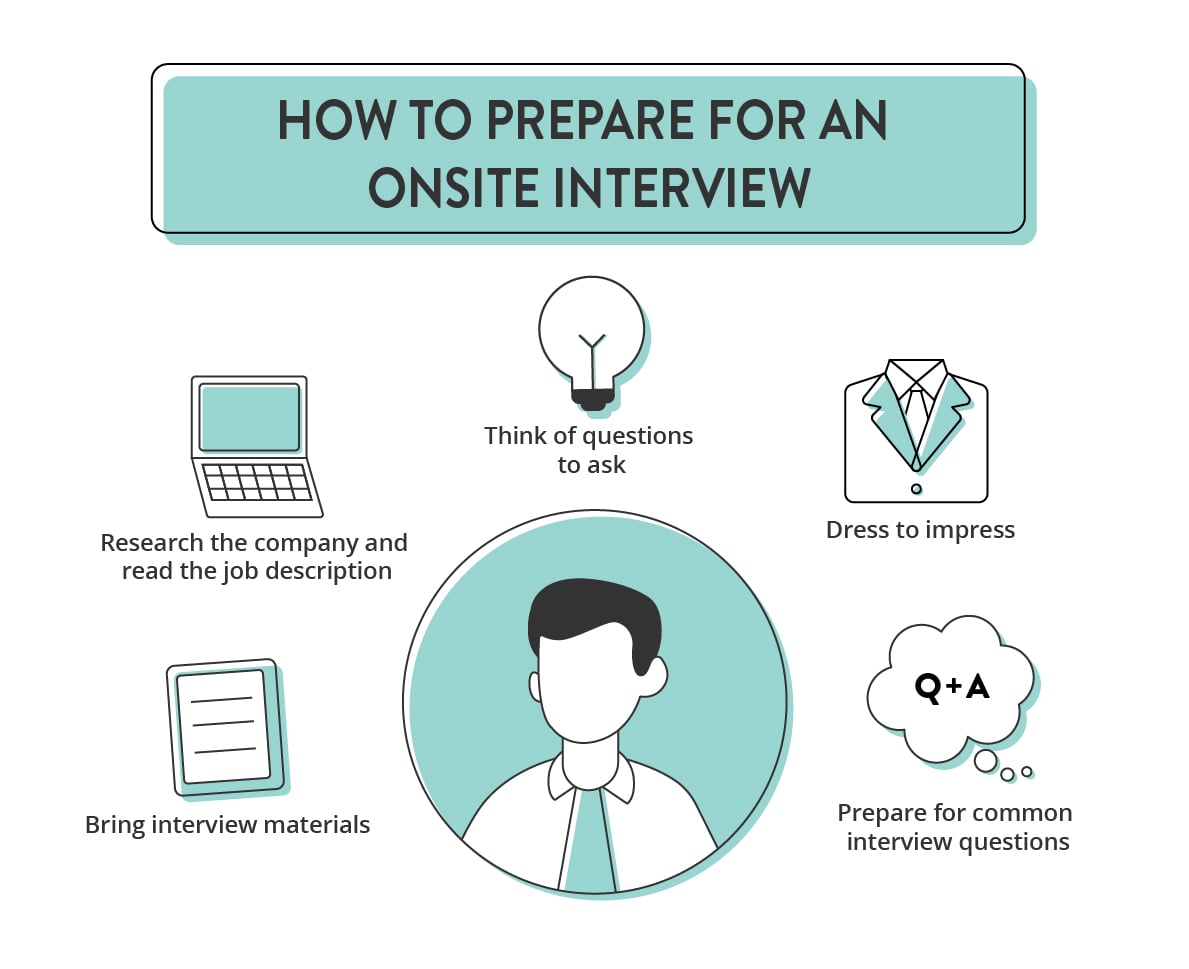
Prepare for Common Job Interview Questions
Having a strong grasp of the company is crucial for your onsite interview, and this extends to anticipating and preparing for common interview questions.
Craft a professional introduction for inquiries like “tell me about yourself.” Prepare for behavioral questions using the STAR method, showcasing relevant experiences.
Questions regarding your strengths and weaknesses are common, but also be ready to discuss the company and its values.
-
Learn About the Company and Your Interviewers
Walking into an interview without knowledge about the company can signal disinterest. Anticipate questions like “what do you know about our company?”
As you research, focus on:
-
The current leadership and management team
-
The company’s history and trajectory
-
The mission and core values
-
The products and services they provide
-
Their target audience and market position
-
Key competitors in the industry
Contact your company liaison to gather information about your interviewers. Understanding their roles and backgrounds will help you connect during the interview.
-
-
Read the Job Description
Your interview strategy should align with the job description. Carefully analyze it to understand required qualifications and skills, allowing you to emphasize these points during your discussion.
Illustrate your knowledge of the role by using keywords from the job description. The more specific examples you can provide that demonstrate your capability in fulfilling the responsibilities, the better.
Encouraging the interviewer to discuss the job duties early on can help you tailor your responses more effectively.
-
Dress for Success to Make an Impression
Attire plays a significant role in the impression you leave. If uncertain, opting for business casual attire is generally appropriate. Alternatively, directly inquire with the employer about their dress expectations.
Ensure your clothing is clean, wrinkle-free, and conservative. Dressing in professional business attire conveys that you respect the opportunity and are taking it seriously.
-
Bring All Necessary Interview Materials
Arriving at an interview empty-handed is a missed opportunity. Essential materials include:
-
Your ID
-
Pens
-
A notepad for taking notes
-
Copies of your resume
-
Examples of your work or your portfolio
-
Business cards
-
A list of references
Additionally, bring a positive attitude; your demeanor can significantly influence the interviewers’ perception of you.
-
-
Be Prepared With Questions to Ask Your Interviewer
Don’t overlook preparing thoughtful questions for your interviewer, especially when asked, “Do you have any questions for me?”
Questions you might consider include:
-
“What challenges does this position typically face?”
-
“Can you describe your management style?”
-
“What does a typical day look like for this role?”
Avoid inquiries about salary and benefits; save those for when an offer is on the table.
-
-
Get a Good Night’s Rest
Making a strong impression is challenging when you’re fatigued or unfocused. Ensure you get sufficient rest the night before your interview, and avoid alcohol to prevent feeling sluggish.
Onsite interviews may involve multiple meetings with different teams, so staying sharp and engaged is crucial throughout the day.
-
Be Respectful, Positive, and Enthusiastic
During the interview, exude confidence and enthusiasm. Address the hiring manager or recruiter by name, engage with a smile, and maintain eye contact. Respect their space by waiting for them to offer a seat before you sit.
Demonstrating interest in the conversation and staying alert will allow you to respond effectively when prompted. If necessary, take a moment to rehydrate and regain focus.
At the interview’s conclusion, express your enthusiasm for the role and inquire about the next steps in the hiring process. Collect business cards for follow-up thank-you emails.
-
Avoid Common Mistakes
Be mindful of several common pitfalls during your onsite interview:
-
Avoid simple “yes” or “no” responses; provide fuller answers.
-
Steer clear of discussing salary or benefits—these topics are best left for HR.
-
Maintain positivity; don’t speak negatively about past employers.
-
If unsure of an answer, don’t pretend; ask for clarification or take a moment to think.
-
Keep your responses concise; avoid lengthy monologues unless the conversation flows organically.
-
Don’t repeat your resume—this is your chance to provide new insights about your qualifications.
-
-
Send a Thank-You Letter After the Interview
After the onsite interview, don’t forget to send a thank-you note to express your appreciation.
Your follow-up is an opportunity to thank the interviewer for their time and to reaffirm your interest in the position. It’s a thoughtful gesture that can set you apart from other candidates.
The Purpose of an Onsite Interview
The onsite interview serves as a crucial platform for both you and the interviewer to evaluate mutual compatibility. The interviewer assesses your potential fit for the role, while you gain insight into the company’s culture and work environment.
This format allows you to meet multiple individuals who would be part of your team, giving you a clearer picture of how you might integrate into the company culture.
Onsite interviews often follow initial screenings, such as phone interviews or networking events, or they may occur because your qualifications are particularly compelling.
While receiving an onsite interview invitation doesn’t guarantee a job offer, it is a positive indicator that you are being seriously considered, especially if it follows prior interviews.
Onsite Interview FAQ
-
Does an onsite interview mean you got the job?
No, an onsite interview does not guarantee a job offer, but it can indicate that you are among the final candidates, particularly if it is a follow-up to previous interviews.
-
How do onsite interviews work?
Onsite interviews typically involve a series of meetings at the company’s offices, which may last several hours or even days, allowing you to meet various team members.
This format is beneficial for understanding the company’s culture while showcasing your skills, but it can also be quite exhausting, so take notes to help you remember key details.
-
How long is an onsite interview?
Onsite interviews can vary in length depending on the company size. Smaller organizations may offer shorter interviews, while larger firms may invite candidates for full-day or multi-day experiences, particularly if travel is involved.
-
What are example questions to ask the interviewer during an onsite interview?
Consider asking questions such as:
-
Can you describe a typical day for someone in this role?
-
Are there plans to expand this team in the near future?
-
What training opportunities does the company offer?
-
What skills or qualities are essential for success in this position and within the company?
-
Final Thoughts
Onsite or in-person interviews may seem daunting, but with adequate preparation, you can enter the room equipped to impress any employer.
Now, it’s time to familiarize yourself with the company’s background, get plenty of rest, and ensure you arrive 15 minutes early for your interview. Best of luck!
Ask the Experts
What’s a common interview question and how would you prepare to answer it?

Krista Morris
CEO and PRW
Virtuoso
It’s impossible to predict every question you’ll encounter, so instead of stressing over specific queries, focus on articulating your major accomplishments and prepare notes covering a range of examples (conflict resolution, meeting goals, overcoming challenges, etc.). This way, you can select the most relevant example during your interview, ensuring you walk in feeling fully prepared for any question.
What’s a good tip to help prepare for an interview?
Joe Mangum
Promoted Resume
To excel in interviews, develop comfort with your own voice. Practicing your responses with a partner or recording yourself can drastically improve your delivery. Review your recordings to assess your energy, clarity, and engagement. This practice will help ease your nerves and enhance your confidence.
References
- Interview Prep
- Star Method For Answering Questions
- Interview Preparation Checklist
- Star Interview Questions
- Words To Use In An Interview
- Mock Interview Preparation
- How To Make A Good Impression
- Bring Writing Samples
- How To Relax Before An Interview
- Interview Coaching
- Common Video Interview Mistakes
- Common Phone Interview Mistakes
- How To Ace Your Interview For A Remote Job
- Good Weaknesses For A Job Interview
- Good Strengths For A Job Interview
- How To Prepare For A Phone Interview
- Talk About Being Laid Off
- How To Decline An Interview
- How Early Should You Arrive For An Interview
- Interview Etiquette Tips
- Phone Interview Tips
- How To Ace A Phone Interview
- Onsite Interview Tips
- Types Of Interviews
- Open Interviews
- Video Interviews
- Promotion Interview
- Internal Interview
- Informational Interview
- Panel Interview
- Online Interview
- Third Round Interview
- Final Interview
- Skype Interview
- Zoom Interview
- Group Interview
- Interview Questions About Your Experience
- Remote Interview
- Interviews For Teen Jobs
- Lunch Interview
- Panel Interview Tips
- Communication

Author

Maddie Lloyd was a writer for the Zippia Advice blog focused on researching tips for interview, resume, and cover letter preparation. She's currently a graduate student at North Carolina State University's department of English concentrating in Film and Media Studies.