- How To Write A Resume
- Resume Examples
- Resume Tips
- Resume Tips
- Best Resume Writing Services
- Things To Avoid On A Resume
- Resume Paper To Use
- What To Include In A Resume
- How To Write A Bio
- How To Write A Personal Statement
- Lied on Your Resume?
- Resume PDF
- Avoid Age Discrimination
- Words and Phrases You Shouldn't Include in Your Resume
- How Many Skills Should You List On A Resume
- Send A Resume As A Pdf
- Resume Critique
- Make A Resume Stand Out
- Resume Spelling
- Resume Past Or Present Tense
- How To List Projects On A resume
- Best Resume Action Words
- How To Quantify Your Resume
- Resume Bullet Points
- Are Resume Writers Worth It
- How Many Jobs To List On Resume
- Resume Vs CV
What would you do to land your dream job? Would you go so far as to embellish your resume? Perhaps just stretch the truth a little? In today’s competitive job market, understanding resume behavior is crucial.
We conducted a survey on resume honesty to reveal who lies on their resumes, the common areas of deception, and the outcomes of these fabrications.
The findings? Certain demographics are more prone to resume embellishment than others, which is unfortunate given the multitude of effective resume templates available.
Summary Of Results
- 30% of individuals admit to having lied or “bent the truth” on their resumes.
- Men are 6% more likely to lie on their resumes than women.
- While men lie more, both genders tend to exaggerate similar aspects.
- Millennials are the most likely to lie on their resumes, whereas Gen Z-ers tend to “bend the truth,” and individuals over 45 generally maintain honesty.
- The most common lies involve work experience, followed closely by technical skills.
- High school graduates are 10% more likely to lie on their resumes compared to dropouts or those with higher education levels.
- Those with graduate degrees are the least likely to misrepresent themselves.
- 80% of people who lie on their resumes are never caught.
How We Determined These Results
We surveyed over 1,000 individuals about their resume behavior and motivations. Participants answered questions regarding past resume practices, motivations for honesty or deceit, as well as demographic information including age, gender, and education level. A detailed breakdown of our data and conclusions is available below.
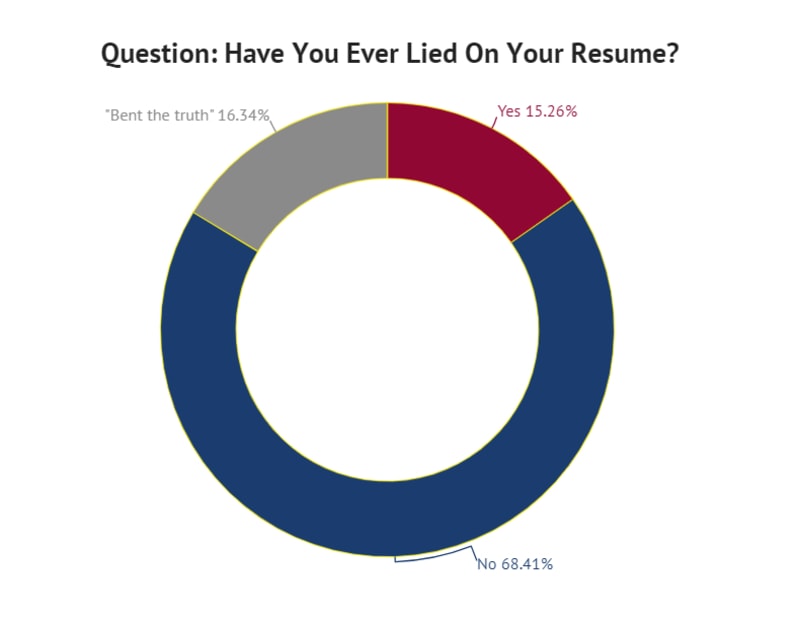
More than 30% of participants admitted to lying or “bending the truth” on their resumes. We further analyzed these responses by age to identify trends among different generations.
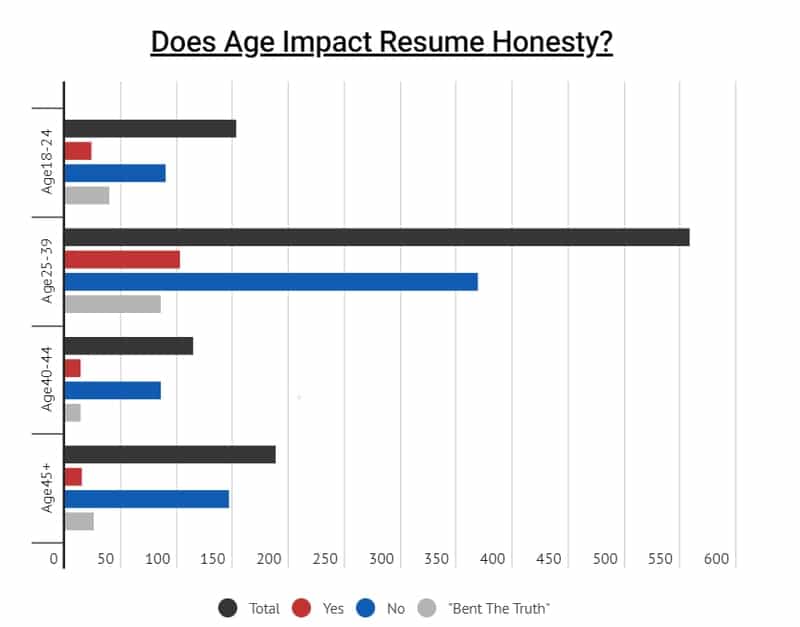
18% of individuals aged 23 to 39 admitted to outright lying on their resumes, making millennials the most likely offenders. In contrast, 41% of Gen Z respondents reported merely “bending the truth.” The most honest demographic? Those over 45, with only 7% admitting to lying.
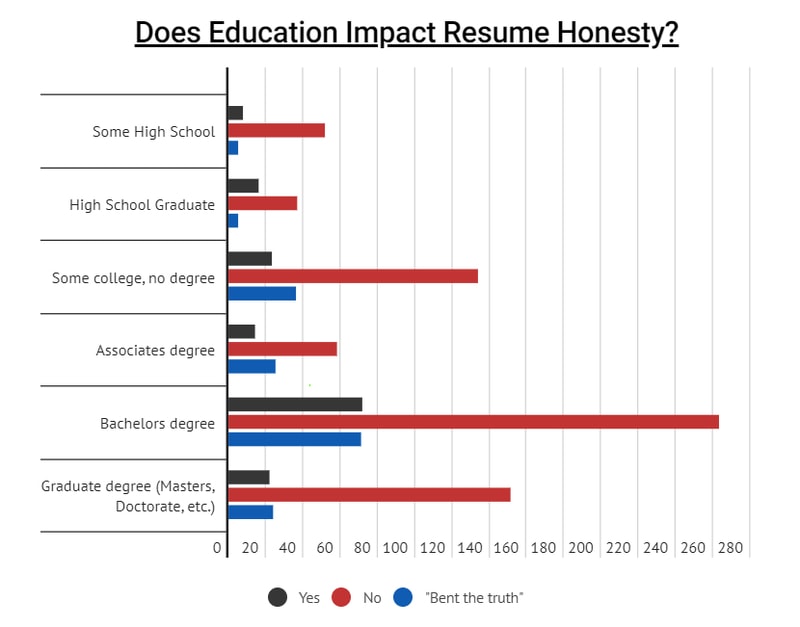
High school graduates are the most likely to lie on their resumes, with 27% acknowledging dishonesty. This is followed by college graduates at 18%, while only 11% of those with advanced degrees report lying.
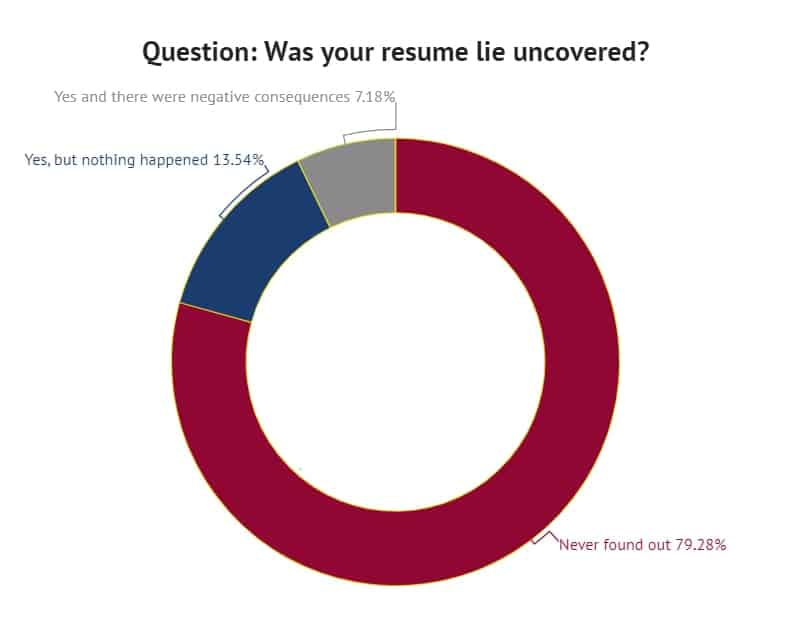
The majority of individuals who lie on their resumes face no repercussions, or at least none that they are aware of. Only 8% of those who admitted to lying reported encountering “negative consequences.”

Interestingly, while 46% of respondents claimed they “never lied and would never,” this marks a decrease from the 68% who previously stated they had never lied on a resume. This suggests a significant number of individuals may be considering dishonesty, even if they haven’t acted on it yet.
What drives people to consider embellishing their resumes?
13% stated they would lie to secure a job, while another 5.6% would do so to negotiate a higher salary. Notably, 41.2% of Gen Z respondents admitted to only “bending the truth.”
Why You Should Avoid Lying on Your Resume
While 30% of individuals may lie or bend the truth on their resumes, that doesn’t mean it’s a smart strategy.
Lying about your qualifications or experience can lead to disastrous outcomes. Although nearly 80% of respondents claimed they faced no repercussions for resume dishonesty, this doesn’t imply that consequences don’t exist.
If a hiring manager discovers that you have misrepresented your technical skills or if a reference check raises red flags, they may not inform you directly. Instead, you could miss out on the job without ever knowing that a simple lie cost you the opportunity—and potentially damaged your reputation with the entire company. Employers prefer candidates who are truthful.
Rather than resorting to dishonesty, focus on enhancing your skills and effectively communicating your value through a well-crafted cover letter. The job market is thriving in 2026, and you might be surprised by the opportunities that arise when you present your true experience.
Have you ever lied on your resume? Share your story by emailing kmorris@zippia.com.
- How To Write A Resume
- Resume Examples
- Resume Tips
- Resume Tips
- Best Resume Writing Services
- Things To Avoid On A Resume
- Resume Paper To Use
- What To Include In A Resume
- How To Write A Bio
- How To Write A Personal Statement
- Lied on Your Resume?
- Resume PDF
- Avoid Age Discrimination
- Words and Phrases You Shouldn't Include in Your Resume
- How Many Skills Should You List On A Resume
- Send A Resume As A Pdf
- Resume Critique
- Make A Resume Stand Out
- Resume Spelling
- Resume Past Or Present Tense
- How To List Projects On A resume
- Best Resume Action Words
- How To Quantify Your Resume
- Resume Bullet Points
- Are Resume Writers Worth It
- How Many Jobs To List On Resume
- Resume Vs CV

Author

Kathy is the head of content at Zippia with a knack for engaging audiences. Prior to joining Zippia, Kathy worked at Gateway Blend growing audiences across diverse brands. She graduated from Troy University with a degree in Social Science Education.