- How Companies Make Money
Find a Job You Really Want In
If you shop online, you’ve likely come across the option to pay using PayPal. This service enables users to purchase items, accept payments, and transfer money seamlessly. With no subscription fees or account maintenance costs, many wonder how PayPal generates revenue.
In this article, we will explore the mechanics of PayPal, its revenue streams, and tips to maximize your experience with the platform.
Key Takeaways
-
PayPal charges most business accounts a fee of $0.30 plus a variable percentage ranging from 1.9% to 2.9% on each payment received.
-
PayPal earns interest on funds left in user accounts, creating another revenue stream.
-
PayPal’s primary advantage lies in its secure and user-friendly platform for sending and receiving money.

What is PayPal?
Founded in 1998, PayPal emerged as a leading e-commerce payment platform. Today, it operates in over 200 markets worldwide. In 2002, eBay acquired PayPal for $1.5 billion, solidifying its role in online transactions.
PayPal is no longer just a tool for online fund transfers; it allows users to send money without being a registered member, provided they have the email address of a PayPal account holder. However, to receive payments, users must create an account.
How Does PayPal Work?
Once you set up your PayPal account, you can link it to a bank account or credit card. PayPal prioritizes user privacy and employs numerous security measures to safeguard transactions between buyers and sellers.
One security feature is the PayPal Security Key, available for a monthly fee of $29.95. This device generates a 6-digit code valid for 30 seconds. When withdrawing funds from your account, you have three options:
-
Transfer the money to your bank account.
-
Add it to your PayPal debit card (if applicable).
-
Request a check by mail.
How Does PayPal Make Money?
PayPal generates revenue through two primary channels:
-
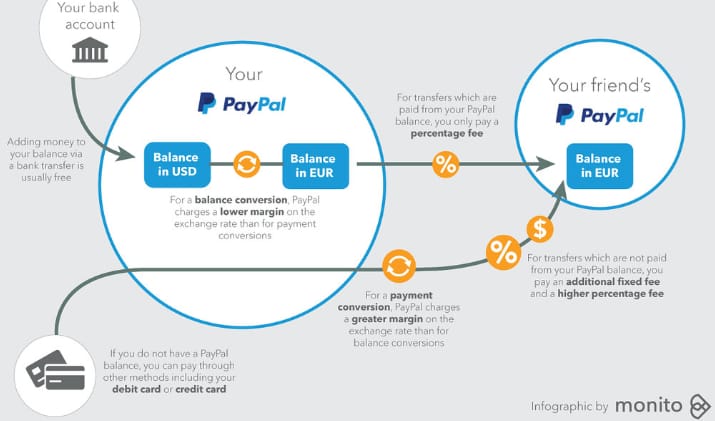
Transaction Fees: While most personal transactions are free, business or premier accounts incur a fee for each transaction. This fee typically consists of $0.30 plus a percentage of the transaction value, which ranges from 1.9% to 2.9%. For charitable organizations, the fee is reduced to 2.2%, while international sales can incur rates as high as 4.4%.
PayPal offers different account types tailored for various user needs. The premier account is designed for individuals starting their selling journey, providing access to shopping cart integrations and payment reporting tools. The business account is suited for larger online retailers, offering enhanced capabilities for managing transactions and customer interactions.
-
Interest on Account Balances: PayPal also earns interest on funds left in user accounts, contributing significantly to its income. With a large user base, even a small average balance can result in substantial interest revenue for the company.
What’s the Advantage of PayPal?
PayPal is recognized for its speed and convenience in online money transfers. It supports transactions with various users, making it a versatile option for both personal and business needs. Many online retailers, auction sites, and marketplaces, including eBay and Amazon, accept PayPal, further enhancing its utility.
Besides facilitating online purchases, PayPal allows users to receive payments, which can be converted into cash or used for future transactions.
Is PayPal Good for Saving Money?
In short, no. PayPal is not a viable savings tool, as it does not offer interest on funds held in accounts. Instead, the company benefits from the interest generated by user balances. Additionally, accounts can be frozen or suspended without prior notice, especially if there are unusual transaction patterns.
It’s best to utilize PayPal primarily for its intended purpose: transferring funds for personal or business transactions.
PayPal FAQ
-
Is there a fee to use PayPal?
Sending money through PayPal is generally free for individual users. However, businesses are charged a fee for each transaction, typically a percentage (1.9% to 2.9%) plus a fixed fee of approximately $0.30.
-
What are the cons of using PayPal?
Disadvantages of PayPal include high transaction fees for merchants, the potential for unexpected account suspensions, and slow fund transfers. The fees for businesses can exceed those of traditional credit card companies, which is a drawback for many merchants.
Moreover, PayPal can freeze accounts without warning if it suspects policy violations, leading to frustrating situations for users. Transferring funds from PayPal to a bank account may also take one to three days unless expedited for an additional fee.
-
Is PayPal safer than a bank?
While PayPal is not inherently safer than a bank for storing money, it offers enhanced security for online transactions compared to traditional banking methods. Because users don’t need to disclose their bank account or credit card details to merchants, using PayPal helps protect sensitive information during purchases.
- How Companies Make Money

Author

Amanda Postma is a writer for the Zippia Career Advice blog with a focus on creating entertaining content to help you through your job search. She received her BA from the University Of Missouri-Columbia.