Find a Job You Really Want In
Zippia Poll: Would You Continue Working If You Received $2,000 a Month?
In today’s evolving labor market, the idea of receiving a universal basic income (UBI) has sparked significant discussion. With the economic shifts of the past few years, particularly in response to global challenges, the question arises: how would the American workforce transform if every worker received an additional $2,000 monthly? This inquiry is particularly relevant as we navigate a landscape defined by hybrid work models and changing employee expectations.
- Only 72% of workers would maintain their current work habits.
- 1 in 20 would choose to leave their jobs entirely.
- 18% would reduce their hours; an additional 5% would invest the extra funds in education or a career change.
- Most respondents would allocate the funds toward housing, utilities, and essential living expenses.
Zippia conducted a survey involving 500 American workers from various income levels and age groups to explore how a monthly $2,000 check would influence work-life choices. Below are the key findings from Zippia’s survey.
Summary of Findings
- Workers aged 18 to 24 were most inclined to use the funds for educational purposes.
- Women were 5% less likely than men to continue working as usual, often opting to work fewer hours.
- After addressing essentials, many respondents indicated they would save the extra income for future needs.
- 60% of individuals aged 35-44 (the highest percentage among age groups) stated they would use the funds to cover basic living costs.
- Higher earners tended to save the funds rather than spend them on necessities, while lower earners were more likely to use the money for bills.
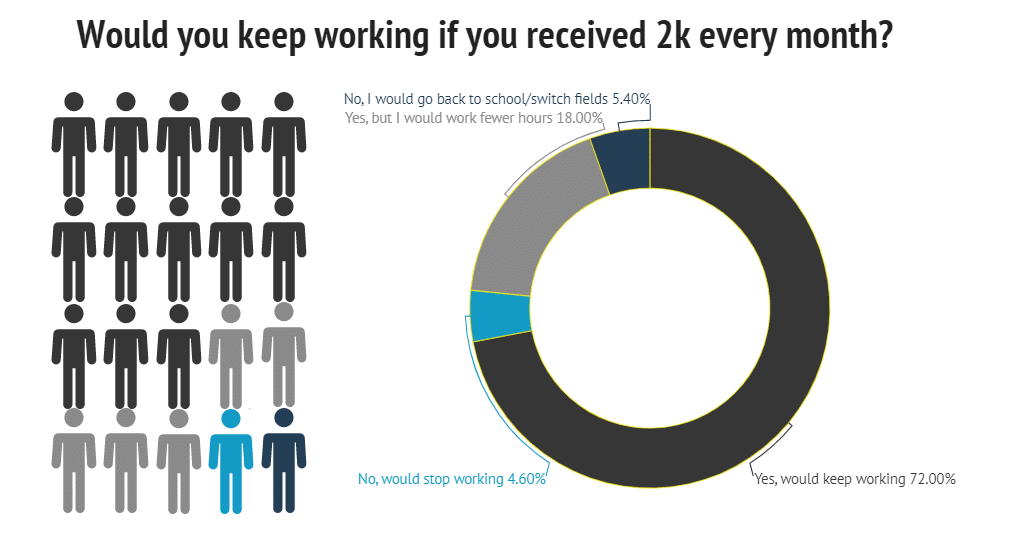
As our survey reveals, 1 in 20 workers would exit the workforce, while 25% may choose to stay but reduce their hours to enhance their quality of life.
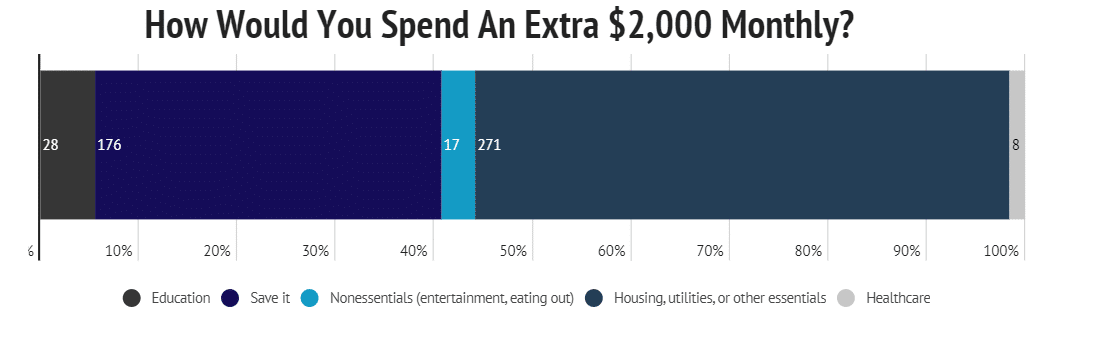
Most respondents indicated they would spend the additional $2,000 on essentials like housing, utilities, and food, with savings being a close second. Healthcare expenses were noted as the least common use of the funds.
Diverse Choices Across Demographics

While the overall decision to remain in the workforce remained consistent, spending behaviors varied significantly among age groups. Workers aged 18-24 were 10% more likely to prioritize education expenses, while Baby Boomers leaned towards saving the additional funds. Those aged 35-44 were most inclined to allocate the money toward housing and other necessities.
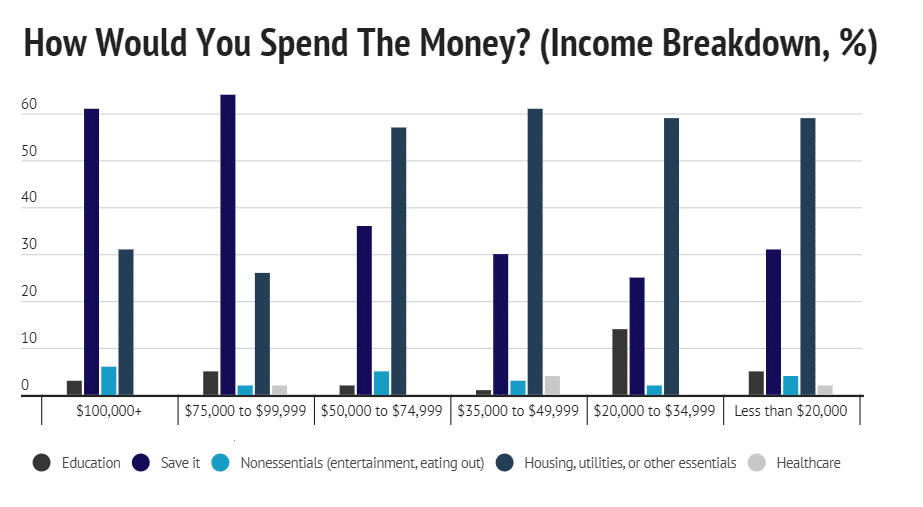
Higher earners showed a tendency to save rather than spend on immediate necessities, whereas lower-income individuals were more likely to use the cash for monthly bills.
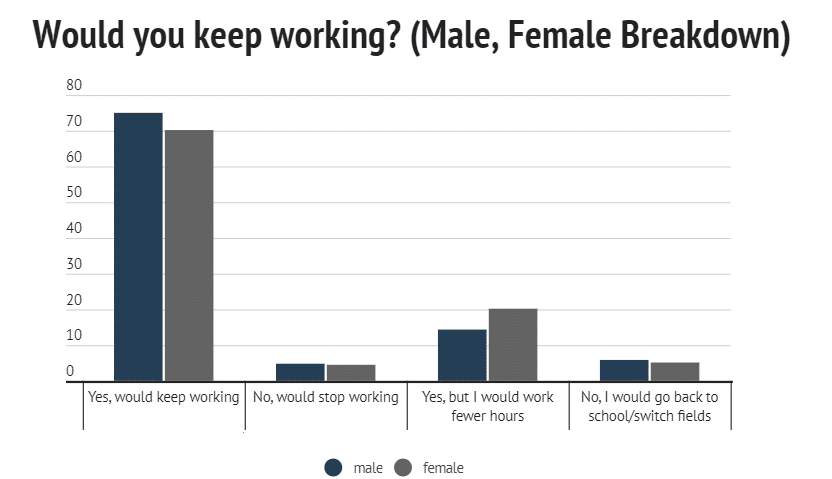
Women were 5% less likely than men to continue working as usual, yet they were 5% more inclined to opt for reduced hours. This may reflect the additional unpaid labor, such as childcare, that many women undertake.
Final Thoughts on the Impact of an Extra $2,000 a Month
Job satisfaction varies widely; many individuals work primarily to meet their financial obligations. Eliminating those obligations could significantly alter their career choices and lifestyle.
However, $2,000 a month may not be sufficient to persuade the 72% of workers who would choose to remain in their current positions. While 5% of respondents indicated they would leave their jobs, an equal number would seize the opportunity to pursue further education or transition to more fulfilling careers. Should universal basic income become policy, it could reduce the overall labor force while simultaneously transforming societal views on work and life balance.
The desire for shorter work hours may pave the way for more productive and flexible work environments that prioritize results over hours spent. While the comprehensive impacts of a monthly stipend on the American workforce remain unpredictable, it is clear that such a shift would bring about profound changes in job culture and employee expectations.

Author

Kathy is the head of content at Zippia with a knack for engaging audiences. Prior to joining Zippia, Kathy worked at Gateway Blend growing audiences across diverse brands. She graduated from Troy University with a degree in Social Science Education.