- Tech Industry Statistics
- MFA Statistics
- Streaming Services Statistics
- Mobile Vs. Desktop Usage Statistics
- AI Statistics
- Live Streaming Statistics
- Zoom Meeting Statistics
- Cord Cutting Statistics
- Digital Transformation Statistics
- Virtual Reality Statistics
- How Fast Is Technology Advancing
- Mobile Commerce Statistics
- SaaS Statistics
- Machine Learning Statistics
- Diversity In High Tech
- Cyber Security Statistics
- Ecommerce Statistics
- Tech Industry
- Gaming Industry
- Renewable Energy Job Creation
- Smartphone Industry
- Cybercrime Statistics
- Amazon Statistics
- Personalization Statistics
Cybersecurity Research Summary. In 2026, cybersecurity threats are more pervasive than ever, affecting individuals and organizations worldwide. With an increasingly digital landscape, both U.S. and global businesses are more reliant on technology, making them prime targets for cybercriminals. Our data analysis team has compiled the latest insights into cybersecurity threats with the following statistics:
-
Cyberattacks occur approximately every 39 seconds.
-
95% of cyberattacks are attributed to human error.
-
Cybercrime cost individuals and businesses in the United States an estimated $6.9 billion in 2021, with numbers expected to rise significantly.
-
Globally, an estimated 30,000 websites are compromised each day.
-
43% of cyberattacks target small businesses.
-
Only 5% of company folders and files are adequately secured against cyber threats.
For further insights, we have categorized the data into specific areas:
Corporate | Cyberattack Methodology | Hacking Statistics | Trends and Projections
General Cybersecurity Statistics
Cybersecurity is a critical concern in today’s digital age, and understanding the facts can underscore the magnitude of the issue. Here are essential statistics regarding cybersecurity:
-
Cybercrime costs the global economy $6 trillion annually.
The financial impact of cybercrime is projected to escalate by 15% per year, potentially reaching $10.5 trillion by 2025.
-
Human error accounts for nearly all cybersecurity breaches.
Approximately 95% of breaches stem from human mistakes, highlighting the need for better education and training in cybersecurity protocols.
-
The U.S. invests about $3.5 billion on cybersecurity each year.
This figure likely underrepresents the true cost, as many incidents go unreported. Ransomware alone is estimated to cost the U.S. about $9 billion annually.
-
The United States leads globally in cybersecurity spending.
U.S. government and private sectors are expected to allocate an additional $18.78 billion to cybersecurity this year.
-
In 2021, the FBI’s Internet Crime Complaint Center (IC3) received 847,376 complaints.
This marked a 7% increase from the previous year, with prevalent issues including ransomware and business email compromise schemes.
-
The IC3 reported a loss of $6.9 billion for Americans in 2021.
This figure has shown a steady increase since 2017, which had only $1.4 billion in losses.
Reported Cybercrime and Financial Losses
| Year | Reported Complaints | Financial Loss |
|---|---|---|
| 2021 | 847,376 | $6.9 Billion |
| 2020 | 791,790 | $4.2 Billion |
| 2019 | 467,361 | $3.5 Billion |
| 2018 | 351,937 | $2.7 Billion |
| 2017 | 301,580 | $1.4 Billion |
Corporate Cybersecurity Statistics
Cybersecurity remains a pressing issue for corporations globally, with data breaches often resulting in substantial damage. Here are key statistics that illustrate the risks associated with inadequate cybersecurity:
-
Over half of U.S. companies have fallen victim to phishing attacks.
About 62% of organizations in the U.S. have reported experiencing social engineering and phishing attacks.
-
Only 5% of a company’s files are adequately protected.
According to the latest reports, a mere 5% of sensitive files are secure, while 22% of folders are accessible to any employee.
-
43% of cyberattacks target small businesses.
Despite being prime targets, only 14% of small businesses feel prepared to tackle these threats, with 60% lacking any cybersecurity measures.
Cyberattack Methodology Statistics
Cyberattacks can stem from various sources and utilize diverse strategies. Here are some insights into the methodologies behind these attacks:
-
More than 40% of data breaches involve internal actors.
Data indicates that 43% of breaches are linked to internal personnel, with half of these being intentional.
-
Email remains the primary delivery method for malware.
In the first half of 2021, 75% of cybersecurity threats were transmitted via email, with phishing being particularly common.
-
Mobile devices account for 60% of cyber fraud.
The rise of mobile banking and app usage has made mobile platforms frequent targets for cybercriminals.
-
Ransomware attacks are rampant.
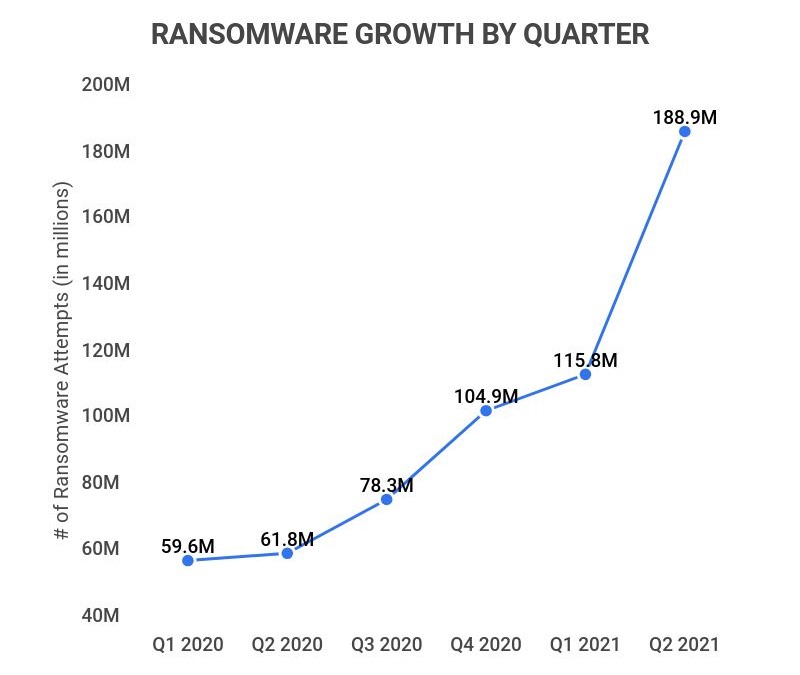
Approximately 4,000 ransomware attacks occur daily, making it one of the fastest-growing threats in cybersecurity.
-
Phishing is the most reported internet crime.
In 2021, there were 323,972 reported phishing incidents in the U.S. alone.
Top 5 Reported Internet Crimes in 2021
| Internet Crime | Reported Incidents |
|---|---|
| Phishing | 323,972 |
| Non-Payment/Non-Delivery | 82,478 |
| Personal Data Breach | 51,829 |
| Identity Theft | 51,629 |
| Extortion | 39,360 |
Hacking Target Statistics
Hackers often target specific sectors, which tend to be more vulnerable to cyber threats. Here are notable trends regarding hacking targets:
-
Approximately 3.8 million records are exposed daily.
From 2013 to the present, it is estimated that 3,809,448 records are compromised each day.
-
Government, retail, and technology sectors are primary targets.
These industries account for 95% of cybersecurity breaches due to their handling of sensitive personal information.
-
About 111.7 million Americans experience data breaches each year.
This statistic indicates that one in three Americans is affected annually, often due to weak security practices.
-
The average cost of a data breach in the U.S. is $200,000.
This financial burden often leads to 60% of businesses closing within six months post-attack.
-
The average ransom demand has increased to over $150,000.
The current average ransom demand stands at $178,254, reflecting a significant rise in extortion tactics.
-
Roughly 1 million new malware variants are created each day.
Data suggests that over 317 million new malware threats emerge annually, highlighting the ongoing evolution of cybercrime.

Cybersecurity Trends and Projections
As technology evolves, so do cybersecurity trends and projections. Here are the latest insights:
-
Cyberattacks surged during the remote work transition post-pandemic.
Cyberattacks saw a substantial increase as organizations adapted to remote work, with complaints to the FBI rising from 1,000 to 4,000 daily.
-
Cybersecurity expenditures are expected to rise by 15% annually.
As organizations invest more in cybersecurity, costs are projected to reach $10.5 trillion by 2025.
-
Ransomware attacks have drastically increased.
In early 2021, there was a 151% rise in ransomware attacks, with new strains emerging regularly.
Cybersecurity FAQ
-
How many Cyberattacks happened in 2020?
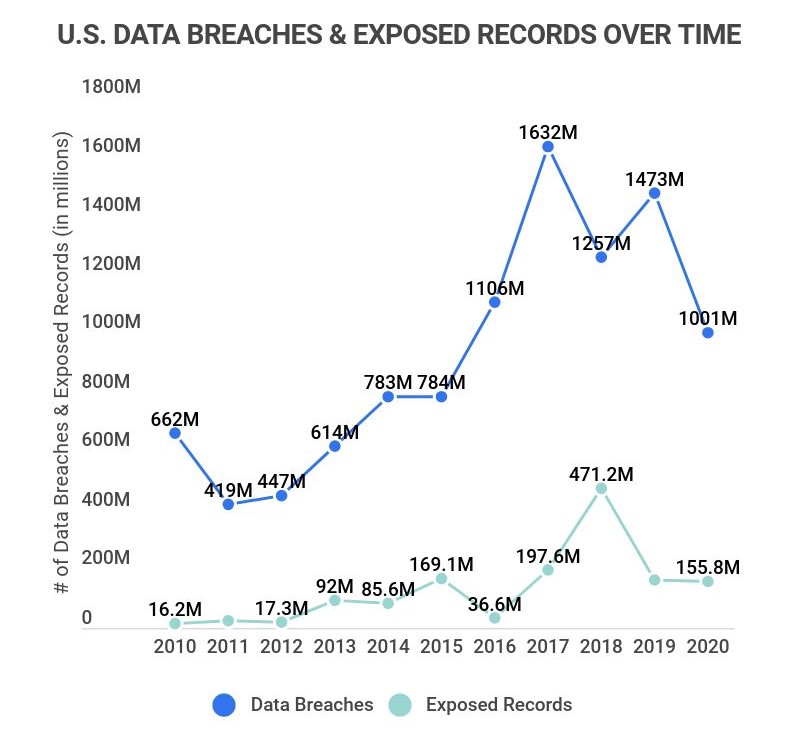
In 2020, 155.8 million digital U.S. records were exposed as a result of cyberattacks, with approximately 1,001 major data breaches recorded. An estimated 30,000 websites were hacked each day globally.
-
What does social engineering mean in cybersecurity?
Social engineering in cybersecurity involves manipulating individuals to disclose private information online. Hackers exploit human vulnerabilities to access confidential data and spread malware.
-
How many accounts are hacked each day in the US?
Approximately half a million U.S. accounts are hacked daily. Since 2015, an average of 199.17 million digital records have been exposed each year in the United States, affecting about one in three Americans annually.
-
Are cybersecurity threats increasing?
Yes, cybersecurity threats are on the rise. Early 2021 saw a 151% increase in ransomware attacks alone. The number of cybersecurity threats is expected to continue growing, with over 1 million new malware pieces being created daily.
-
How many data breaches happened in 2021?
In 2021, there were 1,862 data breaches reported, marking a significant increase from previous years. Ransomware accounted for 22% of all reported attacks, with 294 million individuals affected.
-
What is the most common data breach?
Phishing remains the leading cause of data breaches. In 2019, it constituted nearly one-third of all cyberattacks, and its prevalence has only increased in recent years.
-
Are data breaches increasing?
Yes, data breaches are indeed on the rise. The number of reported breaches surged by 68% in 2021, driven by the transition to remote work and increased mobile device usage.
Conclusion
Cybersecurity breaches continue to pose significant threats to economic stability, business continuity, and the safeguarding of personal information.
Despite rising investments in cybersecurity, the frequency of cyberattacks shows no signs of abating.
The U.S. allocates around $3.5 billion annually to combat cybercrime, a figure that is expected to expand as global costs soar towards $10.5 trillion by 2025.
With a cyberattack occurring every 39 seconds, awareness and education are vital, especially considering that a staggering 95% of attacks stem from human error.
References
-
Cobalt. “Business Cost Of Cybercrime.” Accessed on November 14, 2021.
-
Bank Info Security. “Ransomware Payday: Average Payments Jump To $178,000.” Accessed on November 14, 2021.
-
Cybercrime Magazine. “Cybercrime To Cost The World $10.5 Trillion Annually By 2025.” Accessed on November 14, 2021.
-
Forbes. “30,000 Websites Hacked A Day. How Do You Host Yours?” Accessed on November 14, 2021.
-
University Of North Georgia. “Cybersecurity: A Global Priority And Career Opportunity.” Accessed on November 14, 2021.
-
Analytics India Magazine. “Top Cybersecurity Budgets Around The World.” Accessed on November 15, 2021.
-
Varonis. “2019 Varonis Global Data Risk Report.” Accessed on November 15, 2021.
-
CNBC. “Cyberattacks Now Cost Companies $200,000 On Average, Putting Many Out Of Business.” Accessed on November 15, 2021.
-
CNN Business. “Nearly 1 Million New Malware Threats Released Every Day.” Accessed on November 15, 2021.
-
Statista. “Cyber Crime: Number Of Breaches And Records Exposed 2005-2020.” Accessed on November 15, 2021.
-
Mcafee. “Grand Theft Data.” Accessed on November 16, 2021.
-
ZDNet. “HP Finds 75% Of Threats Were Delivered By Email In First Six Months Of 2021.” Accessed on November 16, 2021.
-
Reader’s Digest. “Top Security Threats Of Smartphones (2021).” Accessed on November 16, 2021.
-
Statista. “Distribution Of Malware Detections Q1 2020, By OS.” Accessed on November 16, 2021.
-
Federal Bureau Of Investigation. “How To Protect Your Networks From Ransomeware.” Accessed on November 16, 2021.
-
Threat Post. “Ransomware Volumes Hit Record Highs As 2021 Wears On.” Accessed on November 16, 2021.
-
The Hill. “FBI Sees Spike In Cyber Crime Reports During Coronavirus Pandemic.” Accessed on November 16, 2021.
-
PR Newswire. “Top Cyber Security Experts Report: 4,000 Cyber Attacks A Day Since COVID-19 Pandemic.” Accessed on November 16, 2021.
-
Federal Bureau of Investigation “Internet Crime Report 2021” Accessed on February 27, 2023.
- Tech Industry Statistics
- MFA Statistics
- Streaming Services Statistics
- Mobile Vs. Desktop Usage Statistics
- AI Statistics
- Live Streaming Statistics
- Zoom Meeting Statistics
- Cord Cutting Statistics
- Digital Transformation Statistics
- Virtual Reality Statistics
- How Fast Is Technology Advancing
- Mobile Commerce Statistics
- SaaS Statistics
- Machine Learning Statistics
- Diversity In High Tech
- Cyber Security Statistics
- Ecommerce Statistics
- Tech Industry
- Gaming Industry
- Renewable Energy Job Creation
- Smartphone Industry
- Cybercrime Statistics
- Amazon Statistics
- Personalization Statistics

Author

Elsie is an experienced writer, reporter, and content creator. As a leader in her field, Elsie is best known for her work as a Reporter for The Southampton Press, but she can also be credited with contributions to Long Island Pulse Magazine and Hamptons Online. She holds a Bachelor of Arts degree in journalism from Stony Brook University and currently resides in Franklin, Tennessee.