How to Write a Curriculum Vitae (CV) (With Template And Examples)
A curriculum vitae (CV) is a comprehensive document that details your educational and professional achievements. While a resume is often preferred for job applications in the United States, certain fields, particularly academia and research, favor the CV format for its extensive insight into your educational and research accomplishments.
CVs are predominantly used outside the U.S., especially in Europe. If you’re applying for a job abroad that specifically requests a CV, pursuing an academic position, or feel a CV better represents your career journey, this guide will help you craft your own. Additionally, it will cover when a CV is more suitable than a resume.
Key Takeaways:
-
A CV provides a detailed account of your academic and professional journey.
-
It includes contact information, work history, education, skills, certifications, awards, publications, professional affiliations, and more.
-
While international CVs may contain personal information, U.S. versions should adhere to discrimination laws by excluding such details.
-
CVs are typically required for jobs in academia and research in the U.S. and are the norm for most applications in Europe.
What is a CV?
CV stands for curriculum vitae, which translates from Latin as “course of life.” CVs focus extensively on your education, experience, and accomplishments, often including sections for achievements, publications, and interests relevant to your field. Unlike resumes, which typically highlight only your highest degree, CVs provide a broader overview of your educational background.
Due to this depth of information, CVs tend to be longer than resumes, offering employers a more comprehensive view of your academic and professional milestones.
When to Use a CV
In the United States, CVs are primarily required for academic, medical, or research positions, which emphasize education, publications, and accolades. Given the nature of these fields, a detailed document is warranted, and CVs can extend over several pages.
CVs are also standard in international applications, particularly in Europe, where they are preferred over resumes.
What to Include in a CV
CVs are unique to each individual, but they usually follow a standard format and include common sections. Just like with a resume, ensure that your skills and achievements are prominently displayed.
-
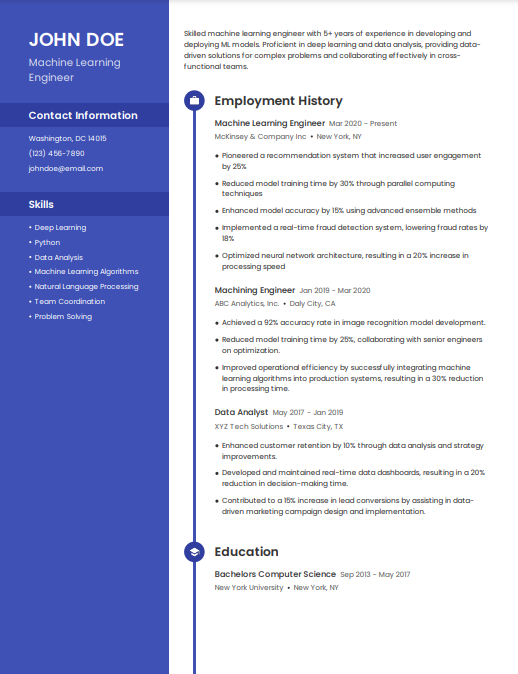
Contact Information: Start with your name and job title, followed by your professional address, home address, reachable phone numbers, email addresses, and optionally, your website or professional portfolio, including your LinkedIn profile.
-
Professional Objective or Work Summary: Outline your career goals or provide a summary of your professional journey. This can highlight your entire career or focus on a specific aspect.
-
Professional Experience: List your work experiences in reverse chronological order. It’s common to omit positions older than ten years, but this may vary based on the situation; if older roles are repetitive and extend your CV beyond five pages, consider excluding them.
-
Education: Include all higher education degrees, along with your major, thesis title, honors received, and notable achievements.
-
Skills: Include any relevant skills not covered in your formal education, such as language skills, emergency training, or additional licenses.
-
Professional Certifications: If your career path includes certifications that enhance your expertise, include them here. For example, trainers may have certifications like the NCSF-CPT certification.
-
Awards or Recognition: List any awards you have received. Don’t forget to mention team awards if you contributed to a group effort.
-
Publications: Include any published works, such as books, articles, or research that are relevant to the position. Consider organizing them in reverse chronological order or by publication, depending on your experience.
-
Membership in Professional Organizations: Demonstrating active participation in your field through memberships can enhance your CV.
-
Extracurricular Activities: Mention any non-work-related groups or activities that relate to your field. For example, mentoring youth in STEM could be relevant if you’re pursuing a teaching career.
-
Letters of Recommendation: This section is optional. Including letters can make your CV appear lengthy unless they come from highly relevant individuals.
Sample Curriculum Vitae
Jane Doe
Graduate Student
Marketing Master of Business AdministrationUniversity of Wisconsin
702 West Johnson Street
Madison, WI 53715-1007Home Address:
1234 Short Street
Madison, WI 53715
Phone: (123) 456-7890
Email: JaneDoe@email.com
LinkedIn: linkedin.com/janedoe
Twitter: twitter.com/janedoeExperienced Marketing major set to graduate in May. Was an intern with Advertising Excellence on the Pepsi campaign that went viral and had an article published in Advertising Age chronicling The Making of a Viral Video. Career focus in television production and marketing.
Professional Experience
Marketing Intern
Advertising Excellence
1/2020 — Present
Achievements
- Part of the team working on the Pepsi campaign that went viral
- Lead creative in Pick Up Garbage Campaigns for Madison City Parks Division
- Contributed to the company blog
UW Bookstore
10/2013 — 8/2017
Funded most tuition expenses by working part-time while attending school.
Education
Marketing Master of Business Administration
University of Wisconsin-Madison
8/2017 — Present
Thesis Title: Breaking Boundaries in Television Marketing in the Digital Age
Set to graduate with Honors
Internship with PepsiCoBachelor of Arts in Communications
University of Wisconsin-Madison
8/2013 — 5/2017
Graduated with Honors
Professional Certifications
- Google Analytics Individual Qualification
- Google Digital Garage
- Google AdWords
- Hootsuite Social Marketing Certification
- Facebook Blueprint Certification
Awards
- Named Marketing Student of the Year by UW-Madison 2019
- Nominated for Best Marketing Intern by Advertising Excellence
Publications
- Advertising Age: “The Making of a Viral Video”
- UW Student Journal: “The Changing View of Advertising”
- Ad Mag: “Looking at Your Audience Through a Lens” (Co-Authored)
Extracurricular Activities
Serve as a Mentor in the local Big Brothers/Big Sisters program and volunteer my services writing and producing their television ads. Currently working on earning a private pilot’s license and hope to integrate flying into my professional career.
At this stage, Jane Doe may choose to append letters of recommendation. These letters, typically written by relevant individuals, do not adhere to a strict format. It’s essential to note that since Jane is applying for a position in the U.S., she has omitted certain personal details from her CV, such as age, in compliance with discrimination laws.
CV Template
[Your Name]
[Address]
[Email Address]
[Phone Number]
[LinkedIn Account] (optional)Work Summary or Professional Objective
[A brief paragraph describing your career trajectory and focus]
Education
[Most Recent Degree], [Date Graduated], [School]
[Lower Degree], [Date Graduated], [School]
(Some CVs may require your GPA, so check the application guidelines.)
Professional Experience
[Most Recent Career], [Date]
[Include relevant duties]
[Previous Career], [Date]
[Include relevant duties]
(Avoid going back more than 10 years unless the experience is highly relevant.)
Honors/Awards
[List any relevant honors or awards you’ve received.]
Publications (if applicable)
[List publications in reverse chronological order]
Memberships/Affiliations
[Include any professional organizations you belong to]
(Other relevant headings can include:)
Languages (if multilingual)
Skills
Volunteering Experience
Personal Interests (optional, can be a short paragraph or list)
Recommendations
Types of CVs
In the U.S., you typically use a CV for three primary reasons: applying internationally, for academic roles, or for medical or research positions. Each purpose may demand different information, so here are tips for tailoring your CV accordingly.
International CVs
While the U.S. typically avoids certain personal information due to discrimination laws, other countries may expect details such as:
- Date of birth
- Nationality
- Gender
- Marital status
- Number and ages of children
- Language skills
- Religion
- Health status
- Passport number
- A professional photo
Academic CVs
For academic positions, your educational background is crucial. Highlight advanced degrees and any additional coursework, training, or certifications. Ensure your CV emphasizes your academic achievements prominently.
Medical/Scientific Research Information
If you work in the sciences or research, a CV is typically required. Emphasize your academic career and practical experience, showcasing significant research projects and their outcomes.
How to Write a CV FAQ
-
What’s the difference between a CV and a resume?
A CV emphasizes education and accomplishments, while a resume focuses on skills and relevant experience. CVs are more in-depth and often several pages long, covering detailed information such as hobbies and publications, while resumes should typically be one page long.
-
How often should you update your CV?
Update your CV every time you apply for a new job to ensure it includes relevant keywords and skills. Regularly maintain your CV by adding new experiences, certifications, or educational achievements.
-
Does order matter on a CV?
While order is not strictly imperative, prioritizing relevant sections is recommended. Using reverse chronological order allows recruiters to easily see your most recent qualifications and experiences.
-
How can you make your CV stand out?
Highlight your most relevant achievements at the beginning to align with the job description. Including a concise summary at the top provides the reader with an overview of your professional background and what you can offer.
References

Author

Kristin Kizer is an award-winning writer, television and documentary producer, and content specialist who has worked on a wide variety of written, broadcast, and electronic publications. A former writer/producer for The Discovery Channel, she is now a freelance writer and delighted to be sharing her talents and time with the wonderful Zippia audience.