It’s Official: “Entry-Level” Isn’t Just About Experience, It’s About Pay
“Entry-level job opening, 3 years of experience required.”
Have you encountered this in a job posting?
It’s no secret that numerous entry-level job listings demand years of experience and a skill set that rivals a lengthy grocery list.
This leaves many job seekers pondering, “How do I land a job to gain experience when all the roles require prior experience?”
To illuminate this dilemma, we analyzed over 3 million job postings across 25 different industries.
From this analysis, we clarified what entry-level truly means, how long it typically takes to advance in various fields, and what distinguishes entry-level positions from jobs that require similar experience.
The findings? It turns out, entry-level isn’t solely about experience; it’s often a code for lower pay.
What We Found Out
-
Jobs labeled as “entry-level” typically offer significantly lower salaries than those that do not, even when the experience required is comparable.
-
“Entry-level” positions requiring 2+ years of experience pay, on average, 20% less than other jobs with similar experience requirements.
-
Startups and transportation roles are the least likely to require years of experience for their entry-level hires.
-
Technology positions frequently use the term “entry-level” liberally; on average, these roles seek candidates with 18 months of experience.
-
Most industries expect entry-level candidates to possess some form of work experience.
-
The career ladder isn’t always a straightforward ascent; the journey from entry-level to junior roles, and from management to senior positions, can be relatively flat in certain sectors.
How We Determined This
We examined over 3 million job postings to understand the nature of entry-level jobs. We began by answering the question, “What constitutes an entry-level job in each industry?” To do this, we averaged the years of experience requested for each job listing that included the term “entry-level.” A higher average indicated greater expectations for entry-level candidates in that sector.
Next, we explored the years of experience sought for job titles such as “entry-level,” “junior,” “mid-level,” “management,” “senior,” and “executive” across various industries to illustrate the professional advancement trajectory.
Finally, we compared jobs that required similar experience levels to analyze the differences between roles tagged as “entry-level” and those that were not.
Continue reading for visualizations of our findings and data-driven tips on overcoming the “experience hurdle.”
Entry-Level Isn’t Just About Experience; It’s About Pay
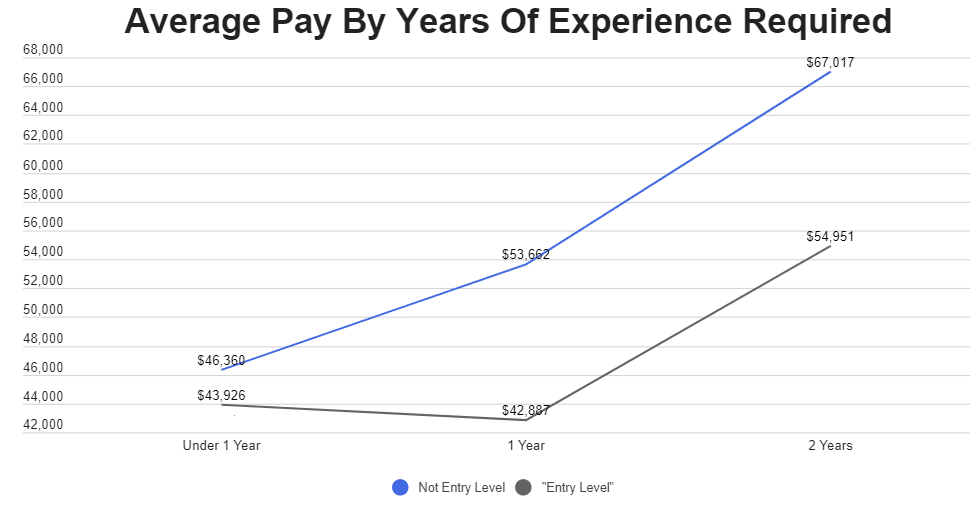
When analyzing the years of experience required, jobs that include the term “entry-level” tend to offer lower pay, even though the skill level expected may be similar.
The pay gap for roles requiring less than one year of experience is approximately 5%. However, this gap widens to a disappointing 20% for entry-level positions that seek candidates with two or more years of experience.
The takeaway? Entry-level does not always indicate the skills or experience required for the job; it may also signal the competitive pay associated with the position.
What Entry-Level Means In Each Industry
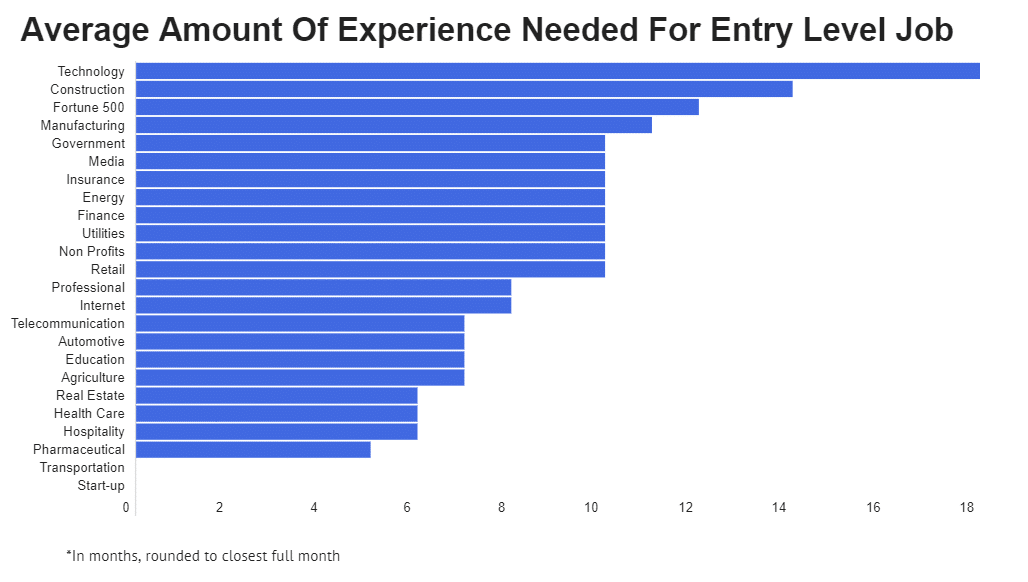
Industries such as technology, construction, and Fortune 500 companies tend to expect the most experience from entry-level hires, with job listings in these sectors typically requiring a candidate to have one year or more of experience.
Conversely, transportation and startups offer genuinely entry-level opportunities. However, educational qualifications and certifications can become barriers for some individuals aiming for these positions.
Professional Advancement Isn’t Always a Ladder; Sometimes It’s a Fence
This graph illustrates the complexities of career paths. While some industries exhibit a clear upward trend, others involve lateral moves. Notably, the most erratic transition occurs between mid-level and management roles.
Likewise, some roles show minimal experience jumps between levels, such as from entry-level to junior positions.
For those aspiring to reach executive status, the most prolonged journey is in the energy sector, requiring nine years of experience, while government roles may offer the shortest path to higher offices.
Entry-Level FAQ
-
What percentage of entry-level jobs require experience?
38.4% of entry-level jobs require at least 3 years of experience. This statistic reinforces the idea that entry-level roles often correlate with lower pay rather than a lack of experience.
However, this doesn’t mean you should shy away from applying to positions where you don’t meet the experience criteria. About 42% of job applicants may lack the requested experience but are still considered suitable candidates that employers are willing to train.
-
How long should you stay at an entry-level job before moving on?
It is advisable to remain in an entry-level position for at least one year before considering a change. This duration allows you to acquire valuable experience and establish a solid relationship with your employer.
Nonetheless, this guideline is not rigid. Currently, approximately 75% of recent graduates spend less than one year in their first job, often using this period to gain experience while seeking better opportunities.
-
How long is someone considered entry-level?
Individuals are typically considered entry-level with less than 5 years of experience. However, this can vary by job; entry-level positions in technology may demand several years of experience, while roles in real estate, healthcare, and hospitality often require just 6 months or less.
What This All Means For Job Seekers
Not all entry-level jobs are genuinely entry-level. While this reality can be disheartening during your job search, it’s essential to recognize that the majority of entry-level jobs require less than one year of experience. Our research also uncovered valuable tips that job seekers can leverage to enhance their prospects.
Tips for Overcoming the Experience Hurdle
-
Explore industries with lower experience requirements. Once you gain a few years of experience, you can always transition to a different field.
-
Apply for junior roles along with entry-level positions. In many sectors, the experience expectations are quite similar.
-
Avoid limiting your applications to just those labeled “entry-level”—this narrows your opportunities and can lead to lower pay.

Author

Kathy is the head of content at Zippia with a knack for engaging audiences. Prior to joining Zippia, Kathy worked at Gateway Blend growing audiences across diverse brands. She graduated from Troy University with a degree in Social Science Education.