- Industry Statistics
- Wedding Industry Statistics
- Yoga Industry Statistics
- Music Industry Statistics
- Landscaping Industry Statistics
- Bicycle Industry Statistics
- Coffee Industry Statistics
- Car Rental Industry Statistics
- Home Improvement Industry Statistics
- Insurance Industry Statistics
- Supplements Industry Statistics
- Golf Industry Statistics
- Fitness Industry Statistics
- US Media And Entertainment Industry Statistics
- Firearm Industry Statistics
- Financial Services Industry Statistics
- Health And Wellness Industry Statistics
- Trucking Industry Statistics
- Wine Industry Statistics
- Pet Industry Statistics
- Mobile App Industry Statistics
- Digital Marketing Industry Statistics
- Hotel Industry Statistics
- Retail Statistics
- Robotics Industry Statistics
- Jewelry Industry Statistics
- Appointment Scheduling statistics
- Restaurant Industry Statistics
- Food Delivery Statistics
- Food Truck Industry
- Fashion Industry
- Real Estate Industry
- US Film Industry
- US Beverage Industry
- USu202fFast Food Restaurants
- US Construction Industry
- US Book Industry
- Cosmetics Industry
- US Food Retail Industry
- US Pharmaceutical Industry
- US Healthcare Industry
- Airline Industry
- Automobile Industry
- Transportation Industry Statistics
- Event Industry Statistics
- Project Management Statistics
- Oil And Gas Industry Statistics
- Nursing Home Statistics
- Nursing Shortage Statistics
- Nursing Statistics
Nursing shortage research summary. Nurses are the backbone of the global healthcare system. Despite increasing interest in the profession, the United States is facing a critical nursing shortage that is expected to escalate over the coming years. Projections indicate that this shortage could result in millions of nursing vacancies by the end of the decade.
To better understand the extent of the nursing shortage in the U.S., we have compiled a comprehensive list of the most recent statistics. Based on our thorough research:
-
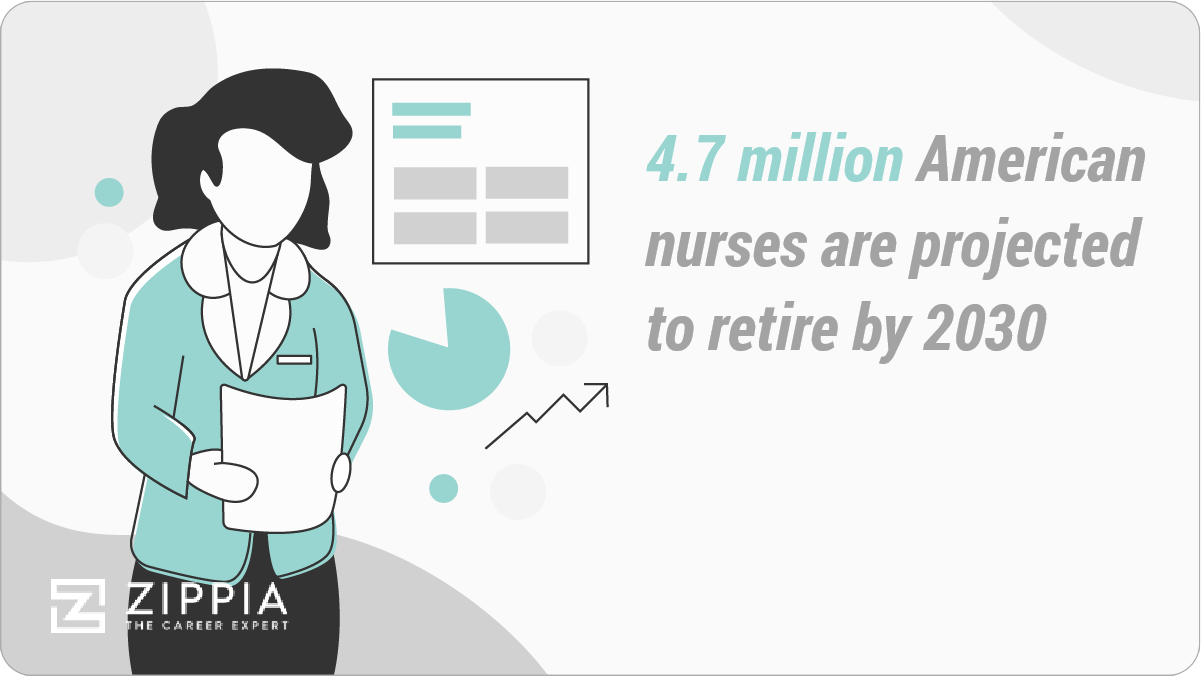
4.7 million nurses are anticipated to retire by 2030
-
13 million nurses will be required globally over the next decade to mitigate the shortage
-
California faces the most severe nursing shortage, projected to be short by 44,500 nurses by 2030
-
55% of registered nurses are over the age of 50
-
1.2 million new nurses are essential by 2030 to alleviate the shortage
-
13% of newly licensed RNs transition to a different job within just one year
-
37% of new RNs express a desire to change jobs after only one year
For further insights, we have categorized the data in the following sections:
Current Nursing Workforce | New Nurses and Nursing Students | State | Projections | Global
Nursing shortage by current nursing workforce
The current nursing workforce has been significantly impacted by resignations and retirements, particularly following the challenges posed by the COVID-19 pandemic. Most nurses are older than anticipated, which places the nursing profession in a vulnerable position. To learn more about the current state of the nursing shortage, we’ve compiled several key statistics:
-
There are currently over 4.2 million registered nurses in the United States
-
The average age of American nurses is 52 years
-
86% of nurses in the United States are women, while 14% are men
-
The average annual nurse turnover rate was 25.9% in 2022
Nursing shortage by new nurses and nursing students
Interest in nursing programs has been on the rise, yet not at a pace sufficient to counter the nursing shortage. Here are notable statistics regarding new nurses and nursing students:
-
Enrollment in nursing programs increased by 5.6% from 2019 to 2020.
In 2020, around 250,000 new nursing students began their careers.
-
In 2021, 91,000 qualified applicants were denied entry into nursing schools.
This figure represents a 13.75% increase over the 80,407 applicants turned away in 2019, due to insufficient faculty, inadequate classroom space, and budget constraints.
Nursing shortage by state
The nursing shortage is not uniform across the nation, impacting certain states more severely than others. If you’re curious about which states are most affected, consider the following facts:
-
As of 2022, the top five states with the most significant hospital staffing shortages are New Mexico, Vermont, Rhode Island, West Virginia, and Arizona.
New Mexico has the most acute hospital staffing shortage, with half of its hospitals reporting insufficient staffing. In Vermont, this percentage is slightly lower at 47%, followed by Rhode Island at 42%, West Virginia at 41%, and Arizona at 40%.
-
As of 2022, the five states with the least severe nursing shortages are Nevada, Utah, South Dakota, Idaho, and Texas.
Currently, Nevada reports no hospitals experiencing staffing shortages, with percentages slightly rising to 2% in Utah, 3% in South Dakota, 4% in Idaho, and 4% in Texas.
-
By 2030, states projected to experience the largest nursing shortages include California, Texas, New Jersey, South Carolina, and Alaska.
Texas is expected to require nearly 16,000 additional nurses, while New Jersey anticipates a need for 11,400, South Carolina will need 10,400, and Alaska will require 5,400 nurses.
-
California is projected to have a deficit of 44,500 nurses by 2030.
This represents the highest anticipated nursing shortage in the nation, with Texas following at a projected shortage of 15,900 nurses.
-
The states expected to have the least severe nursing shortages by 2030 are Florida, Ohio, Virginia, New York, and Missouri.
Florida is projected to have a surplus of over 53,000 nursing staff by 2030.
Nursing shortage trends and projections
While the nursing shortage has become somewhat less severe as the pandemic recedes, the insufficient influx of new nurses to replace retirees remains a pressing issue. Here are essential trends and projections concerning the nursing shortage:
-
By 2030, over 1 million registered nurses in the U.S. are expected to exit the workforce
-
On average, there are 194,500 nursing job openings each year
-
Employment of registered nurses is projected to grow by 9% through 2030
-
By 2030, the total number of nurses in the United States is expected to reach 4.54 million
Global nursing shortage statistics
The nursing shortage affects not only the U.S. but also countries worldwide. Nursing has consistently been a high-demand role globally, and the current climate amplifies this need.
-
Globally, 13 million nurses will be required by 2030 to meet healthcare demands.
Currently, there are 28 million nurses worldwide.
-
Nurses comprise 50% of the global healthcare workforce.
This substantial representation underscores the critical nature of the nursing shortage issue.
-
20% of National Nursing Associations worldwide report an increase in nursing shortages.
Furthermore, 90% of these associations express significant concerns over heavy workloads and resource inadequacies due to nursing shortages, with many attributing this trend to the pandemic.
Nursing shortage statistics FAQ
-
How significant is the nursing shortage in the United States?
The nursing shortage in the United States is substantial, with some states facing deficits of tens of thousands of nurses. Many hospitals are under pressure due to these shortages. For example, New Mexico has reported that 50% of hospitals are lacking the necessary nursing staff.
-
What factors contribute to the current nursing shortage?
Factors such as stress from the pandemic, an aging workforce, and insufficient resources for training future nurses have led to the current nursing shortage. While multiple elements contribute to this crisis, the core issue remains that significantly more nurses are exiting the profession than entering it.
The demanding nature of the job has made it less attractive to the younger generation. Additionally, the majority of nurses today are over the age of 50, with many planning to retire in the next decade.
-
What percentage of nurses quit in their first year?
Approximately 17.5% of newly licensed nurses leave their positions within the first year, as indicated by a 2014 study. The same study found that around 33.5% of nurses leave within their second year.
-
What solutions can address the nursing shortage?
There is no simple fix to the nursing shortage. A significant increase in nursing school enrollments and graduates is necessary over the next decade.
Increased resources must be allocated to nursing programs across the nation to meet the growing demand for nurses. Moreover, incentives must be offered to attract new talent to the field.
-
Which state has the most significant nursing shortage?
California currently has the highest nursing shortage in the nation. By 2030, it is projected that the state will need over 44,000 additional nurses, posing serious challenges for healthcare facilities and their patients.
-
What is the average age of nurses?
The average age of nurses in the United States is 52. The lack of younger nurses entering the field is a growing concern, as only 14.8% of RNs in the U.S. are under 30 years old.
Conclusion
Nurses are essential to the healthcare system, comprising 50% of the global healthcare workforce. However, the increasing shortage of nurses is alarming. Over the next decade, an estimated 13 million new nurses will be necessary worldwide to address this growing crisis.
California is anticipated to experience the most severe nursing shortage in the U.S. by 2030, with a projected need for over 44,000 nurses. Other states grappling with significant staffing shortages include New Mexico, Vermont, Rhode Island, West Virginia, and Arizona.
This issue is likely to intensify, as nearly five million nurses are expected to retire by 2030. Notably, the average age of registered nurses in the U.S. is 52, with more than half of American RNs over the age of 50. The challenge of training and deploying new nurses is also exacerbated by educational bottlenecks.
Despite these challenges, nearly 200,000 nursing jobs remain open each year, and employment of registered nurses is projected to grow by 9% annually through 2030.
References
-
University of St. Augustine for Health Sciences. The 2021 American Nursing Shortage: A Data Study. Accessed on April 24, 2022
-
American Journal of Nursing. NewsCAP: Nursing workforce crisis looms with 4 million nurses retiring by 2030. Accessed on April 24, 2022
-
Chief Healthcare Executive. ‘Global crisis’: 13 million nurses needed worldwide over next decade. Accessed on April 24, 2022
-
Simmons University. The Aging Nursing Workforce | Simmons Online. Accessed on April 24, 2022
-
Nursing World. The Nursing Workforce | American Nurses Association. Accessed on April 24, 2022
-
Journal of Nursing Regulation. The 2020 National Nursing Workforce Survey. Accessed on April 24, 2022
-
Carson Newman University. By the Numbers: Nursing Statistics 2022. Accessed on April 24, 2022
-
NSI Nursing Solutions – 2022 NSI National Health Care Retention & RN Staffing Report. Accessed on April 24, 2022
-
U.S. News. Despite Pressures of Pandemic, US Nursing School Enrollment Climbs | Health News. Accessed on April 24, 2022
-
American Association of Colleges of Nursing. AACN Fact Sheet – Nursing Faculty Shortage. Accessed on April 24, 2022
-
U.S. News. States With the Biggest Hospital Staffing Shortages | Healthiest Communities Health News. Accessed on April 24, 2022
-
Registered Nursing.Org. The Places with the Largest Nursing Shortages. Accessed on April 24, 2022
-
U.S. Bureau of Labor Statistics. Registered Nurses : Occupational Outlook Handbook. Accessed on April 24, 2022
-
National Library of Medicine. The Nursing Workforce – The Future of Nursing 2020-2030 – NCBI Bookshelf. Accessed on April 24, 2022
-
Hospitalist. Global Nurse Shortage Could Reach 13 Million by 2030. Accessed on April 24, 2022
-
World Health Organization (WHO). Nursing and midwifery. Accessed on April 24, 2022
-
International Council of Nurses. INTERNATIONAL COUNCIL OF NURSES POLICY BRIEF – The Global Nursing. shortage and Nurse Retention. Accessed on April 24, 2022
-
Robert Wood Johnson Foundation. Nearly One in Five New Nurses Leaves First Job Within a Year, According to Survey of Newly-Licensed Registered Nurses – RWJF. Accessed on April 24, 2022
- Industry Statistics
- Wedding Industry Statistics
- Yoga Industry Statistics
- Music Industry Statistics
- Landscaping Industry Statistics
- Bicycle Industry Statistics
- Coffee Industry Statistics
- Car Rental Industry Statistics
- Home Improvement Industry Statistics
- Insurance Industry Statistics
- Supplements Industry Statistics
- Golf Industry Statistics
- Fitness Industry Statistics
- US Media And Entertainment Industry Statistics
- Firearm Industry Statistics
- Financial Services Industry Statistics
- Health And Wellness Industry Statistics
- Trucking Industry Statistics
- Wine Industry Statistics
- Pet Industry Statistics
- Mobile App Industry Statistics
- Digital Marketing Industry Statistics
- Hotel Industry Statistics
- Retail Statistics
- Robotics Industry Statistics
- Jewelry Industry Statistics
- Appointment Scheduling statistics
- Restaurant Industry Statistics
- Food Delivery Statistics
- Food Truck Industry
- Fashion Industry
- Real Estate Industry
- US Film Industry
- US Beverage Industry
- USu202fFast Food Restaurants
- US Construction Industry
- US Book Industry
- Cosmetics Industry
- US Food Retail Industry
- US Pharmaceutical Industry
- US Healthcare Industry
- Airline Industry
- Automobile Industry
- Transportation Industry Statistics
- Event Industry Statistics
- Project Management Statistics
- Oil And Gas Industry Statistics
- Nursing Home Statistics
- Nursing Shortage Statistics
- Nursing Statistics

Author

Sky Ariella is a professional freelance writer, originally from New York. She has been featured on websites and online magazines covering topics in career, travel, and lifestyle. She received her BA in psychology from Hunter College.