- HR Statistics
- Average Labor Cost Percent Of Sales
- Average Time to Reach Profitability At A Startup
- Office Space Per Employee
- Recruitment Statistics
- Employee Engagement Statistics
- Work-Life Balance Statistics
- BYOD Statistics
- Paternity Leave Statistics
- Onboarding Statistics
- Average Paid Maternity Leave In Us
- Average Cost Of A Bad Hire
- Employee Theft Statistics
- Paid Family Leave Statistics
- Cost Of Hiring Statistics
- Employee Turnover Statistics
- Average Cost Of Employer Sponsored Health Insurance Statistics
- Sexual Harassment In The Workplace Statistics
- HR Statistics
- PTO Statistics
- Social Media Recruitment Statistics
- Hiring Statistics
- Out Of Prison Employment Statistics
25+ Essential Paternity Leave Statistics [2026]: Average Paternity Leave Length
Paternity leave research summary. The acceptance of paternity leave is steadily increasing, yet research indicates that the average length of paternity leave in the United States continues to fall short of expectations. In fact, standard paternity leave in the US is still less generous compared to many other countries.
Here are some key statistics on paternity leave in the US:
-
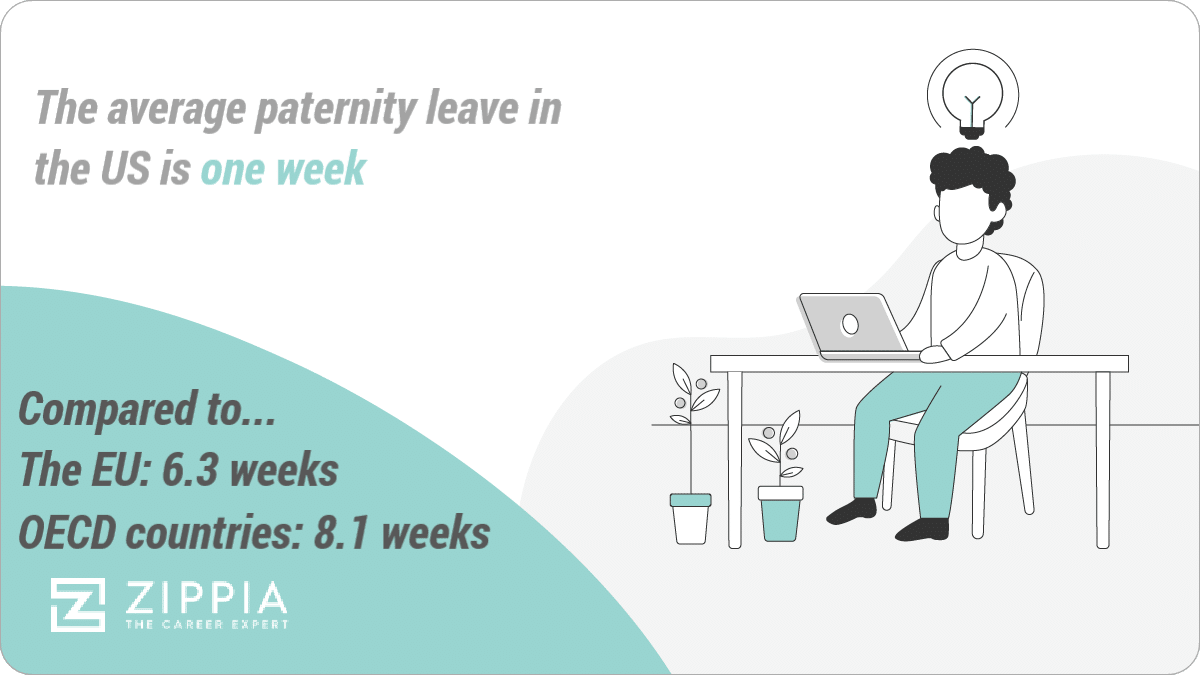
The average paternity leave length is approximately one week in the United States.
-
In contrast, the average paid leave for fathers in the European Union is 6.3 weeks.
-
45% of companies now offer paid paternity leave.
-
Only 20% of all employees have access to paid family leave, and 11% of workers lack even the option for unpaid leave.
-
20% of men expressed concerns that taking paternity leave could jeopardize their career advancement.
-
76% of fathers return to work in less than a week after welcoming a new child.
For further analysis, we categorized the data by:
State | Company | Benefits | Stigma | Trends
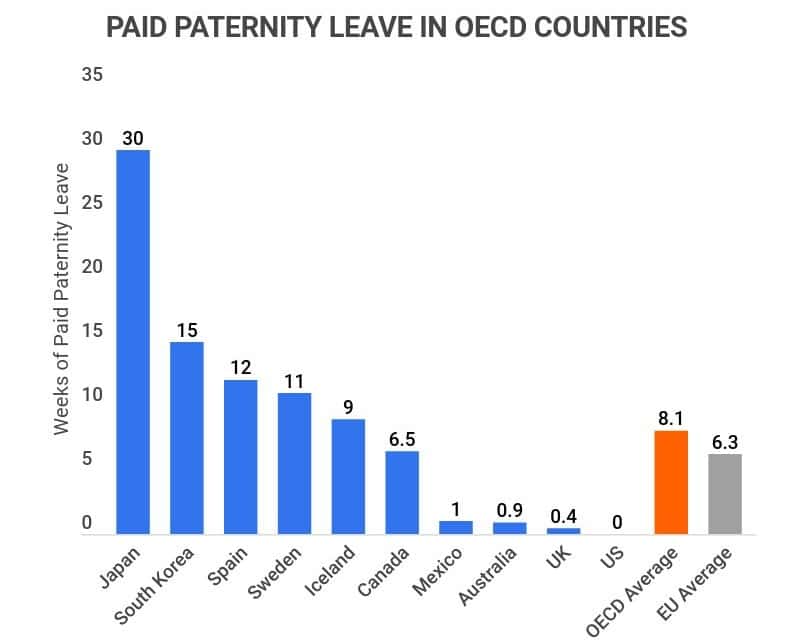
Paid paternity leave length and pay rate in OECD countries
| Country | Weeks of Paid Leave | Pay Rate |
|---|---|---|
| Japan | 30 | 67% |
| South Korea | 15 | 80% (First 12 weeks) 50% (12+ weeks) |
| Spain | 12 | 100% |
| Sweden | 11 | 78% |
| Iceland | 9 | 80% |
| Canada | 6 | 55% |
| Mexico | 1 | 60% |
| Australia | 0.9 | National minimum wage |
| UK | 0.4 | $200/week or 90% weekly pay, whichever is lower |
| US | 0 | 0% |
General paternity leave statistics
Paternity leave has gained increased importance due to evolving gender roles and the expansion of marriage equality. More parents are eager to spend quality time with their newborns, regardless of their gender. Here are some general facts about paternity leave:
-
91% of fathers who weren’t permitted paid paternity leave expressed that they would have taken more time with their families if it had been available in a previous survey.
Additionally, nearly all fathers (95%) noted that workplace flexibility is essential for balancing professional responsibilities with family needs.
-
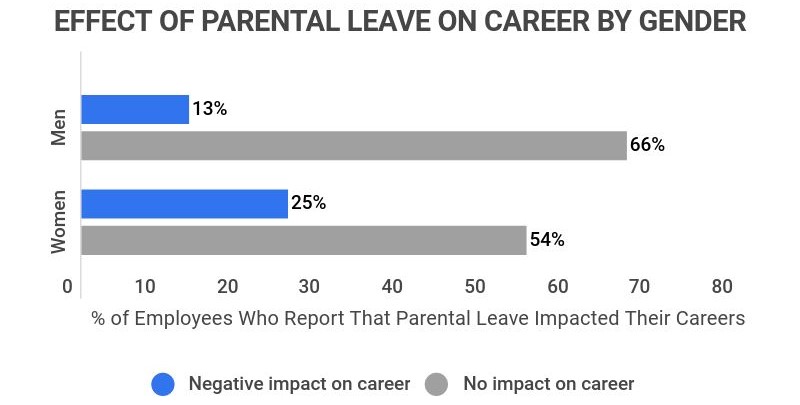
13% of men who took parental leave in the past two years reported a negative impact on their careers.
In comparison, 25% of women who took parental leave in the same timeframe indicated a negative impact on their careers. Conversely, 66% of men and 54% of women reported no noticeable career impact from their leave.
-
89% of fathers believe it is crucial for employers to provide paid paternity leave, according to a prior survey.
However, five out of six respondents indicated they would not take paternity leave unless it covered at least 70% of their salary.
Paternity leave statistics by state
Availability of paternity leave can vary significantly based on your state, as there are currently no federal laws mandating paid paternity leave. Here are some key statistics regarding paternity laws by state:
-
Only New York, California, Rhode Island, New Jersey, Washington, and Washington D.C. have enacted laws mandating paid parental leave.
Outside of these states, American fathers are primarily protected by the Family and Medical Leave Act of 1993, which guarantees job protection following events like the birth or adoption of a child.
However, the FMLA only covers unpaid leave and requires employees to have worked at least 1,250 hours in the previous year at a company with more than 50 employees to qualify.
This limitation often leaves many new fathers unable to bond with their children during the crucial early weeks, as they cannot afford unpaid leave.
-
As of 2023, New York offers the most comprehensive paternity leave program.
New York provides up to ten weeks off for parents following the birth or adoption of a child, with up to 60% of their regular wages and job protection during their leave.
Paternity leave statistics by company
Paternity leave in the US often depends on the employer, as most states do not guarantee it. Here are some insights from our research regarding company policies on paternity leave:
-
Companies like Google and Netflix have observed that providing parents with paid time off positively affects employee retention rates.
These large firms have also found that extended paid paternity leave reduces the need for employees to rely on government assistance following the arrival of a new baby.
-
Notable companies with extensive parental leave benefits include Alphabet, Microsoft, Procter & Gamble, and Amazon.
Amazon offers up to six weeks of paid paternity leave and 20 weeks of paid maternity leave. Procter & Gamble provides eight weeks of paid paternity leave and allows both mothers and fathers to take up to a year off, combining paid and unpaid leave.
Microsoft grants new mothers 20 weeks of paid leave after childbirth and offers 12 weeks of paid leave for all other parental figures. Alphabet, the parent company of Google, provides up to 18 weeks of paid leave for all new parents.
-
As of 2021, private sector businesses represent 16% of companies that offer paid leave for both parents.
Parental leave benefits are more commonly found in larger companies.
The Bureau of Labor Statistics indicates that 25% of employees at organizations with more than 500 employees have access to paid maternity and paternity leave, compared to just 12% at companies with fewer than 99 employees.
-
Studies show that individuals with middle to high incomes are significantly more likely to receive paid time off than those with lower incomes.
75% of individuals earning $75,000 or more reported having at least some paid time off for family or medical reasons, including parental leave, compared to only 37% of those earning under $30,000.
Benefits of paternity leave statistics
Paternity leave provides numerous benefits for parents, from enhancing spousal relationships to contributing to closing the wage gap. Here are some significant benefits:
-
90% of men reported that taking paternity leave improved their relationship with their partner.
-
40% of parents who did not receive paternity leave experienced divorce within 15 years, suggesting that paternity leave reduces the divorce rate by 9%.
-
The National Partnership for Women and Families posits that paid paternity leave can help close the gender wage gap by allowing women to remain in the workforce, promoting equitable caregiving in two-parent households, and facilitating women’s ability to provide for their families.
Paternity leave stigma statistics
Culturally, paternity leave is still not widely accepted, particularly for men. This stigma can deter fathers from taking leave, especially when financial security is a concern.
-
86% of men indicated they would avoid taking paternity leave unless at least 70% of their salary was covered.
The same study revealed that 45% of respondents would only take paternity leave if their employer fully covered their salary.
-
Approximately 23% of men with access to paternity leave do not utilize it.
A principal at the organization that conducted this report highlighted several key steps to improving parental leave policies in the workplace, including establishing parental leave policies for men, educating leadership about the importance of paternity leave, and fostering a supportive culture around taking leave.
-
Men often refrain from taking paternity leave out of fear of losing a portion of their salary or missing career opportunities during their absence.
Despite progress in paternity leave policies, many fathers still feel pressured to return to work sooner than mothers. Even when paid leave is available, many men believe that fully utilizing it may jeopardize their family’s financial situation or professional prospects, forcing them to choose between bonding with their newborn and earning an income.
Paternity leave trends and projections
Paternity leave has gained traction over the years, and while the US still has a significant journey ahead, several states have begun enacting paternity leave laws. Consider these facts regarding trends and projections for paternity leave:
-
From 1994 to 2015, the number of fathers taking paternity leave each month increased from 5,798 to 13,083 in the United States.
-
Currently, 90 countries around the globe provide statutory paid paternity leave.
-
In 1993, the Family and Medical Leave Act (FMLA) established up to 12 weeks of unpaid but job-protected leave per year for specific family and medical situations such as the birth or adoption of a child.
-
In California, the California Family Rights Act expanded in 2021, allowing fathers up to 12 weeks of leave per year for bonding with a new child, addressing a health condition, or caring for a family member.
Paternity leave FAQ
-
How long is typical paternity leave in the United States?
The typical paternity leave in the United States is approximately one week. The length of paternity leave that an employee receives varies based on factors like state laws, employer policies, and individual job positions.
-
Does paternity leave include full pay?
Whether a new father receives full pay during paternity leave largely depends on the benefits package provided by their employer. There is no formal requirement for companies to offer paid time off.
The Family and Medical Leave Act (FMLA) allows for up to 12 weeks of job-protected leave for certain employees, like new fathers, but this leave is unpaid.
Typically, paid paternity leave does not provide full salary. Some employees might receive only half of their usual wages, while others might earn between 70-90% of their typical compensation. A few employees may receive full pay during paternity leave in the United States.
-
Can paternity leave be denied?
Employees eligible for the Family and Medical Leave Act cannot be legally denied their time off for becoming a new parent. This principle was affirmed in 2003 when it was determined that denying paternity leave for men constitutes sex discrimination, perpetuating the traditional expectation for women to be the primary caregivers for new children.
-
What are the benefits of taking paternity leave?
The primary benefits of taking paternity leave include strengthening a father’s bond with their newborn and positively impacting their relationship with their partner.
The initial weeks of a child’s life are critical for establishing a lasting bond between father and child, while also alleviating some of the stress placed on new mothers.
A workplace culture that restricts men’s access to paternity leave can place undue pressure on mothers to serve as the sole caregivers without respite. This lack of paternal involvement may contribute to higher rates of postpartum depression and complicate the mother’s professional life.
Taking sufficient paternity leave to connect with family can also enhance a man’s work performance. Many men who dedicated significant time to bonding after the birth of their child reported that their feelings of joy and fulfillment extended into their professional lives, leading to improved productivity.
In one survey, 100% of the men who took paternity leave stated they were pleased they did so and would repeat the experience if they had another child.
-
What percentage of Americans have paid parental leave?
Approximately 20% of Americans have access to paid parental leave. The latest data from the National Compensation Survey indicates that while 89% of workers can access unpaid family leave via the FMLA, only about 20% have access to paid parental leave.
Paid parental leave is mandated in some states, such as New York and California. Otherwise, it is at the discretion of individual companies to offer paid leave options to new parents, often with varying policies for birthing parents and other caregivers.
-
How much paternity leave are fathers entitled to?
Both men and women are entitled to up to 8 weeks of leave per child. However, this does not guarantee that those 8 weeks will be paid, which is why most fathers typically take only one week off.
Conclusion
The global shift toward more generous paternity leave policies has yielded a range of positive outcomes for fathers, their families, and their workplaces. Key benefits include enabling fathers to bond during critical early moments in their child’s life, strengthening spousal relationships, and inspiring renewed passion in employees.
Access to extended paternity leave also appears to reduce the likelihood of postpartum depression in new mothers, as it allows for shared parental responsibilities during what can be an overwhelming transition.
Despite the significant benefits of providing paternity leave, the United States remains behind many other countries in this regard. While the Family and Medical Leave Act (FMLA) of 1993 has improved perceptions of parental leave, it is not comprehensive. The FMLA only applies to a small segment of the workforce and primarily offers unpaid leave to employees who have worked for companies with over 50 employees for at least 1,250 hours in the preceding year.
Moreover, even eligible employees are only entitled to unpaid leave under the FMLA, which is not a feasible option for most families after the arrival of a new baby.
Individual states create their own regulations regarding mandatory parental leave, leaving many workers to depend on their employers’ discretion. Even when companies do provide paid paternity leave, it is often at a reduced rate. In New York, the state with the most extensive parental leave laws, only up to 66% of an employee’s salary is covered.
As financial stability is crucial for growing families, 86% of men indicate they would not take paternity leave unless at least 70% of their salary was guaranteed.
The arrival of a new child should be a time of unbridled joy; however, the lack of accessible paternity leave can overshadow this special moment. Moving forward, the United States and its employers must align with the more progressive paternity leave policies of other nations to enhance the lives of employees and their families.
References
-
Pew Research. “Key takeaways on Americans’ views of and experiences with family and medical leave” Accessed on September 24, 2021
-
SHRM. “Key takeaways on Americans’ views of and experiences with family and medical leave” Accessed on September 24, 2021
-
Mckinsey & Company. “A fresh look at paternity leave: Why the benefits extend beyond the personal” Accessed on September 24, 2021
-
SHRM. “Availability, Use of Paternity Leave Remains Rare in U.S.” Accessed on September 24, 2021
-
The New Dad. “New Fathers in the Workplace: Paternity Spending Habits” Accessed on September 24, 2021
-
OECD. “Parental leave systems” Accessed on September 24, 2021
-
Fatherly. “What Are the Laws Around Paternity Leave and Family Leave in the U.S.?” Accessed on September 24, 2021
-
Tulane University Law School. “Paternity Leave in the U.S. Leaves a Lot of Gaps” Accessed on September 24, 2021
-
Insider. “10 of the best companies for new parents, including Amazon, Microsoft, and Freddie Mac” Accessed on September 24, 2021
-
HR Morning. “2020 trends: More employers offering paid parental leave”
-
Oxford University Press Blog. “How paternity leave can help couples stay together” Accessed on September 24, 2021
-
Forbes. “How Paid Paternity Leave Can Help Close The Gender Pay Gap” Accessed on September 24, 2021
-
Pew Research Center. “Americans Widely Support Paid Family and Medical Leave, but Differ Over Specific Policies” Accessed on September 24, 2021
-
National Partnership for Women and Families. “Paid Leave Will Help Close the Gender Wage Gap” Accessed on September 24, 2021
-
SHRM. “To Improve Gender Equality, Help Men Take Parental Leave” Accessed on September 24, 2021
-
NCBI. “Divergent Trends in US Maternity and Paternity Leave, 1994–2015” Accessed on September 24, 2021
-
Hackler Flynn & Associates. “Your Guide to Paternity Leave in 2021” Accessed on September 24, 2021
-
U.S. Department of Labor. “Family and Medical Leave (FMLA)” Accessed on September 24, 2021
-
Leigh Law Group. “Can men be fired for taking paternity leave?” Accessed on September 24, 2021
-
Bureau of Labor Statistics. “Employee Benefits in the United States, March 2020” Accessed on September 24, 2021
- HR Statistics
- Average Labor Cost Percent Of Sales
- Average Time to Reach Profitability At A Startup
- Office Space Per Employee
- Recruitment Statistics
- Employee Engagement Statistics
- Work-Life Balance Statistics
- BYOD Statistics
- Paternity Leave Statistics
- Onboarding Statistics
- Average Paid Maternity Leave In Us
- Average Cost Of A Bad Hire
- Employee Theft Statistics
- Paid Family Leave Statistics
- Cost Of Hiring Statistics
- Employee Turnover Statistics
- Average Cost Of Employer Sponsored Health Insurance Statistics
- Sexual Harassment In The Workplace Statistics
- HR Statistics
- PTO Statistics
- Social Media Recruitment Statistics
- Hiring Statistics
- Out Of Prison Employment Statistics

Author

Chris Kolmar is a co-founder of Zippia and the editor-in-chief of the Zippia career advice blog. He has hired over 50 people in his career, been hired five times, and wants to help you land your next job. His research has been featured on the New York Times, Thrillist, VOX, The Atlantic, and a host of local news. More recently, he's been quoted on USA Today, BusinessInsider, and CNBC.