Find a Job You Really Want In
As the job market continues to evolve in 2026, millions of Americans are unexpectedly facing unemployment and navigating a job search landscape that is vastly different from previous years.
Are individuals actively seeking work amidst ongoing economic fluctuations? Or are more workers filing for unemployment while awaiting stability before beginning their job hunts? We analyzed search data to uncover how job search behaviors have adapted to current conditions.
The findings reveal an intriguing trend: although unemployment rates may be climbing, the dynamics of job searches tell a different story.
Summary
- As of March 2026, searches for unemployment assistance have surpassed job searches across all states
- March 15th saw a national spike in interest for unemployment-related searches
- While many states experience consistent interest in unemployment searches, Utah fluctuates around 50% in search rates
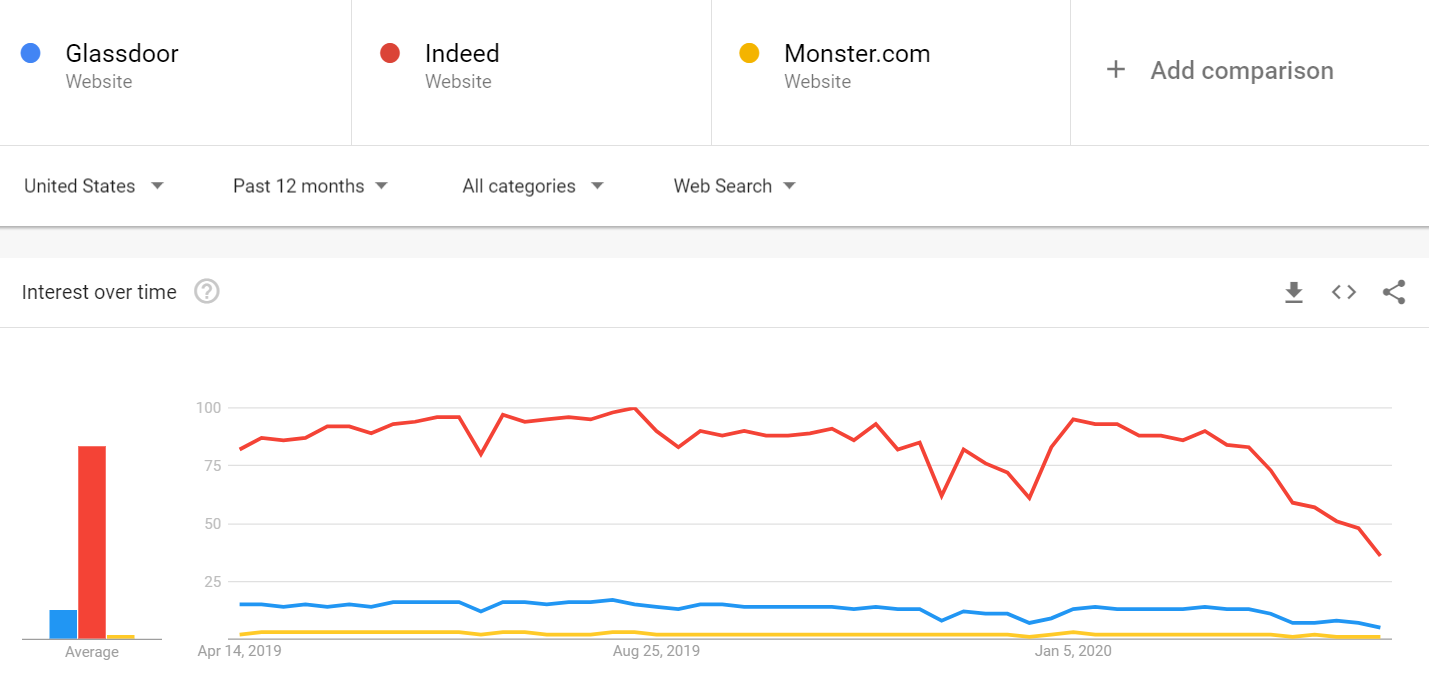
- Job platforms like Indeed and recruiter searches have seen a decline—more individuals may be unemployed, but job searches aren’t surging
- Interest in resumes and job interviews is lower than any week in the past year, excluding holiday periods
- Popular culture references like Tiger King and Zoom continue to demonstrate peaks in search interest simultaneously. One wonders how many remote workers were multitasking during these moments!
How We Determined Job Search Behavior
Our analysis utilized Google Trends to assess changes in job search behavior over the past year, focusing on the terms “unemployment” and “jobs.” Traditionally, interest in unemployment searches is 20% that of job searches; however, since March 15th, interest in unemployment has surged while job search interest has declined.
To determine when unemployment searches surpassed job searches by state, we tracked changes in search behavior starting in March. We also explored terms like “Indeed,” “Resume,” “Zoom,” and even “Tiger King.”
More detailed breakdowns of our findings can be found in the screenshots below.
“Job” Searches Vs. “Unemployment” Searches For The Past 12 Months
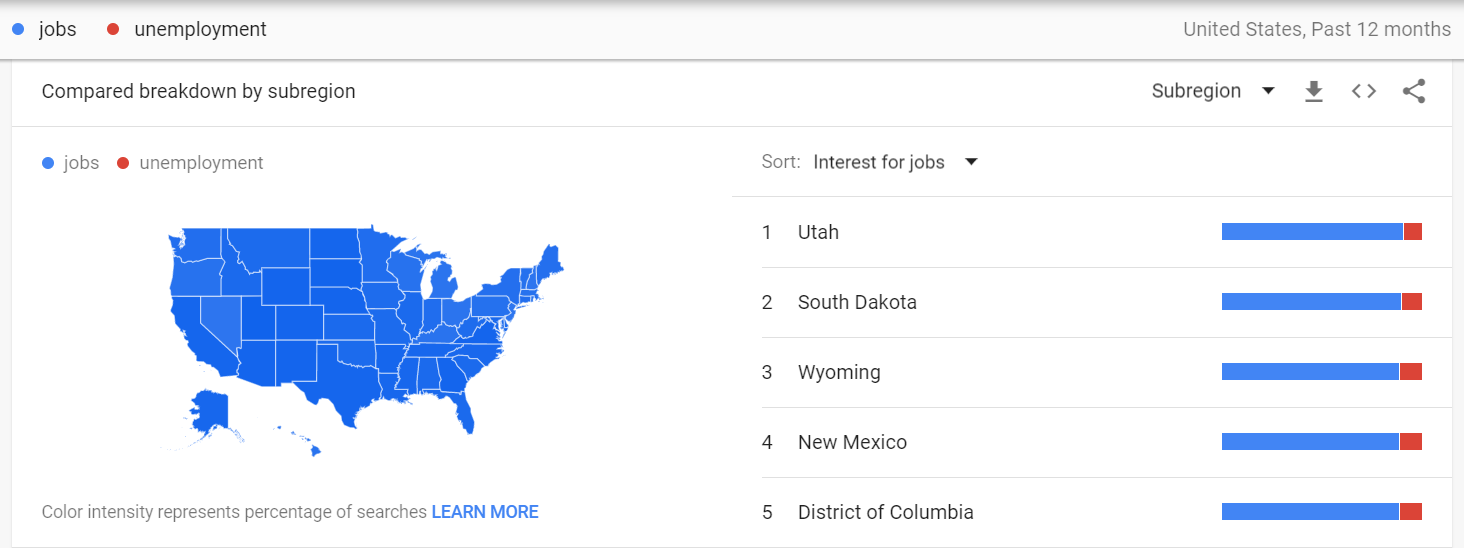
Over the past year, “job” searches have consistently outnumbered “unemployment” searches in the US, which is generally indicative of a healthy labor market where individuals actively seek jobs even during unemployment spells. However, recent trends indicate a shift.
“Job” Searches Vs. “Unemployment” Searches For The Past 7 Days
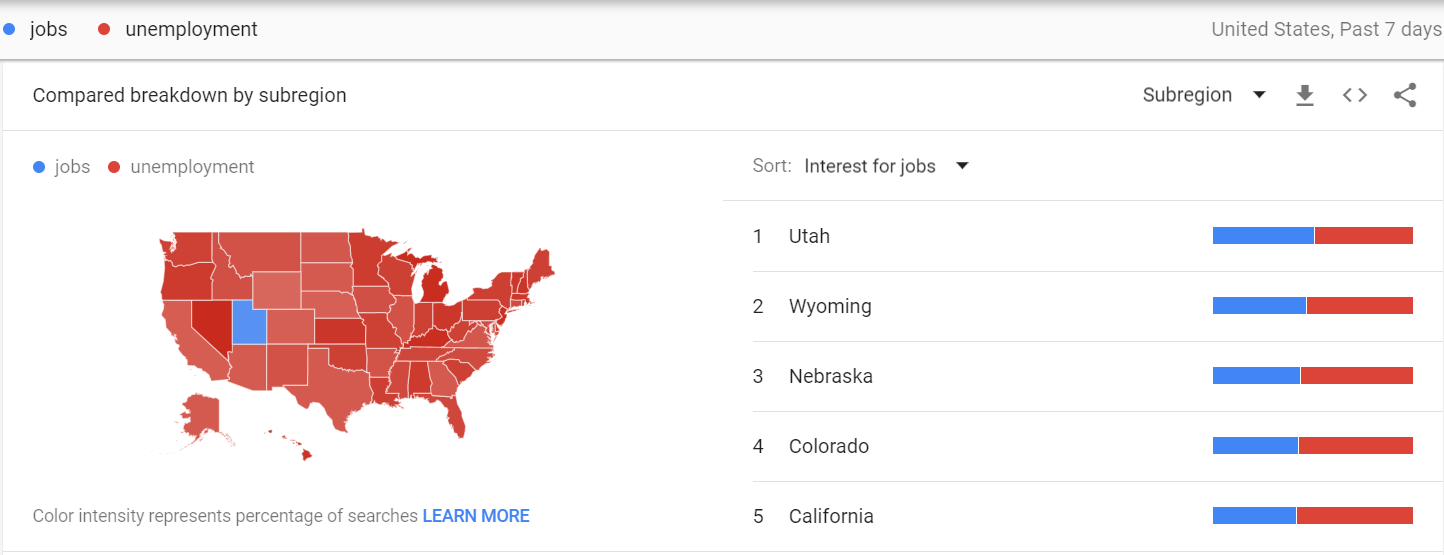
As illustrated, in all states except Utah, “unemployment” searches have surpassed “job” searches in the last week, with Utah hovering around a 49% to 51% split.
To demonstrate that this trend is not seasonally impacted, we compared it to the same week a year ago:
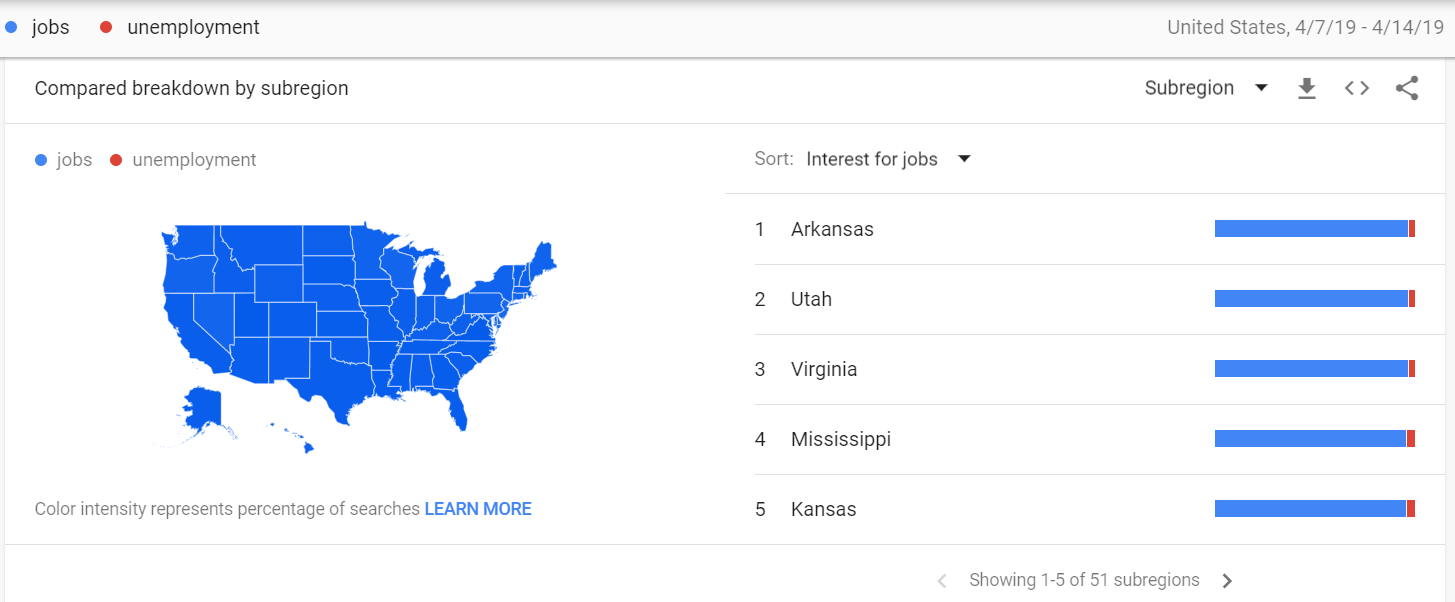
In every state, “unemployment” searches were lower than “job” searches. We then explored the data to identify when “unemployment” searches overtook “job” searches in each state.
Interest in “unemployment” surged following the closure of various businesses. In states where interest peaked earlier, such as Missouri, this can often be traced back to metro area actions.
People Aren’t Engaging with the Job Search Funnel
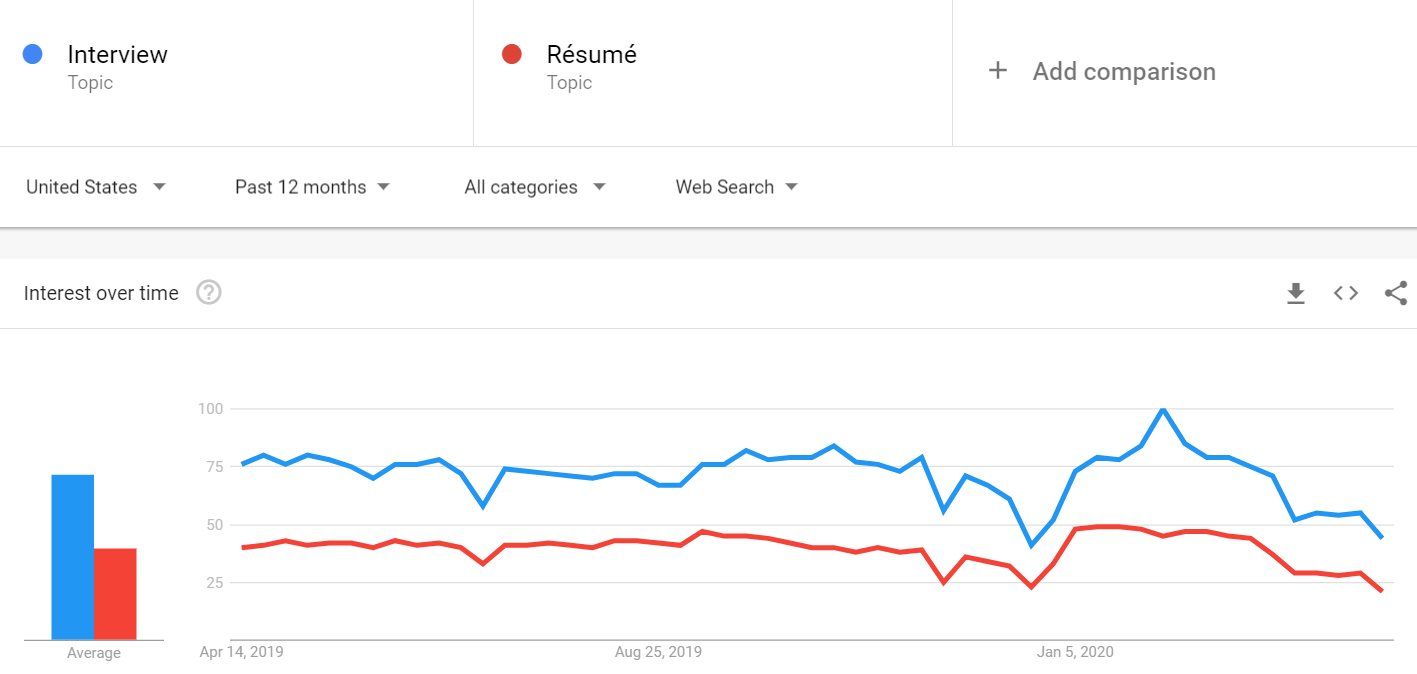
Individuals searching for terms like “resume,” “job interview,” and related phrases are typically in the job search funnel. After a layoff, the first step for many (after processing the situation) is to refresh their resumes, often involving numerous Google searches.
However, amidst rising unemployment, many are not actively updating their resumes. The decline in searches for interview-related topics suggests that those applying for jobs are not progressing through the hiring process. Interest in job search tools is lower now than it has been for all but one week this past year.
Below, you can see the diminished interest in popular job search sites:
Here’s What People ARE Searching For…
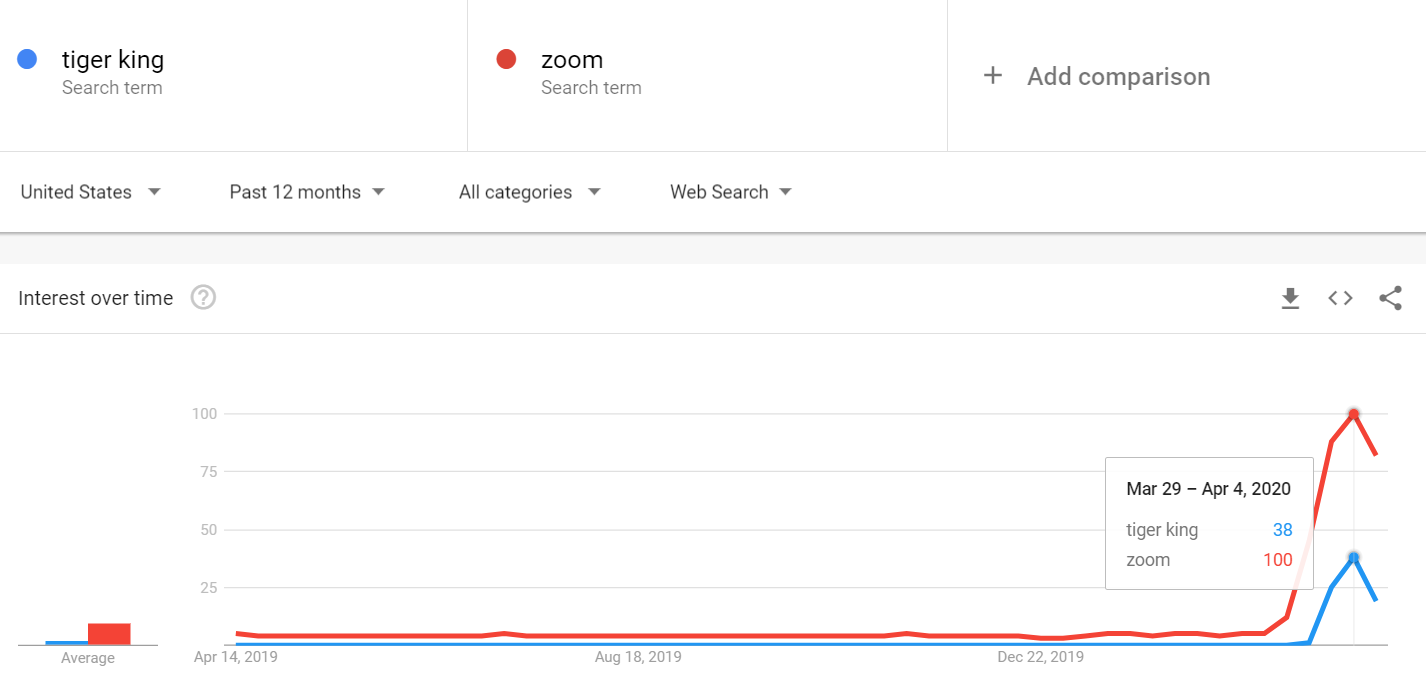
In analyzing current search trends, we noted that interest in “Zoom” and “Tiger King” reached peaks simultaneously.
While we can’t definitively say that remote workers are “Netflix and working,” it’s certainly a fun notion to entertain.
Other trending searches include Google Classroom, Chegg (a tutoring platform), and self-care topics, such as home haircuts.
Closing Thoughts On Rising Interest In Unemployment But Not Jobs
When interpreting this data, it’s crucial to acknowledge that many job seekers initiate their searches while still employed. Those considering a job change typically do not prioritize unemployment benefits research.
The decline in job search interest may indicate that employed individuals are hesitant to seek new opportunities during uncertain economic times. Additionally, with many companies implementing hiring freezes, skilled candidates may receive less attractive job offers. The reduced interest in resumes and interview tips highlights a job market caught in a state of limbo.
Ultimately, while one might anticipate that the newly unemployed would quickly pivot to searching for “jobs” post-“unemployment,” the current climate complicates this expectation.
Many who have recently lost their jobs may feel uncertain about pursuing public-facing roles. Others may be on furlough, awaiting their positions to be reinstated. Although remote work and gig opportunities exist, the job market appears subdued, leaving many job seekers grappling with the shift in dynamics.
Need more specific Google Trends data or a breakdown for cities in your area? Email kmorris@zippia.com with your requests.

Author

Kathy is the head of content at Zippia with a knack for engaging audiences. Prior to joining Zippia, Kathy worked at Gateway Blend growing audiences across diverse brands. She graduated from Troy University with a degree in Social Science Education.