Find a Job You Really Want In
The U.S. is currently facing a significant teacher shortage, a challenge that has grown more pressing in recent years.
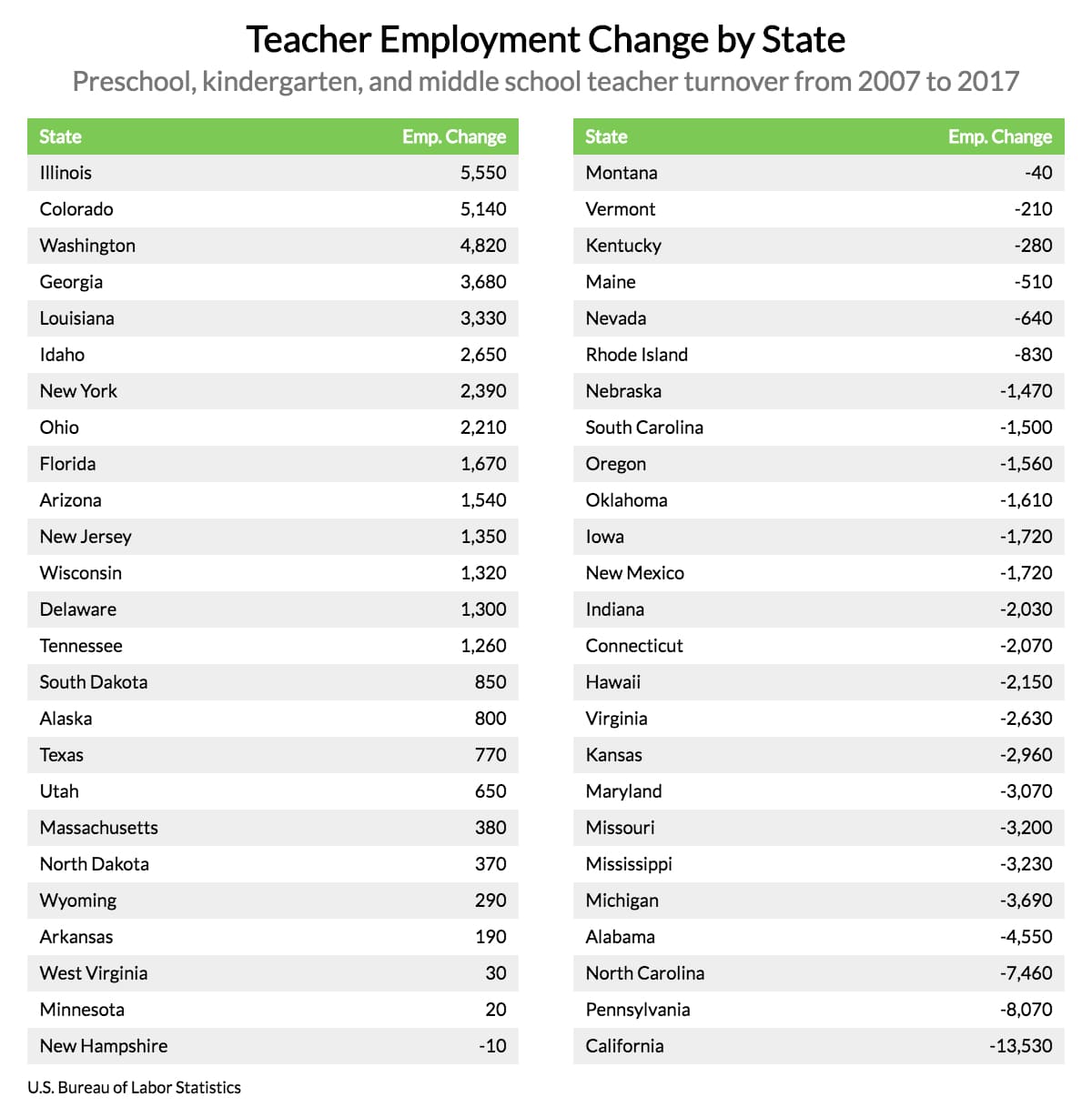
Recent data from the U.S. Bureau of Labor Statistics highlights ongoing trends in teacher employment across various educational levels, indicating persistent declines in the workforce.
From 2017 to 2026, numerous states have continued to grapple with decreasing employment numbers for preschool, kindergarten, and middle school teachers, reflecting a broader national trend.
Specifically, the U.S. saw a substantial reduction in teacher numbers, with over 30,000 positions lost across these three categories.
This trend aligns with earlier analyses, including a report by the Learning Policy Institute, which identified low salaries, limited career advancement opportunities, and challenging working conditions as contributing factors to teacher attrition.
As we examine these statistics, it becomes increasingly clear that there is a pressing need for qualified educators in American classrooms.
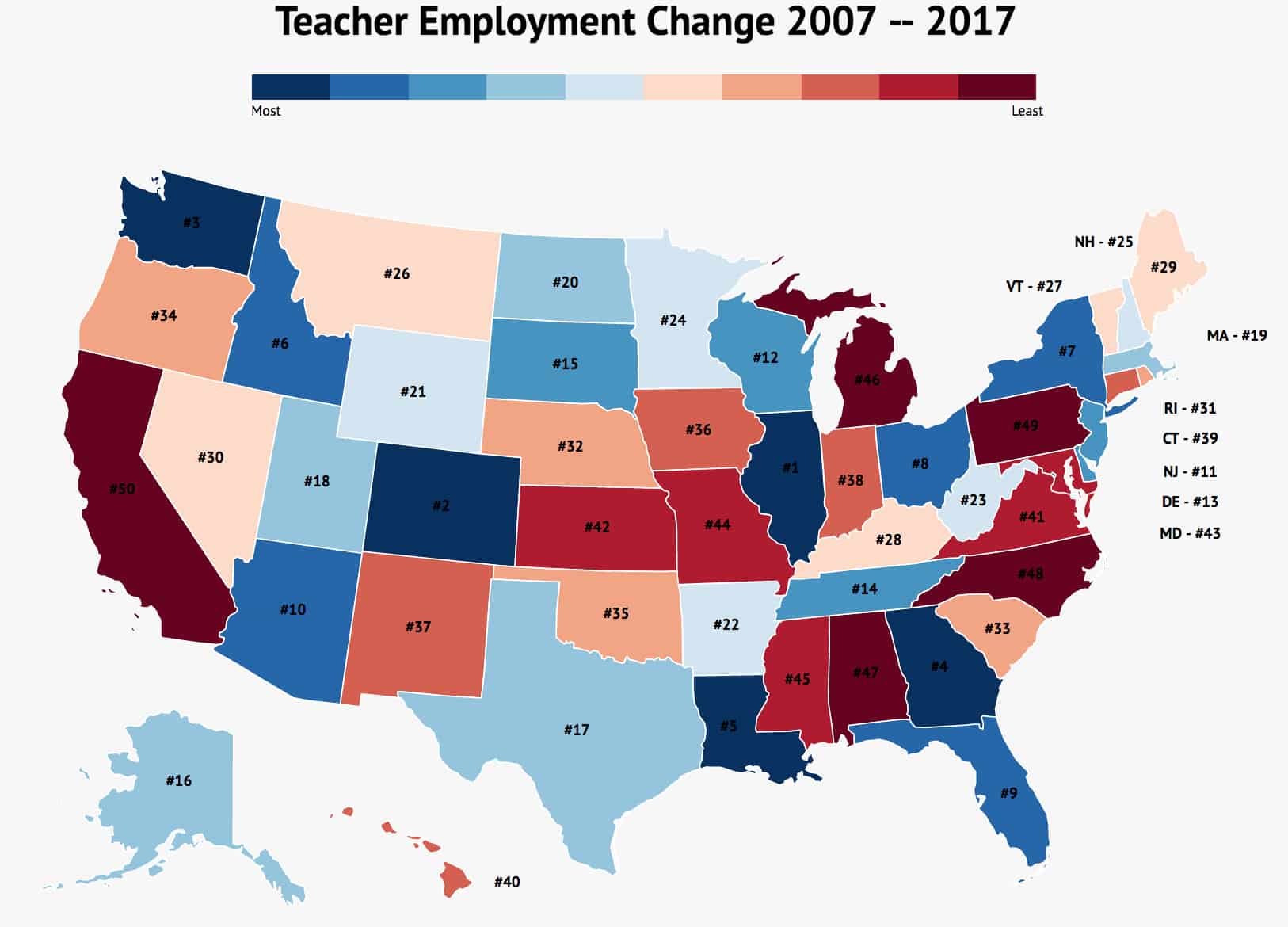
Summary of Findings
- For the three categories:
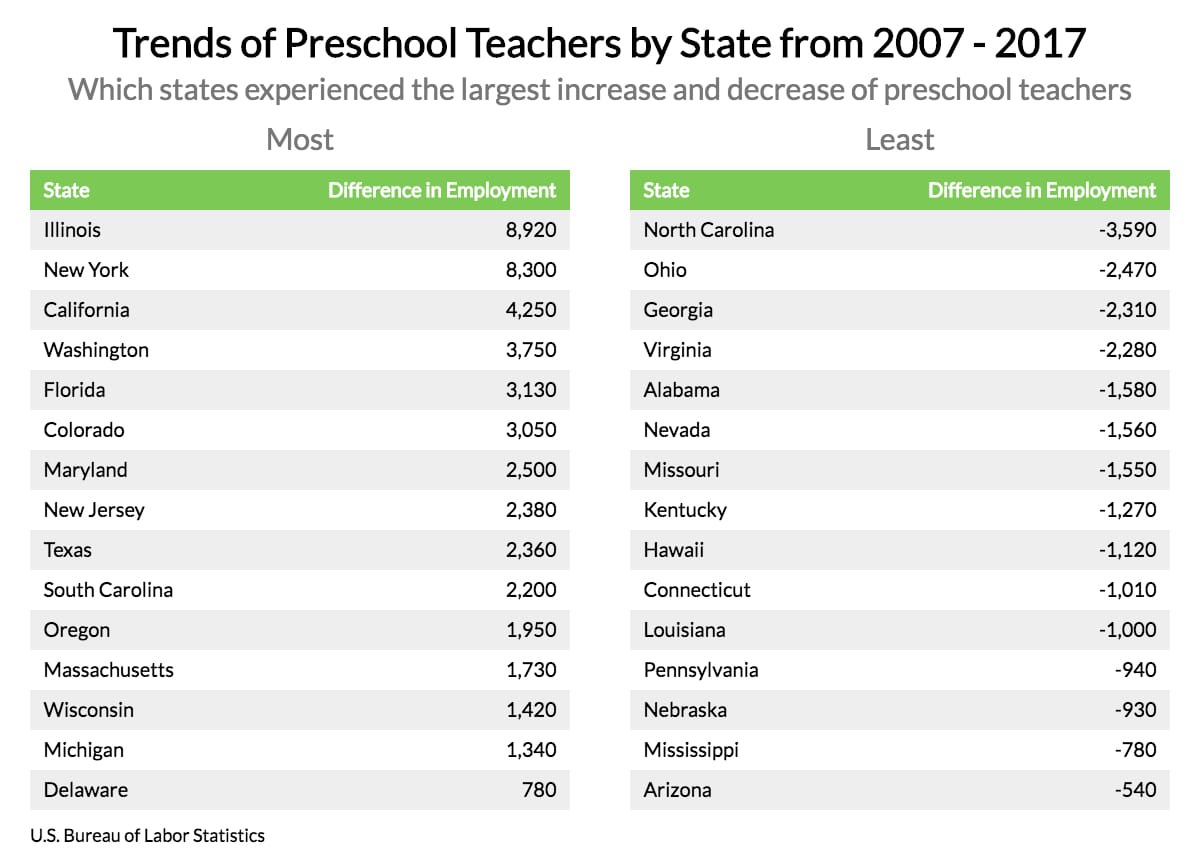
- Preschool teacher employment: 20 states have reported losses
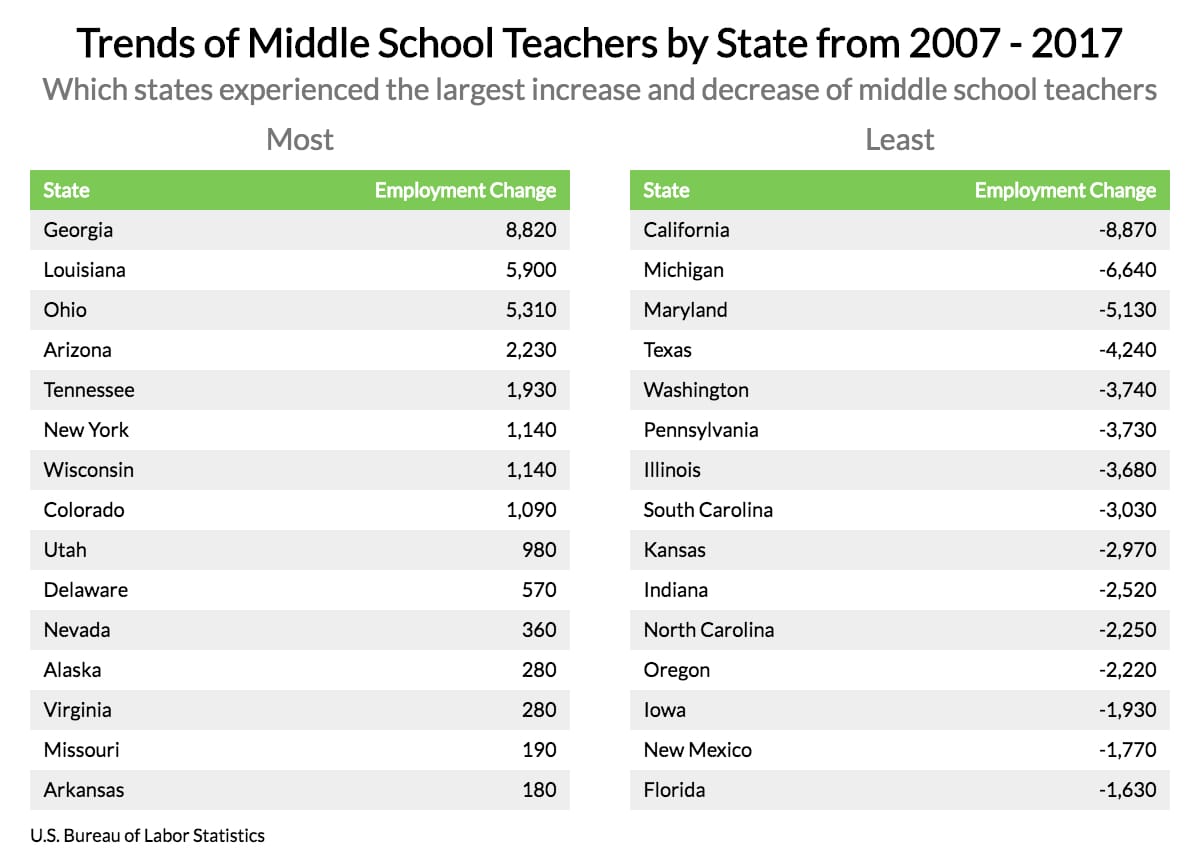
- Middle school: 29 states have reported losses
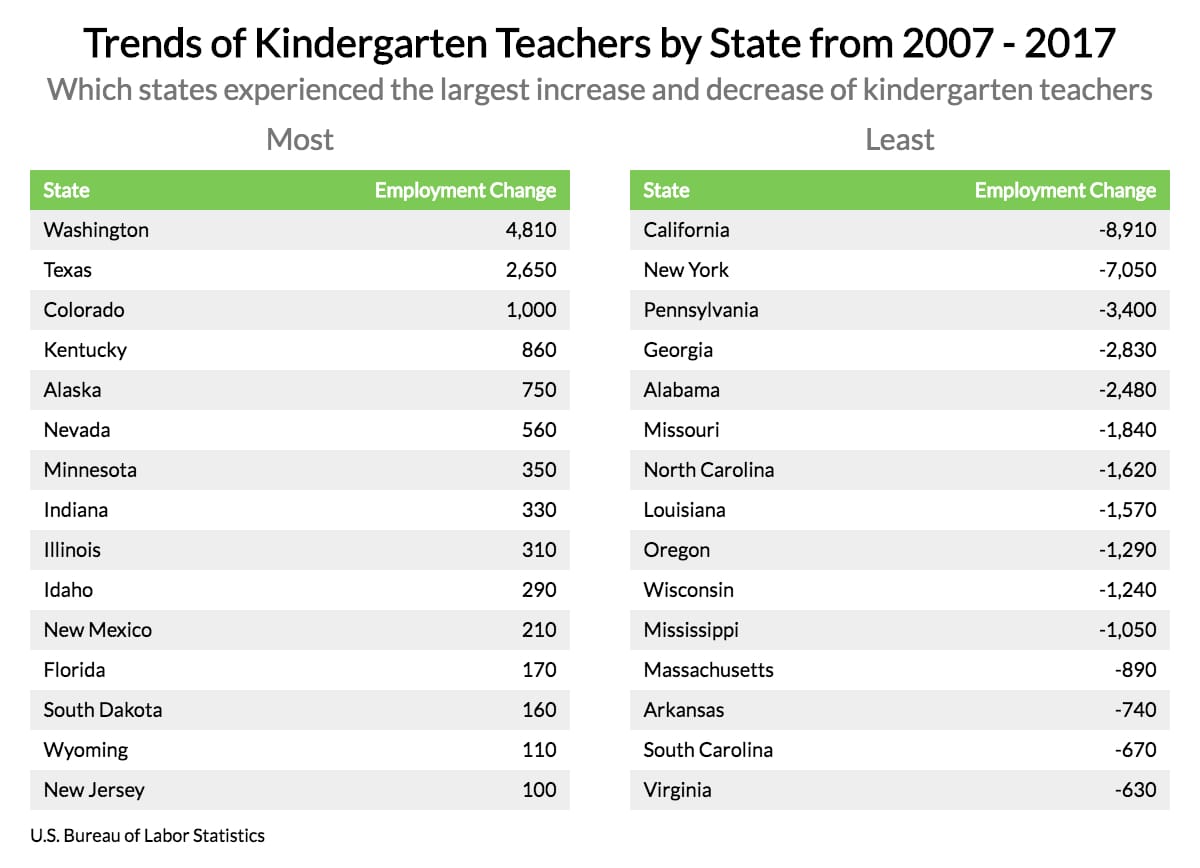
- Kindergarten: 30 states have reported losses
- California has seen the largest losses in kindergarten and middle school teachers over the past decade, with 8,910 kindergarten and 8,870 middle school teachers lost.
- Colorado ranks among the top 10 states for growth in all three categories:
- Washington, Texas, Colorado, Illinois, Florida, and New Jersey are all in the top 10 for growth in two categories.
- Pennsylvania and North Carolina are in the bottom 10 for growth in all three categories:
- Alabama, Missouri, Louisiana, Oregon, Mississippi, South Carolina, and Virginia are ranked in the bottom 10 for two categories.
- Georgia has seen the largest increase in middle school teachers, yet it ranks in the bottom four for growth in preschool and kindergarten teachers.
Below are individual charts detailing employment trends for preschool, kindergarten, and middle school teachers.
Methodology
The U.S. Bureau of Labor Statistics’ Occupational Employment Survey provides comprehensive wage and employment data for over 800 occupations at national, state, and local levels.
By comparing data sets from 2017 to 2026, we analyzed changes in teacher employment by state.
To ensure accuracy, we categorized each teacher group by their specific occupation codes.
As the education landscape continues to evolve, understanding these trends is essential for addressing the ongoing teacher shortage.

Author

McLeod Brown is a former writer and researcher for the Zippia Career Advice blog. His work at Zippia focused on understanding the relationship between colleges, debt, and jobs. A graduate of the University of North Carolina at Wilmington with a BA in Business Administrator, he is now pursuing a masters of science in analytics from the Institute of Advanced Analytics.