Research Summary. A significant majority of employees prefer working from home when given the option. Many are willing to sacrifice benefits such as higher salaries, vacation time, and employer-matching retirement contributions to secure remote work opportunities.
Despite the productivity gains associated with remote work, disparities in access persist across income, education, race, and gender.
After thorough analysis, our data team concluded:
-
Approximately 50% of the U.S. labor force works remotely, leading to a decline in urban economic activity and a boost in suburban and rural economies.
-
90% of employees plan to continue remote work in the future.
-
A substantial 54% of employees wish to maintain their remote work arrangements after the pandemic has subsided.
-
74% of employers aim to make remote work a permanent option for some employees.
-
77% of remote workers report increased productivity while working from home.
-
While only 65% of Americans have fast enough internet for reliable video calls, most remote workers effectively use technology to remain productive.
For deeper insights, we categorized the data as follows:
Productivity | Remote Work Location | COVID-19 Impact | Income and Education | Technology Use | Industry Insights | Gender and Race

General Work From Home Statistics
-
42% of the U.S. labor force works from home full-time.
Changes in workforce dynamics and advancements in technology have led to nearly half of employed adults in the U.S. working remotely, nearly doubling the number compared to those working at physical offices (26%).
-
Remote work is diminishing the economic significance of urban centers.
Since the 1980s, revitalized urban areas were the hub for younger, educated workers. However, this trend shifted in 2020 as remote work became prevalent, prompting many to relocate to suburban and rural areas.
The implications for urban economies are profound, affecting transportation, retail, and the demand for commercial real estate. U.S. office vacancy rates are projected to remain high.
-
Most remote employees possess the necessary tools and skills for success.
Notably, 87% have successfully obtained the equipment needed for their roles, 80% meet deadlines effectively, 64% feel motivated, and 68% report minimal interruptions.
-
By eliminating commutes, remote workers save an average of 8.5 hours weekly, totaling 408 hours annually.
Many utilize this extra time for physical activities, reporting 30 additional minutes of exercise during the workweek.
-
43% of remote workers cite schedule flexibility as the primary benefit of working from home.
However, common challenges include:
-
Loneliness
-
Communication and collaboration hurdles
-
Home distractions
-
-
90% of remote workers intend to continue working remotely throughout their careers.
Additionally, 94% of remote workers advocate for remote opportunities to others.
-
Remote work benefits both employees and employers.
Remarkably, 55% of remote employees take fewer than 15 vacation days annually, indicating greater year-round availability.
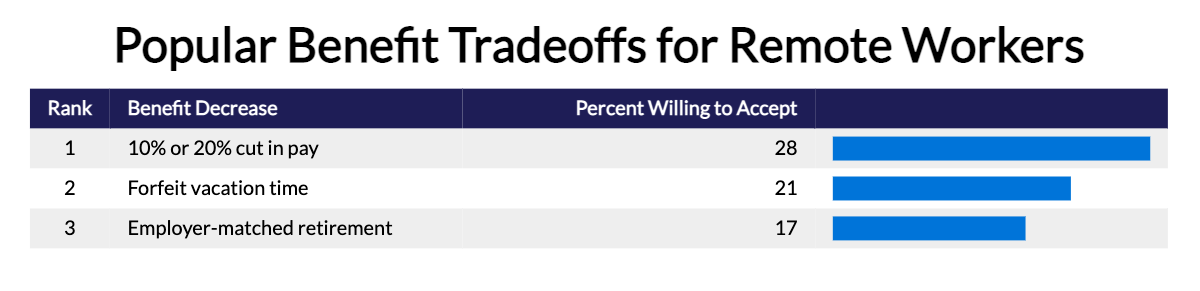
Many employees are willing to trade benefits for remote work flexibility, with 28% willing to accept a 10-20% pay cut for this privilege.
Employers also benefit, saving an average of $11,000 per remote employee annually, with employees saving between $600 and $6,000 per year.
Environmentally, remote work contributes to a decreased carbon footprint through reduced commuting.
-
88% of entrepreneurs always planned to support remote work.
Moreover, many companies employing remote workers are small; 22% have fewer than ten employees, while 15% have over 1,000 employees.
-
Most remote workers earn less than $25,000 annually.
-
28% earn under $25,000
-
18% earn between $25,001 and $50,000
-
18% earn between $50,001 and $75,000
-
Work From Home Productivity Statistics
-
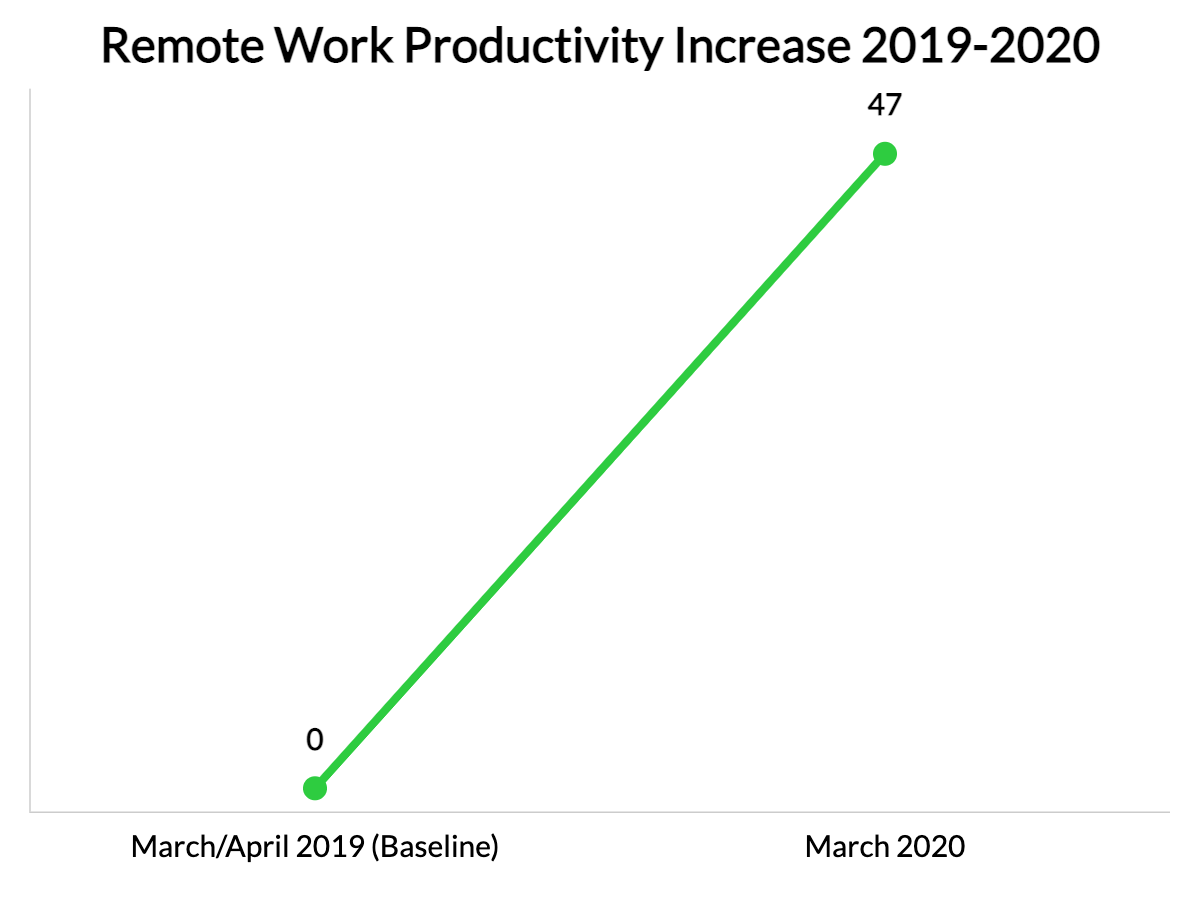
Remote work productivity increased by 47% between March and April 2019 compared to March 2020.
However, productivity peaks on Tuesdays, Wednesdays, and Thursdays from 10:30 AM to 3:00 PM.
-
Work from home employees spend 15% less time procrastinating, though they take more breaks.
37% of remote employees find breaks essential for maintaining productivity.
-
Remote workers experience fewer distractions.
75% report enhanced productivity due to a more focused work environment.
Remote Work Location Statistics
-
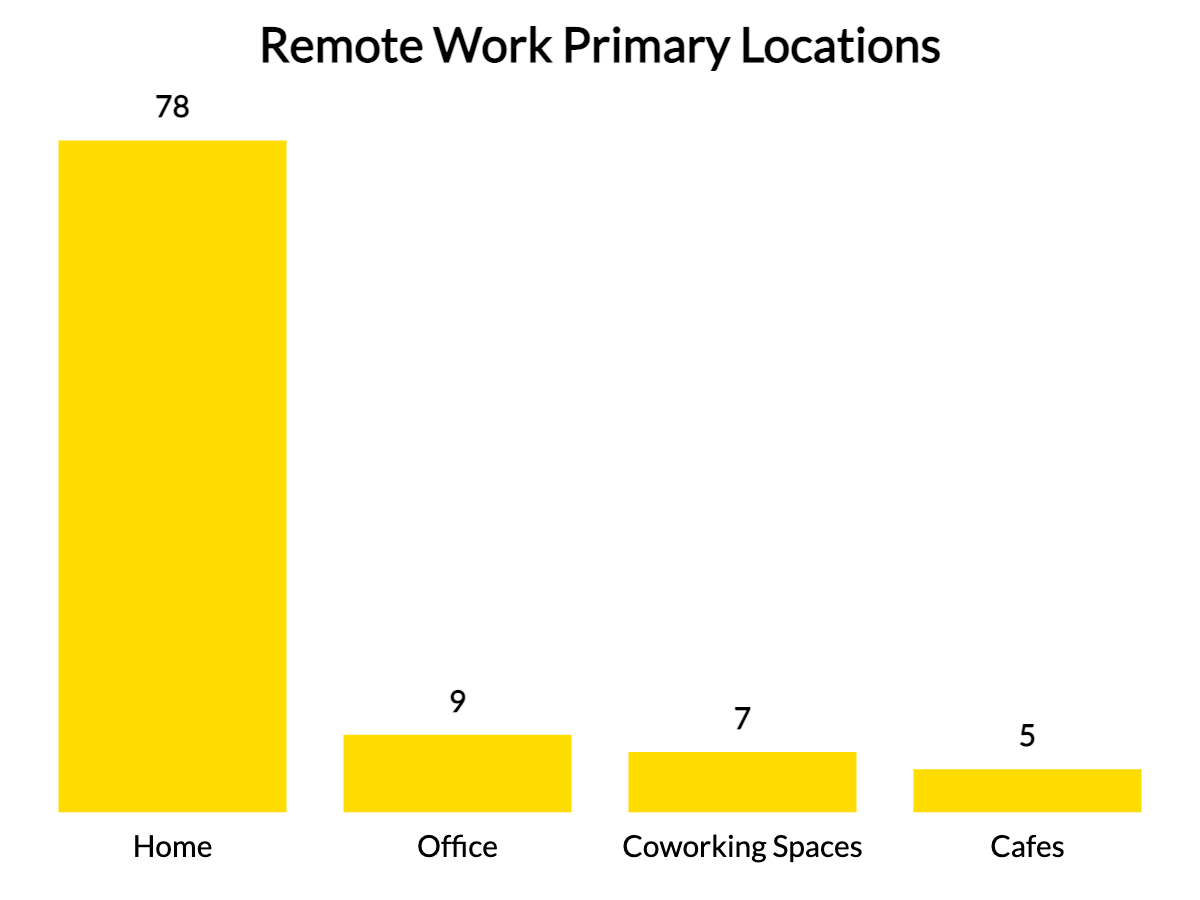
Most remote workers operate primarily from home, with some utilizing secondary locations.
78% of remote workers consider their home their primary workspace, followed by offices (9%), coworking spaces (7%), and cafes (5%).
As for secondary locations, 33% prefer cafes, 25% work from home, 12% choose coworking spaces, and 11% opt for traditional offices.
-
Expenses vary by remote working location.
71% of those using coworking spaces spend under $100 monthly, while 19% of cafe users spend $6-$10 weekly.
-
Many remote workers travel while working.
43% spend 10% or less of their time traveling for work, yet 81% have worked while traveling outside their home city.
Work From Home Statistics Related to COVID-19
-
A surge in remote work has been observed due to the COVID-19 pandemic.
Working from home has become vital for many, with 64% of remote workers stating their workplace is closed or inaccessible. 36% choose to stay home even when their workplace is open.
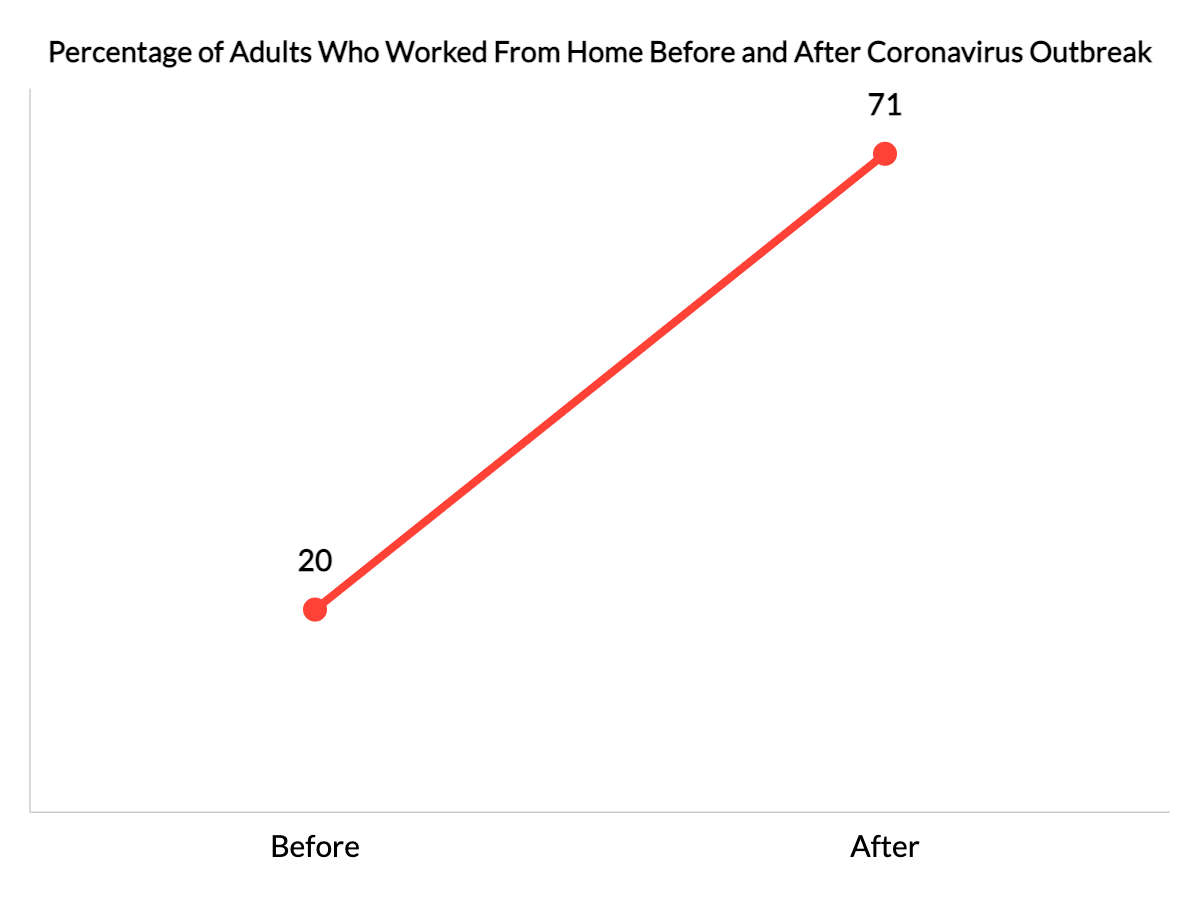
Before the pandemic, only 20% of adults worked from home regularly, but this number surged to 71%, with 54% wishing to continue post-pandemic.
-
Part-time remote workers express concerns about in-person exposure to COVID-19.
Approximately 80% of part-time remote workers have some in-person interactions, with over half concerned about exposure to the virus while at work.
-
New teleworkers report easier work-life balance, but feel less connected to colleagues.
38% of new remote workers find balancing work and family easier, while 65% of those who did not work from home before the pandemic feel less connected to coworkers.
-
Motivation levels among remote workers vary widely by age.
42% of workers aged 18 to 49 report challenges in staying motivated since the pandemic began, compared to only 20% of workers aged 50 and older.
Work From Home Statistics by Income and Education
-
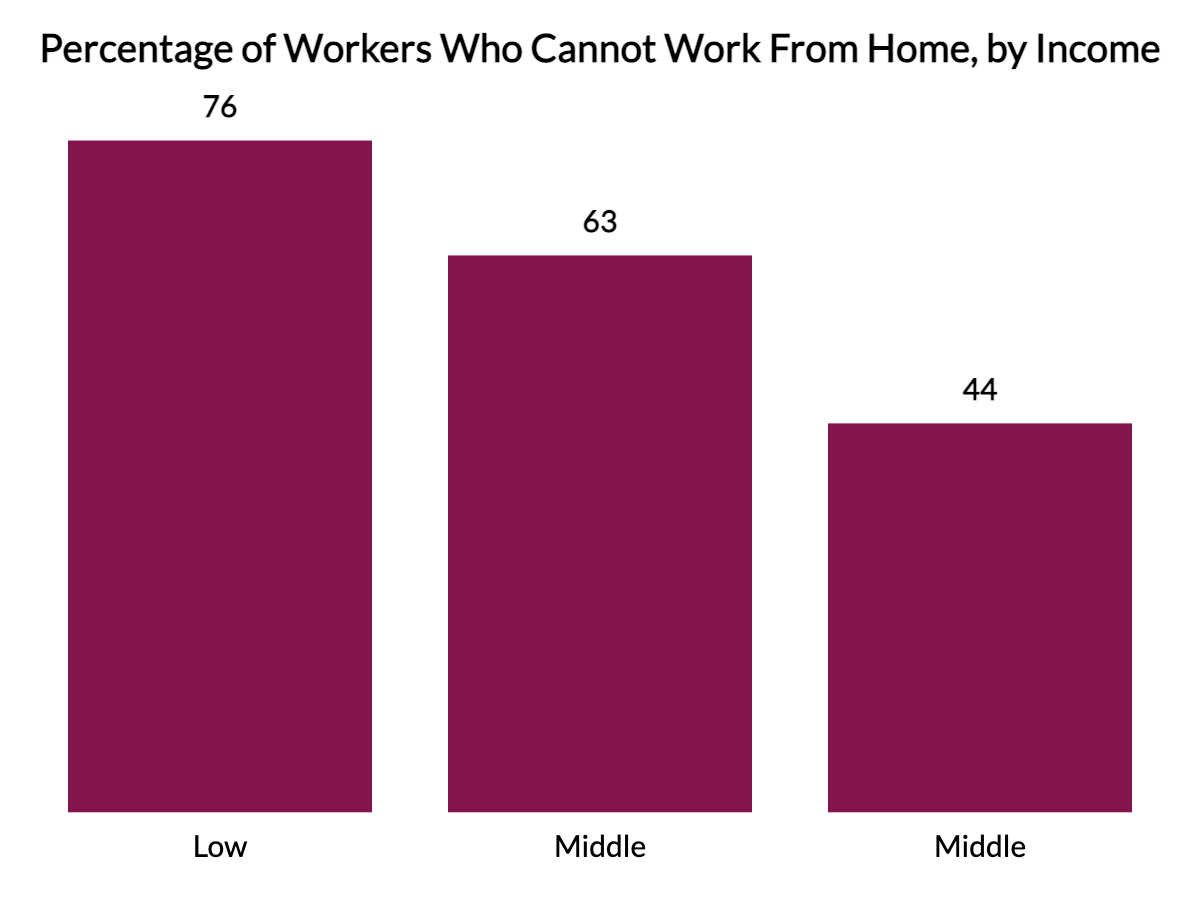
Access to remote work opportunities is closely tied to income levels.
76% of low-income workers believe their jobs cannot be done remotely, compared to 63% of middle-income workers and 44% of high-income workers.
-
Higher education levels correlate with the ability to work from home.
62% of workers with a bachelor’s degree or higher can work remotely, compared to only 23% of those without a college degree.
-
Employees with advanced education were more likely to work from home in 2020.
65% of employees with a bachelor’s degree or higher worked from home, an increase from 37% in 2019, while 19% of those with only a high school diploma worked remotely, up from 13% in 2019.
Work From Home Statistics Related to Technology
-
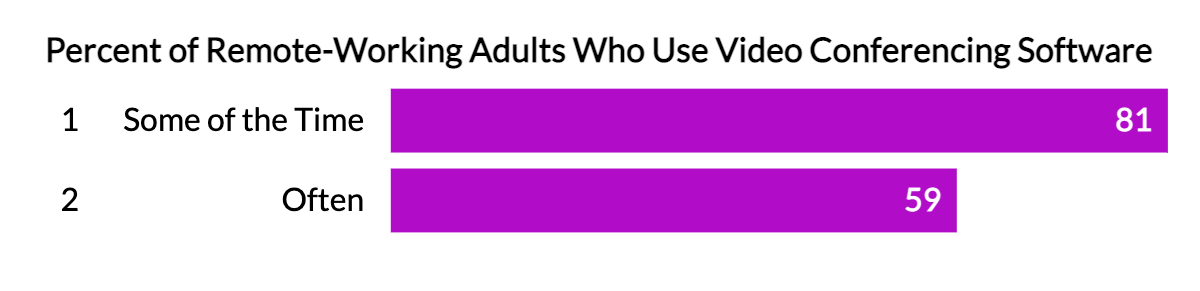
Video conferencing software is essential for remote communication.
81% of remote workers use video conferencing software, with 59% utilizing it frequently. Additionally, 57% use instant messaging tools occasionally, while 43% use them often.
However, only 65% of Americans have swift enough internet to support video calls, indicating a significant barrier for 35% of the population.
-
Most remote employees view technology as a suitable substitute for in-person interaction.
65% of teleworkers regard video conferencing and instant messaging platforms as effective alternatives to face-to-face meetings, while 35% disagree.
Work From Home Statistics by Industry, Position, and Earnings
-
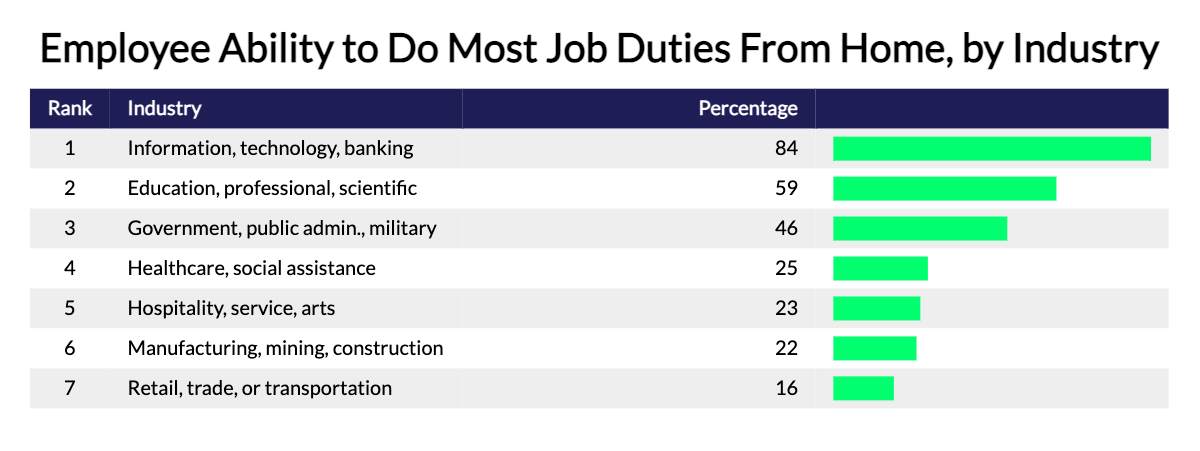
The ability to perform job duties remotely varies significantly by industry.
These statistics include:
-
84% in information, technology, banking, finance, accounting, real estate, and insurance sectors.
-
59% in education, professional, scientific, and technical services.
-
46% in government, public administration, and military sectors.
-
25% in healthcare and social assistance.
-
23% in hospitality, service, arts, entertainment, and recreation.
-
22% in manufacturing, mining, construction, agriculture, forestry, fishing, and hunting.
-
16% in retail, trade, or transportation.
-
-
Industries saw different increases in remote work opportunities from 2019 to 2020.
Financial activities rose by 40%, professional services by 25%, and education and health services by 23%. Many industries have returned to pre-pandemic levels as of 2023, including education, social services, and sales.
-
Some job roles are more suited to remote work than others.
Roles requiring collaboration, problem-solving, and creativity, such as coaching, counseling, and teaching, are less conducive to remote work. Conversely, many remote workers report they can effectively learn, interact with computers, communicate, and analyze information from home.
-
Most remote workers are older, employed by larger firms, and possess higher education.
78% of remote workers hold at least a college degree, and 32% occupy management positions or higher. Most remote employees are over 45 years old, earn an average salary of $58,000, and work for organizations with over 100 employees, with 75% earning more than $65,000 annually.
Work From Home Statistics by Gender and Race
-
Both men and women have seen increased availability for remote work.
Women (41%) are more likely than men (36%) to have the option to work from home. The percentage of men working remotely increased from 20% in 2019 to 36% in 2020, while women rose from 26% to 49% during the same period.
-
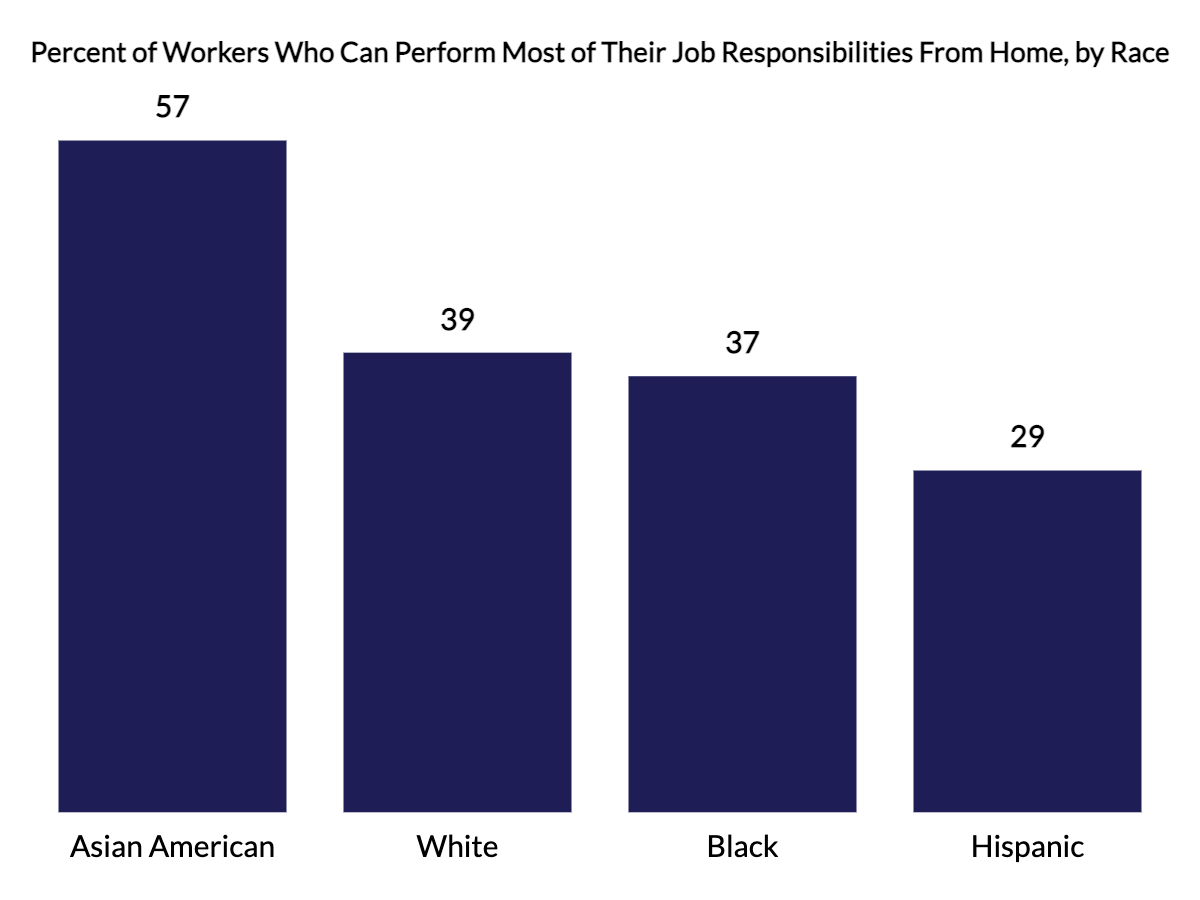
A significant racial divide exists in remote work access.
57% of Asian American workers can perform most of their job duties from home, compared to 39% of White workers, 37% of Black workers, and 29% of Hispanic workers.
Work From Home FAQ
-
Does working from home work?
Yes, working from home works. Numerous benefits accompany remote work, such as enhanced productivity and improved work-life balance. Key advantages include:
-
Increased productivity. Since more employees began working from home, productivity has significantly improved.
-
Flexibility. 43% of remote workers identify schedule flexibility as the primary advantage of working remotely.
-
Reduced need for time off. Remote workers often take fewer vacation days due to better work-life balance.
-
No commuting. Eliminating daily commutes reduces stress and saves time.
-
Cost savings. Both employees and employers save money through remote work arrangements.
-
-
Are remote workers more productive?
Yes, remote workers tend to be more productive. Studies indicate an increase in productivity among remote workers, with many reporting their performance as equal to or better than when working in an office.
-
What percentage of employees are working remotely?
About 50% of the U.S. labor force is currently working remotely. Furthermore, 90% of these workers plan to continue remote work in the future.
This shift opens opportunities for relocation away from urban centers, allowing employees to choose their living arrangements more freely.
Conclusion
The COVID-19 pandemic has significantly influenced the increase in remote work opportunities since 2019, contributing to a transformative shift in the economy and employee experiences.
While adjustments have occurred since the pandemic, the trend toward remote work shows no signs of reversing.
However, disparities in remote work access persist based on industry, position, education, and socioeconomic factors. Reliable internet access and technology capabilities remain critical to remote work success.
References
-
Pew Research Center. How the Coronavirus Outbreak Has – and Hasn’t – Changed the Way Americans Work. Accessed on 8/3/21.
-
U.S. Bureau of Labor and Statistics. American Time Use Survey — May to December 2019 and 2020 Results. Accessed on 8/3/21.
-
Apollo Technical. Surprising Working From Home Productivity Statistics (2021). Accessed on 8/3/21.
-
Buffer.com. State of Remote Work 2018 Report: What It’s Like to be a Remote Worker in 2018. Accessed on 8/4/21.
-
FlexJobs. FlexJobs 2018 Annual Survey. Accessed on 8/4/21.
-
Stanford News. Stanford research provides a snapshot of a new working-from-home economy. Accessed on 8/5/21.
-
McKinsey Company. What’s next for remote work: An analysis of 2,000 tasks, 800 jobs, and nine countries. Accessed on 8/5/21.
-
Business Insider. This may be the end of the work-from-home economy. Accessed on 8/5/21.
-
Global Workplace Analytics. Latest Work-At-Home/Telecommuting/Mobile Work/Remote Work Statistics. Accessed on 8/5/21.
-
Forbes. 5 Statistics Employers Need To Know About The Remote Workforce. Accessed on 8/5/21.

Author

Chris Kolmar is a co-founder of Zippia and the editor-in-chief of the Zippia career advice blog. He has hired over 50 people in his career, been hired five times, and wants to help you land your next job. His research has been featured on the New York Times, Thrillist, VOX, The Atlantic, and a host of local news. More recently, he's been quoted on USA Today, BusinessInsider, and CNBC.