
Automatically apply for jobs with Zippia
Upload your resume to get started.
Bone density technologist skills for your resume and career
15 bone density technologist skills for your resume and career
1. Patients
- Scanned/imaged patients on nuclear cameras.
- Performed Screening Mammography exams and Bone Density exams on patients, sent reports to Doctors and patients, made patient appointments.
2. Patient Care
Patient care entails the diagnosis, recovery, and control of sickness as well as the maintenance of physical and emotional well-being through the use of healthcare providers' services. Patient care is described as services provided to patients by health practitioners or non-professionals under guidance.
- Performed imaging and clerical duties, at defined levels, related to the provision of patient care.
- Provided excellent patient care and customer service to a population ranging from infant to geriatric.
3. Asphalt
- Tested density of the laid asphalt paper work and working with v-dot to meet there expectations
- Conducted material inspections of hot mixed asphalt as it arrived by dump truck.
4. Medical History
- Changed workflow protocol through direct interpretation of BMD results and medical history to determine patient eligibility for Vertebral Fracture Analysis VFA.
- Interact with patients to obtain medical history and rule-out any contraindication to the assigned protocol and/or procedure.
5. Radiology
Radiology means a division of medicine that concentrates on the use of radiant energy or any other radioactive material in the process of diagnosis and ailment treatments. It deals specifically with X-rays and radiations bearing high-energy, used in medicine and diagnosis.
- Rotate daily in the various Radiology departments, such as Surgery/C-arm, Outpatient, and the Emergency Room.
- Assisted the Radiology Manager in creating a Bone Density Department for Westerly Hospital's Radiology Dept.
6. QC
Quality control is a set of instructions or procedures to ensure a manufactured product or a service is up to the highest quality standards. This set of quality control criteria are either defined by the clients or the company itself.
- Performed weekly and monthly QC procedures for X-ray and Bone Densitometry equipment.
- Perform QC on all the equipment in both departments, keeping log accounts of all.
Choose from 10+ customizable bone density technologist resume templates
Build a professional bone density technologist resume in minutes. Our AI resume writing assistant will guide you through every step of the process, and you can choose from 10+ resume templates to create your bone density technologist resume.7. Epic
Epic is a private healthcare company which developed and continues to provide a software intended for healthcare professionals and the organization and management of medical records. It is by far one of the largest in its field, with over 50% of patients having a medical record present in their system. Patients, as well as clinics and various medical professionals and facilities are all able to use this system to keep medical history and information safe and easy to reach, alter, and share with the necessary people.
- Process new clinical staff Providence Epic Care link application.
- Worked with EPIC and PAX.
8. Patient Charts
- Input patient charts into NueMD System.
- Collected patient charts various departments within the hospital compiling information into hospital's database for review by the health information department.
9. Bone Density Scans
- Provide bone density scans for a very busy OB-GYN practice.
- Performed bone density scans for a group of doctors
10. CPR
Cardiopulmonary resuscitation or CPR is a medical procedure that involves chest compression to help a patient breathe. This artificial ventilation helps in keeping the brain function in place and regulates blood throughout the body. CPR is a lifesaving procedure that is used in emergencies.
- Performed X-Rays during day, night, and weekend shifts including emergency treatment (CPR) before the physician arrived.
- Maintain a current CPR certification according to hospital and Army regulations.
11. DXA
- Operated and performed DXA scans for the Osteoporosis research and UCLA Athletes.
- Perform daily QA scans on DXA, GE Lunar Prodigy.
12. DEXA
- Scanned patient using Hologic Discovery DEXA machine and reported results to physicians for reporting.
- Perform Dexa scans utilizing GE Lunar Prodigy Advanced System.
13. Mammography
- Acquire and submit all required follow-ups, biopsy results and medical outcome audits into the Mammography Report System(MRS).
- Perform Digital Screening/Diagnostic Mammograms and Bone Density exams -Perform all mammography QA/QC tests according to ACR/MQSA guidelines.
14. Patient Scheduling
- Manage multiline phone system, and assist with patient scheduling and handle customer service inquires.
15. Pacs
Picture archiving and communication system or, as is more commonly shortened, PACS, is a type of imaging scan used in medical treatment and other such work which provides effective storing and access to images and scans created by a large variety of machinery and medical tools. This might include scans such as CTs and MRIs and even basic X-rays and the system can also potentially be used to store digitised versions of originally physical paper documents.
- Prepared images to be viewed, sent by PACS and read by radiologist.
- Perform Digital Radiographs, PACs System *Perform Bone Mineral Density exams
5 Bone Density Technologist resume examples
Build a professional bone density technologist resume in minutes. Browse through our resume examples to identify the best way to word your resume. Then choose from 5+ resume templates to create your bone density technologist resume.

What skills help Bone Density Technologists find jobs?
Tell us what job you are looking for, we’ll show you what skills employers want.
List of bone density technologist skills to add to your resume
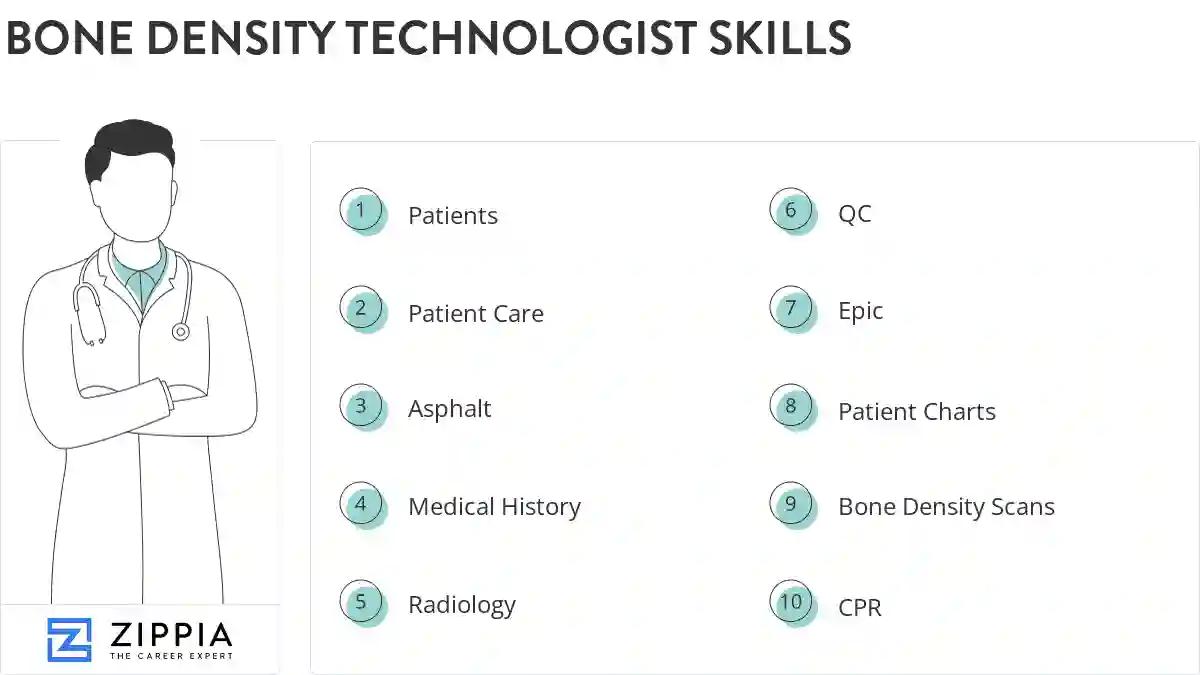
The most important skills for a bone density technologist resume and required skills for a bone density technologist to have include:
- Patients
- Patient Care
- Asphalt
- Medical History
- Radiology
- QC
- Epic
- Patient Charts
- Bone Density Scans
- CPR
- DXA
- DEXA
- Mammography
- Patient Scheduling
- Pacs
- Bone Density Exams
- ALARA
- Patient History
- Exam Rooms
- Hologic
- Diagnostic Images
- Customer Service
- QA
- CR
- High-Quality Images
- X-Ray Equipment
- EKG
- EMR
- Clinical Trials
- C-Arm
- IV
- Patient Education
- RIS
- Front Desk
- MRI
- X-Ray Exams
- Hippa
- DR
- Patient Data
- Health Fairs
Updated January 8, 2025
