
Automatically apply for jobs with Zippia
Upload your resume to get started.
Building inspector skills for your resume and career

15 building inspector skills for your resume and career
1. Plumbing
- Disseminated technical information to building, plumbing and sign inspectors.
- Inspected commercial and residential electrical and plumbing systems.
2. Customer Service
Customer service is the process of offering assistance to all the current and potential customers -- answering questions, fixing problems, and providing excellent service. The main goal of customer service is to build a strong relationship with the customers so that they keep coming back for more business.
- Respond to customers need and provides appropriate assistance and information, utilizing professional customer service skills.
- Provided professional customer service to permit holders and professional contractors.
3. Building Construction
- Test materials for suitability in building construction.
- Inspected residential, commercial and public building construction for compliance with all codes, laws and ordinances.
4. Ladders
- Work from ladders, hanging scaffolding, boats, and from the bucket of snooper and bucket trucks.
5. Construction Sites
A piece of land where constructional activities are to be conducted is termed as a construction site.
- Reviewed construction documents, visited construction sites and attended construction meetings.
- Monitor construction sites periodically to ensure overall compliance.
6. Code Violations
A code violation is any building, process, or structure which is not following the applicable codes of its jurisdiction. Some common code violations include working without a permit, not checking old materials for inconsistencies, improper electrical work, and more. If code violations are found, actions may be taken against the owner of the structure or process according to the law.
- Investigate complaints regarding unauthorized or unsafe building use or construction, issue stop work orders on illegal construction, code violations.
- Prepare daily inspection reports, notify contractors of any code violations, and follow up to ensure compliance.
Choose from 10+ customizable building inspector resume templates
Build a professional building inspector resume in minutes. Our AI resume writing assistant will guide you through every step of the process, and you can choose from 10+ resume templates to create your building inspector resume.7. Safety Standards
- Communicate directives, instructions, and guidelines for implementation of safety standards, policies, requirements, and procedures.
8. Fire Protection
- Inspected all Electrical under 600 volts and data, Fire protection systems- including signaling and initiating devices.
- Fire protection of walls, and material used, Standpipe systems, and handicap accessibility areas.
9. Inspection Results
Inspection Results are provided after inspecting and analyzing a structure for various defects, including whether a home is ready to be occupied or sold. There may also be inspection results during construction to ensure the structure abides by local zoning, electrical, and plumbing regulations. Without satisfactory inspection results, the structure may need additional work before continuing construction or becoming occupied.
- Communicate inspection results to supervisor.
- Entered inspection results in the city's database, attended community development meetings with city officials and community planners.
10. Roofing
- Review roofing plans in the field to ensure accuracy in product approval selection and fire ratings.
- Assisted in roofing and carpentry.
11. Inspection Reports
An inspection report is a written document provided after a thorough evaluation of a specific procedure/ process.
- Designed and implemented quarterly inspection reports as well as trend reports for the International Monetary Fund building Property Managers.
- Generated daily inspection report documenting work in progress, contractor performance and events.
12. Code Enforcement
- Performed a variety of municipal code enforcement activities.
- Reviewed prior inspection notes to prepare for scheduled inspections and provided site reports as needed to the Code Enforcement Department.
13. Commercial Buildings
- Managed performance of structural repairs on residential and commercial buildings.
- Performed inspections on various sized commercial buildings.
14. Stop-Work Orders
- Issue violation notices and stop-work orders, conferring with owners, violators, and authorities to explain regulations and recommend rectifications.
- Issue violation notices and stop-work orders until building is compliant.
15. On-Site Inspections
- Assisted Building Inspector/Zoning Administrator in making on-site inspections of buildings.
- Provide periodic on-site inspections of new construction.
5 Building Inspector resume examples
Build a professional building inspector resume in minutes. Browse through our resume examples to identify the best way to word your resume. Then choose from 5+ resume templates to create your building inspector resume.

What skills help Building Inspectors find jobs?
Tell us what job you are looking for, we’ll show you what skills employers want.
List of building inspector skills to add to your resume
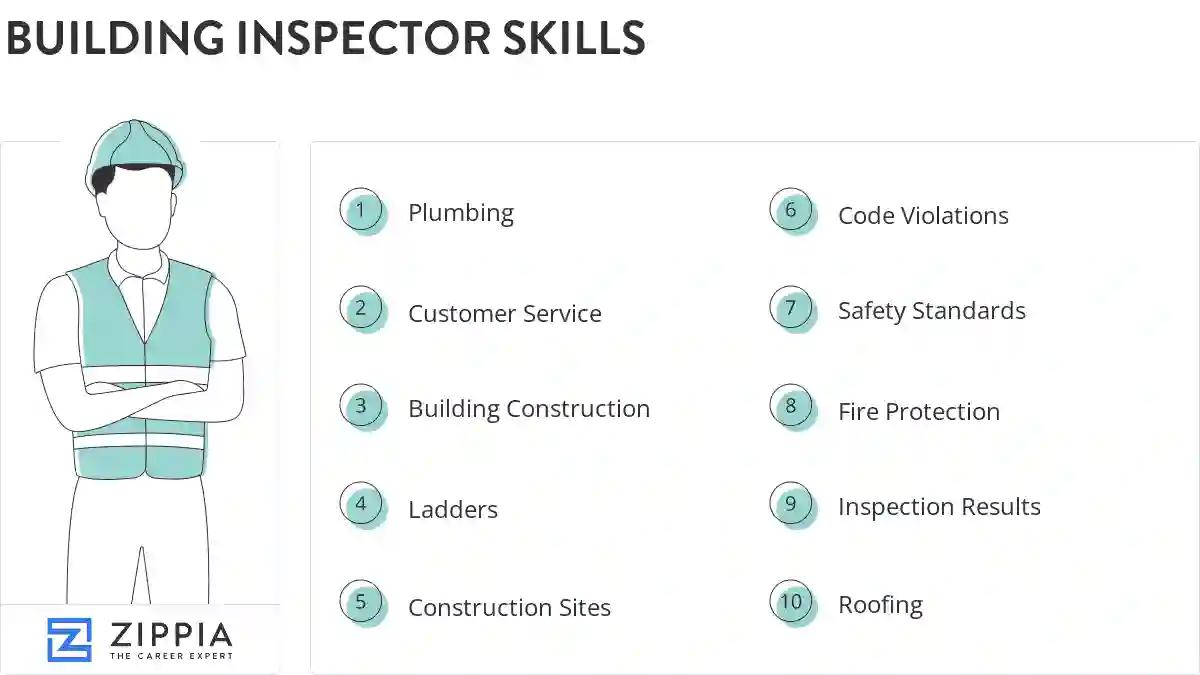
The most important skills for a building inspector resume and required skills for a building inspector to have include:
- Plumbing
- Customer Service
- Building Construction
- Ladders
- Construction Sites
- Code Violations
- Safety Standards
- Fire Protection
- Inspection Results
- Roofing
- Inspection Reports
- Code Enforcement
- Commercial Buildings
- Stop-Work Orders
- On-Site Inspections
- HVAC
- Electrical Code
- Building Permits
- Scaffolding
- Correction Notices
- Construction Methods
- OSHA
- City Codes
- Demolition
- International Building
- Electrical Systems
- City Ordinances
- Contract Specifications
- Swimming Pools
- Local Building Codes
- Safety Regulations
- Excavations
- Inspection Process
- Construction Inspection
- State Building Codes
- Property Maintenance
- Code Compliance
- Residential Properties
- Design Professionals
- Residential Structures
- Construction Process
- IBC
- Boca
- Asbestos
Updated January 8, 2025
