Explore jobs
Find specific jobs
Explore careers
Explore professions
Best companies
Explore companies
What is a cardiac technician and how to become one
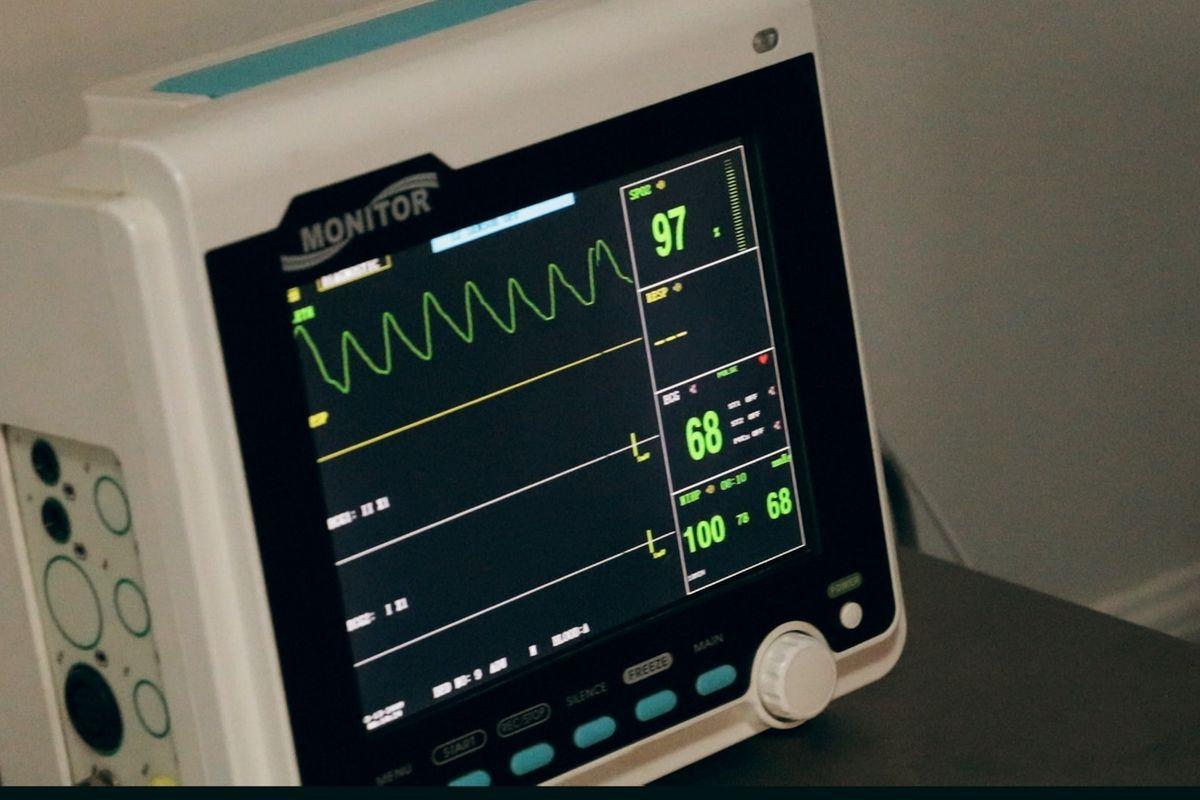
A cardiac technician performs diagnostic tests on patients with heart conditions. They work closely with cardiologists and other healthcare professionals to diagnose and treat heart disease. These technicians use a variety of technologies, such as electrocardiograms (ECGs), echocardiograms, and stress tests, to measure heart function and identify any abnormalities. They also monitor patients during procedures like cardiac catheterizations and assist in the preparation and maintenance of equipment.
Avg. Salary $39,698
Avg. Salary $59,228
Growth rate 10%
Growth rate 0.3%
American Indian and Alaska Native 0.91%
Asian 13.87%
Black or African American 10.58%
Hispanic or Latino 12.77%
Unknown 3.28%
White 58.58%
Genderfemale 65.64%
male 34.36%
Age - 44American Indian and Alaska Native 3.00%
Asian 7.00%
Black or African American 14.00%
Hispanic or Latino 19.00%
White 57.00%
Genderfemale 47.00%
male 53.00%
Age - 44Stress level is very high
7.1 - high
Complexity level is challenging
7 - challenging
Work life balance is good
6.4 - fair
What are the pros and cons of being a cardiac technician?
Pros
Ability to work in various healthcare settings, including hospitals and clinics
Competitive salary, benefits, and job security due to high demand for cardiac technicians
Opportunity for career advancement and specialization
Continuing education opportunities to stay up-to-date on industry standards
Opportunities for flexible scheduling and work-life balance
Cons
Exposure to stressful and emotionally charged situations
Long hours on your feet performing physically demanding tasks
Potential exposure to infectious diseases and hazardous materials
Required to work nights, weekends, and holidays as needed
Potential for burnout due to the demanding nature of the job
Cardiac technician career paths
Key steps to become a cardiac technician
Explore cardiac technician education requirements
Start to develop specific cardiac technician skills
Skills Percentages Patients 23.22% BLS 8.67% CPR 4.79% Acls 4.66% Cardiology 3.84% Complete relevant cardiac technician training and internships
Accountants spend an average of 1-3 months on post-employment, on-the-job training. New cardiac technicians learn the skills and techniques required for their job and employer during this time. The chart below shows how long it takes to gain competency as a cardiac technician based on U.S. Bureau of Labor Statistics data and data from real cardiac technician resumes.Gain additional cardiac technician certifications
More About CertificationsCardiac technician certifications can show employers you have a baseline of knowledge expected for the position. Certifications can also make you a more competitive candidate. Even if employers don't require a specific cardiac technician certification, having one may help you stand out relative to other applicants.
The most common certifications for cardiac technicians include Certified EKG Technician (CET) and Certified Phlebotomy Technician (CPT).
Research cardiac technician duties and responsibilities
- Assist with placement and manage intra-aortic balloon pumps.
- Receive and edit electrocardiogram (ECG) data in order to and formulate sound clinical judgments.
- Provide technical phone-base support and customer service in a call center environment to LifeWatch cardiac patients.
- Enter data in the EMR.
Prepare your cardiac technician resume
When your background is strong enough, you can start writing your cardiac technician resume.
You can use Zippia's AI resume builder to make the resume writing process easier while also making sure that you include key information that hiring managers expect to see on a cardiac technician resume. You'll find resume tips and examples of skills, responsibilities, and summaries, all provided by Zippi, your career sidekick.
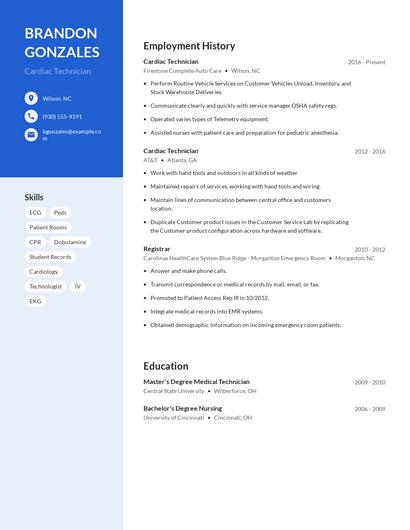
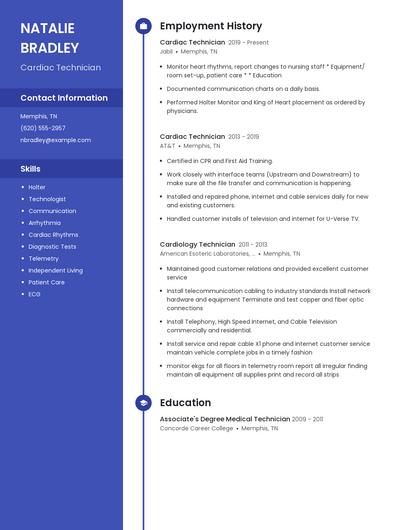
Choose from 10+ customizable cardiac technician resume templates
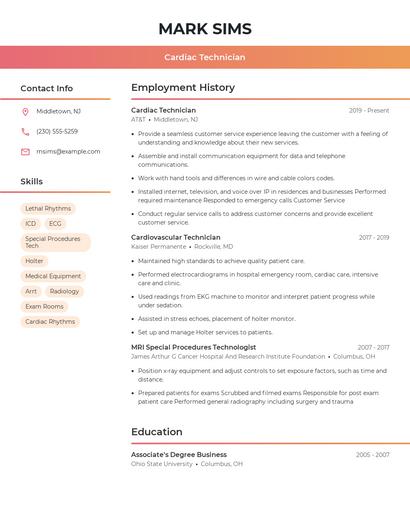
Build a professional cardiac technician resume in minutes. Browse through our resume examples to identify the best way to word your resume. Then choose from 10+ resume templates to create your cardiac technician resume.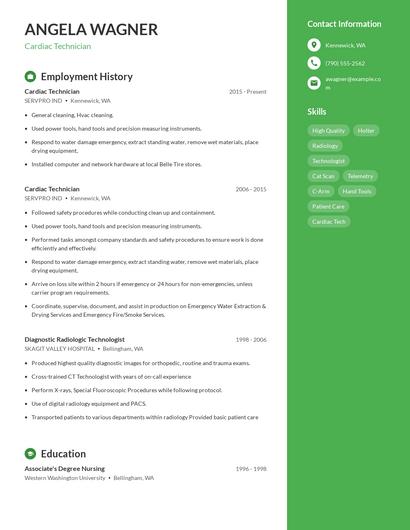

Apply for cardiac technician jobs
Now it's time to start searching for a cardiac technician job. Consider the tips below for a successful job search:
- Browse job boards for relevant postings
- Consult your professional network
- Reach out to companies you're interested in working for directly
- Watch out for job scams
How did you land your first cardiac technician job

Are you a cardiac technician?
Share your story for a free salary report.
Average cardiac technician salary
The average cardiac technician salary in the United States is $39,698 per year or $19 per hour. Cardiac technician salaries range between $31,000 and $50,000 per year.
What am I worth?

How do cardiac technicians rate their job?
Cardiac technician reviews

Nothing
Updated January 8, 2025
