
Automatically apply for jobs with Zippia
Upload your resume to get started.
Cardiac technician skills for your resume and career
15 cardiac technician skills for your resume and career
1. Patients
- Provided technical phone-based support and customer service in a call center environment to LifeWatch cardiac patients.
- Monitored and evaluated patients during exercise stress test and reported any abnormalities to attending Cardiologist.
2. BLS
- Related coursework and certificates: BLS Certified-Basic Life Support, ACLS Certified- Advanced Cardiovascular Life Support
- Maintained a yearly BLS license and Cardiac Telemetry Monitor Certification.
3. CPR
Cardiopulmonary resuscitation or CPR is a medical procedure that involves chest compression to help a patient breathe. This artificial ventilation helps in keeping the brain function in place and regulates blood throughout the body. CPR is a lifesaving procedure that is used in emergencies.
- Assisted nurses and physicians on the code team with CPR.
- Expanded professional knowledge base by attending various seminars and training sessions including CPR and Crisis Patient Intervention certification.
4. Acls
- Obtained ACLS & PALS Certification.
- Certified in CPR and ACLS.
5. Cardiology
Cardiology refers to the medical scientific field which researches and treats various issues, developments, diseases, and other afflictions within or related to the human heart and, by extension, some of the circulatory systems within the body, too. Some of the afflictions of the heart include the following: cardiac arrest, hypertension, and various forms of cardiomyopathy. This branch of medicine deals with everything from diagnosis to treatment, whether by way of medical procedures or drug or physical therapy, to post-procedure and further check-ups.
- Supervised EKG / Echo / Vascular Technicians within Cardiology Diagnostic Suite / Respiratory Care department.
- Resolve staff and physician schedule conflicts and working with Cardiology Patient Flow Coordinators.
6. ECG
An electrocardiogram (ECG) is a piece of medical equipment used to determine a person's heart rate. It is one way of monitoring and assessing the heart by conducting ECQ where a device called electrodes is connected to a machine by wires. This device is stick to the skin, particularly in the arm, chest, and leg part of the body.
- Commended for consistent conciseness and quality of written analysis of recorded ECG test data.
- Obtained, analyzed, and documented cardiac Electrocardiogram (ECG) rhythm strips.
Choose from 10+ customizable cardiac technician resume templates
Build a professional cardiac technician resume in minutes. Our AI resume writing assistant will guide you through every step of the process, and you can choose from 10+ resume templates to create your cardiac technician resume.7. Catheter
- Performed blood draws and insertions of peripheral intravenous catheters.
- Removed patient IV's and Foley catheters
8. Vital Signs
Vital signs are a set of values indicating different body systems' performance. They are measurements of the body's most basic functions. The four major vital signs used in medicine to assess a patient are body temperature, pulse rate, respiration rate, and blood pressure.
- Performed EKG's, vital signs, transtelphonic and office pacemaker testing.
- Obtain patinets starting vital, exercise, and post vital signs.
9. Arrhythmia
Arrhythmia refers to an irregular or abnormal rate of your heartbeat. This means that your heart beats either too quickly, beats too slowly, or beats with an irregular pattern. Some factors that can affect your heart's rhythm (arrhythmia) include having had a heart attack, smoking, congenital heart defects, stress, etc.
- Maintained patient records associated with arrhythmia monitoring.
- Enrolled health care providers and reviewed status of professional credentials for qualification into the Arrhythmia program.
10. Cath Lab
A catheterization laboratory, or a cath lab, is a specialized room in a hospital where doctors perform minimally invasive tests and procedures to diagnose and treat medical diseases. It is an examination room equipped with diagnostic imaging equipment. The equipment there can visualize chambers and arteries of the heart to rule out any possibility of atherosclerosis, obstruction in vessels/valves, or any other malignancies in the heart.
- Assisted in organizing the transition into the new Cath Lab Facility.
- Involved with interviewing process of new hires for cath lab.
11. Telemetry
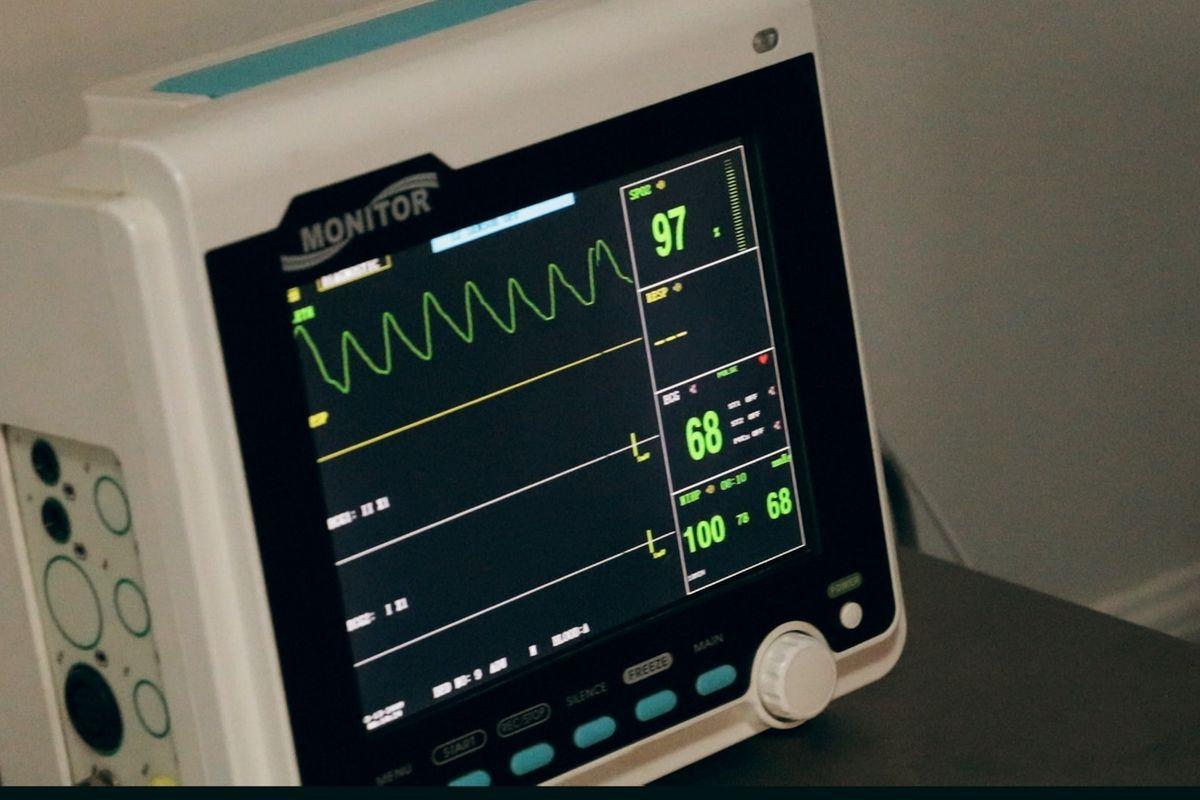
A telemetry is a process of automatically monitoring and recording vital conditions like the blood pressure, heart rhythm, and oxygen saturation of a patient, particularly those in the Intensive Care Unit or ICU critical condition. It is where the information gathered to report as a basis for a doctor's findings.
- Maintained cardiac telemetry equipment and ensured monitors were operational and syncing in Intensive Care environment.
- Communicated with nursing units and medical staff regarding changes in patient telemetry status.
12. Customer Service
Customer service is the process of offering assistance to all the current and potential customers -- answering questions, fixing problems, and providing excellent service. The main goal of customer service is to build a strong relationship with the customers so that they keep coming back for more business.
- Delivered excellent customer service and patient care.
- Enhance the patient experience through effective communication and positive customer service, through phone calls and continuing care by scheduling appointments.
13. Electrocardiogram
- Provide Electrocardiogram testing to all inpatients, outpatients and Emergency Department monitoring heart rate and rhythms detecting abnormal variance.
- Monitor electrocardiogram for abnormal patterns and input information into a machine or marks tracing to indicate positions of chest electrode.
14. Patient Education
- Respond to Code Blue Chart using CERNER (completion, patient education, pain management etc.)
- Carried out diagnostic tests and patient education as required.
15. Medical History
- Obtain medical history, IV access, heart rate, heart rhythm, and blood pressure prior to test.
- Obtained medical history, established IV, performed treadmills with various software programs.
5 Cardiac Technician resume examples
Build a professional cardiac technician resume in minutes. Browse through our resume examples to identify the best way to word your resume. Then choose from 5+ resume templates to create your cardiac technician resume.

What skills help Cardiac Technicians find jobs?
Tell us what job you are looking for, we’ll show you what skills employers want.
List of cardiac technician skills to add to your resume
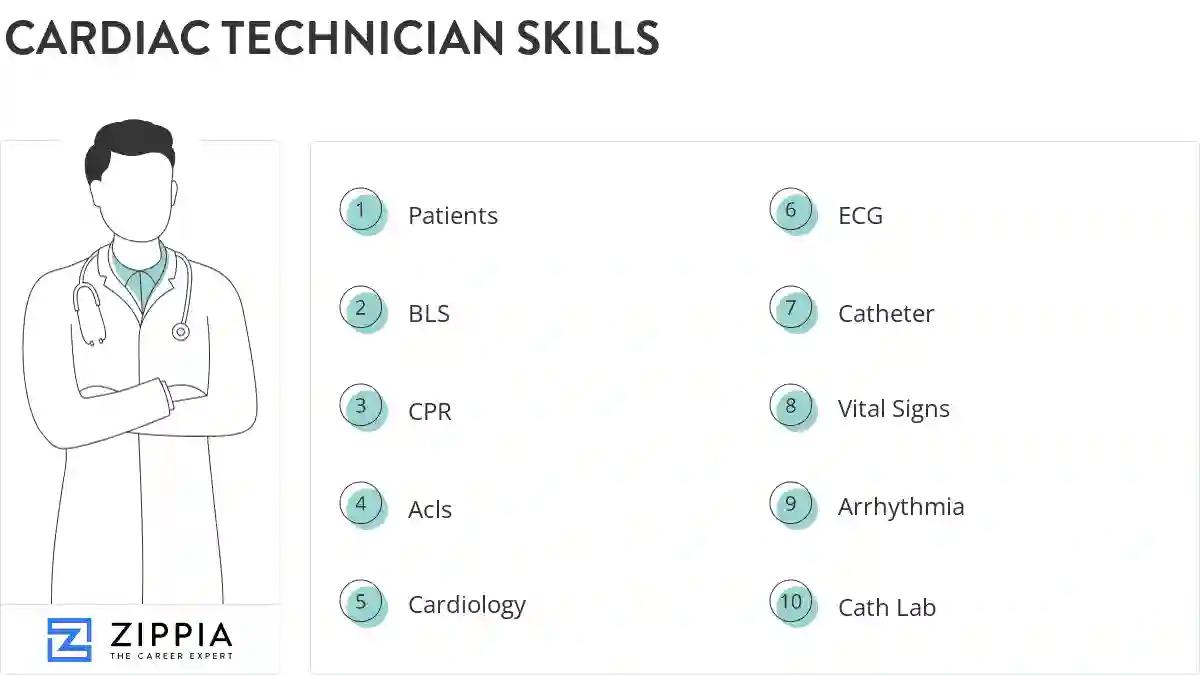
The most important skills for a cardiac technician resume and required skills for a cardiac technician to have include:
- Patients
- BLS
- CPR
- Acls
- Cardiology
- ECG
- Catheter
- Vital Signs
- Arrhythmia
- Cath Lab
- Telemetry
- Customer Service
- Electrocardiogram
- Patient Education
- Medical History
- Cardiac Rhythms
- Computer System
- Blood Pressure
- Interventional Procedures
- Compassion
- EMR
- Direct Supervision
- Resuscitation
- Emergency Situations
- EP
- Patient History
- Echocardiogram
- Holter Monitors
- Physician Orders
- Direct Patient Care
- Test Results
- Treadmill
- Heart Rate
- Therapeutic Procedures
- ICD
- Cardiac Stress
- Advanced Life Support
- Ablation
- Cardiac Arrhythmia
- Cardiac Monitors
- Rhythm Strips
- Rehabilitation
- Muse
- HIPAA
- Calculation
- Transcription
- Cardiac Tech
Updated January 8, 2025
