Explore jobs
Find specific jobs
Explore careers
Explore professions
Best companies
Explore companies
Job outlook for data operators in the United States
Data operator job and salary trends over time
Data operator jobs over time
Data operator job growth rate over time
| Year | # of jobs | % of population |
|---|---|---|
| 2021 | 10,440 | 0.00% |
| 2020 | 10,748 | 0.00% |
| 2019 | 11,345 | 0.00% |
| 2018 | 12,409 | 0.00% |
| 2017 | 12,776 | 0.00% |
Average data operator salary over time
Data operator salary by year
| Year | Avg. salary | Hourly rate | % Change |
|---|---|---|---|
| 2026 | $34,582 | $16.63 | +2.8% |
| 2025 | $33,628 | $16.17 | +4.1% |
| 2024 | $32,303 | $15.53 | +4.0% |
| 2023 | $31,058 | $14.93 | +2.8% |
| 2022 | $30,224 | $14.53 | +2.2% |
Data operator jobs by state
Most common states for data operators
| Rank | State | Population | # of jobs | Employment/ 1000ppl |
|---|---|---|---|---|
| 1 | Massachusetts | 6,859,819 | 2,451 | 36% |
| 2 | Alaska | 739,795 | 198 | 27% |
| 3 | District of Columbia | 693,972 | 154 | 22% |
| 4 | New Jersey | 9,005,644 | 1,865 | 21% |
| 5 | Rhode Island | 1,059,639 | 159 | 15% |
| 6 | Hawaii | 1,427,538 | 204 | 14% |
| 7 | New Hampshire | 1,342,795 | 189 | 14% |
| 8 | Maryland | 6,052,177 | 766 | 13% |
| 9 | Connecticut | 3,588,184 | 458 | 13% |
| 10 | North Dakota | 755,393 | 98 | 13% |
| 11 | Minnesota | 5,576,606 | 661 | 12% |
| 12 | Utah | 3,101,833 | 383 | 12% |
| 13 | Montana | 1,050,493 | 131 | 12% |
| 14 | South Dakota | 869,666 | 107 | 12% |
| 15 | California | 39,536,653 | 4,172 | 11% |
| 16 | Illinois | 12,802,023 | 1,370 | 11% |
| 17 | Colorado | 5,607,154 | 621 | 11% |
| 18 | Nebraska | 1,920,076 | 215 | 11% |
| 19 | New York | 19,849,399 | 1,890 | 10% |
| 20 | Iowa | 3,145,711 | 319 | 10% |
Most common cities for data operators
| Rank | City | # of jobs | Employment/ 1000ppl | Avg. salary |
|---|---|---|---|---|
| 1 | Wilmington | 2 | 3% | $32,675 |
| 2 | Franklin | 1 | 3% | $33,413 |
| 3 | Cupertino | 1 | 2% | $42,404 |
| 4 | Doral | 1 | 2% | $31,122 |
| 5 | Ann Arbor | 1 | 1% | $32,455 |
| 6 | Cambridge | 1 | 1% | $41,031 |
| 7 | Framingham | 1 | 1% | $41,079 |
| 8 | Huntsville | 1 | 1% | $25,962 |
| 9 | Atlanta | 1 | 0% | $32,916 |
| 10 | Colorado Springs | 1 | 0% | $34,733 |
| 11 | Orlando | 1 | 0% | $30,116 |
Data Operator job outlook: Expert opinions
Our panel of data operator experts

Furman University
University of Pennsylvania

Arkansas State University

Monmouth University

Oakland University

The Citadel
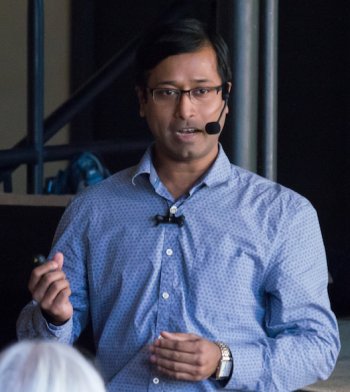
Montclair State University

InterNACHI
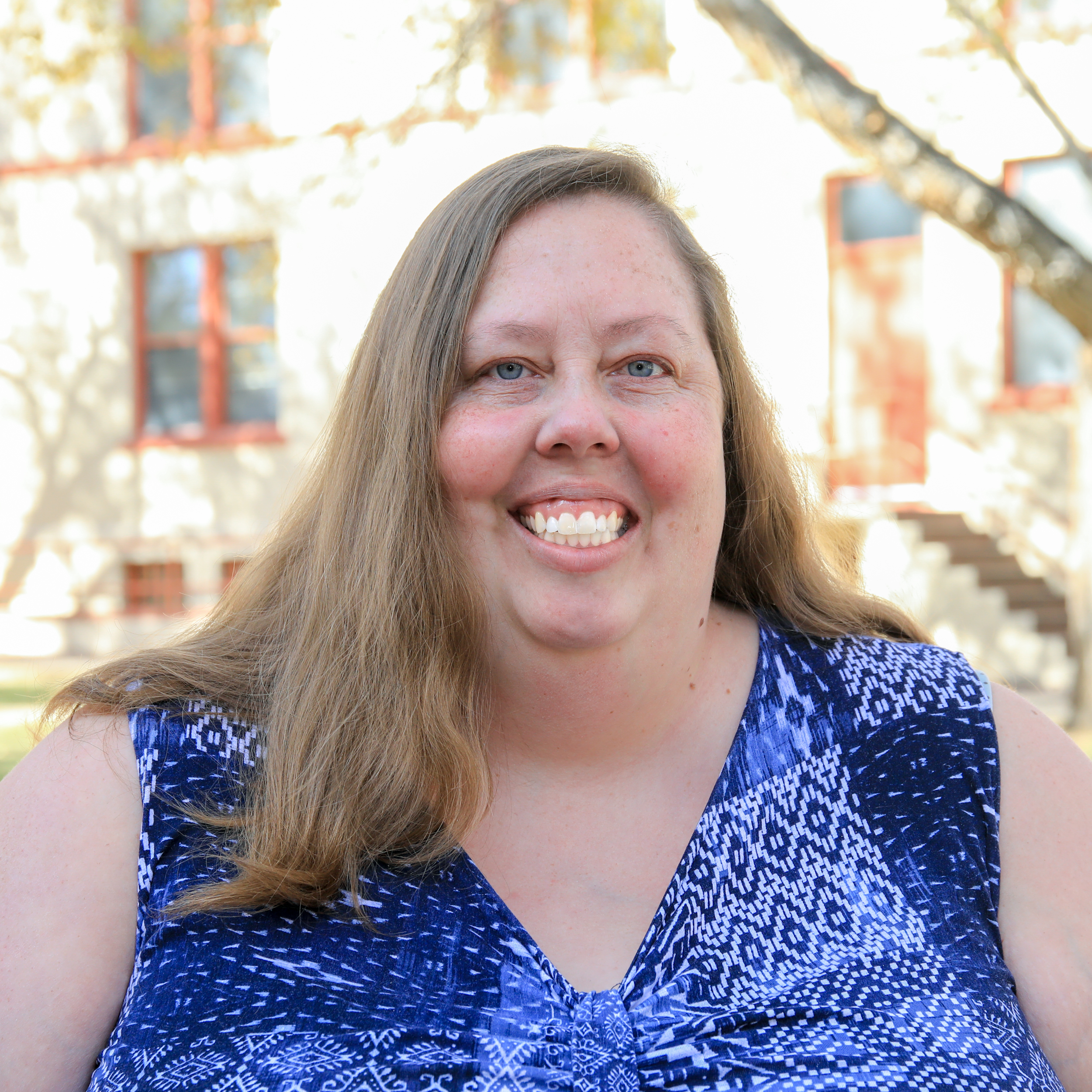
New Mexico Institute of Mining and Technology
Chiara Palladino
ProfessorFurman University
Department of Classics
Will there be an enduring impact of the coronavirus pandemic on Data Operators?
Chiara Palladino: The coronavirus pandemic has dramatically accelerated some trends that were already in place: it will become increasingly difficult to pursue traditional academic careers in Classics, for example by accessing graduate schools and, even more, getting to stable professorial jobs. However, it also represents an important opportunity, for Classics departments and graduates, to go beyond traditional academic careers: the beauty of majoring in Classics is precisely that it does not dictate a single career path. It's time to explore the possibilities: our Classics graduates at Furman have successfully pursued careers in Medicine, Law, Cultural Resource Management, Business, and even the Army.
What certifications/licenses/courses can have the biggest impact for Data Operators?
Chiara Palladino: More than acquiring a specific piece of paper, it's important to be able to articulate the value of a major in Classical languages and culture. Classics is not just about being able to read Homer or Cicero: it's a deep dive into information technology. A Classicist has a unique understanding of how information changed through history, being transmitted, manipulated, and preserved in many different ways, up to today's digital revolution. The study of "dead languages", which complements this knowledge, is a method of manipulating and analyzing information at an incredibly deep level of detail. Students, but also departments, should be willing to explore how these methods can be developed in diverse scenarios. For example, courses that apply computational approaches to Classical languages are a great way to develop marketable skills: you can study the Odyssey and learn coding at the same time, developing a cutting-edge skillset in an exciting and meaningful way
What will help Data Operators increase their earning potential?
Chiara Palladino: A Classical education can a powerful tool, when meaningfully combined with other subjects. For example, one can combine two majors in Mathematics and Classics, and learn how to apply mathematical logic to the syntactical analysis of Ancient Greek. Students should pursue learning opportunities that challenge them to apply diverse approaches to complex problems, and this will make their approach stand out in an ever-changing job market that requires extremely flexible skills.
Moreover, Classics will make you stand out in the crowd, if you know how to use it. The reason why students pick Classics in the first place is because ancient cultures are endlessly fascinating, with myth, history, and art that have so many ramifications in today's life. A Classics student should learn how to communicate those stories: maybe Classics won't give you easy access to a predetermined professional path, but being a highly educated storyteller will make you memorable in networking situations, and it will make you stand out among a pool of almost identical competitors.
What soft skills should all Data Operators possess?
Abraham Wyner: They should be able to do basic statistical analyses on their own without running for help (summarize data, cross tabulations, basic visualizations and regression of one variable). Of course, they need to use Excel and have some programming skills so they can learn the particular tool on the job easily (if they have never programmed this is hard).
Dr. Ferebee Tunno Ph.D.
Associate ProfessorArkansas State University
Department of Mathematics and Statistics
What are the biggest trends we'll see in the Data Operator job market given the pandemic?
Dr. Ferebee Tunno Ph.D.: It will probably be a plus going forward for people looking for a job in academics to have experience with apps like Zoom or Webex. This way, they know how to participate in remote meetings and classes if and when needed (e.g., if a heavy snow precludes people from being on-campus for a day or two).
The pandemic has also exposed online courses as a pale substitute for face-to-face learning. This is not to say that online courses can't be created and conducted well, and of course we all understand why we had to temporarily go remote in 2020, but once the pandemic begins to recede, I predict that the demand for online courses will decline.
What's a good job out of college for Data Operators?
Dr. Ferebee Tunno Ph.D.: Becoming an actuary is very practical and the pay is good. Plus, you don't need a Ph.D. to become one.
Becoming a statistics professor (like myself) is also a very rewarding job. We have the dual satisfaction of helping students to become clear-thinkers as well as introducing them to the creative world of research.
Will there be an enduring impact of the coronavirus pandemic on Data Operators?
Joseph Coyle Ph.D.: It is hard to say to be honest. In some sense the students graduating in the spring of 2021 have had to be more resourceful than normal during their time. I think they are better prepared for that experience. In terms of employment or graduate school, the story is probably less positive. My sense is that there are a lot of unknowns companies and graduates schools are facing. Having said that, if there is an enduring impact, it will be one that is more positive. We have all been forced to think about what we do in a different way and, in my opinion, that generally leads to a positive outcome.
What type of skills will young Data Operators need?
Joseph Coyle Ph.D.: I think one of the most important skills is being able to communicate, either written or oral communication. It is my impression that now, more than ever, we rely as much on our interaction with others as we do the individual skills or content knowledge. It is one thing, for example, to be able to construct a mathematical model of a phenomenon, but to be able to describe it in a meaningful and impactful way to a room full of people is even better.
Of course, I think it goes without saying that being tech-savvy or even just open to learning new technologies, is also important.
What experience really stands out on Data Operator resumes?
Joseph Coyle Ph.D.: That's a tough one to be honest. I believe that most undergrad programs, for example, have much of the same courses. What would stand out to me are the out of the classroom experiences such as internships, participating in undergraduate research projects, volunteering, and things like that.
Will there be an enduring impact of the coronavirus pandemic on Data Operators?
Nicole Dambrun: I absolutely believe the pandemic will have a lasting impact on graduates. I believe that the pandemic will have a lasting impact on all of us! Many people have lost their jobs or migrated into different positions since the pandemic started, and it's hard to predict which sectors will emerge strongest when we return to normal, if we return to normal. It would make sense that telecommunication companies, public health organizations and companies championing social justice would come out of the pandemic in need of additional employees. I also hope renewable energy is a field that will grow after this. Graduates may end up heading down a career path they didn't imagine, or working remotely for a company not in their area. In my Calculus classes, I teach mostly Business majors and these students have a degree that I believe can adapt to different industries and positions.
What type of skills will young Data Operators need?
Nicole Dambrun: Many students aren't enthuthiastic about taking classes online, which is understandable, but I think having online classes on your resume demonstrates that you've been able to learn and communicate in an online setting, which will be an important skill for any job that involves working remotely full or part time.
Dr. Todd Wittman Ph.D.
Associate ProfessorThe Citadel
Department of Mathematical Sciences
Are there any particularly good places in the United States for Data Operators to find work opportunities?
Dr. Todd Wittman Ph.D.: There are certainly hubs for data analysis at big tech companies in California and Washington and at government organizations in Virginia and D.C. But the pandemic has opened up possibilities for a wider array of geographic locations. In many fields, employers have now realized that their employees can work remotely and still get just as much work done as if they were in an office. A job applicant with a glowing resume might be able to make the argument for working from home anywhere in the world.
What Data Operator skills would you recommend for someone trying to advance their career?
Dr. Shaon Ghosh: Speaking for physics graduates specifically, and STEM graduates in general, I believe that the future is going to be a knowledge-based economy driven by data. It is also a sector that has been the least affected by the pandemic. If there is one skill that students should have in their repertoire, it is "technical computing skill". Note that I am intentionally not calling it "computer programming skill", which is a much more general term (encompassing anything from web-page designing to coding a new Linux operating system).
It is important that students should know how to handle and analyze large volumes of data and how to use advanced numerical and statistical techniques to produce quantitative inferences that have subjective and objective value. This is what I am referring to as technical computing skill. I am not saying that other types of programming skills will not be useful. But, if you have one year to prepare, in my opinion, this is a skill where you can invest your time to get the most benefit.
What type of skills will young Data Operators need?
Nick Gromicko: They need to stop earning "underwater basket weaving" and "aroma therapy" degrees and instead learn the trades: electrical, plumbing, HVAC, masonry, etc. There are simply not enough Americans who know how things work, how to build them, and how to repair them.
Are there any particularly good places in the United States for Data Operators to find work opportunities?
Nick Gromicko: InterNACHI has 26,700 members at www.nachi.org/nachi-stats and many of those companies are constantly hiring.
Dr. Elisabeth Kramer-Simpson
Program DirectorNew Mexico Institute of Mining and Technology
Technical Communication program
What experience really stands out on Data Operator resumes?
Dr. Elisabeth Kramer-Simpson: Real-world projects and communication experience interfacing with users and customers.
Lab experience/STEM experience because this gives a high level of technical expertise.
Coding and the ability to learn different software and specifically the ability to adapt to what the company uses.
Professional skills like taking initiative and writing/editing skills are also valuable.
Teamwork and collaboration experience.