
Automatically apply for jobs with Zippia
Upload your resume to get started.
Dredge pipe operator skills for your resume and career
15 dredge pipe operator skills for your resume and career
1. Sewer Lines
Every sewerage system is interconnected. Every house drainage system links the network using sewer lines to narrow down the intermissions between the house system and the central drainage system of the city or town. Burring of the sewer lines underground prevents tampering and leaking of the sewer lines.
- Excavate trench and laying sewer lines, abandon septic tank to satisfy the code required by city plumbing inspectors.
- Pipe Layer for installation of underground pipe work such as water lines, sewer lines, and catch basins.
2. Asphalt
- Installed water line and sewer Installed electrical ducks Placed and patched asphalt on top of ditches across roads
- Water line connection Sewer line connection Driving/GPS operation Trench digging Jack Hammer Various tool use/Measurements Concrete Trailer hauling Asphalt patch work
3. DIG
- Dig ditch to lay water, sewer, gas, and electric line.
- Run excavator to dig and remove any contaminated dirt or soil on location or around well heads or underground pipes.
4. CDL
- Have CDL would drive swab unit to job and rig up and swab well in then turn it over to production
- Drive tractors, apply ammonia, spread fertilizer, and work on machinery, maintenance, welding, received CDL
5. OSHA
- Transit Laser Techniques / Grading Techniques OSHA Construction 10 Certified.
- Excavate trench 42-72 to OSHA standards.
6. Loaders
- Experience on a bridge replacement job where I also ran equipment such as loaders and rollers.
- Operated equipment, such as pickup trucks, rollers, front-end loaders, or backhoes.
Choose from 10+ customizable dredge pipe operator resume templates
Build a professional dredge pipe operator resume in minutes. Our AI resume writing assistant will guide you through every step of the process, and you can choose from 10+ resume templates to create your dredge pipe operator resume.7. Safety Rules
Principles or regulations that ensure the protection of people, objects, or the environment are called safety rules. These rules can be governing actions, devices, or procedures that help in minimizing the risks of loss, injury, or damage.
- Conducted safety inspections, followed safety rules for plant operations, and participated in safety meetings.
- Received numerous awards for accident prevention by following all factory safety rules and regulations.
8. Water Lines
Water Lines are pipes, tubes, and other forms of conveyance systems for water. These sewer systems transport water throughout a home, commercial building, or city water system. Water lines within a home transport hot and cold water to different areas of the house, such as from a cold-water holder or system to a water heater.
- Locate; water lines, gas lines, electrical lines, pumping concrete, setting manholes.
- Excavated land in preparation of sewer and water lines for construction of residential and commercial facilities.
9. Pipe Systems
Pipe systems are the interconnection of pipes and plumbing that allow the various taps in a home or structure to produce water.
- Lay out full-scale drawings of pipe systems, supports, and related equipment, following blueprints.
- Understand and safely operate all equipment used for trenching, aligning, and properly installing pipe systems.
10. Water Mains
- Dig out water mains water meters for crew to fix.
- Lay pipe for storm or sanitation sewers, drains, and water mains mostly for the city of Durham.
11. End Loaders
- Operated and monitored equipment included in the waste-water treatment process including operating front end loaders.
- Job Description: Operate heavy construction equipment (bulldozers, tractors, front-end loaders) Erect structures and pour concrete.
12. GPS
GPS stands from Global Positioning System. It is a navigation system comprising of satellites that helps in determining the location, velocity, and synchronize time data for different modes of travel like air, sea, or land.
- Excavate to subgrade and replace with appropriate materials using hand held GPS.
- Use Matricon's Intellimine dispatch and high precision GPS systems to locate ore bodies and mine according to company dig plans.
13. Storm Drains
- Maintained grade and compaction for storm drains and sanitary manliness, set up and dismantled many varieties of shoring.
- Completed a variety of underground utility projects including sewers, storm drains, and water.
14. Lay Pipe
- Lay pipe at proper depth and grade ensuring work area is hazard free throughout project.
- Lay pipe Run machines loader, trackhoe329
15. DUG
- Poured cement and dug holes for pipes; and compressed dirt off road dump trucks.
- Fused the pipe Dug the entry pit for bursting to start Connected the service lines Ran all the heavy equipment
5 Dredge Pipe Operator resume examples
Build a professional dredge pipe operator resume in minutes. Browse through our resume examples to identify the best way to word your resume. Then choose from 5+ resume templates to create your dredge pipe operator resume.

What skills help Dredge Pipe Operators find jobs?
Tell us what job you are looking for, we’ll show you what skills employers want.
List of dredge pipe operator skills to add to your resume
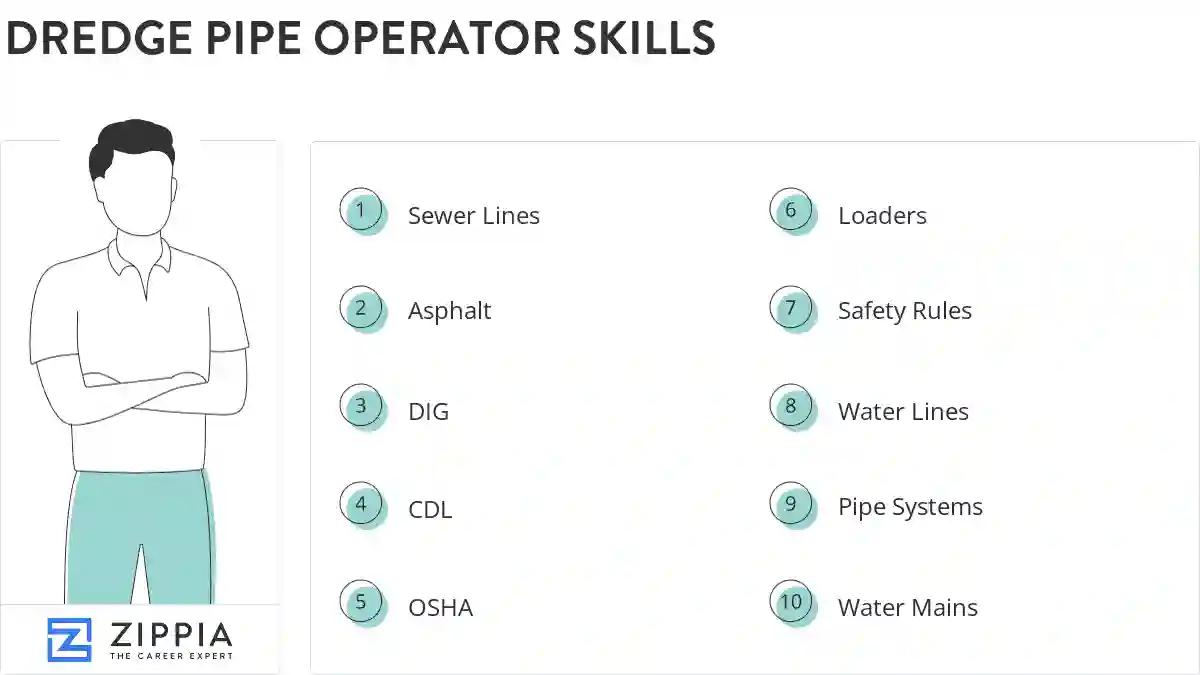
The most important skills for a dredge pipe operator resume and required skills for a dredge pipe operator to have include:
- Sewer Lines
- Asphalt
- DIG
- CDL
- OSHA
- Loaders
- Safety Rules
- Water Lines
- Pipe Systems
- Water Mains
- End Loaders
- GPS
- Storm Drains
- Lay Pipe
- DUG
- RAN
- Water Truck
- Excavations
- Grade Stakes
- Pipe
- Bobcat
- PVC
- Grade Rods
- Drill Holes
- Bulldozers
- Taps
- Traffic Control
- RCP
- Pipe Routes
- Pipe Pieces
- Service Line
- Tamping Machines
- Water Services
Updated January 8, 2025
