
Automatically apply for jobs with Zippia
Upload your resume to get started.
Electrocardiograph technician skills for your resume and career
12 electrocardiograph technician skills for your resume and career
1. EKG
- Responded to EKG requests via use of pager, phone system and overhead paging system.
- Prepared patients and assisted during EKG stress testing and EKG Thallium stress testing.
2. ECG
An electrocardiogram (ECG) is a piece of medical equipment used to determine a person's heart rate. It is one way of monitoring and assessing the heart by conducting ECQ where a device called electrodes is connected to a machine by wires. This device is stick to the skin, particularly in the arm, chest, and leg part of the body.
- Reviewed patient's clinical record to obtain and record identifying information required for ECG records.
- Provided ECG testing to help physicians diagnose cardiac and peripheral vascular ailments in patients.
3. Patients
- Responded to stat and Code Blue pages and followed through on disposition of patients and employees.
- Followed all hospital policies and codes to better serve patients, fellow employees and myself.
4. Electrocardiogram
- Monitor electrocardiogram for abnormal patterns and input information into a machine or marks tracing to indicate positions of chest electrode.
- Provide Electrocardiogram testing to all inpatients, outpatients and Emergency Department monitoring heart rate and rhythms detecting abnormal variance.
5. Stress Tests
- Assisted in Cardiac catheterization lab, diagnostic test, stress test and other test.
- Assisted in holter monitor and stress testing under the supervision of physician.
6. Medical Equipment
Medical equipment refers to apparatus for use in medical procedures.
- Set up and monitored medical equipment and device to determine emergency intervention needs.
- Operated designated medical equipment to diagnose patients' health performance.
Choose from 10+ customizable electrocardiograph technician resume templates
Build a professional electrocardiograph technician resume in minutes. Our AI resume writing assistant will guide you through every step of the process, and you can choose from 10+ resume templates to create your electrocardiograph technician resume.7. Acls
- Maintain dept ACLS medications and equipment.
- Obtained ACLS & PALS Certification.
8. Treadmill
- Conducted special procedures involving dynamic electrocardiography, such as ambulatory recording and treadmill exercise; perform and/or assist in cardiopulmonary resuscitation.
- Assisted in placement of holter-monitor and assisted physician during treadmill stress test procedures.
9. Patient Care
Patient care entails the diagnosis, recovery, and control of sickness as well as the maintenance of physical and emotional well-being through the use of healthcare providers' services. Patient care is described as services provided to patients by health practitioners or non-professionals under guidance.
- Collected data for department supervisor to improve the performance of the respiratory department and the quality of patient care.
- Assisted nursing staff with patient care when necessary.
10. Patient Confidentiality
Patient confidentiality refers to the obligation of professionals who have access to personal and medical records or communications of patients during consultation or treatment, to keep this information confidential and not disclose it to third parties unless the patient has express permission granted for such disclosure.
- Maintain patient confidentiality in accordance to HIPPA while conversing with medical professionals.
11. Echocardiogram
- Assisted in Echocardiogram stress test TILT tables, Cardioversions, and transesophageal echocardiograms.
- Transcribed all echocardiogram and carotid reports after dictation by physician.
12. Blood Pressure
- Assist RN with Cardiac Maintenance Program; check blood pressure and pulse before, during, and after their cardiac workouts.
- Perform and maintain records of patient's vital signs, such as blood pressure, pulse, temperature and respiration.

What skills help Electrocardiograph Technicians find jobs?
Tell us what job you are looking for, we’ll show you what skills employers want.
List of electrocardiograph technician skills to add to your resume
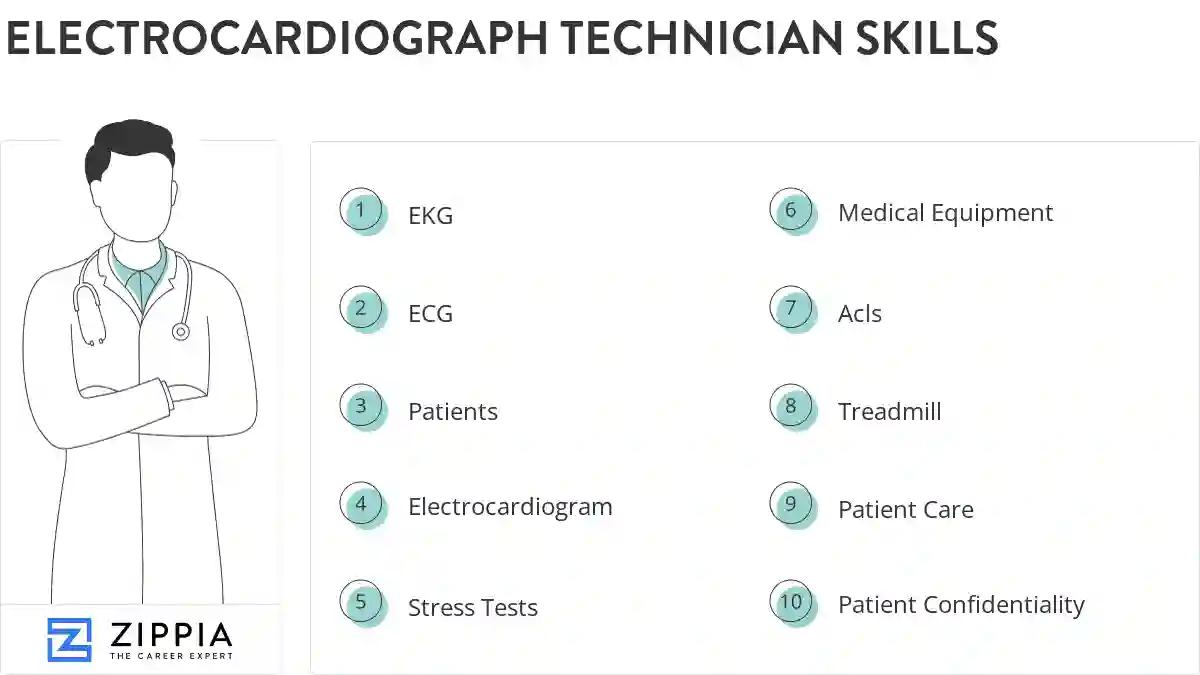
The most important skills for an electrocardiograph technician resume and required skills for an electrocardiograph technician to have include:
- EKG
- ECG
- Patients
- Electrocardiogram
- Stress Tests
- Medical Equipment
- Acls
- Treadmill
- Patient Care
- Patient Confidentiality
- Echocardiogram
- Blood Pressure
Updated January 8, 2025
