Explore jobs
Find specific jobs
Explore careers
Explore professions
Best companies
Explore companies
Job outlook for employee relations coordinators in the United States
Employee relations coordinator job growth summary. After extensive research, interviews, and analysis, Zippia's data science team found that:
The projected employee relations coordinator job growth rate is -3% from 2018-2028.
About -1,700 new jobs for employee relations coordinators are projected over the next decade.
Employee relations coordinator salaries have increased 18% for employee relations coordinators in the last 5 years.
There are over 11,393 employee relations coordinators currently employed in the United States.
There are 46,224 active employee relations coordinator job openings in the US.
The average employee relations coordinator salary is $53,308.
Are employee relations coordinator jobs in demand?
Employee relations coordinator job and salary trends over time
Employee relations coordinator jobs over time
Employee relations coordinator job growth rate over time
| Year | # of jobs | % of population |
|---|---|---|
| 2021 | 11,393 | 0.00% |
| 2020 | 12,507 | 0.00% |
| 2019 | 13,494 | 0.00% |
| 2018 | 13,773 | 0.00% |
| 2017 | 14,017 | 0.00% |
Average employee relations coordinator salary over time
Employee relations coordinator salary by year
| Year | Avg. salary | Hourly rate | % Change |
|---|---|---|---|
| 2026 | $53,308 | $25.63 | +6.1% |
| 2025 | $50,237 | $24.15 | +1.8% |
| 2024 | $49,341 | $23.72 | +7.3% |
| 2023 | $46,000 | $22.12 | +1.4% |
| 2022 | $45,353 | $21.80 | +5.9% |
Employee relations coordinator jobs by state
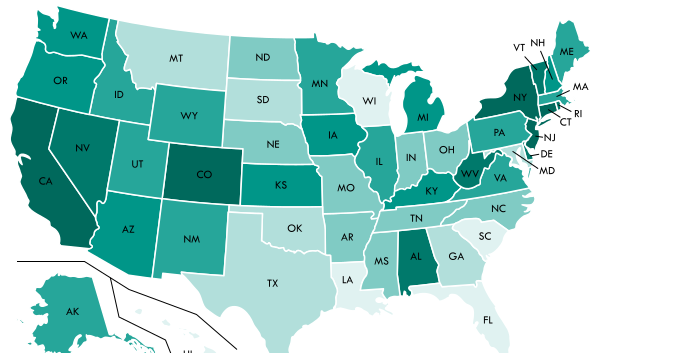
Most common states for employee relations coordinators
| Rank | State | Population | # of jobs | Employment/ 1000ppl |
|---|---|---|---|---|
| 1 | District of Columbia | 693,972 | 212 | 31% |
| 2 | New Hampshire | 1,342,795 | 328 | 24% |
| 3 | Rhode Island | 1,059,639 | 232 | 22% |
| 4 | Delaware | 961,939 | 210 | 22% |
| 5 | Maine | 1,335,907 | 249 | 19% |
| 6 | North Dakota | 755,393 | 136 | 18% |
| 7 | New Mexico | 2,088,070 | 317 | 15% |
| 8 | Idaho | 1,716,943 | 250 | 15% |
| 9 | South Dakota | 869,666 | 134 | 15% |
| 10 | West Virginia | 1,815,857 | 259 | 14% |
| 11 | Alabama | 4,874,747 | 616 | 13% |
| 12 | Oklahoma | 3,930,864 | 465 | 12% |
| 13 | Massachusetts | 6,859,819 | 611 | 9% |
| 14 | Vermont | 623,657 | 52 | 8% |
| 15 | Alaska | 739,795 | 55 | 7% |
| 16 | Illinois | 12,802,023 | 723 | 6% |
| 17 | Oregon | 4,142,776 | 258 | 6% |
| 18 | Iowa | 3,145,711 | 195 | 6% |
| 19 | Utah | 3,101,833 | 176 | 6% |
| 20 | Wyoming | 579,315 | 34 | 6% |
Most common cities for employee relations coordinators
| Rank | City | # of jobs | Employment/ 1000ppl | Avg. salary |
|---|---|---|---|---|
| 1 | Merrimack | 1 | 4% | $58,370 |
| 2 | Slidell | 1 | 4% | $40,229 |
| 3 | Tucker | 1 | 4% | $43,246 |
| 4 | Lancaster | 1 | 2% | $52,965 |
| 5 | Riverside | 2 | 1% | $61,511 |
| 6 | Kalamazoo | 1 | 1% | $56,687 |
| 7 | Mountain View | 1 | 1% | $69,260 |
| 8 | Rockford | 1 | 1% | $53,729 |
| 9 | Tuscaloosa | 1 | 1% | $58,771 |
| 10 | Albuquerque | 1 | 0% | $52,980 |
| 11 | Houston | 1 | 0% | $44,808 |
| 12 | Las Vegas | 1 | 0% | $61,086 |
| 13 | Orlando | 1 | 0% | $35,904 |
| 14 | San Jose | 1 | 0% | $69,052 |
Employee Relations Coordinator job outlook: Expert opinions
Our panel of employee relations coordinator experts
University of Maine
San Jose State University
University of Scranton
Indiana University Southeast
Neumann University
Washington State University- Vancouver

Land O Lakes

Grand Valley State University

Saint Leo University

University of Maine at Machias
Kansas State University

Zones, LLC
Superior Restaurant Group

University of La Verne

University of New Hampshire

Indiana University - Purdue University Indianapolis
NC State University
Drexel University
What Employee Relations Coordinator skills would you recommend for someone trying to advance their career?
Billy Obenauer PhD: In my human resource management class, we discuss skills that cannot be easily substituted by technology. We are consistently seeing technology take over tasks previously filled by humans. Think about things like self-checkout kiosks, HR interfaces where employees elect benefits, chatbots, and warehouses where packages are picked by machines. Technology will continue to take over tasks, but humans should continue to hold unique abilities to connect with each other, inspire, empathize, etc. These soft skills will be particularly relevant to a graduating class that spent so much time in isolation during their developmental years. Graduates who can skillfully interact with others in the workplace will have an advantage.
What will help Employee Relations Coordinators increase their earning potential?
Dr. Erin Woodhead PhD: Definitely the soft skills are becoming increasingly important as we transition back to in-person work amidst the many tragedies happening in the world. It will become increasingly important to know how to dialogue with coworkers who have different views and life experiences.
What Employee Relations Coordinator skills would you recommend for someone trying to advance their career?
Dr. Ale Kennedy: The majority of time is spent listening to customers and providing service, whether it is hiring, classification, training, and/or a difficult employee. Human Resources is relied on heavily to provide guidance during difficult situations and through processes.
What general advice would you give to an Employee Relations Coordinator?
Dr. Paul Datti PhD, CRC, HS-BCP: In my experience as Program Director of Scranton’s Counseling and Human Services Program, as well as being a board member of the Council for Standards in Human Services Education (the only accrediting body for human services educational programs), I can tell you that it's really about helping others. That’s what we do! Our students tend to gravitate towards the care of others, and they appreciate that they have been trained well. Part of our program’s mission is to train self-reflective practitioners, competent caregivers, and community leaders, and we believe we are successful at that. Some potential downsides can include long and/or unpredictable work hours, large caseloads, and potential for burn out. For the latter, however, it should be noted that our program (as well as others), train students on how to not only help others to recognize, prevent, and address burnout, but themselves as well.
What will help Employee Relations Coordinators increase their earning potential?
Dr. Paul Datti PhD, CRC, HS-BCP: Graduates of The University of Scranton’s Counseling and Human Services program, as well as other similar educational programs, tend to have significant success upon graduation. At Scranton, typically about half to two-thirds of our graduates go on to graduate school, mainly in professional counseling or social work, but some also go on to programs in public administration, applied behavior analysis, child life care, and even law school. The remainder tend to soon get jobs in the field, in positions such as behavioral health technician, community health assistant, rehabilitation aide, child advocate, psychiatric or mental health technician, social work assistant, and more. According to OnetOnline and the Bureau of Labor Statistics, jobs in this area are expected to exponentially grow over the years and are considered “bright outlook” occupations.
Dr. Toni Whitfield
ProfessorWhat general advice would you give to an Employee Relations Coordinator?
Dr. Toni Whitfield: Make sure you have done your research and know what the industry standard is. Be confident and assertive about talking about pay. Too many students are hoping they will get a good deal. Negotiation is critical. You must know your worth and know ask for a negotiation—even if it isn’t just salary—work from home a few days a week ? Get a stipend for driving? Any other bennies?
What will help Employee Relations Coordinators increase their earning potential?
Dr. Toni Whitfield: I cover a great deal of tips and specifics about prep for the world of work in several of my classes. The most important is to find a mentor (formal and informal), pay attention to what is going on around you and find a colleague you can ask questions that relate to everyday life and the culture of the organization. Show up! Be seen! Let your supervisor know what you are doing and especially when you are doing things well. Be curious. Dress for the job you want next. Build relationships inside and outside of the organization—this is critical everything is about relationship building. Create a I Love Me file that you can add to all year to prepare for your evaluations and to update your resume.
Dr. Gregory Kordsmeier
Director, Institute for Learning and TeachingIndiana University Southeast
Sociology
What Employee Relations Coordinator skills would you recommend for someone trying to advance their career?
Dr. Gregory Kordsmeier: Many employers are looking for the skills that sociology majors have developed over the course of their major, but many of these employers will not phrase it as looking for a sociology major. Skills like working in teams, data analysis and communication, written and oral visualization, and an ability to work with diverse populations are all prized by employers and common among sociology majors. Your job as a recent graduate is helping translate the work that you did and the skills you developed in college into terms that prospective employers can understand.
Robert Till Ph.D.
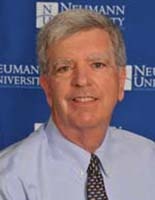
Professor EmeritusNeumann University
Management Department
What skills will help Employee Relations Coordinators earn the most?
Robert Till Ph.D.: When considering what areas of HR offer the greatest compensation, you need to think about supply and demand. Typically, if you have quantitative or computer skills, your value increases. A simple search of HR jobs suggests that Compensation and Benefits is an area that does pay well.
The graduates felt their CIS course and their HR Courses were helpful to their success, but they would have liked exposure to HR software currently being used in the field and greater exposure to forms typically used in HR departments.
Adriana Thomas
Advisor, Internship Coordinator, InstructorWashington State University- Vancouver
Department of Human Development
What soft skills should all Employee Relations Coordinators possess?
Adriana Thomas: People skills. Communication, collaboration.
Philomena Morrissey Satre
Director of Diversity Equity & Inclusion and External Strategic PartnershipsLand O Lakes
What skills stand out on Employee Relations Coordinator resumes?
Philomena Morrissey Satre: Soft skills: The ability to communicate effectively with multiple stakeholders from all levels of the organization, problem-solving skills to resolve employee relations issues. Being resourceful: the ability to have a broad perspective and understand functions of HR, strong administrative and project management skills, ability to build strong relationships, and understanding the business.
What skills will help Employee Relations Coordinators earn the most?
Philomena Morrissey Satre: Coachability: listen and receive feedback, communicate effectively, draw on Internship or prior job experience, show that you can manage multiple priorities, and willingness to learn and continue developing skills and manage multiple priorities. Additionally, care and compassion for all. Willingness to do what it takes to get the job done even when it may not be your favorite task or responsibility. Lastly, an innovative mindset!
Dan Wiljanen Ph.D.
Affiliate of Practice Professor, SHRM Student Chapter AdviserGrand Valley State University
Seidman College of Business
What soft skills should all Employee Relations Coordinators possess?
Dan Wiljanen Ph.D.: Soft Skills
-Active Listening - Giving full attention to what other people are saying, taking time to understand the points being made, asking questions as appropriate, and not interrupting at inappropriate times.
-Critical Thinking - Using logic and reasoning to identify the strengths and weaknesses of alternative solutions, conclusions, or approaches to problems.
-Service Orientation - Actively looking for ways to help people.
-Social Perceptiveness - Being aware of others' reactions and understanding why they react as they do.
-Judgment and Decision Making - Considering the relative costs and benefits of potential actions to choose the most appropriate one.
-Complex Problem Solving - Identifying complex problems and reviewing related information to develop and evaluate options and implement solutions.
-Coordination - Adjusting actions concerning others' actions.
-Time Management - Managing one's own time and the time of others.
-Competencies - Blend of skills, abilities, and knowledge
-Integrity - Job requires being honest and ethical.
-Cooperation - Job requires being pleasant with others on the job and displaying a good-natured, cooperative attitude.
-Attention to Detail - Job requires being careful about detail and thorough in completing work tasks.
-Dependability - Job requires being reliable, responsible, and dependable, and fulfilling obligations.
-Adaptability/Flexibility - Job requires being open to change (positive or negative) and considerable variety in the workplace.
-Stress Tolerance - Job requires accepting criticism and dealing calmly and effectively with high-stress situations.
-Concern for Others - Job requires being sensitive to others' needs and feelings and understanding and helpful on the job.
-Social Orientation - Job requires preferring to work with others rather than alone and being personally connected with others on the job.
-Analytical Thinking - The job requires analyzing information and using logic to address work-related issues and problems.
Initiative - Job requires a willingness to take on responsibilities and challenges.
-Persistence - Job requires persistence in the face of obstacles.
What hard/technical skills are most important for Employee Relations Coordinators?
Dan Wiljanen Ph.D.: Knowledge of the HR Discipline
-Personnel and Human Resources - Knowledge of principles and procedures for personnel recruitment, selection, training, compensation and benefits, labor relations and negotiation, and personnel information systems.
-Administration and Management - Knowledge of business and management principles involved in strategic planning, resource allocation, human resources modeling, leadership technique, production methods, and coordination of people and resources.
-Law and Government - Knowledge of laws, government regulations, and executive orders.
-Education and Training - Knowledge of principles and methods for training design, implementation, and evaluation.
Technology Skills
-Enterprise resource planning ERP software
-Human resources software - Human Resource Information Systems (HRIS)
-Office suite software
-Project management software
-Web page creation and editing software
-Word processing software
What skills will help Employee Relations Coordinators earn the most?
Dan Wiljanen Ph.D.: For college graduates seeking the HR Coordinator job role, the following might help them stand out and therefore get a higher starting salary:
-Internship experience
-Actual job experience in HR
-Supervisory experience
-Study abroad
-Active membership in a student chapter of the Society for Human Resource Management (SHRM)
-Being a member of the national and local SHRM chapter
-Participant in a mentorship program
-Major or minor in Human Resource Management
-Grade point average
Additional Information
Skills that will help an HR coordinator earn the most can be found in the SHRM Competency Model for early career professionals. To get hired at a higher pay rate or earn more money in the early career stage, the SHRM competency model is a good guide. It represents what employers are seeking in HR candidates.
The SHRM Competency Model - Please review the competencies for "early-career" professionals, pages 12 - 55. You will find Competency clusters, sub-competencies, and behaviors. The information includes the proficiencies expected of entry-level HR professionals.
J. Adam Shoemaker Ph.D.
Associate Professor of Management & Human ResourcesSaint Leo University
Management & Operations Department
What soft skills should all Employee Relations Coordinators possess?
J. Adam Shoemaker Ph.D.: FYI, soft skills are a lot more difficult to train than hard skills. This is part of the reason that there is so much demand for soft skills - for the most part, they need to be innate to the candidate.
Here again, communication comes up - and here, it is important to recognize that communication is much more than just telling people. A good communicator is a great listener. He knows when to speak his mind and when to wait and see what happens. She knows how to collaborate effectively with people and how to take action when needed.
What skills will help Employee Relations Coordinators earn the most?
J. Adam Shoemaker Ph.D.: In any field, it helps to be able to demonstrate you are qualified by presenting professional certification. Certification is shorthand for all soft and hard skills that an employer would want a new hire to have. You can say that you have the skills; you can demonstrate that you have the skills if you get the chance. Alternatively, you can show that an external organization has assessed your skills and found you worthy by presenting your certificate. Most upper-level HR professionals hold one or more certifications in compensation, strategic human resources, or talent development, demonstrating that they have the experience and the know-how to get the job done.
What skills stand out on Employee Relations Coordinator resumes?
J. Adam Shoemaker Ph.D.: First and foremost, communication skills - this is what you will see somewhere on every HR coordinator job posting. But there's a difference between simply saying you have "excellent communication skills" and providing evidence!
In your resume, be sure to highlight how you used your communication skills to get things done in your previous job titles. Write something like: "Effectively communicated complex plans and new initiatives verbally and in writing to diverse teams across the organization." This tells me that this candidate knows how to talk to and write to people in very different roles in ways that they will understand.
Robert Tropea
Assistant Professor of Management and Entrepreneurial Studies.University of Maine at Machias
Department of Business and Professional Studies
What skills stand out on Employee Relations Coordinator resumes?
Robert Tropea: The Human Resource Coordinator provides clerical duties for the organization's human resource department. This individual provides administrative support and assistance to the HR Manager in recruiting projects to fill open positions within the company. The HR Coordinator may likely also assist in guiding new employees through many other human resource processes to include benefits, payroll, and a whole variety of the duties and responsibilities associated with the position the individual has been hired for. In essence, the coordinator must be aware of and possess much of the HR Managers skill set."
Although work experience in a particular field would stand out most in an individual's resume, these experiences may not exist for a recent college graduate. So, lacking specific experience, among the more important skills to provide, could include an "internship" opportunity within an HR department or specific courses in your school related to the HR function. In my opinion, however, is my strong belief in "Certifications" For example at our university we offer a "Certification" in Human Resource Management.
Human Resource Management Certificate - 18 credits
Complete all of the following:
-BUS 324 - Labor Relations Management
-BUS 325 - Business Ethics & Social Responsibility
-MAN 301 - Management
-MAN 315 - Essentials of Negotiation
- MAN 332 - Human Resource Management
Complete one of the following:
-BUS 332 - Leadership
-MAN 313 - Managerial Decision Making
-MAN 318 - Human Behavior in Organizations
-MAN 321 - Operations & Project Management
Since all these courses are offered within most Business Degree programs as either required or elective, a student can earn this or most "Certifications" with careful planning.
The completion of a certificate of this sort is a very close equivalent to the actual experience in the field.
What are the biggest trends we'll see in the Employee Relations Coordinator job market given the pandemic?
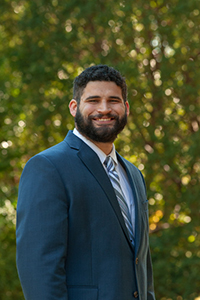
Anthony Ferraro Ph.D.: One of the things that we are seeing at the moment is a move toward remote work. Over the last year we saw many of our student internships and work placements operating in a remote space. There is some suggestion that this style work may continue. Reducing overhead for physical spaces when work can be done remotely and comfort-level with remote work has increased is likely a contributing factor there. Given some of the trends we are seeing in mental health and demands on counseling services, I foresee increased opportunity in that space. One of the things that is most appealing about each of these trends to our students is that in either scenario being "location locked" (due to family obligations or unwillingness to relocate) will not be an issue and that these emerging professionals will be able to make a difference in their own communities. Many of our students place a high value on impacting change, particularly at the local level.
What technical skills for an Employee Relations Coordinator stand out to employers?
Anthony Ferraro Ph.D.: Transferable skills sounds like a cliche but it is one of the strengths for our students which allows a diverse range of career options both within our field and outside of it. Some of the most consistent skills that we attempt to foster and seem to be important for prospective employers include: strong interpersonal communication skills including listening and advanced technical writing, understanding of program development and evaluation, community outreach, etc. While I wouldn't quite consider these skills, many of our students demonstrate high levels of empathy, have firm knowledge of social issues and human development processes, as well as a baseline understanding of the policymaking process in the U.S. and within our state. This combination of skills and knowledge lends itself well to work with nonprofit organizations, public and private agencies, and work with the cooperative extension network most directly. However, many of our students also use these skills to move into health-related professions, including occupational therapy and nursing, as well as counseling professions including marriage and family therapy, school counseling, social work, etc. Many students will complement their undergraduate studies in HDFS with graduate degrees that will further enhance their competitiveness and/or provide the technical training, certification, and/or licensure needed.
What soft skills should all Employee Relations Coordinators possess?
Adrianne Keeler: Soft skills that all graduates should possess and make sure they display during the interview process are public speaking/presentation skills (and specifically the ability to speak and present to various levels of audiences), persuasion/hunting/competitive mentality (especially when targeting working for sales organizations like Zones! We want to know that this soft skill set is natural for you!), coachability (graduates are going to have to learn and retain a lot of information, and are bound to need coaching- are they going to take it?), and lastly a flexible positive attitude. (These times demand flexibility in the workplace, things are pivoting all the time! And the ability to remain positive is key to success with both internal and external customers.)
How have salaries changed over time for Employee Relations Coordinators?
Adrianne Keeler: Salaries in our field have gotten more and more competitive, and have continued to rise. Not only with the base wage, but really with the commission side of earnings. To remain a competitive employer in our industry, companies have made the commissions uncapped and thrown other incentives into the wages as well.
How have salaries changed over time for Employee Relations Coordinators?
Brandi Sechrist: Salaries have risen over the years but not drastically.
What certifications/licenses/courses can have the biggest impact for Employee Relations Coordinators?
Yehia Mortagy: As such courses and certificates would include those that support the above trends. This includes (in no particle order) SAS certification, Python or similar packages, Data Analytics, Supply chain, and Analysis in order to understand/computerize processes.
Jonathan Nash Ph.D.
Assistant Professor of AccountingUniversity of New Hampshire
Paul College of Business and Economics
What are the biggest trends we'll see in the Employee Relations Coordinator job market given the pandemic?
Jonathan Nash Ph.D.: In most years accounting firms have a visible presence on campus. They host networking sessions, resume reviews, and other events promoting professional development. Because of the pandemic firms now offer virtual sessions to help students gain insight into this profession and firm culture. Similarly, interviews, internships, and leadership training events have all moved online.
Despite these changes, employment opportunities have remained strong. Firms need accounting information to make decisions irrespective of macro-level economic conditions. As a result, demand for accounting majors is fairly inelastic (in the press accounting is often referred to as a "recession proof" majorwww.cnbc.com. Initial data suggests our placement rate for this year will be in the mid-90's, consistent with prior years, and salaries remain high (median starting salary of approximately $60,000) relative to most other majors.
What certifications/licenses/courses can have the biggest impact for Employee Relations Coordinators?
Jonathan Nash Ph.D.: Most firms expect students to have a plan for obtaining a CPA license when they're hired. Students must have an undergraduate degree to sit for the CPA exams, so most undergraduates begin taking exams after receiving their degree. Graduate students take the CPA exams while enrolled in the MSA program. Other certifications improve a student's resume, but are not the primary determinant of placement.
What technical skills for an Employee Relations Coordinator stand out to employers?
Mike Polites: Again I believe that this will largely depend on the industry the graduate goes into. But there are some skills that will stand out regardless. In my opinion those might include skills such as knowledge of multiple computer programs; not just Microsoft Office, but website development programs, creative graphic programs, social media management programs, etc. I have a former student who designates on her calendar every Friday morning for 90 minutes she teaches herself a new program, or at least familiarizes herself with it. I love this! What a great dedication to making herself more marketable in the workforce. Other skills that are important include video creation, learning industry-specific software (do a little research on this to prepare for a job interview), project management, data analysis, and strong research skills.
I'd be remissed if I didn't add that technical skills are important to pair with what many call "soft skills" or what I like to refer to as "necessary skills" such as interpersonal communication, communicating well on teams, critical thinking, problem solving/conflict management, and presentation skills.
Thomas Byrnes
Senior Lecturer in Marketing, Marketing Faculty Adviser, American Marketing AssociationNC State University
Department of Business Management
What's a day at work look like for an Employee Relations Coordinator?
Thomas Byrnes: Obviously, there is quite a bit of "screen time". Zoom meetings, virtual client meetings, peer team meetings, etc. are probably what they will be spending quite a bit of time with. So, it is important that a recent graduate is comfortable with electronic calendaring. It is important though that they have a reasonable work-life balance. They need to ensure that they build time into their schedules for breaks which could include lunch breaks as well as time to physically complete some exercise. It is vital that these graduates can find a work place in their home environment that is relatively free from distractions.
What soft skills should all Employee Relations Coordinators possess?
Thomas Byrnes: Obviously, employers are seeking candidates from certain disciplines such as marketing, finance, supply chain, accounting, etc. But, what distinguishes the candidates is their enthusiasm, passion and strong interest in the company they are interviewing with. There is an expression that I have heard from several recruiters: "we hire for attitude and train for ability". It is vital that candidates have a thorough understanding of the company they are interviewing with, that they come prepared with questions for the recruiter and show a strong interest in working for that company. Obviously, the students have to demonstrate strong organizational skills, excellent communication skills, listen well to the questions they are asked and simple things such as "eye contact". This is important even in virtual interviews!
Dr. Salvatore Falletta
Human Resource Development – Program DirectorDrexel University
Policy, Organization, and Leadership
Will there be an enduring impact of the coronavirus pandemic on Employee Relations Coordinators?
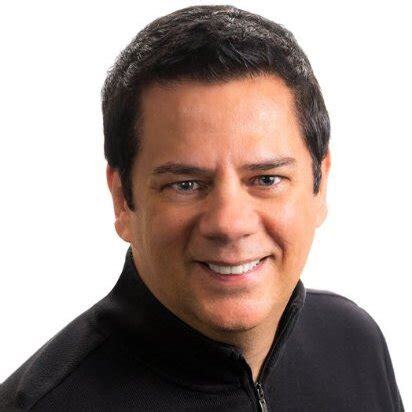
Dr. Salvatore Falletta: The once-in-a-100-years pandemic namely, COVID-19, has been sweeping across our nation and the world. Uncertainty is at an all-time high, as we experience complete disruption of our daily activities and become more homebound. As a result, the way in which we work has changed rapidly. Working remotely has exponentially increased and technology is being leveraged like never before. Remote work will be the new normal for many organizations and industries including the HR profession, which in turn, will provide recent graduates and top talent with greater opportunities irrespective of geographical location and where they physically reside.
What soft skills should all Employee Relations Coordinators possess?
Dr. Salvatore Falletta: While technical skills are vitally important, organizations today expect new employees to posses a broader range of competencies including "soft skills" such as communication, ethics and integrity, being a team player, intercultural sensitivity (e.g., global awareness, diversity, equity, and inclusion), and creativity and innovation, among others.