
Automatically apply for jobs with Zippia
Upload your resume to get started.
Engineer/producer skills for your resume and career
15 engineer/producer skills for your resume and career
1. Audio Engineering
- Freelance music production and audio engineering at 32 track A/D studio.
- Head of team for music production and audio engineering.
2. R
R is a free software environment and a language used by programmers for statistical computing. The R programming language is famously used for data analysis by data scientists.
- Experience in statistical, economic, and data analysis using Stata, R, and Excel.
3. Video Production
- Co-owned and operated a boutique audio and video production facility with an uncommonly intimate focus on the needs of its clients.
- Produced and directed video productions, photo shoots, advertising/promotional campaigns, special events, and presentation developments.
4. Pro Tools
- Utilize expertise in sophisticated software editing and production software such as Adobe Audition, Pro Tools and Apple Logic.
- Produced/Mixed solo Album (Released JULY 2013) - Editing/Mixing-Pro Tools 10
5. Music Production
- Install, adjust, and operate electronic equipment to record, edit, and transmit radio and live music productions.
- Gained exceptional customer service skills by providing composition, recording, music production, and mixing technique services and mentorship.
6. Studio Equipment
Studio Equipment refers to the electronic devices and workplace equipment that can be found in a radio, film, photography, or production studio. This may include any piece of recording equipment, cameras, lighting, and backdrops required for the particular studio. Much of this equipment must be maintained, either with routine cleaning, repairs, or other forms of maintenance.
- Record musical groups and artists as efficiently and comfortably as possible-Expertly navigate through ProTools-Proper use and maintenance of studio equipment
- Prepared studio equipment for recording sessions with customers.
Choose from 10+ customizable engineer/producer resume templates
Build a professional engineer/producer resume in minutes. Our AI resume writing assistant will guide you through every step of the process, and you can choose from 10+ resume templates to create your engineer/producer resume.7. Sound Design
Sound Design skills are required to give animations or films more depth through the use of sound. E.g., the sound of a spaceship, footsteps in movies, sound during fight scenes, etc., all require sound designing skills. It involves creating, recording, and optimizing sound samples for film production, theatre, live performance, and more. You must have a sharp ear to identify different sounds, eliminate redundant ones, and eventually conclude the best audio sample for a particular scene.
- Learned sound design by creating branded FX.
- Collaborated with and advised student sound designers and engineers to obtain the necessary information to execute sound designs.
8. RAN
RAN stands for "revenue anticipation note," which refers to a practice where an organization (often the government) borrows money to support a specific project. When these funds are then repaid, the money given to the lenders comes from the profits generated by the business originally funded.
- Prepared and ran equipment during live FM broadcasts.
- Designed and ran lighting rigs for Binghamton University Club events and neighboring Binghamton area.
9. Radio Show
- Co-produced and engineered various nationally syndicated radio shows and radio specials.
- Engineered and produced national syndicated radio shows and remote broadcast.
10. Live Sound
- Record, mix, and master music for a variety of artist * Mix and engineer live sound
- Live Sound Reinforcement - Monitor and Front-of-house engineering, sound system design, and concert lighting.
11. Songwriting
- Accomplished number 1 charting dance music songwriter and producer/engineer with a publishing catalog of more than 200 musical productions.
- Record Production, Instrumentalist, Vocalist, Engineering, Arrangement, Composition, Songwriting, Remixing.
12. Sound Effects
- Create program montages that include: voice over, music beds, sound bites, and sound effects.
- Set up and fine tuned the audio recording equipment, sound effects and monitored audio levels throughout the show.
13. Radio Station
A radio station is a station with the standard installations required to transmit audio sounds to a wider audience within a geographical region using radiofrequency waves. The audio sounds include news, music, sports information, jingles, press releases and statements, warnings, talk shows, and a large variety of content that can be transmitted to listeners. This is also called radio broadcasting which is the main role of a radio station. The broadcasting can be done on land, or via a satellite orbiting the earth as in satellite radios.
- Represent CBS out at live broadcasts- setting up broadcast equipment and sending audio back to the radio station.
- Support staff for maintaining the radio station and web content.
14. Adobe Audition
- Used Adobe Audition to edit 10 Seconds of Glory clips that were submitted by listeners to be played on-air.
- Mixed and edited music using software programs such as Audacity, Pro Tools, and Adobe Audition.
15. DJ
DJ is an acronym for disc jockey which stands for a person that curates songs and plays them for an audience or in a radio station to numerous listeners. They usually have a compilation of songs from different artists cutting across different genres and regions of the world. They are important figures in the music entertainment industry.
- Performed live spots and breaks with DJ.
- Show Production, Live Audio Mixing, Live Performance Lighting, Stage Management, DJ and Artist Relations.
5 Engineer/Producer resume examples
Build a professional engineer/producer resume in minutes. Browse through our resume examples to identify the best way to word your resume. Then choose from 5+ resume templates to create your engineer/producer resume.

What skills help Engineer/Producers find jobs?
Tell us what job you are looking for, we’ll show you what skills employers want.
What skills stand out on engineer/producer resumes?
Duncan MacKenzie
Chairperson and Associate Professor, Columbia College Chicago
What soft skills should all engineer/producers possess?
Dr. Heidrun Schmitzer
Professor and Chair, Xavier University
What engineer/producer skills would you recommend for someone trying to advance their career?
Benom Plumb
Program Director & Associate Professor, University of the Pacific
What type of skills will young engineer/producers need?
John Ring
Director Engineering Outreach, Elon University
List of engineer/producer skills to add to your resume
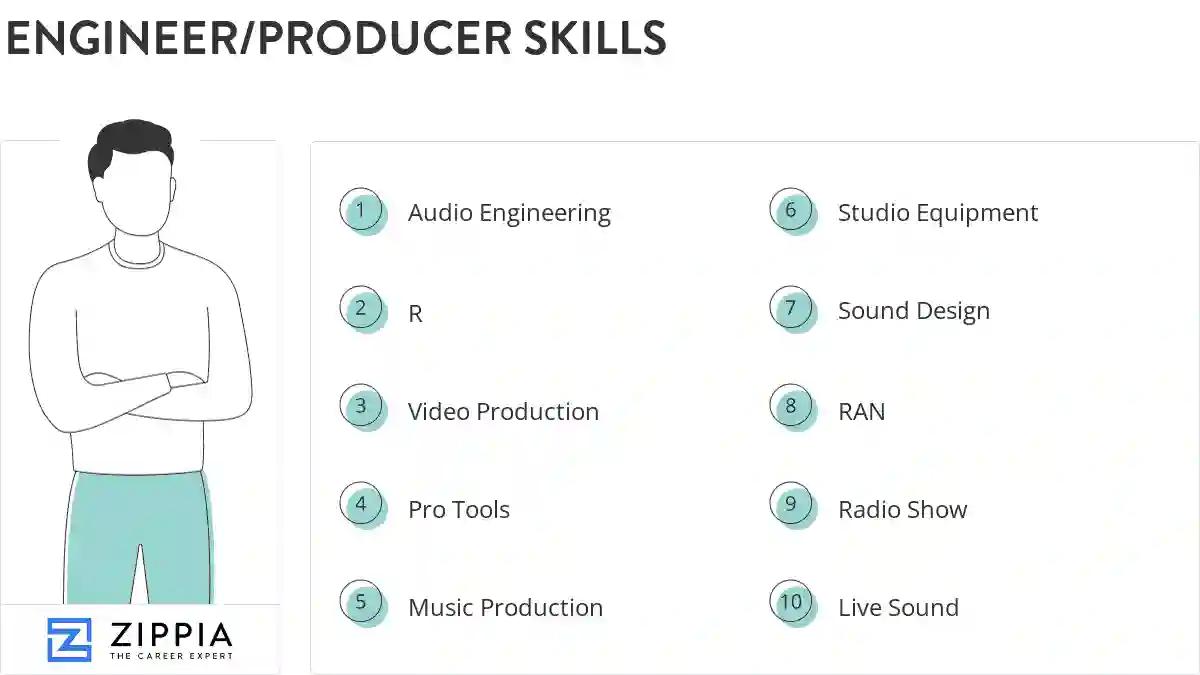
The most important skills for an engineer/producer resume and required skills for an engineer/producer to have include:
- Audio Engineering
- R
- Video Production
- Pro Tools
- Music Production
- Studio Equipment
- Sound Design
- RAN
- Radio Show
- Live Sound
- Songwriting
- Sound Effects
- Radio Station
- Adobe Audition
- DJ
- SSL
- Mix Audio
- Ableton
- Live Shows
- FM
- Production
- Logic Pro
- Microphone Placement
- Digital Audio
- EP
- Studio Environment
- YouTube
- ADR
- Sound Equipment
- Audio Tracks
- Video Equipment
- Music Videos
Updated January 8, 2025
