
Automatically apply for jobs with Zippia
Upload your resume to get started.
Estate administrator skills for your resume and career
15 estate administrator skills for your resume and career
1. Probate
- Review and Production efficiency submit legal documents for various probate procedures.
- Review probate and civil pleadings, notes, trusts and contracts for review with management or the Assistant Attorney General.
2. Client Relationships
- Maintained a working knowledge of various bank resources to facilitate client service delivery and expand client relationships.
3. Estate Settlement
- Served as administrator of the trust and estate settlement unit of elder law firm.
- Provided contract services in the area of estate settlement to a general practice attorney
4. Litigation
- Code corporate documents relating to patent litigation, cellular telephone tower contracts and other litigation matters.
- Streamlined administrative processes and introduced process improvements that enhanced productivity and ease of civil litigation documentation.
5. Financial Institutions
Financial Institutions come in all sizes, forms, and are meant for all sorts of purposes. Some only keep money, some only trade it, some focus on extending loans, some work with only other financial corporations or regular business and companies, and some are built to be useful and multi-purpose. A central bank, for example, is a banking institution meant to keep an eye on other banks and ensure that no laws or rules are broken or bent.
- Coordinated with law firms, banks and other financial institutions.
- Represent and defend financial institutions, trusts and government-sponsored enterprises before Florida courts and quasi-judicial bodies.
6. Estate Assets
- Distributed, transferred and/or sold estate assets.
Choose from 10+ customizable estate administrator resume templates
Build a professional estate administrator resume in minutes. Our AI resume writing assistant will guide you through every step of the process, and you can choose from 10+ resume templates to create your estate administrator resume.7. Estate Tax Returns
- Prepared agreements settling account, receipt and release agreements, and estate tax returns.
- Produced all necessary documents for yearly estate tax returns.
8. Trust Accounts
- Assisted in the administration of trust accounts.
- Worked closely with outsourced bookkeeping service regarding operating and trust accounts; prepared payroll.
9. Real Estate Transactions
- Handled all estate administration, real estate transactions, tax preparations and accountings
- Represented Georgia residential lenders in residential and commercial real estate transactions and closings, including lease negotiations, purchases and refinances.
10. Securities
- Executed all client-directed gifts, including gifts of securities and personal property, to individuals and various charitable organizations.
- Managed Conservator s estate of real property, personal property, assets, and securities.
11. CPA
- Worked with Estate Attorneys and CPA.
- Assisted the supervisor and CPA's in various record keeping projects.
12. Client Assets
- Tracked daily account reconciliations for approximately $500 million in client assets.
- Conducted thorough cost/benefit analysis of client assets, approved asset purchases and made recommendations or justifications.
13. Estate Accounts
- Administered a portfolio of personal trust and estate accounts for high net worth clients.
14. Real Property
Real property refers to the land, buildings, and every other physical thing on sight within a marked area of land. It also refers to everything physically and permanently attached to a given parcel of land including the soil. It goes further into the legal documents like the right to ownership, right to sell, lease, and use the land including all the physical assets on it. The term is also related to real estate and can be used interchangeably.
- Interpreted decades-old maps for clarity and fairness of real property.
- Handled all Assets and Real Property Liquidation and distribution.
15. Property Management
Property management is the regular oversight of commercial, residential, or industrial real estate by a third-party contractor. Property management includes the day-to-day care of the property, fixing minor and major issues, and monitoring the security of the property.
- Make decisions regarding property management, rental and sale of the properties in the best Project management interest of the estate.
- Handled all aspects of residential property management for multiple unit dwellings as part of a decedents estate.
5 Estate Administrator resume examples
Build a professional estate administrator resume in minutes. Browse through our resume examples to identify the best way to word your resume. Then choose from 5+ resume templates to create your estate administrator resume.

What skills help Estate Administrators find jobs?
Tell us what job you are looking for, we’ll show you what skills employers want.
List of estate administrator skills to add to your resume
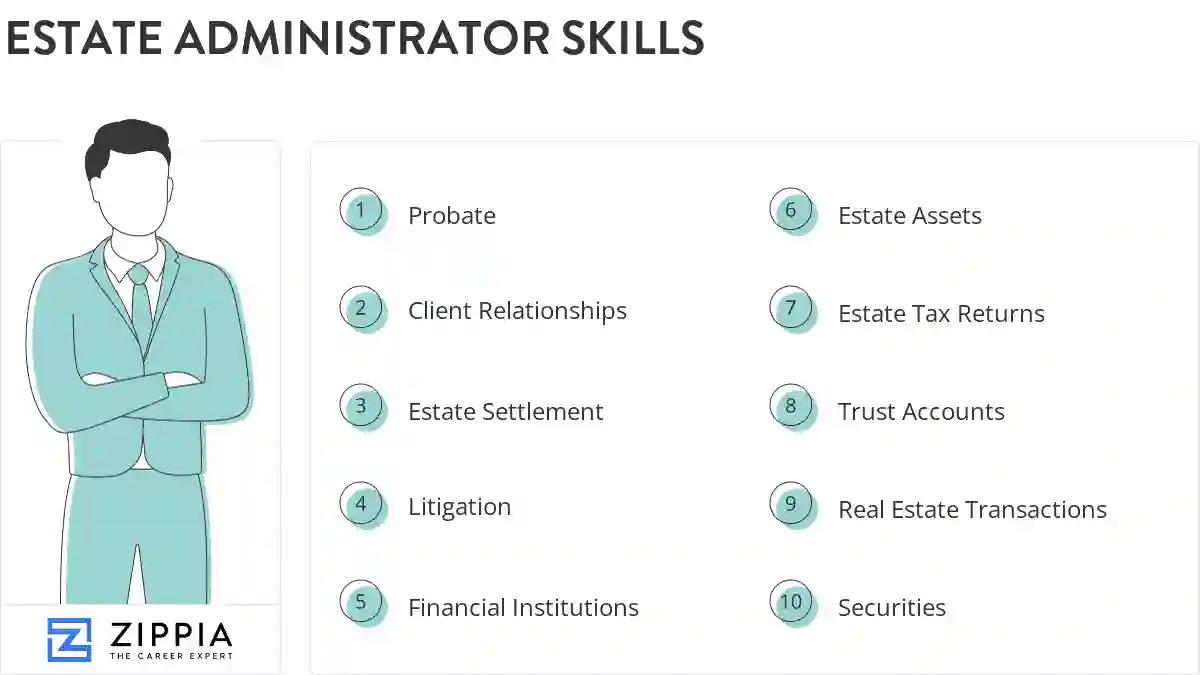
The most important skills for an estate administrator resume and required skills for an estate administrator to have include:
- Probate
- Client Relationships
- Estate Settlement
- Litigation
- Financial Institutions
- Estate Assets
- Estate Tax Returns
- Trust Accounts
- Real Estate Transactions
- Securities
- CPA
- Client Assets
- Estate Accounts
- Real Property
- Property Management
- Financial Assets
- Social Security
Updated January 8, 2025
