
Automatically apply for jobs with Zippia
Upload your resume to get started.
Evening or night nurse supervisor skills for your resume and career
13 evening or night nurse supervisor skills for your resume and career
1. BLS
- Received bonus for participation in professional development program by obtaining oncology certification and BLS instructor certification.
- Maintain unit deployment readiness by ensuring current unit BLS certifications.
2. CPR
Cardiopulmonary resuscitation or CPR is a medical procedure that involves chest compression to help a patient breathe. This artificial ventilation helps in keeping the brain function in place and regulates blood throughout the body. CPR is a lifesaving procedure that is used in emergencies.
- Delivered patient/family education in CPR, crisis intervention and physiological warning signs; assisted with discharge planning and community resource coordination
- Participated in emergency situations of non-responsive individuals by administering drugs, initiating CPR and documenting appropriate actions according to response guidelines.
3. Discharge Planning
- Directed discharge planning/quality assurance/utilization review/risk management programs.
- Participate in physician/nursing rounds, patient discharge planning, educate patients/family with regard to medications, equipment and pulmonary disease management.
4. Acls
- Provided assessment and interventions in emergent situations, including cardiac and respiratory arrest, and followed ACLS protocols.
- Provided clinical intervention based on cardiac rhythms utilizing ACLS protocol, performed Peritoneal Dialysis on ESRD patients.
5. Direct Patient Care
- Participated in direct patient care-gave treatments to patients, prepared surgical instruments, assisted in operations and provided post -operational care.
- Registered nurse on Oncology/Pulmonary Unit accountable for direct patient care and monitoring of care provided by other professional and ancillary personnel.
6. Emergency Situations
- Assigned staff duties during emergency situations in response to department's emergency assistance requests.
- Identify safety/emergency situations and respond in accordance with procedures/policies
7. Physician Orders
Physician orders are an instruction or a set of instructions given to a patient by a doctor. This could range from being put on bedrest to being given a prescription to fill and take.
- Obtain Physician Orders and carry them out Follow Resident care plans, and document progress in medical records
- passed meds, nightly patient assessments, wound and skin treatments and dressing changes as per physician orders, EMR charting.
8. Infection Control
Infection control describes the principles and practices used in hospitals and other healthcare facilities to control and minimize the spread of infections with the aim of lowering rates of infection. Infection control refers to the process of detecting and controlling pathogens in order to reduce their spread.
- Developed and implemented infection control policies including: mandatory immunization requirements, medication management, and infection control and quarantine procedures.
- Selected to serve as an infection control coordinator- facilitated and organized meetings with ward managers to ensure infection control policy compliance.
9. Night Shifts
- Mobilized Reservist in response to Operation Enduring Freedom Increased visibility of Evening / Night Supervisor on both day and night shifts.
10. Medication Administration
- Assisted elderly and developmentally-disabled adults with medication administration.
- Demonstrated superior accuracy in documentation and medication administration.
11. EMR
- Trained as a super-user during the implementation of EMR Received Outstanding Performance / Best Qualified on Officer Evaluation Report
- Commended for EMR accuracy, effective team collaboration, patient relations and consistent delivery of empathetic care.
12. Vital Signs
Vital signs are a set of values indicating different body systems' performance. They are measurements of the body's most basic functions. The four major vital signs used in medicine to assess a patient are body temperature, pulse rate, respiration rate, and blood pressure.
- Obtain Vital signs, and monitor any changes in residents conditions and report them immediately to RN.
- Performed physical examinations by taking vital signs, checking neurological reflexes, examining breasts, or performing pelvic examinations.
13. Patient Care
Patient care entails the diagnosis, recovery, and control of sickness as well as the maintenance of physical and emotional well-being through the use of healthcare providers' services. Patient care is described as services provided to patients by health practitioners or non-professionals under guidance.
- Conducted patient care rounds for the purpose of assessing, planning, implementing and evaluating patient care needs.
- Maintain current knowledge relating to new developments, therapeutic measures while utilizing evidence-based practice to provide excellent and holistic patient care.

What skills help Evening Or Night Nurse Supervisors find jobs?
Tell us what job you are looking for, we’ll show you what skills employers want.
List of evening or night nurse supervisor skills to add to your resume
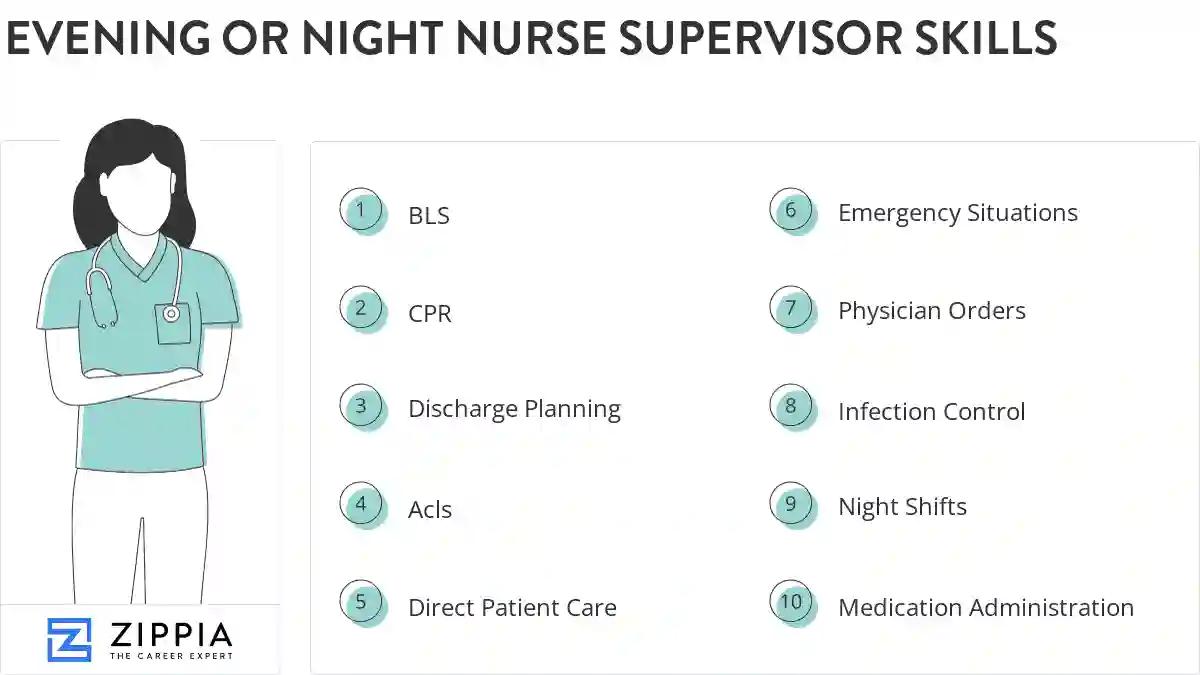
The most important skills for an evening or night nurse supervisor resume and required skills for an evening or night nurse supervisor to have include:
- BLS
- CPR
- Discharge Planning
- Acls
- Direct Patient Care
- Emergency Situations
- Physician Orders
- Infection Control
- Night Shifts
- Medication Administration
- EMR
- Vital Signs
- Patient Care
Updated January 8, 2025
