
Automatically apply for jobs with Zippia
Upload your resume to get started.
Instructional design specialist skills for your resume and career
15 instructional design specialist skills for your resume and career
1. Instructional Design
Instructional design is the application of knowledge and skills by creating learning experiences and materials. The practice follows a systematic assessment of needs, designing a process, developing learning materials, and evaluating if these experiences are effective.
- Organized storyboards and instructional design documents from faculty and instructional designers to create reusable learning modules based on Quality Matters standards.
- Developed instructor-led, performance-based training programs, using standard instructional design methodology, resulting in an improvement in management skills.
2. Subject Matter Experts
- Worked with identified subject matter experts and course instructors to develop quality content that improved existing curriculum.
- Analyzed submissions from engineers and subject matter experts and converted data into policy.
3. PowerPoint
- Created animated and interactive PowerPoint presentations and self-paced hands-on tutorials.
- Utilized the following software during design and development phase: o InfoMapping o Acrobat o PowerPoint o Presenter
4. Training Programs
- Developed and reviewed all educational, instructional, and training programs to include content and curriculum development in educational outreach.
- Captured legacy knowledge in managing franchises for training programs delivered in traditional classroom format and online.
5. Learning Management System
A learning management system or LMS is application software used for administration, tracking, or documentation purposes in education institutes, offices, learning, or training programs. It streamlines the daily chores and reduces the time spent on manual administration tasks. LMS provides a broad array of access to eLearning platforms and also reduces learning and development costs. Google Classrooms, Blackboard Learn are examples of learning management systems
- Developed HTML and Learning Management System performance assessments based on instructional objectives and job competencies.
- Define processes for Plateau/SuccessFactors/SAP learning management system, document procedures for I.T.
6. Training Materials
- Identified learner characteristics that supported specific objectives and training strategies for the validation and evaluating of training practices and training materials.
- Provide oversight and management of personnel to enable timely product development in delivering relevant training materials.
Choose from 10+ customizable instructional design specialist resume templates
Build a professional instructional design specialist resume in minutes. Our AI resume writing assistant will guide you through every step of the process, and you can choose from 10+ resume templates to create your instructional design specialist resume.7. Project Management
- Project management: Skilled in effectively managing projects from inception to conclusion using proven project management techniques.
- Lead and/or provide project management support in the educational endeavors of the university.
8. ELearning
- Updated and optimized eLearning software application simulations for Sales training.
- Use various authoring tools for creating and maintaining interactive eLearning content and job aids.
9. Course Content
- Design and develop dynamic instructional interactions and simulations to create interactive, engaging course content.
- Provided training and coaching for professors on delivering course content in a distance education environment.
10. Blended Learning
- Designed and assisted with the implementation of instructor led training, self-study, blended learning, and e-learning programs and products.
- Distance (Webinar) training and other blended learning solutions using Human Performance Improvement (HPI) methodology.
11. Learning Objectives
- Managed content for training department, aligning organizational goals with learning objectives.
- Participated in meetings and discussion with customers to define learning objectives and course scope to initiate a needs analysis.
12. Articulate Storyline
- Design and develop e-Learning, instructor led training, and job aids, using tools such as Articulate Storyline.
- Practice (GMP) Articulate Storyline 2 Quality Assurance Specialist, Cephalon, Inc.
13. Curriculum Development
- Create new curriculum development while evaluating and revamping existing curricula as needed.
- Placed videos and PowerPoints into the curriculum development team system.
14. Camtasia
- Converted numerous instructor-led courses to appropriate e-learning formats using Articulate, Captivate, Camtasia and ancillary software packages.
- Authored e-learning modules using Captivate and Camtasia to facilitate online learning.
15. SMEs
- Collaborated with SMEs and diverse stakeholders to design and develop company-wide learning and development programs.
- Work with instructors, SMEs, instructional technologists and multimedia developers to analyze, design, and develop distributed learning solutions.
5 Instructional Design Specialist resume examples
Build a professional instructional design specialist resume in minutes. Browse through our resume examples to identify the best way to word your resume. Then choose from 5+ resume templates to create your instructional design specialist resume.

What skills help Instructional Design Specialists find jobs?
Tell us what job you are looking for, we’ll show you what skills employers want.
What skills stand out on instructional design specialist resumes?
Meredith Kier Ph.D.
Associate Professor and Department Chair, William & Mary
I think that we will continue to need talented candidates in the field who are prepared in culturally-responsive teaching strategies to promote equitable learning outcomes for students. This being said, it is important for teachers to be supported by their administrators and community to cultivate a network of care for students.
What hard/technical skills are most important for instructional design specialists?
Desiree Pointer Mac Ph.D.
Professor of Education, Director of Graduate Education Programs, Alverno College
What soft skills should all instructional design specialists possess?
Desiree Pointer Mac Ph.D.
Professor of Education, Director of Graduate Education Programs, Alverno College
What instructional design specialist skills would you recommend for someone trying to advance their career?
Dr. Lynn Baynum Ph.D.
Associate Professor in Early Childhood and Literacy Education, Shippensburg University
For example, a teacher candidate who volunteers to work in a homeless shelter would begin to understand the factors that impact academic success. Also, teacher candidates can volunteer or work in urban settings with English Language Learners to better understand language acquisition. Fluency in a second language is not required in teacher training, yet conversational understanding of a second language helps a teacher candidate to not only communicate in that language, but also to empathize with English Language Learners. Knowledge of these factors (language acquisition, poverty, equity) enables teacher candidates to not only reflect on learners' needs but also to learn how to advocate for support. In addition, teacher candidates can become well versed in the service agencies aligned with community wellness and safety. In fact, teacher candidates can enroll in such programs as Youth First Aid Mental Health Training and QPR Training (Question, Persuade, Refer) to better recognize links between cognitive and social-emotional development.
What technical skills for an instructional design specialist stand out to employers?
David Emanuel Ph.D.
Associate Professor, Nyack College
List of instructional design specialist skills to add to your resume
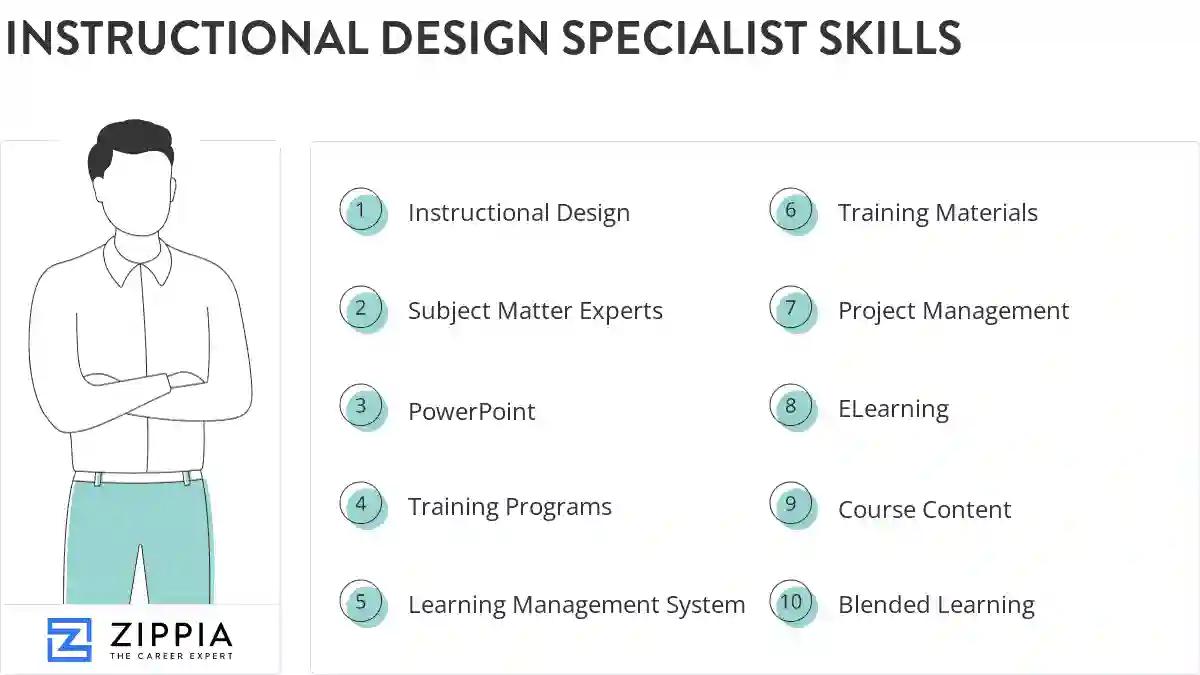
The most important skills for an instructional design specialist resume and required skills for an instructional design specialist to have include:
- Instructional Design
- Subject Matter Experts
- PowerPoint
- Training Programs
- Learning Management System
- Training Materials
- Project Management
- ELearning
- Course Content
- Blended Learning
- Learning Objectives
- Articulate Storyline
- Curriculum Development
- Camtasia
- SMEs
- Instructional Technology
- Led Training
- HR
- Instructional Materials
- Professional Development
- Course Materials
- Photoshop
- Training Courses
- SharePoint
- Training Sessions
- Training Projects
- Content Development
- Delivery Methods
- Course Development
- Adobe Captivate
- Blackboard
- Training Development
- Course Design
- Training Classes
- WebEx
- Emerging Technologies
- HTML
- Training Modules
- Employee Development
- Adult Learning Theories
- Training Curriculum
- Educational Materials
- Training Documentation
- SCORM
- ILT
- Webinar
- Addie Model
- Learning Outcomes
- Educational Content
Updated January 8, 2025
