What does a linux systems engineer do?
A Linux system engineer is responsible for creating computer applications and programs through the Linux operating system. Linux system engineers design technical model solutions that would improve the efficiency of operational processes and maximize the staff's productivity. They also handle the upgrade of network infrastructure, system maintenance, and installment of software updates. A Linux system engineer must have excellent knowledge of the Linux methods, as well as a strong command of programming languages and system codes to generate system tools according to business requirements and client specifications.
Linux systems engineer responsibilities
Here are examples of responsibilities from real linux systems engineer resumes:
- Lead the drive to upgrade from SMS to SCCM to take advantage of the advanced features that SCCM offer.
- Manage VMware (ESX & ESXi) servers and clusters.
- Create and manage user accounts and groups permissions on RHEL6 systems using LDAP.
- Manage disk configurations using LVM on local servers as well as NFS systems.
- Experience in AWS, which include managing application in the cloud and creating instances.
- Perform pSeries Virtualization in AIX environments, build and manage VIO servers and clients.
- Install various Linux OS (RHEL, CentOS, SLES, etc . )
- Script in bash, Perl and python.
- Provide patching support & upgrading of RHEL OS on monthly basis for applying the security patches for Linux servers.
- Configure VMware servers network and SAN resources.
- Migrate windows and Linux servers in data center.
- Monitor the system performance with the NAGIOS and TIVOLI monitoring tools.
- Create, implement and maintain various bash and Perl scripts for system and performance monitoring.
- Resolve network relate problems involving network systems such as DNS and DHCP using TCP/IP relate tools.
- Define, document and execute methods and procedures for upgrading all physical and virtual CentOS Linux servers.
Linux systems engineer skills and personality traits
We calculated that 11% of Linux Systems Engineers are proficient in Python, Bash, and Cloud. They’re also known for soft skills such as Analytical skills, Communication skills, and Problem-solving skills.
We break down the percentage of Linux Systems Engineers that have these skills listed on their resume here:
- Python, 11%
Skilled and Developed automation scripting in Python (core) using Puppet to deploy and manage Java applications across Linux servers.
- Bash, 5%
Developed Bash and Perl scripts to automatically maintain system routines
- Cloud, 4%
Developed innovative tool for LINUX deployment and Disaster Recovery Process which is platform, distribution independent and cloud environment friendly.
- Centos, 4%
Performed day to day administration of Windows 2008 R2/ 2012, Linux Red Hat, CentOS, Oracle Linux.
- Red Hat, 4%
Support HP-UX 11i, Red Hat Enterprise Linux 4,5, and 6 and Windows 2000/2003/2008/2012 Enterprise Server issues related to backups.
- Troubleshoot, 4%
Analyze code related defects using system generated logs, and troubleshoot configuration issues on application servers in all environments.
Most linux systems engineers use their skills in "python," "bash," and "cloud" to do their jobs. You can find more detail on essential linux systems engineer responsibilities here:
Analytical skills. The most essential soft skill for a linux systems engineer to carry out their responsibilities is analytical skills. This skill is important for the role because "administrators need to evaluate networks and systems to make sure that they perform reliably and to anticipate new requirements as customers’ needs change." Additionally, a linux systems engineer resume shows how their duties depend on analytical skills: "maintained/modified perl programs for power analysis of android phones. "
Communication skills. Another soft skill that's essential for fulfilling linux systems engineer duties is communication skills. The role rewards competence in this skill because "administrators must describe problems and their solutions to non-it workers." According to a linux systems engineer resume, here's how linux systems engineers can utilize communication skills in their job responsibilities: "utilized samba, winbind, and kerberos to establish linux to windows communication and configuring linux servers with active directory domains. "
Problem-solving skills. Another skill that relates to the job responsibilities of linux systems engineers is problem-solving skills. This skill is critical to many everyday linux systems engineer duties, as "administrators must quickly resolve problems that arise with computer networks." This example from a resume shows how this skill is used: "developed perl based plug-ins and created rpm package for extending functionality of nagios monitoring solution. "
The three companies that hire the most linux systems engineers are:
- General Dynamics183 linux systems engineers jobs
- General Dynamics Mission Systems
145 linux systems engineers jobs
- Oracle47 linux systems engineers jobs
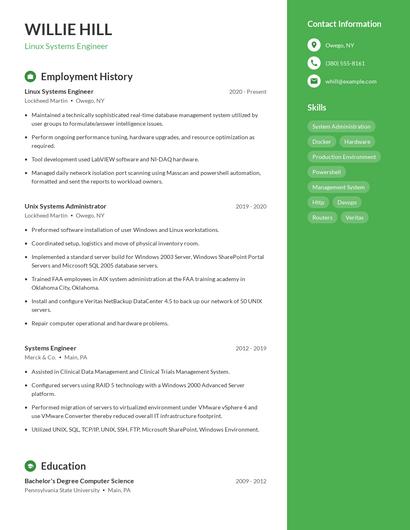
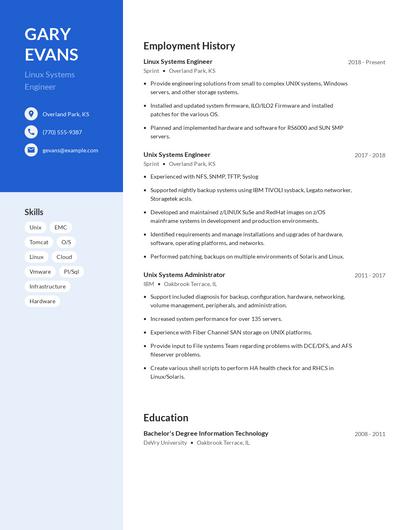
Choose from 10+ customizable linux systems engineer resume templates
Build a professional linux systems engineer resume in minutes. Our AI resume writing assistant will guide you through every step of the process, and you can choose from 10+ resume templates to create your linux systems engineer resume.









Compare different linux systems engineers
Linux systems engineer vs. Unix administrator
A Linux administrator is responsible for monitoring the efficiency of Linux operating systems to support business operations and high-quality deliverables. Linux administrators handle the resolution of Linux network issues, maintaining its stability and ensuring its safety and security from unauthorized access and malware threats. They also conduct regular maintenance to configure the system navigation and infrastructure, running multiple diagnostic tests to identify defects, and recommending strategic procedures for system enhancement. A Linux administrator must have excellent communication and technical skills, especially in providing technical support on faulty servers.
There are some key differences in the responsibilities of each position. For example, linux systems engineer responsibilities require skills like "python," "cloud," "troubleshoot," and "aws." Meanwhile a typical unix administrator has skills in areas such as "database," "veritas netbackup," "ibm aix," and "disk space." This difference in skills reveals the differences in what each career does.
Unix administrators really shine in the finance industry with an average salary of $93,829. Comparatively, linux systems engineers tend to make the most money in the technology industry with an average salary of $113,271.The education levels that unix administrators earn slightly differ from linux systems engineers. In particular, unix administrators are 2.7% less likely to graduate with a Master's Degree than a linux systems engineer. Additionally, they're 0.2% less likely to earn a Doctoral Degree.Linux systems engineer vs. Linux administrator
A systems administrator lead is responsible for planning, designing, and implementing procedures for critical enterprise systems. Typical duties of systems administrators include managing the day-to-day operations of a company's computer and network systems, developing new application and system implementation plans, and establishing guidelines for installing and managing the organization's computer operating systems. In addition, you are expected to ensure the security of computer systems by preventing unauthorized use, user abuse, and acts of nature.
In addition to the difference in salary, there are some other key differences worth noting. For example, linux systems engineer responsibilities are more likely to require skills like "cloud," "docker," "devops," and "system administration." Meanwhile, a linux administrator has duties that require skills in areas such as "windows," "database," "http," and "disk space." These differences highlight just how different the day-to-day in each role looks.
On average, linux administrators earn a lower salary than linux systems engineers. Some industries support higher salaries in each profession. Interestingly enough, linux administrators earn the most pay in the technology industry with an average salary of $82,498. Whereas linux systems engineers have higher pay in the technology industry, with an average salary of $113,271.linux administrators earn similar levels of education than linux systems engineers in general. They're 1.2% more likely to graduate with a Master's Degree and 0.2% less likely to earn a Doctoral Degree.Linux systems engineer vs. Systems administrator lead
Systems administrators are employees who oversee information technology infrastructures in the office. They are skilled information technology professionals who are knowledgeable about the company's network systems and other technology-related infrastructures. They are responsible for installing, configuring, or updating network systems, software, and hardware. They also monitor the different systems and troubleshoot any issues that users may encounter. Systems administrators manage the access of users, ensure the security of the network, and address any challenges that users may have. They conduct repairs and routine maintenance to ensure that the systems in place are in the best shape.
Some important key differences between the two careers include a few of the skills necessary to fulfill the responsibilities of each. Some examples from linux systems engineer resumes include skills like "python," "bash," "cloud," and "centos," whereas a systems administrator lead is more likely to list skills in "linux," "project management," "technical support," and "database. "
Systems administrator leads make a very good living in the telecommunication industry with an average annual salary of $103,205. On the other hand, linux systems engineers are paid the highest salary in the technology industry, with average annual pay of $113,271.systems administrator leads typically earn similar educational levels compared to linux systems engineers. Specifically, they're 3.4% less likely to graduate with a Master's Degree, and 0.2% less likely to earn a Doctoral Degree.Linux systems engineer vs. Systems administrator
Types of linux systems engineer
Updated January 8, 2025
