
Automatically apply for jobs with Zippia
Upload your resume to get started.
Neurodiagnostic technologist skills for your resume and career
15 neurodiagnostic technologist skills for your resume and career
1. Patients
- Recognized artifact and properly documented the patient's condition and archived patients when finished.
- Placed appointment reminder calls to patients and documented pediatric patient numbers for analysis purposes.
2. Patient Care
Patient care entails the diagnosis, recovery, and control of sickness as well as the maintenance of physical and emotional well-being through the use of healthcare providers' services. Patient care is described as services provided to patients by health practitioners or non-professionals under guidance.
- Collaborated across teams between necessary health contacts in line with patient care and confidentiality.
- Prioritized my daily work schedule, was in contact with my Neurologists regarding patient care.
3. Epilepsy
- Performed long term epilepsy monitoring.
- Performed EEG, EP, IOM and Operation of Epilepsy Monitoring, Developed Infant Hearing Screening Protocol.
4. Intraoperative
- Performed intraoperative monitoring with various types of monitoring equipment to collect diagnostic patient data.
- Performed Evoked Potential Studies, Intraoperative Monitoring and Electroencephalograms.
5. CPR
Cardiopulmonary resuscitation or CPR is a medical procedure that involves chest compression to help a patient breathe. This artificial ventilation helps in keeping the brain function in place and regulates blood throughout the body. CPR is a lifesaving procedure that is used in emergencies.
- Maintained CPR certification with yearly credits.
- Result: Teammates are able to participate in mandatory workshops such as: sign language or CPR training for assigned home
6. Nerve Conduction Studies
- Performed nerve conduction studies in numerous doctor's offices around the state of Arizona.
- Perform nerve conduction studies at clinics through northeast Florida.
Choose from 10+ customizable neurodiagnostic technologist resume templates
Build a professional neurodiagnostic technologist resume in minutes. Our AI resume writing assistant will guide you through every step of the process, and you can choose from 10+ resume templates to create your neurodiagnostic technologist resume.7. Electroencephalography
- Conduct tests or studies such as electroencephalography (EEG).
- Perform standard and complex electroneurodiagnostic testing procedures, which include; routine, bedside, sleep deprived and ambulatory electroencephalography.
8. Electroencephalograms
- Performed Electroencephalograms under the direct supervision of a registered EEG Technologist and / or a Neurologist or Neurosurgeon
- Preform electroencephalograms with impedance settings of 10 Hertz or less with very little artifact.
9. Test Results
- Recorded test results and other data into patient s record.
- Submitted reports to physicians summarizing test results.
10. EMU
- Performed 300 hours of EEG testing in multiple hospital departments including MICU, SICU, EMU, and LTM.
- Work in the EMU doing LTM with pediatrics and attend grid surgeries
11. Ambulatory EEG
- Performed Ambulatory EEG recording to include 23, 48 and 72 hours.
- Performed EEG, EMG and Ambulatory EEG - On call
12. ICU
ICU means intensive care units. It also has a name known as the critical care unit or intensive therapy unit. The ICU handles patients experiencing acute diseases or severe injuries that need specialized treatment procedures by specific professionals.
- Provided EEG testing procedures on inpatient, ICU, LTM, and outpatient.
- Perform TCD exams in the ICU.
13. Medical History
- Document pertinent medical history from the patient or family members.
- Take pertinent medical history relating a patient's illness to radiology procedure.
14. Patient Data
- Maintained record keeping, patient data sheets, patient logs, and clinical follow up.
15. Perform EEG
- Performed and utilized the EEG equipment, Kept records of patient studies, file insurance, ran department, ordered supplies.
- Performed procedures and used equipment as delegated by a licensed professional, EEG's, EMG/NCV's, VENG's.
5 Neurodiagnostic Technologist resume examples
Build a professional neurodiagnostic technologist resume in minutes. Browse through our resume examples to identify the best way to word your resume. Then choose from 5+ resume templates to create your neurodiagnostic technologist resume.

What skills help Neurodiagnostic Technologists find jobs?
Tell us what job you are looking for, we’ll show you what skills employers want.
List of neurodiagnostic technologist skills to add to your resume
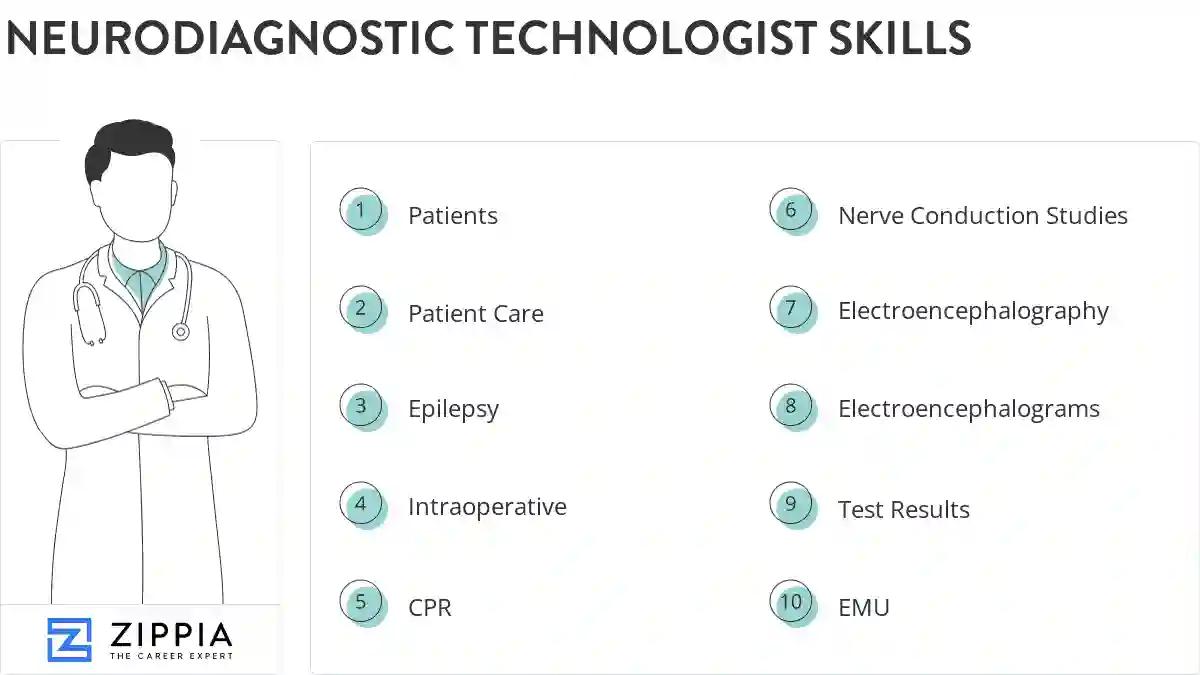
The most important skills for a neurodiagnostic technologist resume and required skills for a neurodiagnostic technologist to have include:
- Patients
- Patient Care
- Epilepsy
- Intraoperative
- CPR
- Nerve Conduction Studies
- Electroencephalography
- Electroencephalograms
- Test Results
- EMU
- Ambulatory EEG
- ICU
- Medical History
- Patient Data
- Perform EEG
- ECS
- PET
- LTM
- Medical Equipment
- WADA
- Sleep Studies
- Baer
- EKG
- Sleep Disorders
- Diagnostic Procedures
- Epic
- MSLT
- EPS
- EMG
- Ncv
- IOM
- Nervous System Disorders
- Routine EEG
- Hippa
- PSG
- Ssep
- Electrode Placement
- Brain Disorders
- Repair Equipment
- Patient Charts
- Sleep Lab
- Titration
Updated January 8, 2025
