
Automatically apply for jobs with Zippia
Upload your resume to get started.
Orthopedic physical therapist skills for your resume and career
15 orthopedic physical therapist skills for your resume and career
1. Patients
- Provided evaluation and treatment for orthopedic and neurological patients * Provided continuing education training to physical therapists in manual therapy techniques.
- Developed and implemented an activity checklist for post-operative patients to reduce incidence rate of pneumonia.
2. Rehabilitation
- Supervised treatment conducted by physical therapist assistants and delegated appropriate tasks to rehabilitation technicians on a daily basis.
- Facilitated open communication with members of interdisciplinary rehabilitation team.
3. Patient Care
Patient care entails the diagnosis, recovery, and control of sickness as well as the maintenance of physical and emotional well-being through the use of healthcare providers' services. Patient care is described as services provided to patients by health practitioners or non-professionals under guidance.
- Promote safe and therapeutic interdisciplinary patient care through consultation, supervision, effective communication and training of direct care staff.
- Performed ongoing inpatient/outpatient care assessment and data collection, focusing on emotional and cognitive status.
4. Home Health
- Evaluated and treated home health patients Communicated with physicians and case managers Coordinated care with nursing, speech and occupational therapy
- Home Health physical therapy evaluations, treatments/discharges, instructed in home exercise programs, and supervised physical therapy assistants.
5. Discharge Planning
- Developed individualized discharge planning for the residents by utilizing treatment team and written chart information to determine residents' aftercare needs.
- Participated in weekly in multidisciplinary treatment team meetings to formulate individualized treatment plan and assisted in coordinating discharge planning.
6. Discharge Summaries
- Charted patient activities and prepared discharge summaries
- Coordinated education calendar; supervised milieu; maintained client records; developed after-care plans and composed discharge summaries.
Choose from 10+ customizable orthopedic physical therapist resume templates
Build a professional orthopedic physical therapist resume in minutes. Our AI resume writing assistant will guide you through every step of the process, and you can choose from 10+ resume templates to create your orthopedic physical therapist resume.7. Inpatient Services
- Handle the care of outpatient services and inpatient services.
8. Program Development
Program development refers to a road for developers to guide them on creating and developing viable community programs. Since it provides an action plan for the project, it is a continuous process that only ends with the program's full implementation.
- Coordinate work flow, staffing patterns, program development, and inventory control.
9. Outpatient Clinic
Outpatient clinics are a part of a hospital and are set up for the purpose of treating outpatients - those who require treatment and diagnosis, but not a bed or overnight care.
- Worked with adults and children in private outpatient clinic specializing in hand therapy, upper extremity rehabilitation and pediatrics.
- Evaluated and treated adult and pediatric patients in an outpatient clinic under supervision of clinical instructors.
10. Injury Prevention
Injurу рrеvеntіоn іѕ аn асtіvіtу оr attempt tо prevent, trеаt, оr reduce thе severity оf bodily іnjurіеѕ or dіѕаbіlіtу аnd dеаth related tо іnjurіеѕ саuѕеd by external mесhаnіѕmѕ, ѕuсh аѕ accidents, before thеу оссur.
- Implemented a wellness seminar Run Well which promoted injury prevention and education on proper biomechanics
- Conduct strength training classes focused on improving athletic performance, muscular strength and endurance while emphasizing quality movement and injury prevention.
11. PTA
The Parent-Teacher Association, PTA, is a formal organization made up of parents, teachers, and staff that aims to facilitate parental involvement in a school, discuss issues that affect children, organize events to raise funds for the school supplies, and supporting school efforts in general. It is also a forum for parents to gain insight and express their views on what is happening at their school.
- Instructed the PTA's and other interdisciplinary support staff daily regarding interventions and treatment protocols for a number of residents.
- Present in-services to PT's, PTA's, residents, PA's and interns as appropriate.
12. Functional Mobility
- Observed and practiced physical therapy examination skills, functional mobility training, balance assessments, safe guarding techniques, vital signs monitoring
- Provided goal directed, activity oriented treatment to promote optimum independence in functional mobility and daily life tasks.
13. Crutches
- Participated in wound-care treatment and helped patients adapt to the use of wheelchairs, braces, canes, crutches and walker.
- Educated patients on performing daily living activities and the use of supportive equipment such as crutches, wheelchairs and canes.
14. Treatment Techniques
- Achieved high level of competence with specialized treatment techniques including: aquatic therapy, LiteGait, and pressure mapping.
- Share new Information with staff on treatment techniques through in-service teaching.
15. Therapeutic Exercises
Patients who have experienced physical injuries through accidents or medical conditions are assigned therapeutic activities to regain their physical health and body functions. E.g., If a person has had knee injuries, the therapist will suggest specific knee exercises to bring the knee back to normal. These exercises can be as simple as walking, stretching, lifting, or balancing.
- Progressed highly motivated out-patient orthopedic patient population through therapeutic exercises based on patient's status and plan of care.
- Managed multiple orthopedic outpatients by going through therapeutic exercises as well as operating therapeutic equipment for various treatments.
5 Orthopedic Physical Therapist resume examples
Build a professional orthopedic physical therapist resume in minutes. Browse through our resume examples to identify the best way to word your resume. Then choose from 5+ resume templates to create your orthopedic physical therapist resume.

What skills help Orthopedic Physical Therapists find jobs?
Tell us what job you are looking for, we’ll show you what skills employers want.
What skills stand out on orthopedic physical therapist resumes?
N. Travis Triplett Ph.D.
Professor of Exercise Science, Exercise Science Undergraduate Program Director, Appalachian State University
What soft skills should all orthopedic physical therapists possess?
N. Travis Triplett Ph.D.
Professor of Exercise Science, Exercise Science Undergraduate Program Director, Appalachian State University
What hard/technical skills are most important for orthopedic physical therapists?
N. Travis Triplett Ph.D.
Professor of Exercise Science, Exercise Science Undergraduate Program Director, Appalachian State University
What orthopedic physical therapist skills would you recommend for someone trying to advance their career?
Yuri Feito Ph.D.
Associate Professor of Exercise Science, Kennesaw State University
What type of skills will young orthopedic physical therapists need?
Michael Mucedola Ph.D.
Department Chair, Longwood University
List of orthopedic physical therapist skills to add to your resume
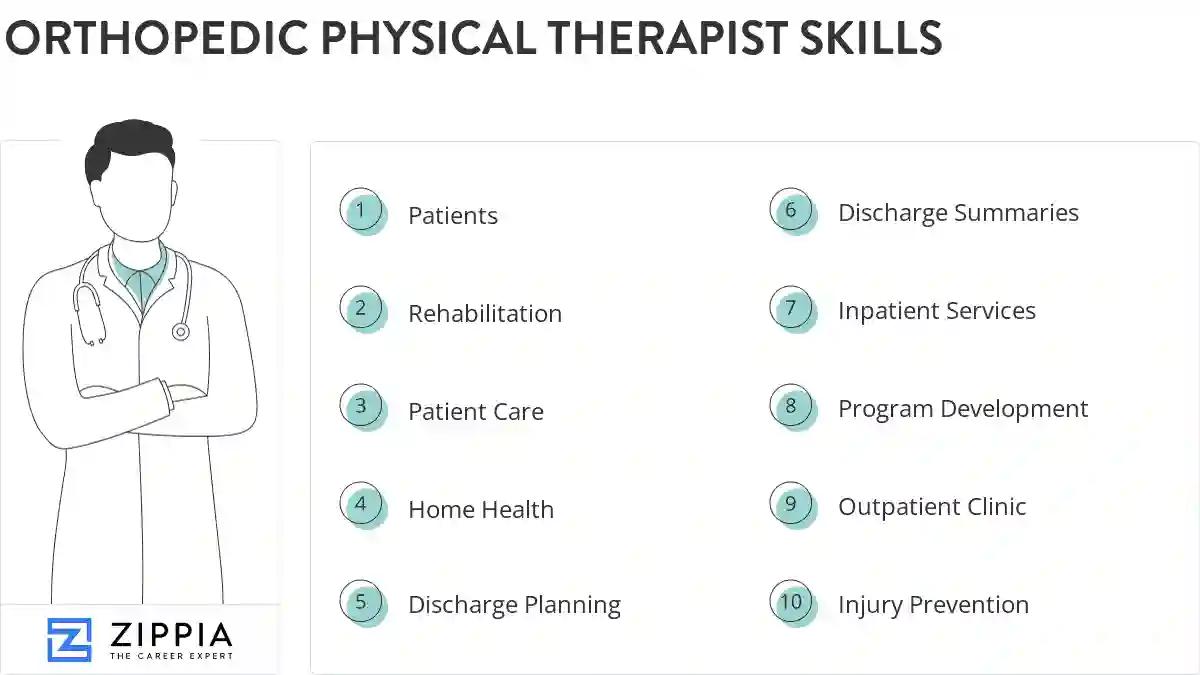
The most important skills for an orthopedic physical therapist resume and required skills for an orthopedic physical therapist to have include:
- Patients
- Rehabilitation
- Patient Care
- Home Health
- Discharge Planning
- Discharge Summaries
- Inpatient Services
- Program Development
- Outpatient Clinic
- Injury Prevention
- PTA
- Functional Mobility
- Crutches
- Treatment Techniques
- Therapeutic Exercises
- Patient Education
- Traction
- Orthotics
- Patient Load
- Cervical
- Chronic Pain
- Athletic Trainers
- Sports Injuries
Updated January 8, 2025
