Explore jobs
Find specific jobs
Explore careers
Explore professions
Best companies
Explore companies
Job outlook for process engineer interns in the United States
Process engineer internship job growth summary. After extensive research, interviews, and analysis, Zippia's data science team found that:
The projected process engineer internship job growth rate is 10% from 2018-2028.
About 30,600 new jobs for process engineer interns are projected over the next decade.
Process engineer internship salaries have increased 6% for process engineer interns in the last 5 years.
There are over 63,334 process engineer interns currently employed in the United States.
There are 87,030 active process engineer internship job openings in the US.
The average process engineer internship salary is $39,495.
Are process engineer internship jobs in demand?
Process engineer internship job and salary trends over time
Process engineer internship jobs over time
Process engineer internship job growth rate over time
| Year | # of jobs | % of population |
|---|---|---|
| 2021 | 63,334 | 0.02% |
| 2020 | 63,372 | 0.02% |
| 2019 | 65,589 | 0.02% |
| 2018 | 64,283 | 0.02% |
| 2017 | 62,420 | 0.02% |
Average process engineer internship salary over time
Process engineer internship salary by year
| Year | Avg. salary | Hourly rate | % Change |
|---|---|---|---|
| 2026 | $39,495 | $18.99 | +1.1% |
| 2025 | $39,082 | $18.79 | +1.1% |
| 2024 | $38,647 | $18.58 | +1.4% |
| 2023 | $38,132 | $18.33 | +1.9% |
| 2022 | $37,435 | $18.00 | +1.0% |
Process engineer internship jobs by state
Most common states for process engineer interns
| Rank | State | Population | # of jobs | Employment/ 1000ppl |
|---|---|---|---|---|
| 1 | District of Columbia | 693,972 | 200 | 29% |
| 2 | Massachusetts | 6,859,819 | 1,243 | 18% |
| 3 | Delaware | 961,939 | 176 | 18% |
| 4 | New Hampshire | 1,342,795 | 221 | 16% |
| 5 | Virginia | 8,470,020 | 1,079 | 13% |
| 6 | Maryland | 6,052,177 | 729 | 12% |
| 7 | Minnesota | 5,576,606 | 687 | 12% |
| 8 | Colorado | 5,607,154 | 646 | 12% |
| 9 | Oregon | 4,142,776 | 505 | 12% |
| 10 | North Dakota | 755,393 | 89 | 12% |
| 11 | California | 39,536,653 | 4,219 | 11% |
| 12 | Iowa | 3,145,711 | 355 | 11% |
| 13 | Utah | 3,101,833 | 339 | 11% |
| 14 | Nebraska | 1,920,076 | 203 | 11% |
| 15 | Vermont | 623,657 | 68 | 11% |
| 16 | North Carolina | 10,273,419 | 1,060 | 10% |
| 17 | Washington | 7,405,743 | 717 | 10% |
| 18 | Connecticut | 3,588,184 | 370 | 10% |
| 19 | Idaho | 1,716,943 | 174 | 10% |
| 20 | Wyoming | 579,315 | 51 | 9% |
Most common cities for process engineer interns
| Rank | City | # of jobs | Employment/ 1000ppl | Avg. salary |
|---|---|---|---|---|
| 1 | Annapolis | 8 | 20% | $39,895 |
| 2 | Juneau | 6 | 18% | $48,988 |
| 3 | Frankfort | 4 | 14% | $33,996 |
| 4 | Dover | 4 | 11% | $44,219 |
| 5 | Lansing | 9 | 8% | $39,777 |
| 6 | Ames | 3 | 5% | $36,126 |
| 7 | Hartford | 5 | 4% | $40,431 |
| 8 | Topeka | 5 | 4% | $33,775 |
| 9 | Baton Rouge | 7 | 3% | $38,238 |
| 10 | Little Rock | 6 | 3% | $38,345 |
| 11 | Tallahassee | 5 | 3% | $37,334 |
| 12 | Springfield | 4 | 3% | $38,110 |
| 13 | Montgomery | 5 | 2% | $35,377 |
| 14 | Boston | 10 | 1% | $44,471 |
| 15 | Indianapolis | 9 | 1% | $32,790 |
| 16 | Atlanta | 5 | 1% | $36,850 |
| 17 | Urban Honolulu | 4 | 1% | $44,217 |
| 18 | Des Moines | 3 | 1% | $36,015 |
Process Engineer Internship job outlook: Expert opinions
Our panel of process engineer internship experts
University of New Mexico
San Jose State University
Texas A&M University - Kingsville

Rose-Hulman Institute of Technology
Tuskegee University
Arizona State University

Missouri University of Science & Technology

South Dakota School of Mines and Technology

North Dakota State University

University of Denver

University of Nebraska–Lincoln
SUNY College at New Paltz

East Tennessee State University
Hope College
Wilkes University

Robert Morris University

Boston College
Miami Dade College Padrón Campus
The University of Akron

Duquesne University
What will help Process Engineer Interns increase their earning potential?
Jamie Gomez: Chemical engineers thrive on tackling complex problems and embracing diverse projects, which offer ample opportunities for innovation and career growth. Their work profoundly impacts society, particularly in advancing sustainable technologies. However, the profession can be demanding, with high workloads, regulatory hurdles, and safety challenges. Ethical considerations must also be carefully balanced with industrial growth. Senior chemical engineering students transitioning from capstone design projects often find the experience stressful but invaluable. These projects mirror real-world engineering scenarios and equip them with practical skills like problem-solving, collaboration, innovation, and adaptability. Additionally, they gain an understanding of the economic aspects of engineering projects, learning to assess cost-effectiveness and financial feasibility. These competencies are crucial for career success, offering versatility and a wide range of professional opportunities.
What Process Engineer Internship skills would you recommend for someone trying to advance their career?
Christopher Lew: Chemical engineering is a multidisciplinary, technology-driven field that offers a broad set of skills and knowledge. Graduates have many career opportunities to choose from in various industries. The profession is dynamic, well-compensated, and allows for success and growth.
What will help Process Engineer Interns increase their earning potential?
Christopher Lew: People like the broad range of career opportunities, the ability to address complex challenges, and the potential for success and growth in various fields. Dislikes may include the complexity of the field and the varied responsibilities that require a unique way of thinking and problem-solving.
What Process Engineer Internship skills would you recommend for someone trying to advance their career?
Martin Sentmanat Ph.D.: My basic advice to students is to keep their options open and to be as adaptable as possible. Because of the breadth and depth of technical acumen that is acquired during their academic formation, Chemical Engineers are represented in a broad spectrum of industries from management consulting to semiconductors to energy and just about every industry in between. As a matter of fact, our students often have more than one job offer when it comes time for graduation.
What will help Process Engineer Interns increase their earning potential?
Martin Sentmanat Ph.D.: My best advice for students looking to maximize their salary potential is to focus on two key attributes: 1) work experience, and 2) communication skills. Students that have work experience from engineering internships tend to have the easiest time landing offers for permanent positions upon graduation.
Kimberly Henthorn
Department Head & Associate ProfessorRose-Hulman Institute of Technology
Department of Chemical Engineering
What skills will help Process Engineer Interns earn the most?
Kimberly Henthorn: I think being well-rounded is more important than being really good at just one thing. Showing that you are good at academics is only one element of being a good employee. You have to be good at communication, be personable, have a curious and creative mind, and work well in a team. Being involved in leadership opportunities and extracurriculars (both at school/work and in the community) are a great way to show well-roundedness.
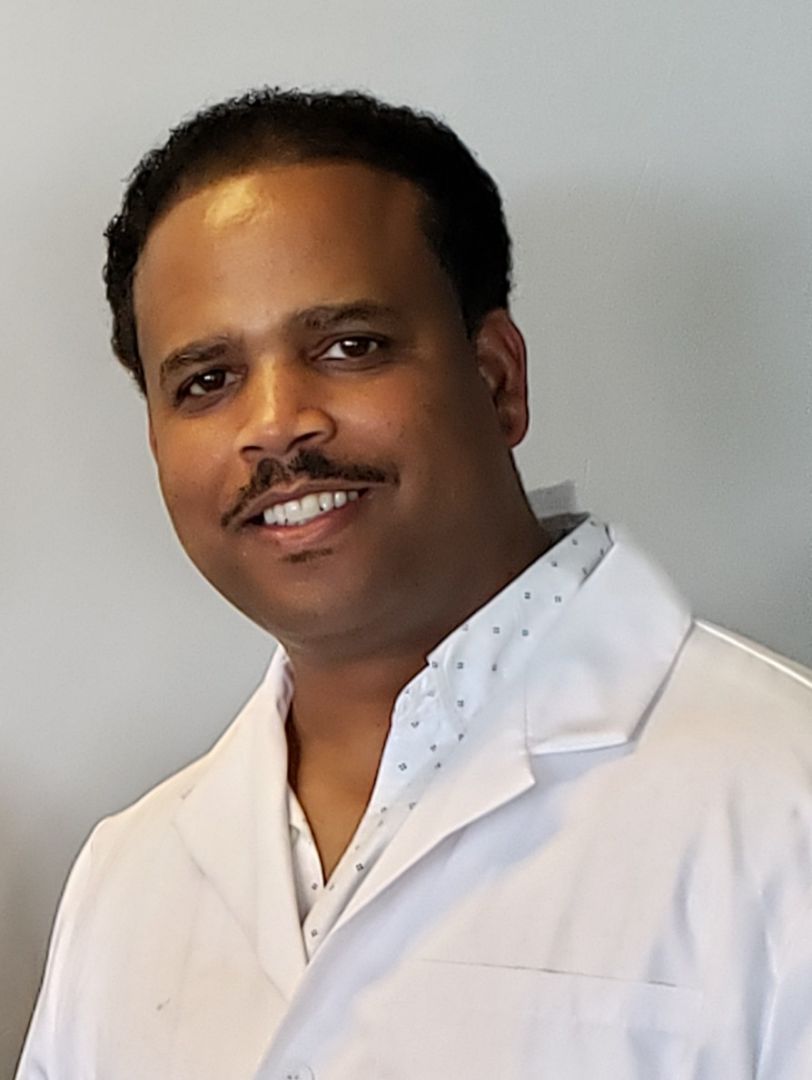
Dr. Michael Curry Ph.D.
Associate Professor of Chemistry, Adjunct Associate Professor of MSE,, Affiliate Member of The Center for Sustainable Nanotechnology, and Founder/CEO of Eco-friendly Plastic Materials, LLCTuskegee University
Chemistry, and Material Science Engineering Faculty
What skills stand out on Process Engineer Internship resumes?
Dr. Michael Curry Ph.D.: -Able to work in team environments
-Excellent critical thinker
-Able to make critical data evaluations and interpretations and process adjustments
-Strong background in chemical processes
-Excellent communicator (writing, talking, reading)
-Strong problem-solving capabilities
-Excellent project manager
-Independent thinker
-Self-starter
David Nielsen Ph.D.
Associate ProfessorArizona State University
School for Engineering of Matter, Transport and Energy
What skills stand out on Process Engineer Internship resumes?
David Nielsen Ph.D.: Relevant real-world experience (i.e., internships); computational skills like programming; statistical analysis.
What soft skills should all Process Engineer Interns possess?
David Nielsen Ph.D.: Communication, teamwork, decision-making.
What hard/technical skills are most important for Process Engineer Interns?
David Nielsen Ph.D.: Strong fundamental understandings of mass and energy balances, as well as thermodynamics; data analysis.
Christi Patton Luks
Professor (NTT) and Associate Chair for Academic AffairsMissouri University of Science & Technology
Linda & Bipin Doshi Department of Chemical & Biochemical Engineering
What hard/technical skills are most important for Process Engineer Interns?
Christi Patton Luks: We teach a lot of facts and theories. All of those are useful, but really the ability to problem solve and pull together the different things you've learned is what makes the difference. When I worked in the industry, I may not have solved a differential equation, but I had solved enough problems in school that I could recognize when the patterns I was seeing in real life had the correct trends. If the trend wasn't what I expected, I got to dig deeper to figure out why. Curiosity and a desire to dig deeper to solve a problem really help.
What skills will help Process Engineer Interns earn the most?
Christi Patton Luks: Frankly, your GPA may be the biggest driver for your first job out of college. A high GPA gets a lot of attention, but you'll need work experience and activities to convert that into a job offer. If your GPA isn't great, then those extracurricular activities and internships will be what lands you that job. The key is to tell a story about what you got out of each of those experiences. When I was interviewing for my first job, I think I got more interest in the fact that I had helped to organize a local preliminary competition to Miss America than anything else. I hadn't competed! I had just organized the production of the show. I spent just a few weeks working on that project, but it was unusual and demonstrated leadership and organization, and teamwork.
What are the biggest trends we'll see in the Process Engineer Internship job market given the pandemic?
William Cross Ph.D.: The biggest job market trends given the pandemic are working from home, and slightly delayed hiring - in Metallurgical Engineering at SD Mines, it took about 9-12 months for our Spring 2020 graduates to be hired to levels that took less than three months pre-pandemic, although eventually most of our graduates have been placed. The Fall 2020 graduates have seen a similar delay.
I expect some of the work from home will remain into the future, but do not expect the delayed hiring to extend for too much longer. I also expect that in some fields the pandemic has accelerated trends towards greater automation of job functions.
What soft skills should all Process Engineer Interns possess?
William Cross Ph.D.: The soft skills that all graduates should possess are primarily in communication - speaking/writing clearly, and listening/reading comprehension - and in teamwork skills. Being able to function in a variety of roles on a team is very important to success in many jobs.
How have salaries changed over time for Process Engineer Interns?
William Cross Ph.D.: This of course depends on the time range to which the question refers. Over the last 4-5 years salaries have been rather flat on average going by SD Mines graduates in Metallurgical Engineering, although this is working off a rather high baseline. SD Mines has been recognized as the top engineering schools in the nation for return on investment, and Metallugical Engineering has an above average starting salary for SD Mines at around $65,000/year.
Andriy Voronov
ProfessorNorth Dakota State University
Coatings and Polymeric Materials Department
Will there be an enduring impact of the coronavirus pandemic on Process Engineer Interns?
Andriy Voronov: Since pandemic is not over yet, there may be only a guess on how significant this impact can be. I think answering this question resonates with more general one, namely, "Will our life after COVID-19 be the same as before?" We all want to be positive about that but are just not certain. Moreover, I think in some professional aspects in most fields, changes are unavoidable. Working from home, attending virtual conferences, taking part in Zoom meetings, even virtual get together with colleagues will most probably remain to be a new post-pandemic working routine, by all advantages and disadvantages this may bring to most recent graduates. Speaking about materials science, I hope and do believe that there will be global and impactful factors other than coronavirus pandemic, such as novel materials trends, technological innovations etc., to take into account for graduates.
What certifications/licenses/courses can have the biggest impact for Process Engineer Interns?
Andriy Voronov: I think most graduate programs in materials science offer opportunities for interdisciplinary research and educational activities. Their philosophy is to educate and prepare job prospects by providing advanced aspects of work, including extensive collaborations between departments, programs, institutions or with industrial partners. Offering specialized trainings in various areas, graduate programs aim to merge basic and applied research within the certain field. With this said, quit often graduate programs work also with leading industrial scientists who help to provide to the graduates new and practical directions to become competitive at the job market. Answering your question more specifically, graduate programs do target as complementary and comprehensive education as possible. It will be interesting to hear from graduates what courses they took have the biggest impact for them, as well as if they need any additional certifications/licenses and which specifically.
How have salaries changed over time for Process Engineer Interns?
Andriy Voronov: Being materials scientist means being able to do lot of things starting from fundamental research on material properties and characterization up to developing entirely new formulations and modify them to make new products suitable for new applications. One should be prepared to work in research lab, but also in pilot plants, as well as in manufacturing facilities. As for the soft skills, those are critical thinking, problem solving, communication, written and oral, including ability to communicate science to scientists, but also nonscientific audience, also flexibility and adaptability in (always) willing to learn. Although not a soft skill, but rather technical one, do not forget about fundamental knowledge and understanding of materials specifics and properties one works with.
Dr. Matt Howard Gordon Ph.D.
Professor & Chair, Mechanical & Materials EngineeringUniversity of Denver
Department of Mechanical & Materials Engineering
Will there be an enduring impact of the coronavirus pandemic on Process Engineer Interns?
Dr. Matt Howard Gordon Ph.D.: I think so. At least for a couple years.
What's a good job out of college for Process Engineer Interns?
Dr. Matt Howard Gordon Ph.D.: I think any technical job is a good job for engineers. You build experience, ideally in an area of interest, making it easier to get your next job.
What will help Process Engineer Interns increase their earning potential?
Dr. Matt Howard Gordon Ph.D.: I stress outside the class experiences - internships, undergraduate research, and/or study abroad. I believe all help with earning potential. And maybe students should consider getting their PE.
Will there be an enduring impact of the coronavirus pandemic on Process Engineer Interns?
Stuart Bernstein Ph.D.: The pandemic hit us unexpectedly, unlike the last two recessions the construction industry managed to survive. I point that out to say that leading up to the pandemic, the industries and customers we normally built for were still planning and designing projects, expecting them to continue. Much of the industry, that I am aware of, has continued to build, albeit with sparser workforces, which would indicate there should still be a lot of work to catch up on when the pandemic clears.
On the other side of that argument, businesses are finding they are functioning effectively with their employees working remotely. This could trigger them to reduce, or nearly eliminate, their need for physical plants in the future. This, in turn, could leave a lot of current spaces vacant, triggering a slow down on building new, and increasing rehab. If this does happen, there will be an even bigger demand for mega data centers, and, of course, there is still a need for medical facilities, assisted living, and retirement homes.
What technical skills for a Process Engineer Internship stand out to employers?
Stuart Bernstein Ph.D.: I have found that employers want their new hires to have at least a working knowledge of, and familiarity with, all of the technical skills, such as estimating, scheduling, surveying and document control. More importantly, though, they are looking for people with interpersonal, teamwork, and leadership skills. They want people who will fit well with the personality of company, who will be able to work well with others, who can solve problems on their own and with the help of others, and who can communicate well with people from all different walks of life, and professions, including owners.
Kevin Shanley Ph.D.
Associate Professor & ChairSUNY College at New Paltz
Division of Engineering Programs
What's a day at work look like for a Process Engineer Internship?
Kevin Shanley Ph.D.: Work is going to be a blend of in person and virtual meetings. I suspect this will continue well into the future. I suspect that travel will decrease. While COVID-19 has its grip on us, workers will likely rotate days in and out of the office. Some new hires may go months if not years without meeting some colleagues in person.
What technical skills for a Process Engineer Internship stand out to employers?
Kevin Shanley Ph.D.: Critical thinking and problem solving are still the big draws. Obviously, employers are looking for flexible team players now more than ever.
Will there be an enduring impact of the coronavirus pandemic on Process Engineer Interns?
Kevin Shanley Ph.D.: Yes, I think the effects will stay with all of us for quite some time.
Jared Wilson
Assistant Professor and Faculty CoordinatorEast Tennessee State University
Surveying and Mapping
What's a good job out of college for Process Engineer Interns?
Jared Wilson: Within the field of land surveying and related employment opportunities, work is available. However, in my experience, work may not be in the exact location a person wishes to live. So, a move may be necessary, or potentially traveling to where the work is located. Should a graduate, or person for that matter, want to work, work is available.
What certifications/licenses/courses can have the biggest impact for Process Engineer Interns?
Jared Wilson: The goal for the surveying and mapping program at East Tennessee State University is to educate students in the field of land surveying and mapping. The hope is that the students find gainful employment in that field and obtaining professional licensure, in a given state, is a significant motivator for employers. However, a significant factor that I have noticed is the successful passing of the Fundamentals of Surveying, FS, exam in conjunction with the four-year degree. This combination of education and successful completion of the first hurdle in examinations, seems to open many doors for job seekers in the field of surveying and mapping.
What are the biggest trends we'll see in the Process Engineer Internship job market given the pandemic?
Jared Wilson: The information I have been provided is positive, when the outlook is concerning the workload job market, that is being performed by the professional land surveying and geomatic industry. Land surveying, and subsequently land surveyors, have been deemed essential; thus, work is still being performed. The profession, as a whole, is driven highly by the status of the economy, and in the current economic state, the current workload is in demand. Thus, graduates should be able to find gainful employment regardless of the impact COVID-19 has. As with all professions, adaptation is necessary, and the profession is adapting well.
Ned Nielsen
Professor of Engineering DesignHope College
Engineering Department
What experience really stands out on Process Engineer Internship resumes?
Ned Nielsen: Employers are looking for engineering graduates who have had an internship and who have some type of international experience. Since not many engineering graduates have international experience, those who do are highly sought after.
What's a day at work look like for a Process Engineer Internship?
Robert Taylor: For the recent graduate, the day at work will be a continuation of C-19 protocol. That will not change until we obtain "herd immunity" for C-19. That said, however, we all still get the normal flu and its mutations and we get the common cold, also a coronavirus. The good news is that the C-19 exercise has re-taught us the necessity for germ prevention...staying at home when we are sick, using better protocols for cleaning of hands & surfaces, and "social distancing." I do also think that the recent graduate will be prepared for his new "days at work" based on the discussions I have had with last year's graduates and their employers. One must remember, we are preparing students for the academic and practical needs of engineering students!
Will there be an enduring impact of the coronavirus pandemic on Process Engineer Interns?
Robert Taylor: It is difficult to guess what impact C-19 will have, since we are still in the middle of it. To date, companies are still hiring EE graduates. Many companies are still working face-to-face (F2F) and are using social distancing and other acceptable protocols. Graduating seniors last and this year have taken many hands-on labs and therefore are prepared for the hands-on work environment. For future graduating classes, which have participated in more remote learning and "artificial" or simulated lab environments, they may experience some issues going from the remote to hands-on environment. On the other hand, those students would be better prepared for simulations (and gaming) better than the previous classes. Many schools, and ours included, are trying to prepare the engineering students for both the simulated AND the F2F labs by using simulations and sending kits to the students for home practice labs. The jury is still out on the "home lab" results!
What technical skills for a Process Engineer Internship stand out to employers?
Dr. Benjamin Campbell Ph.D.: When I talk to employers of engineers two key skills tend to stand out: problem solving skills and communication skills. These skills are very difficult to develop quickly on the job, but a new employee that can demonstrate strength in these two areas can quickly integrate into a team or train into a job that requires specific technical skills. Communication skills can be assessed verbally during the interview. If it's a virtual interview for a remote job, present yourself like you will be representing their company: professional dress, clean and unclutters backdrop, practice eye contact into the camera with clear speech, and make sure there are no external distractions or noises (pets, roommates, etc). Sometimes the interviewer will request an impromptu writing sample. Communication skills can also be assessed before the interview with how quickly and professionally a prospective employee responds to the company's requests for information. Problem solving skills are often assessed by asking the job candidate about a difficult technical problem they faced and the how they solved it. Be prepared with several examples in mind and prioritize them by the tasks that are most relevant to the job description or the interests of the interviewer. Having a portfolio on hand or some unique visual aids can leave a distinct impression; and if virtual, have files readily accessible if you need to screen share but have an uncluttered desktop and inoffensive computer wallpaper. Some interviewers will assess both problem solving and communication skills simultaneously through role playing the solving of a technical problem or asking for a pseudo-code solution to a programming task.
What are the biggest trends we'll see in the Process Engineer Internship job market given the pandemic?
Dr. Benjamin Campbell Ph.D.: I have heard from CEOs and Presidents of companies that have embraced working from home and are considering keeping this arrangement for several of their work groups, even after the pandemic. Allowing remote work decreases the need for expensive office space (especially in high rent areas like Silicon Valley or New York City) and virtual meetings cut travel costs. A company can recruit worldwide and invite a prospective employee to live anywhere that has a high speed internet connection. Employees value the flexibility, comfort, and non-existent commute of working from home. There are sectors where managers and their teams have adjusted well to working remotely. As long as the productivity doesn't suffer, I feel this trend will continue.
For those recent graduates entertaining the workforce, they will need to demonstrate the ability to work remotely, and manage their own schedule when they don't have an office structure surrounding them. This can be conveyed in an interview by talking about their online education during the pandemic, and the work ethic they developed managing a course load of synchronous or asynchronous online courses with individual and group assignments. An internship that required working remotely is another great talking point in an interview. Discuss a typical day on that job, the technical challenges faced and the solutions developed under the adverse circumstances of the pandemic.
What's a good job out of college for Process Engineer Interns?
Dr. Benjamin Campbell Ph.D.: For the recent graduates, I recommend you get any job that challenges you, where you can build experience relevant for your desired career. It's rare to find your dream job right out of college, but a savvy engineer can identify jobs opportunities that will promote skill building and mobility for motivated employees. Ask the interviewer if there is support available for continuous improvement; inquire about training across the organization to better understand how the company functions. Beware of jobs that confine you to a very limited and repetitive role. If the job isn't challenging, you likely aren't growing as an employee or building your resume for the job you want. Also, work the current job like it's your dream job. Many promising candidates have lost offers when references are checked and previous employers give lackluster assessments. Always keep an eye to the future by watching for new opportunities; build out your network with the people you meet through work, professional organizations and networking events. Very few people perfectly fit a job description; take a chance interviewing if you feel you can develop the job skills you lack but don't exaggerate your qualifications to compensate. Don't be afraid to make a change if you aren't happy in your current job, but avoid burning bridges on the way out. Another option for recent graduates is to seek out a promising start-up and offer to work for lower pay in exchange for equity in the company. At this point in your life you probably have the low expenses (other than college loans) and ample free time (if you are single with no kids and no mortgage) that you could direct into working the long hours needed to make a startup successful. A small company requires employees to wear many hats while working with other motivated people in a high risk but high reward environment. If the company fails or you burn out, take your experience and move on. If the company is successful, your equity will minimize your financial concerns while you decide what your next job should be.
What Process Engineer Internship skills would you recommend for someone trying to advance their career?
Janet Kolodner Ph.D.: Communication skills, collaboration skills, imagination skills, project skills, computational (computer) skills related to what they are interested in doing. There are plenty of online classes for computaional skills; communication, collaboration, project, and imagination come through getting involved with others on projects. Getting involved in something that helps them feel a sense of purpose and that has them working towards goals with others will do the trick.
What are the biggest trends we'll see in the Process Engineer Internship job market given the pandemic?
Janet Kolodner Ph.D.: It looks like the new government will make a lot of public service and infrastructure positions available. That's good. There will be jobs up and down the ladder-administration, management, craft work, etc. People who are feeling entrepreneurial might start businesses in areas where businesses have closed down; we've lost a lot of small businesses: retail, restaurants, personal services. Those who owned many of those businesses won't want to start again; there will be lots of room for new blood as we become more vaccinated as a population and ready to eat out and get our nails and hair done, go on vacations, and buy things we've put off.
Will there be an enduring impact of the coronavirus pandemic on Process Engineer Interns?
Dr. Diego Tibaquirá: I'm not sure enduring, but there will things that will probably be done differently. How people communicate and work might be different. Telecommuting and Remote work might become more prominent and permanent. Creating a viable way to ensure the job is done remotely will be more of a permanent change, and new graduates will need to be prepared for this environment.
What type of skills will young Process Engineer Interns need?
Dr. Diego Tibaquirá: Great communication skills in a remote setting. How to interact and collaborate while not being in the same space at the same time. Organizational skills to be able to stay on task and perform their jobs in a hybrid format (face-to-face combined with remote).
What experience really stands out on Process Engineer Internship resumes?
Dr. Diego Tibaquirá: Manage to get some hands-on experience and Industry Certifications. Internships can help a resume stand out. Having recognized Industry Certifications add to the experience and knowledge recognition that candidates are prepared for the job. Just like everyone else, Industry Certification can now be done via remote proctoring so students can upskill at a distance.
What are the biggest trends we'll see in the Process Engineer Internship job market given the pandemic?
Dr. Teresa Cutright Ph.D.: The same major skills will be needed as pre-COVID-19 for solving the specific problems in environmental engineering. Additional skills, for any job, will be time management and responsibility. This will be particularly important for those working remotely.
What skills stand out on Process Engineer Internship resumes?
Dr. Teresa Cutright Ph.D.: For environmental, the technical skills will depend on the specific job the person is applying for. The skills needed for watershed management is different from designing wastewater treatment plants.
Dr. Melikhan Tanyeri Ph.D.
Assistant Professor of Biomedical EngineeringDuquesne University
Department of Engineering
What are the biggest trends we'll see in the Process Engineer Internship job market given the pandemic?
Dr. Melikhan Tanyeri Ph.D.: Jobs that allow working remotely will be popular. This would allow young professionals to choose a career which provide them with the flexibility to relocate. It would enable people to live in more affordable cities/states, and raise their family there. Some cities already started to provide incentives for young professionals to move and work remotely. It will also accelerate automation and digitization of a variety of industries, leading to new job categories, especially related to machine learning and artificial intelligence. Healthcare and public health will continue to be another focal point in the near future.
What skills stand out on Process Engineer Internship resumes?
Dr. Melikhan Tanyeri Ph.D.: Problem-solving, flexibility, adaptability, interpersonal skills, leadership, teamwork, technical/computer skills
Are there any particularly good places in the United States for Process Engineer Interns to find work opportunities?
Dr. Melikhan Tanyeri Ph.D.: Several cities/regions appear to be hotspots: Bay Area, Boston, Seattle, Austin, San Diego, Phoenix, Dallas, Denver, DC, Research Triangle, Philadelphia, Pittsburgh.