
Automatically apply for jobs with Zippia
Upload your resume to get started.
Reading instructor skills for your resume and career
15 reading instructor skills for your resume and career
1. Classroom Management
- Instituted effective classroom management to ensure a cooperative learning environment.
- Implemented effective classroom management and instruction.
2. Literature
- Create Syllabi and curriculum based on university curriculum goals from department selected Literature sources.
- Instructed courses in comparative literary analysis, psychological perspectives on literature, and general composition skills.
3. Student Learning
- Facilitated student learning, initiated and participated in efforts to consistently improve level of students' success.
- Facilitate and create a healthy online learning environment Access student learning
4. Language Arts
Language art refers to the ability to master a language.
- Created Innovative and Imaginative ways to assist struggling students with reading comprehension skills and improve MCT2 Language Arts scores.
- Performed teacher observations and provided feedback for English/language arts, reading, and social studies teachers.
5. Instructional Materials
- United States *Prepared instructional materials for students.
- Researched intervention strategies, gathered instructional materials, implemented accommodating approaches and technologies.
6. Reading Comprehension
- Educated elementary students in reading comprehension and articulation.
- Fostered individual growth in reading comprehension.
Choose from 10+ customizable reading instructor resume templates
Build a professional reading instructor resume in minutes. Our AI resume writing assistant will guide you through every step of the process, and you can choose from 10+ resume templates to create your reading instructor resume.7. Mathematics
- Created, wrote, and implemented year-long pacing guides for grade-level Mathematics & History department.
- Specialized in guiding students mathematics in subjects ranging from basic math to calculus.
8. Student Performance
- Evaluate student performance fairly and consistently to promote maximum learning.
- Complete all required documentation to monitor and assess student performance.
9. Study
- Provided instruction empowering developmental reading students with study strategies.
- Facilitated a self-contained and independent study environment.
10. K-12
K12 is a term that incldues all 12 years of education in the US education system. It includes the education offered at the primary stage, middle stage, and secondary stage. It includes children of ages as young as 5 to 18 years. The grades included in K12 are Kindergarten, the initial 5 stages, grades 6 to 8, and 9 to 12. This system is followed specifically followed in the US and may vary in other countries.
- Tutored/Mentored grades K-12 in all disciplines, maintained participant roster as well as detailed spreadsheets tracking each students progress.
- Instructed academic reading, beginning reading and elementary math for students from K-12.
11. Syllabus
- Developed course structure & coordinated syllabus * Constructed, administered, and graded all course assignments and assessments
- Prepared and distributed syllabus to students and department chair.
12. Student Achievement
- Present action research data and student achievement data to faculty and staff.
- Grade progress of student achievement.
13. Test Scores
- Monitored students progress through computer database and test scores.
- handled credit card/monetary transactions, and entered test scores into the database
14. Course Objectives
A course objective allows students to know all that a course is about, why it is taught, where it is going, and what is required of them to be successful in the course. It forms the basis of the class and establishes a behavior, skill, or action that a student can demonstrate if they have achieved mastery of the objective. The objectives must be observable, measurable, valid, and also aligned with the expectations of the course.
- Developed and presented curriculum, facilitated seminar discussions, and evaluated student attainment of graduate-level course objectives.
- Evaluated achievement of course objectives, providing officers with essential skills for higher joint duty positions.
15. Professional Development
Professional development means to have the essential training certification or education with the purpose of earning and having a successful career. Every job requires a different set of skills. However, new skills may be needed in the future. Professional development, in this regard, helps people to develop and polish the skills and become efficient workers.
- Worked with Youngstown State University to conduct New Castle School District Professional Development seminars, demonstrating cross-curricular reading strategies.
- Analyzed data and assist teachers to use as classroom formative guidance, structure curriculum plans *Facilitated professional development.
5 Reading Instructor resume examples
Build a professional reading instructor resume in minutes. Browse through our resume examples to identify the best way to word your resume. Then choose from 5+ resume templates to create your reading instructor resume.

What skills help Reading Instructors find jobs?
Tell us what job you are looking for, we’ll show you what skills employers want.
What skills stand out on reading instructor resumes?
Zavi Gunn
Director, Queens College of the City University of New York
What hard/technical skills are most important for reading instructors?
Adam Ellwanger Ph.D.
Professor of English, University of Houston - Downtown
What soft skills should all reading instructors possess?
Adam Ellwanger Ph.D.
Professor of English, University of Houston - Downtown
What reading instructor skills would you recommend for someone trying to advance their career?
Suzanne Tiemann
Professor, Park University
What type of skills will young reading instructors need?
Ye Chen Ph.D.
Assistant Professor, University of West Georgia
- Instructional design skills for analyzing instructional needs and designing & developing effective instructional solutions.
- Technical skills in utilizing technology to develop and implement instruction. At the same time, they are expected to understand how to integrate technology into instructional settings in a pedagogically meaningful way.
- Communication skills are essential as their work roles heavily rely on effective communication with content experts, clients, trainees/students, etc. throughout the instructional design process
What technical skills for a reading instructor stand out to employers?
Eric Ross
Associate Professor, Languages, North Dakota State University
List of reading instructor skills to add to your resume
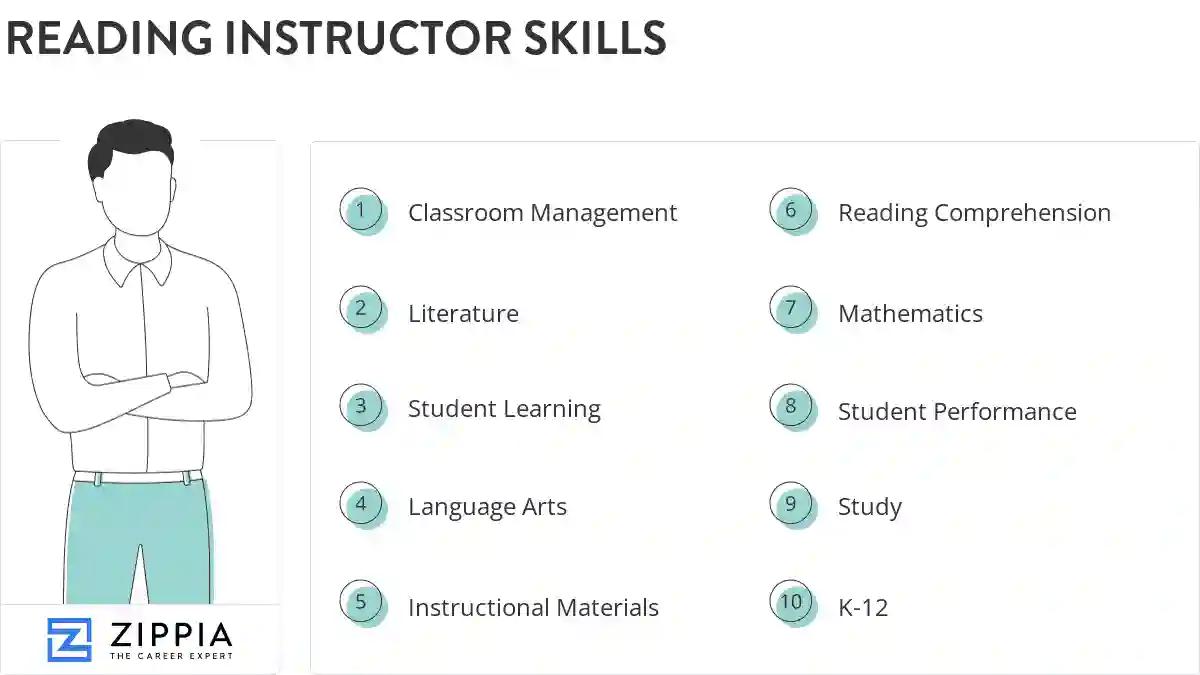
The most important skills for a reading instructor resume and required skills for a reading instructor to have include:
- Classroom Management
- Literature
- Student Learning
- Language Arts
- Instructional Materials
- Reading Comprehension
- Mathematics
- Student Performance
- Study
- K-12
- Syllabus
- Student Achievement
- Test Scores
- Course Objectives
- Professional Development
- IEP
- ESL
- Public Schools
- Social Studies
- Blackboard
- Summer Program
- Learning Styles
- Course Materials
- Progress Monitoring
- Learning Strategies
- Open Communication
- PowerPoint
- Comprehension
- Learning Environment
- Vocabulary
- K-5
- Academic Performance
- Course Content
- Cooperative Learning
- Benchmark
- Tabe
- ELL
- Phonemic Awareness
- Fiction
- ESOL
Updated January 8, 2025
