
Automatically apply for jobs with Zippia
Upload your resume to get started.
Registered nurse midwife skills for your resume and career
15 registered nurse midwife skills for your resume and career
1. Patients
- Communicated health concerns to patients while completing up-to-date information regarding family and medical histories.
- Monitored patients in labor and assisted in delivery, served medications.
2. Vital Signs
Vital signs are a set of values indicating different body systems' performance. They are measurements of the body's most basic functions. The four major vital signs used in medicine to assess a patient are body temperature, pulse rate, respiration rate, and blood pressure.
- Counseled and prepared mothers for surgery, took and documented vital signs.
- Monitored vital signs, intake and output.
3. Blood Pressure
- Greet patients* Patient teaching/health education* Automatic and manual blood pressure readings* BMI readings* Full Lipid Panel Cholesterol/Glucose
- Administered influenza immunizations, administered wellness testing including cholesterol, glucose, and blood pressure screenings
4. Surgery
- Assisted in bedside surgery, all types of ventilation, arterial and venous lines.
- Oversee care and treatment for patients undergoing various plastic surgery procedures regarding correction of trauma-related injuries, cosmetic imperfections and genetic influences
5. GYN
GYN is a commonly used abbreviation that stands for gynecology or a gynecologist. The word "gynecology" has emerged from the Greek word "gynaikos" which means women and "logy means "study" making it a study of women. A doctor who specialized in handling pregnancy, childbirth, and treating female reproductive system diseases is called a gynecologist. They diagnose and treat issues of the uterus, ovaries, fallopian tubes, and breasts.
- Post surgical OB or GYN surgical recovery RN.
- Scrubbed and circulated in Orthopedics, Plastic, GYN, General, PV, CV, Neuro, Thoracic and Urology.
6. Midwifery
- Provided training for UMMS family practice residents in deliveries and triage and nurse midwifery student training in office and deliveries.
- Served as preceptor and mentor to nursing, midwifery, medical, and other allied-health students.
Choose from 10+ customizable registered nurse midwife resume templates
Build a professional registered nurse midwife resume in minutes. Our AI resume writing assistant will guide you through every step of the process, and you can choose from 10+ resume templates to create your registered nurse midwife resume.7. Emergency Room
- Performed triage of pregnant women presenting through the emergency room.
8. Labor Delivery
- Labor Delivery/ Medical-Surgical) Labored and Delivered normal and High risk pregnancies Neonatal Resuscitation Medical Surgical Nursing Charge Nurse/Ward Management
- Labor Delivery & Postpartum setting-assess neonate and resuscitate according to NRP standards.
9. IV
- Performed and evaluate Ultrasounds, Administer IV, injections, drugs and medical care.
- Connected IV fluids, inserted catheters and gave enemas.
10. Health Education
Health education refers to education concerning healthcare.
- Maintained population control through family planning services and health education.
- Conduct health education for pre and post natal mothers.
11. Care Plan
- Assessed care requirements and wrote care plans.
- Developed and implemented nursing care plan.
12. Community Health Care
- Conducted over 1000 deliveries in acute care setting and community health care in Yadama, Najran.
13. Patient Care
Patient care entails the diagnosis, recovery, and control of sickness as well as the maintenance of physical and emotional well-being through the use of healthcare providers' services. Patient care is described as services provided to patients by health practitioners or non-professionals under guidance.
- Provision of competent and dignified patient care.
- Report directly to medical provider significant clinical changes, coordinated medication refills, participated in team management approach in patient care.
14. Patient Education
- Provide therapeutic communication and patient education
- Recognized as a role model for implementing individualized and age appropriate patient education based on their level of education and diversity.
15. Medication Administration
- Computerized medication administration and daily documentation.
- Maintained patient documentation and coordinated medication administration.
5 Registered Nurse Midwife resume examples
Build a professional registered nurse midwife resume in minutes. Browse through our resume examples to identify the best way to word your resume. Then choose from 5+ resume templates to create your registered nurse midwife resume.

What skills help Registered Nurse Midwives find jobs?
Tell us what job you are looking for, we’ll show you what skills employers want.
What type of skills will young Registered Nurse Midwives need?
Angela Mund
Vice President, American Association of Nurse Anesthetists
What skills stand out on registered nurse midwife resumes?
Angela Mund
Vice President, American Association of Nurse Anesthetists
The most competitive applicants will have an overall GPA >3.5. Basic science courses are heavily weighted with respect to both course grade and type of course. A competitive resumé should include evidence of clinical expertise, leadership, volunteerism, and scholarly work. In addition, all registered nurse applicants should have shadowed a CRNA to learn about the profession prior to application. The interview process may include assessments of critical thinking, decision-making, and emotional intelligence.
What soft skills should all Registered Nurse Midwives possess?
Diane Salvador Ph.D.
Executive Director and Professor, Elmhurst University
What hard/technical skills are most important for Registered Nurse Midwives?
Diane Salvador Ph.D.
Executive Director and Professor, Elmhurst University
What registered nurse midwife skills would you recommend for someone trying to advance their career?
Michelle Hampton Ph.D.
Associate Professor, San Jose State University
Clinical sites weren't accepting students for several months, and now that they are again, they have significantly limited the number of students allowed at one time and the number of hours they can train. When a staff member or patient tests positive, students are pulled from the site for some time, and students are struggling to get the minimum number of hours required to continue progressing in the nursing program. Some schools have even suspended admission for new groups of students instead choosing to focus on getting the current students through the program.
List of registered nurse midwife skills to add to your resume
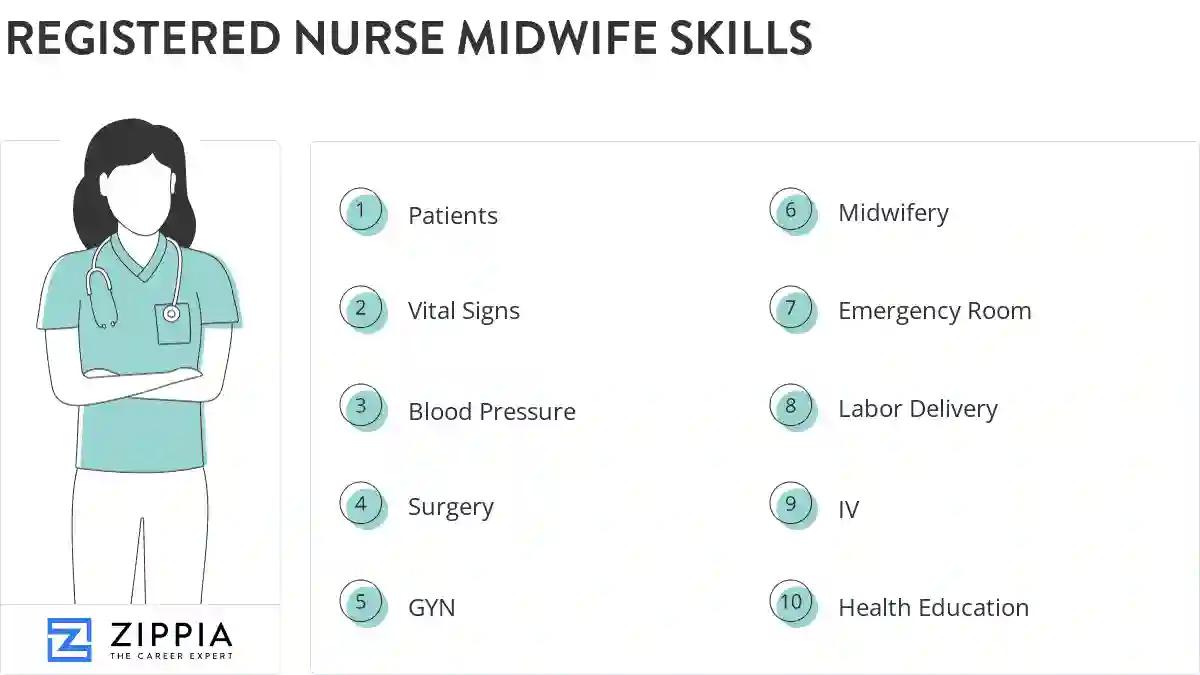
The most important skills for a registered nurse midwife resume and required skills for a registered nurse midwife to have include:
- Patients
- Vital Signs
- Blood Pressure
- Surgery
- GYN
- Midwifery
- Emergency Room
- Labor Delivery
- IV
- Health Education
- Care Plan
- Community Health Care
- Patient Care
- Patient Education
- Medication Administration
- Post-Partum Care
- Catheter
- Pregnant Women
- Physical Assessments
- Tracheostomy
- Diabetes
- CPR
- Labour
- Health Promotion
- Family Planning
- Hospital Policies
- Blood Products
- Medical-Surgical Nursing
- Emergency Situations
- Patient History
Updated January 8, 2025
