
Automatically apply for jobs with Zippi
Upload your resume to get started.
Residential building inspector skills for your resume and career

15 residential building inspector skills for your resume and career
1. Sketch
- Interview, photograph, sketch and report on residences requiring insurance inspections Required to verify information and document potential hazards
- Gather exterior measurements and create computerized sketch.
2. Windows
Windows is a chain of operating systems that controls a computer and is developed by Microsoft. Every version of Windows consists of GUI (graphical user interface), with a desktop that allows the user to open their files.
- Inspected the exterior of the property from the roof, windows and siding for any damages or hazards.
- Trash Removal, boarding windows, property cleaning, lock set change, lawn maintenance.
3. Plumbing
- Performed residential building, plumbing, mechanical and electrical inspections.
- Passed non-required commercial building and plumbing inspector exams.
4. Residential Buildings
- Inspect all aspects of commercial and residential buildings for structural quality, general safety, or conformance to specifications and codes.
5. Inspection Process
The inspection processes are planning, review meeting, preparation, inspection meeting, reworking, and follow-up to meet customer requirements, wants, and needs. The objective is to prevent the defective product from flowing through subsequent operations and to avoid losses for the company.
- Reviewed the various plans and engineering drawings to ensure that the inspection process is followed in accordance to the plans.
- Developed record keeping and filing system to streamline inspection process.
6. HVAC
- Conducted energy audits; built HVAC systems to house specs, built solar proposals.
- Inspected and witnessed the testing and commissioning of the HVAC equipment.
Choose from 10+ customizable residential building inspector resume templates
Build a professional residential building inspector resume in minutes. Our AI resume writing assistant will guide you through every step of the process, and you can choose from 10+ resume templates to create your residential building inspector resume.7. Residential Properties
Any space you can use as a flat, house, or residential area is called a residential property. These can include public property, private property, and cooperative property.
- Completed commercial and residential properties surveys.
- Inspect business and residential properties for pest control needs to provide consultation services and propose solutions for elimination and prevention.
8. Construction Materials
Construction materials are equipment and objects that are used to construct buildings. Naturally occurring elements like clay, wood, and sand also come under construction materials. Man-made construction materials include concrete, bricks, tiles, etc. Using good quality construction materials helps in reducing maintenance costs and reduces the chances of frequent maintenance. The properties of artificial and natural elements determine the quality of construction material.
- Inspect construction materials to determine class of type of the materials being used as well as techniques used in construction.
- Performed field and laboratory tests on construction materials.
9. Local Building Codes
- Gained knowledge of local building codes and worked closely with contractors and subcontractors in the area.
- Perform plans review and site inspection of commercial and residential projects for compliance with state and local building codes.
10. Pest Control
Pest control is the regulation or management of a species defined as a pest, a member of the animal kingdom that impacts human activities adversely. Pest control specialists go to client's homes and businesses to inspect for insects or rodents. They then use the appropriate method to remove or terminate the pest, whether that requires a pesticide, trap, or another technique.
- Schedule appointments to investigate and assess customers pest control needs and develop customized solutions that would solve their issues.
- Work prescribed territory providing termite and pest control services along with insulation and related consumer products direct to home owners.
11. Plan Review
- Prepared reports on inspection and plan review process such as any findings and recommendations as needed.
- Performed technical residential plan reviews for compliance with the International Building Code and City requirements.
12. Residential Construction
- Inspected all mechanics and construction of residential construction.
- Project manager for technical provisions found in building codes and associated standards that pertain to commercial and residential construction.
13. Construction Methods
- Evaluated construction methods and determined cost-effectiveness of plans, using computers.
- Check construction methods, material, installation of material and adherence to approved plans.
14. Building Permits
- Issued building permits which included several additional on-site inspections.
- Automated building permits activity tracking methods.
15. IRC
- Inspect residential structure for compliance to the International Residential Code(IRC).
5 Residential Building Inspector resume examples
Build a professional residential building inspector resume in minutes. Browse through our resume examples to identify the best way to word your resume. Then choose from 5+ resume templates to create your residential building inspector resume.

What skills help Residential Building Inspectors find jobs?
Tell us what job you are looking for, we’ll show you what skills employers want.
List of residential building inspector skills to add to your resume

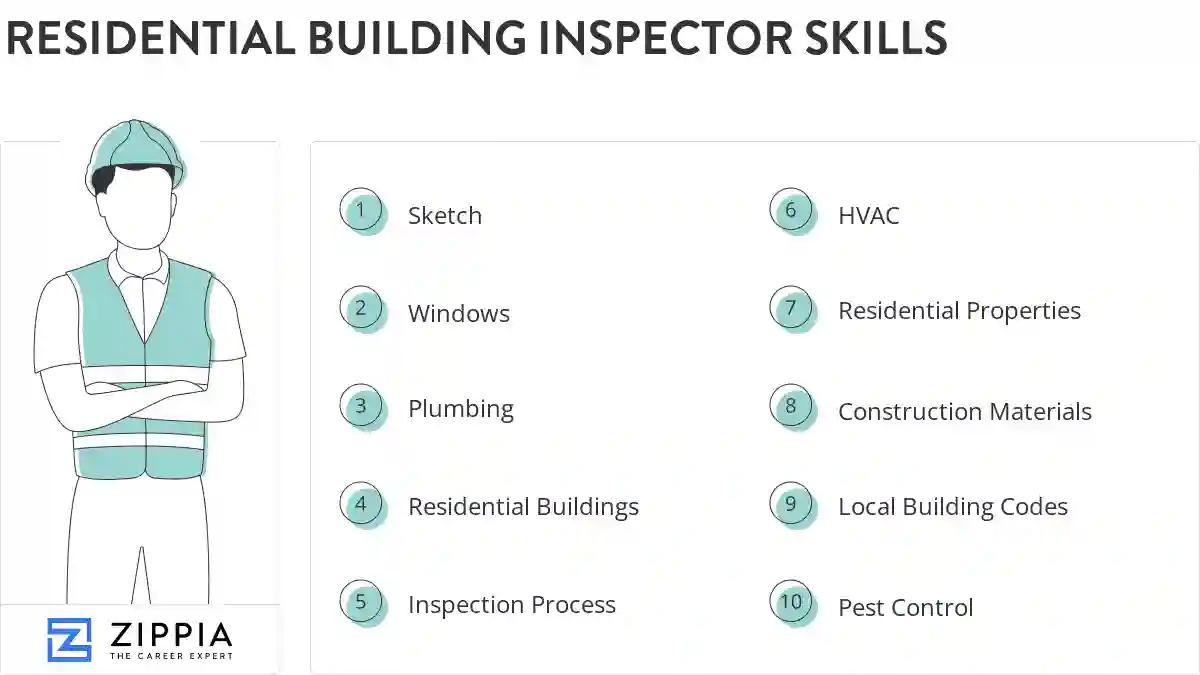
The most important skills for a residential building inspector resume and required skills for a residential building inspector to have include:
- Sketch
- Windows
- Plumbing
- Residential Buildings
- Inspection Process
- HVAC
- Residential Properties
- Construction Materials
- Local Building Codes
- Pest Control
- Plan Review
- Residential Construction
- Construction Methods
- Building Permits
- IRC
- Residential Homes
- Property Inspections
- Code Changes
- Replacement Costs
- GPS
- Residential Inspections
- Square Footage
Updated January 8, 2025
