
Automatically apply for jobs with Zippia
Upload your resume to get started.
Resource recovery engineer skills for your resume and career
15 resource recovery engineer skills for your resume and career
1. Windows
Windows is a chain of operating systems that controls a computer and is developed by Microsoft. Every version of Windows consists of GUI (graphical user interface), with a desktop that allows the user to open their files.
- Designed and implemented Data Storage Solutions for W2K, Windows 2003 and Windows 2008 servers globally.
- Contract)This contract was engaged to design and implement a DR process for Windows Servers.
2. EMC
- Skilled in EMC VNX 5200 with recovery point on VBLOCK systems.
- Worked with Senior Project Managers and Business Analysts to design complex data management solutions for business units involving EMC Storage.
3. Backup Recovery
- Provided second/third level technical expertise and support for backup recovery initiatives, resolution and issues.
4. Commvault
- Preformed employee reviews Assisted in backup migration from Data Protector to Commvault.
5. Linux
Linux is a Unix-like operating system. Just like Windows, Mac OS, and IOS, Linux is an operating system used by millions across the globe. Android itself is powered by the Linux operating system. Linux manages all the hardware resources that are associated with your computer. The software is famous because of the protection it grants from viruses, malware, and crashes. The Linux operating system is entirely free and is an open-source software meaning it can be altered by those equipped with the knowledge to code.
- Migrated customer from SAP on AIX to SuSE Linux on POWER.
- Installed and configured WebLogic and Apache Tomcat application servers running on Red Hat Enterprise Linux in a clustered/non-clustered environment.
6. Avamar
- Deployed the Remote Office backups using Avamar Technology and have been managing the Avamar Servers successfully.
- Integrated vCenters into Avamar environments and migrated native client backups to image backups with proxy.
7. Backup Policies
- Set up regular backup policies for thousands of clients to utilize the new backup infrastructure.
8. SQL
- Developed SQL scripts, Stored Procedures, XML Stored Procedures, and XSD Crystal Reports 10.
- Linked Servers between Oracle 10G and SQL Server.
9. Networker
- Improved NetWorker performance by updating dynamic port limit and correcting peer authentication issues.
- Implement new Networker and Data Domain backup environment consisting of 20 storage nodes, eight DD880s.
10. Unix
UNIX is a computer operating system that was first created in the 1960s and has been constantly updated since then. The operating system refers to the set of programs that enable a machine to function. It is a multi-user, multi-tasking device that works on computers, laptops, and servers. UNIX systems also have a graphical user interface (GUI), similar to Microsoft Windows, that makes it simple to use.
- Managed test lab, installed and maintained all UNIX test beds and managed re-creation of customer environments.
- Performed multiple augments installing and adding new devices/servers along with adding configurations for video streaming using Unix and checking router configurations.
11. Technical Issues
- Provide technical support Wireless Back Up Units, Cloud Services, Fiber, Ethernet First Mile and T1 technical issues.
- Assist co-worker on any technical issues when needed or requested.
12. Backup Systems
- Cross-trained on eleven other backup systems that supported all corporate worldwide backup and recovery requirements.
- Performed the planning and coordination in the execution of approved releases, upgrades or changes to the backup systems.
13. Disaster Recovery
The ability or procedure by which an organization regains its access and control over its IT framework after an unwanted disaster such as natural calamity or a cyberattack.
- Led cross functional teams to ensure adequate documentation and preparation for scheduled disaster recovery exercises.
- Prepared monthly reports for assigned accounts detailing progress and status of annual disaster recovery objectives.
14. Disk
- Monitored disk and tape capacity and utilization.
- Skilled at providing file, folder, disk and system restores.
15. Level Support
- Provided third level support to Brazil steady state team with a 24/7 pager.
- Provide 2nd and 3rd level support to offshore team.

What skills help Resource Recovery Engineers find jobs?
Tell us what job you are looking for, we’ll show you what skills employers want.
List of resource recovery engineer skills to add to your resume
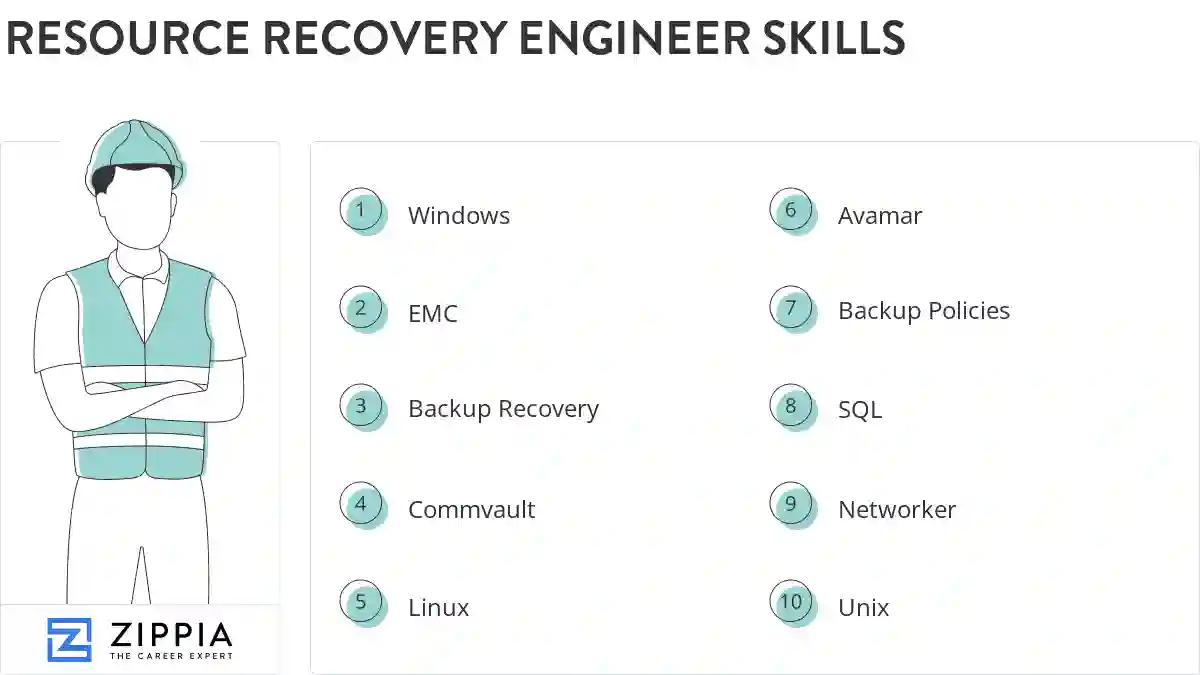
The most important skills for a resource recovery engineer resume and required skills for a resource recovery engineer to have include:
- Windows
- EMC
- Backup Recovery
- Commvault
- Linux
- Avamar
- Backup Policies
- SQL
- Networker
- Unix
- Technical Issues
- Backup Systems
- Disaster Recovery
- Disk
- Level Support
- Ethernet
- Encryption
- SLA
- NAS
- Recovery Environment
- Backup Environment
- TSM
- SAN
- Cloud
- Communication Troubleshoot
Updated January 8, 2025
