
Automatically apply for jobs with Zippia
Upload your resume to get started.
Restorative aide skills for your resume and career
15 restorative aide skills for your resume and career
1. Patients
- Help Restorative patients improve/maintain current physical capabilities through active and passive range-of-motion exercises, gait training, and strengthening exercises.
- Worked with physical and occupational therapists to ensure patients received proper maintenance after being released from therapy.
2. Rehabilitation
- Communicated frequently with nursing and rehabilitation departments, concerning resident goal setting.
- Perform exercises to residents following discharged from rehabilitation under a therapy program.
3. Strength Training
Strength training, also called resistance training involves the performance of physical exercise or a training technique aimed at improving muscle strength and endurance using a person's body weight or free weights/weight machine/resistance bands.
- Assisted residents with range of motion and strength training exercise.
- Assist residents with walking and strength training.
4. Body Functions
- Assist with maintaining body functions so they don't have a significant decline in ROM due to aging.
5. Care Plan
- Participated in the development and implementation of resident assessment and care plan.
- Participated in monthly resident care plans
6. Resident Care
- Participate in Resident Care Conferences that are multidisciplinary in accordance with person-centered care.
- Second day admission assessment, including assessment of skin, orientation, and level of resident care needed.
Choose from 10+ customizable restorative aide resume templates
Build a professional restorative aide resume in minutes. Our AI resume writing assistant will guide you through every step of the process, and you can choose from 10+ resume templates to create your restorative aide resume.7. Restorative Care
- Prepare resident for treatment by dress/position and administer restorative care in accordance with established policies and procedures.
- Prepare residents for treatment and administer restorative care in alignment with internal policies and procedures.
8. Bed Mobility
- Exercise includes AROM, AAROM, PROM, Ambulation, bed mobility, transfers, eating programs, and splint care.
9. CPR
Cardiopulmonary resuscitation or CPR is a medical procedure that involves chest compression to help a patient breathe. This artificial ventilation helps in keeping the brain function in place and regulates blood throughout the body. CPR is a lifesaving procedure that is used in emergencies.
- Obtained CPR certification*Successfully completed training in order to become a Certified Nurse Assistant
- Assisted medical staff in the administration of prescribed medication and in medical emergencies including CPR and first aid as needed.
10. Home Health
- Shift Manager, House Manager, and Home Health Manager
- Certified Home Health Aide-Certified Nursing Assistant Clinical Training Medical Terminology, Vital Signs, clinical procedures and medical theory.
11. Direct Supervision
Direct supervision is a term used to indicate that a person is supervising a certain task or a certain person while being physically present or in close proximity. It refers to the presence of a person and the availability of their supervision in something if it is needed.
- Provide daily restorative services to residents under direct supervision ofTherapy staff, Ensure residents highest abilities are attained
- Assist in the intervention and management of student behavior under direct supervision of teacher and/or campus administrator.
12. Restorative Program
- Documented all residents who participated in my restorative program.
- Documented progression and regression of patient's restorative program with PROM, AROM, splint tolerance, and gait.
13. ADL
ADL is a clinical shorthand for "activities of daily living." It includes tasks such as feeding, dressing, bathing, and caring for one's self and personal hygiene.
- Perform ADL programs, therapeutic exercise and gait training, also in-serviced nursing and family members of residents.
- Perform range of motions exercises, assist in ADL's and feeding
14. Compassion
- Administered prescribed care with compassion and sensitivity to patient needs.
- Time management and organizational skills Empathy and compassion Excellent verbal and written communication.
15. Walkers
- Assisted patients with operating mechanical devices; such as crutches, canes, prostheses, walkers and wheelchairs.
- Provide the resident with good body alignment when in wheelchairs or on walkers.
5 Restorative Aide resume examples
Build a professional restorative aide resume in minutes. Browse through our resume examples to identify the best way to word your resume. Then choose from 5+ resume templates to create your restorative aide resume.

What skills help Restorative Aides find jobs?
Tell us what job you are looking for, we’ll show you what skills employers want.
What skills stand out on restorative aide resumes?
Marina Orobinskaia
Program Coordinator, Bellevue College
What soft skills should all restorative aides possess?
Marina Orobinskaia
Program Coordinator, Bellevue College
What hard/technical skills are most important for restorative aides?
Marina Orobinskaia
Program Coordinator, Bellevue College
List of restorative aide skills to add to your resume
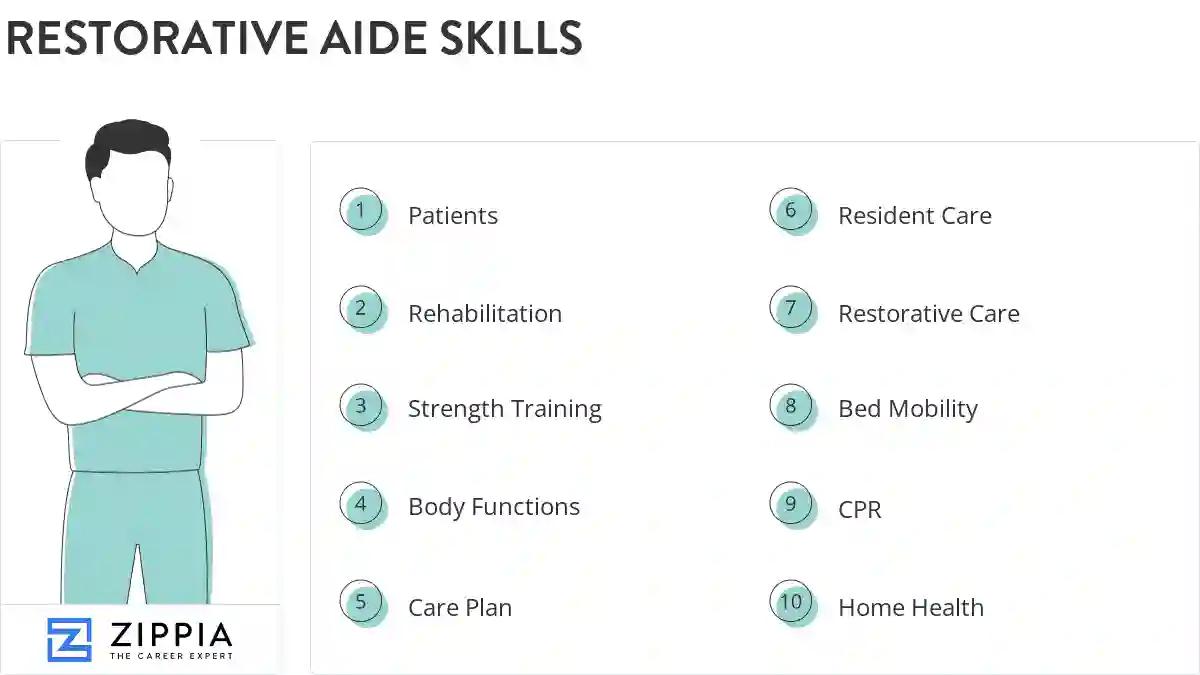
The most important skills for a restorative aide resume and required skills for a restorative aide to have include:
- Patients
- Rehabilitation
- Strength Training
- Body Functions
- Care Plan
- Resident Care
- Restorative Care
- Bed Mobility
- CPR
- Home Health
- Direct Supervision
- Restorative Program
- ADL
- Compassion
- Walkers
- Hippa
- Nursing Home
- Adaptive
- Occupational Therapy
- Vital Signs
- Speech Therapy
- Splints
- Motion Exercises
- Patient Care
- Restorative Therapy
- Adaptive Equipment
- Body Mechanics
- Emotional Support
- Therapeutic Exercises
- Gait Belts
- Blood Pressure
- Oral Hygiene
- Traction
- Catheter
- Passive Range
- Crutches
- Parallel Bars
- Therapy Equipment
- Disinfect Equipment
- Slings
- Fluid Intake
- Medical Appointments
- Word Processing
Updated January 8, 2025
