
Automatically apply for jobs with Zippia
Upload your resume to get started.
Roaster operator skills for your resume and career
10 roaster operator skills for your resume and career
1. GMP
GMP stands for Good Manufacturing Practice. It is a system that ensures that all products like food, beverages, and medicinal drugs that are produced comply with the quality standards. It helps in minimizing the risks and hazards that cannot be eliminated after the testing of final products.
- Manufacture active pharmaceutical ingredients using GMP format and aseptic techniques.
- Learn and practice GMP, FDA, and environmental, health and safety regulations and wear the prescribed personal protective equipment.
2. Roasting
- Modified the roasting schedule to support current and future Packaging requirements.
- Assessed current and future schedule requirements against actual packing and roasting statuses to optimize packaging machinery uptime.
3. Pallets
- Operate sit-down and stand-up forklifts to access and relocate pallets of ingredients and finished product.
- Unload and receive cartons of merchandise from delivery trucks, trailers and pallets.
4. Safety Standards
- Maintained quality control of product and safety standards to ensure economic and timely production of company products.
- Operated/Monitored multiple pieces of equipment in accordance with safety standards, ensuring quality product with minimal unplanned stops
5. Production Schedules
The project plan of a film or a documentary that highlights how a production budget will be spent over a given period until its completion is called a production schedule. The scheduling process starts with writing and analyzing the script, which is then broken down to determine and allocate the budget for each scene. The production schedule also includes several elements of the film including; cast actors, special effects, wardrobe, special equipment, stunts, extras, silent bits, production equipment, and many others.
- Studied production schedules, manufacturing, and customer specifications to run jobs profitably and successfully.
- Communicated with upstream departments about the production schedule and the availability of material.
6. Processing Equipment
Processing Equipment refers to any form of machinery or equipment used in the manufacturing of goods or in processing raw materials used in later goods. Equipment for food processing, for example, may include meat saws and other knives and packaging materials, while equipment used in water or oil treatment may involve more complex machinery and chemical procedures.
- Operated processing equipment and an Ultra High Temperature pasteurizing unit in the manufacturing plant.
- Monitor and troubleshoot all processing equipment.
Choose from 10+ customizable roaster operator resume templates
Build a professional roaster operator resume in minutes. Our AI resume writing assistant will guide you through every step of the process, and you can choose from 10+ resume templates to create your roaster operator resume.7. Analytical Tools
- Monitor and document product quality using analytical tools.
- Performed quality tests using analytical tools.
8. CCP
- Practiced CCP (Critical Control Point) when needed.
9. Machine Operation
- Time management skills aimed at ensuring that machine operations are carried out in a time efficient manner.
- Started machine operations by pressing buttons on control panels.
10. RAN
RAN stands for "revenue anticipation note," which refers to a practice where an organization (often the government) borrows money to support a specific project. When these funds are then repaid, the money given to the lenders comes from the profits generated by the business originally funded.
- Exchange information with the last shift and coming shift on how the products and machines ran that shift.

What skills help Roaster Operators find jobs?
Tell us what job you are looking for, we’ll show you what skills employers want.
List of roaster operator skills to add to your resume
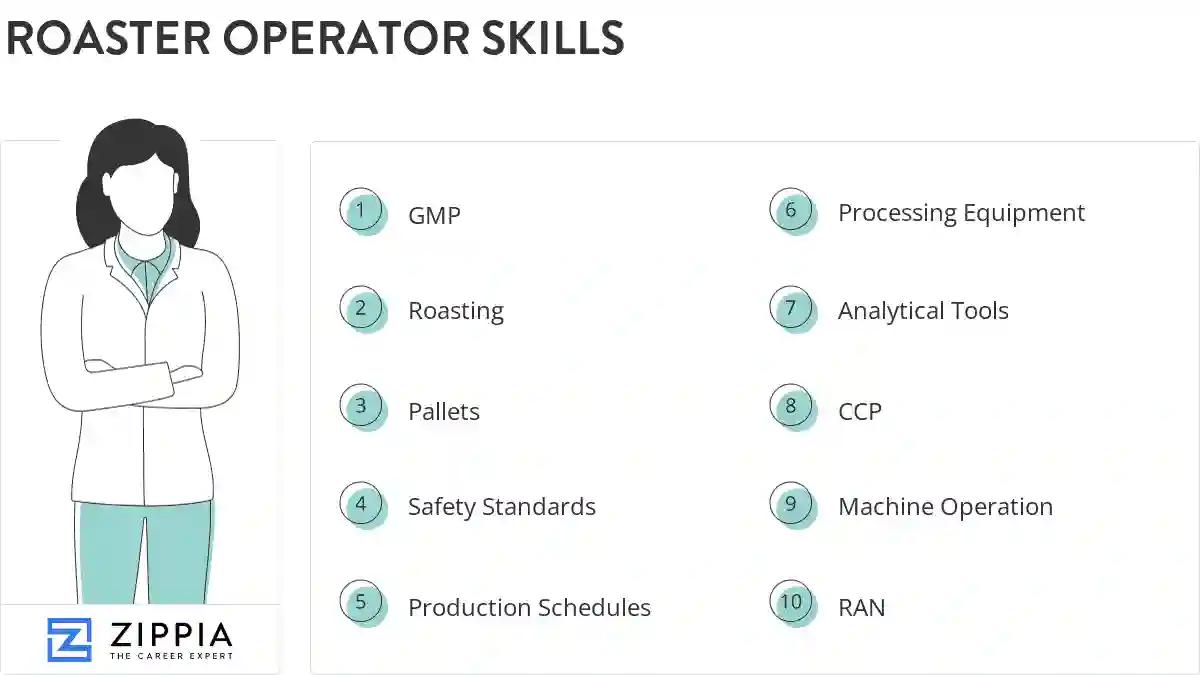
The most important skills for a roaster operator resume and required skills for a roaster operator to have include:
- GMP
- Roasting
- Pallets
- Safety Standards
- Production Schedules
- Processing Equipment
- Analytical Tools
- CCP
- Machine Operation
- RAN
Updated January 8, 2025
