
Automatically apply for jobs with Zippia
Upload your resume to get started.
Securities counselor skills for your resume and career
15 securities counselor skills for your resume and career
1. CPR
Cardiopulmonary resuscitation or CPR is a medical procedure that involves chest compression to help a patient breathe. This artificial ventilation helps in keeping the brain function in place and regulates blood throughout the body. CPR is a lifesaving procedure that is used in emergencies.
- Maintain certification of CPR, First Aid, self-defense techniques, control tactics as well as other numerous behavioral/psychological courses.
- Stayed up to date on all recommended training Skills Used * Trained in CPR and First Aid.
2. Direct Care
Direct care is the act of identifying people with special needs and offering the necessary care for them.
- Maintain security, implement treatment and activity programs, and provide direct care to sexual psychopathic personality patients.
- Provide direct care for civilly committed mentally ill individuals.
3. Securities
- Advise on commercial/contract, corporate, employment, IP and securities laws and regulations.
- Review and analyze legal documents in large international securities litigation case on plaintiff's side.
4. Patrol
- Check inmate mail, bunks, belongings for possible contraband; maintain a periodic patrol either inside or outside the institution.
- Monitored, investigated, and reported suspicious persons and situations, safety hazards, unusual or illegal activity in patrol area.
5. Therapeutic Interventions
- Assist residents in relieving their anxieties and tension using counseling and therapeutic intervention techniques.
- Performed therapeutic intervention and personal safety techniques sufficient to control aggressive behavior.
6. Therapeutic Environment
- Facilitate daily inmate's group therapy meetings, ensuring a safe and secured therapeutic environment.
- Provided a safe, therapeutic environment for residents through enforcing housing unit rules.
7. Physical Changes
- Recognized and reported behavioral and physical changes to head of department.
8. Substance Abuse
- Collected urine samples for random and routine substance abuse screenings of residents as required.
- Referred and coordinated the admission of clients to psychiatric/substance abuse hospitals, outpatient organizations and social service agencies.
9. Patients
- Create and utilize individualized behavior modification plans for patients.
- Conducted community outings for patients.
10. Emergency First Aid
- Provide emergency first aid/CPR assistance when needed.
11. Emergency Situations
- Monitor emergency systems at Control Centers so early detection and quick response to emergency situations is provided.
- Respond to any unusual or emergency situations.
12. Residential Care
- Provide facility security and/or residential care at the Competency Restoration Program inside the Minnesota Security Hospital.
- Provide facility security and/or residential care at the Minnesota Sex Offender Treatment Program.
13. Security Procedures
A security procedure is a verification protocol used to check if an electronic signature, record, or performance belongs to that specific person. It is a set of necessary procedures that need to be performed to maintain security. These procedures are step-by-step guidelines on how to implement, enable, or enforce security.
- Maintain and implement a thorough understanding of hospital policies and security procedures.
- Maintain and follow proper security procedures and policies.
14. Physical Crisis Intervention
- Provide security and verbal and/or physical crisis intervention.
- Provide security through verbal and/or physical crisis intervention, determine the possession of contraband through pat searches and room searches.
15. Incident Reports
An Incident Report, in a medical facility such as hospitals and nursing homes, is a type of paperwork filled out immediately after and in the case of an incident of some sort, with the goal of describing the incident and its consequences, as well as the measurements taken after or during the incident, as well as any other information relevant to said incident. Such an incident might be a patient acting out or a patient being injured.
- Completed incident reports and notified Shift Supervisor about incident.
- Read the daily shift report and any incident reports that were written prior to my arrival, each day.

What skills help Securities Counselors find jobs?
Tell us what job you are looking for, we’ll show you what skills employers want.
List of securities counselor skills to add to your resume
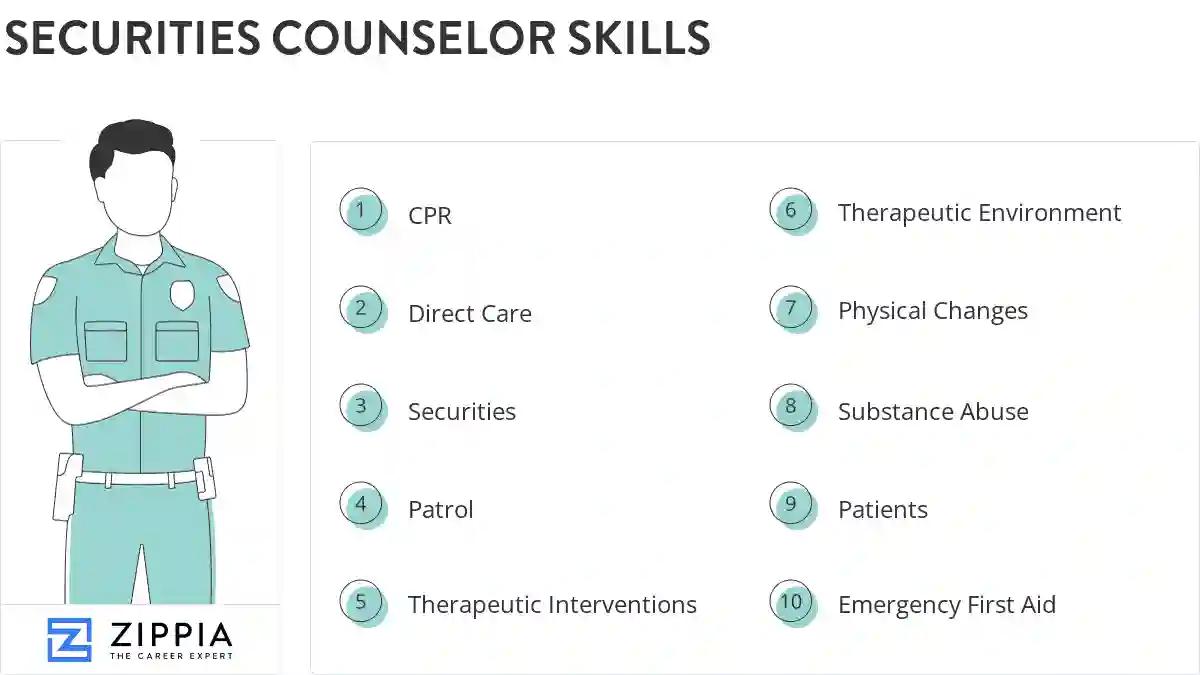
The most important skills for a securities counselor resume and required skills for a securities counselor to have include:
- CPR
- Direct Care
- Securities
- Patrol
- Therapeutic Interventions
- Therapeutic Environment
- Physical Changes
- Substance Abuse
- Patients
- Emergency First Aid
- Emergency Situations
- Residential Care
- Security Procedures
- Physical Crisis Intervention
- Incident Reports
- Treatment Facility
- Room Searches
- Head Counts
- Facility Rules
- Security Rounds
- Conflict Resolution
- Security Cameras
- Video Cameras
- Crisis Situations
- Emergency Response
- Hippa
- Facility Safety
- Body Searches
Updated January 8, 2025
