
Automatically apply for jobs with Zippia
Upload your resume to get started.
Slitting machine operator skills for your resume and career
15 slitting machine operator skills for your resume and career
1. Slitting Machines
- Commissioned and served as sole operator for new automated slitting machine as well as operating and maintaining multiple rotary slitting machines.
- Performed set up, running, monitoring and troubleshooting of polyurethane slitting machines.
2. Data Entry
Data entry means entering data into a company's system with the help of a keyboard. A person responsible for entering data may also be asked to verify the authenticity of the data being entered. A person doing data entry must pay great attention to tiny details.
- Complete production paper work and data entry on PC in a timely manner.
3. Rewind
- Operate slitting Rewind machine Adjust tension control for correct Specification
4. Production Schedules
The project plan of a film or a documentary that highlights how a production budget will be spent over a given period until its completion is called a production schedule. The scheduling process starts with writing and analyzing the script, which is then broken down to determine and allocate the budget for each scene. The production schedule also includes several elements of the film including; cast actors, special effects, wardrobe, special equipment, stunts, extras, silent bits, production equipment, and many others.
- Develop and execute line production schedules to meet Department goals and standards for run times and cost parameters.
- Review production schedule and coordinate with senior personal for daily tasks.
5. Machine Operation
- Observed machine operation and examined cut strips for flatness, burrs and surface defects.
- Reviewed program specifications or blueprints to determine and set machine operations and sequencing, finished workpiece dimensions and numerical control sequences.
6. General Maintenance
General maintenance is the regular check-up and repairs of machinery, buildings, and other mechanical equipment. General maintenance is performed by repair workers who are skilled to handle the day-to-day defects produced in the machinery. General maintenance aims to make sure the items remain in the best operational conditions. Usually, a set of planned activities are performed regularly by an expert to monitor the maintenance.
- Set up, operation, and general maintenance of the slitting machine
Choose from 10+ customizable slitting machine operator resume templates
Build a professional slitting machine operator resume in minutes. Our AI resume writing assistant will guide you through every step of the process, and you can choose from 10+ resume templates to create your slitting machine operator resume.7. Customer Specs
- Set up knives and web path on slitter per customer specs.
- Slit coils of steel to customer specs.
8. Troubleshoot
Troubleshooting is the process of analyzing and fixing any kind of problem in a system or a machine. Troubleshooting is the detailed yet quick search in the system for the main source of an issue and solving it.
- Repaired and troubleshoot all complicated mechanical and electrical issues.
- Program, set up, troubleshoot, and maintain machines used to stack products on a pallet and wrap them.
9. Quality Checks
Quality checks are a component of quality control aimed at ensuring that quality requirements are met. Internally, quality checks provide assurance to managers, and externally, it provides assurance to clients, federal departments, authorities, and certifiers.
- Perform quality checks for others performing tasks as a secondary procedures used in inspections.
- Conducted quality checks to ensure product remained within technical specifications identified in production blueprints and plans.
10. RAN
RAN stands for "revenue anticipation note," which refers to a practice where an organization (often the government) borrows money to support a specific project. When these funds are then repaid, the money given to the lenders comes from the profits generated by the business originally funded.
- Operated machine so production continuously ran.
- Managed the levels of chemicals to make sure process ran correctly for making Styrofoam.
11. Acceptable Production
- Maintain acceptable production, waste, quality, and food packaging safety standards.
12. Routine Maintenance
- Perform routine maintenance on equipment by troubleshooting the equipment to meet established hourly production standards and perform preventative maintenance procedures.
- Forged participation on routine maintenance, ensured workplace safety workplace, and guaranteed security and maintenance of heavy equipment.
13. Quality Issues
- Monitored quality control equipment to minimize defects and quality issues.
- Assist with new operators line management skills, job safety hazards and quality issues.
14. Safety Procedures
Safety procedures are a set of standardized procedures, that ensures minimal to no risk to people, resources, and the work environment. A company follows the step-by-step safety procedures as it they not only keep the customers and the employees safe, but also help in avoiding legal claims.
- Performed general administrative requirements in accordance with established safety procedures, including document formatting, proofreading and maintaining cell input.
- Created or enhanced new and existing safety procedures to improve quality and safe operating practices in the manufacturing facility.
15. Machine Functions
- Set up and operated computer-controlled machines or robots to perform one or more machine functions on metal or plastic workpieces.
5 Slitting Machine Operator resume examples
Build a professional slitting machine operator resume in minutes. Browse through our resume examples to identify the best way to word your resume. Then choose from 5+ resume templates to create your slitting machine operator resume.

What skills help Slitting Machine Operators find jobs?
Tell us what job you are looking for, we’ll show you what skills employers want.
List of slitting machine operator skills to add to your resume
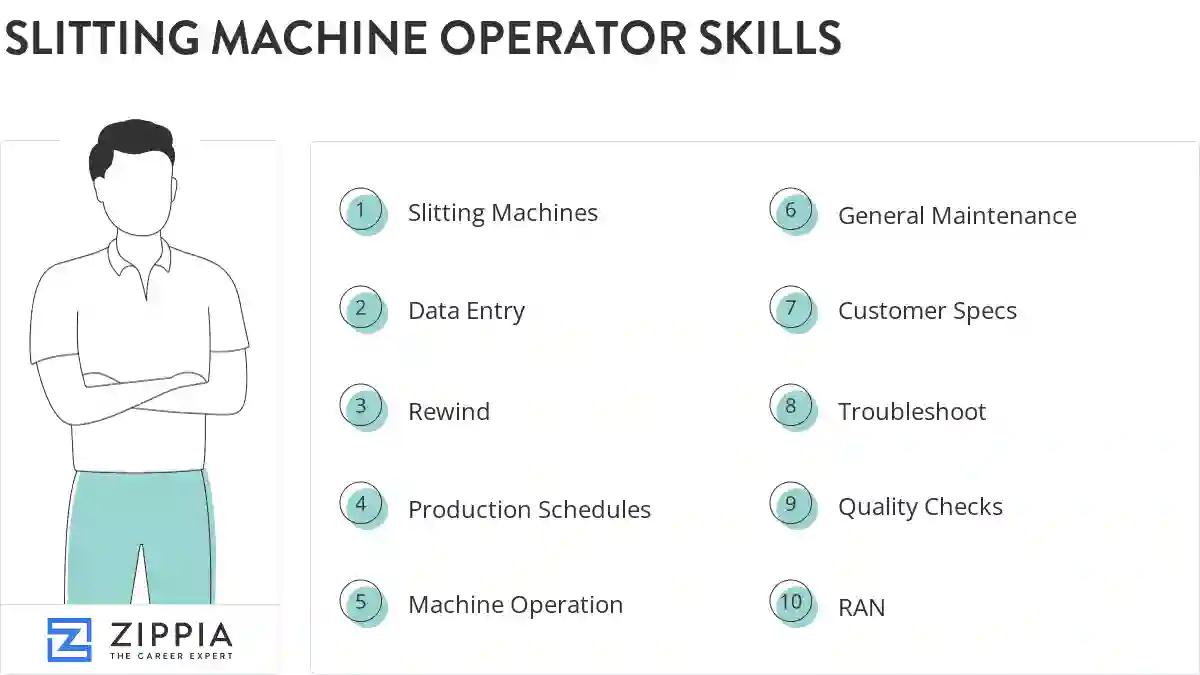
The most important skills for a slitting machine operator resume and required skills for a slitting machine operator to have include:
- Slitting Machines
- Data Entry
- Rewind
- Production Schedules
- Machine Operation
- General Maintenance
- Customer Specs
- Troubleshoot
- Quality Checks
- RAN
- Acceptable Production
- Routine Maintenance
- Quality Issues
- Safety Procedures
- Machine Functions
Updated January 8, 2025
