
Automatically apply for jobs with Zippia
Upload your resume to get started.
Systems mechanic skills for your resume and career
15 systems mechanic skills for your resume and career
1. Hand Tools
- Performed maintenance incorporating proper usage of hand tools & insured adequate accountability & security of issued equipment.
- Operated test stands, electronic test equipment, hand tools, torque wrenches, and AGE equipment to perform tasks.
2. Test Equipment
Test equipment is a mechanical tool or a device which is used create signals and gather response from an electronic device under test. It helps in detecting any faults in the device and it also proves the proper operation of the electronic device.
- Test equipment and calibration laboratory standards troubleshooting, repair and calibration in a Type IV USAF Calibration Laboratory.
- Operated support equipment to determine system probabilities and repaired malfunctions utilizing appropriate test equipment and technical references.
3. Preventive Maintenance
- Provided periodic preventive maintenance, diagnose system malfunctions, and replace/repair defective components.
- Performed preventive maintenance on all associated equipment.
4. Hydraulic Systems
- Performed preventative and corrective maintenance for mechanical, electrical, and hydraulic systems and/or components.
- Corrected previously diagnosed malfunctions of mechanical, electrical and hydraulic systems and components.
5. Technical Data
Technical data refers to both scientific and technical nature and information recorded and presented in any form other than financial and management information but includes manuals and instructional materials, as well as technical data formatted as a computer database.
- Ensured strict obedience to technical data integrity, maintenance operating instructions and tool control directives.
- Reported zero discrepancies while carrying out duties during operational readiness inspections as technical data TODA.
6. Support Equipment
- Provided routine preventative maintenance, overhaul, calibration and repair of all powered and non-powered support equipment.
- Maintained a wide variety of support equipment to include powered and non-powered aerospace ground support equipment.
Choose from 10+ customizable systems mechanic resume templates
Build a professional systems mechanic resume in minutes. Our AI resume writing assistant will guide you through every step of the process, and you can choose from 10+ resume templates to create your systems mechanic resume.7. Technical Manuals
Technical Manuals are informative pieces of writing, often including diagrams and images, which educate the person who is using it and assist them in learning how to control, build, fix, or otherwise handle the product or products which it speaks of. A technical manual is also known more commonly as a user manual and it typically comes with most products, especially items such as furniture, electronics, appliances, software, machinery, and even medication and medical devices.
- Tested repaired assemblies and electronic integrated systems to assure equipment is operational in accordance with applicable technical manuals or directives.
- Performed aircraft maintenance in accordance with established Production Acceptance Certification procedures, job guides, and technical manuals.
8. Electrical Troubleshooting
- Repaired computers systems such as ECM, also electrical troubleshooting, hydraulic troubleshooting and power train troubleshooting specifically to heavy equipment.
- Repaired new and used vehicles, including electrical troubleshooting and 15-A mechanic-interior trim repairs to dashboards and gauges.on
9. Electronic Equipment
Electronic equipment is equipment in which electrons are conducted in a controlled manner, especially in a gas or vacuum, or semiconductor amplifier. These equipment are components for controlling the flow of electrical current for information and signal processing, telecommunications, and system control.
- Diagnosed faults and improper functioning of electronic equipment and electrical systems.
- Calibrate or adjust electronic equipment or instruments to specification.
10. Mechanical Troubleshooting
- Assist and conduct wheeled vehicle mechanical troubleshooting, repair and services.
- Trained organizational level personnel in electronic and mechanical troubleshooting / repair of the Vulcan system.
11. Safety Practices
- Utilized safety practices and procedures following established safety rules and regulations and maintain a safe and clean work environment.
- Implemented standard safety practices and procedures.
12. Engineering Drawings
Engineering drawings are technical drawings that tell about the requirements for engineering components or equipment. Such drawings have standardized languages and symbols. There are multiple types of engineering drawings such as isometric drawing, orthographic or multiview drawing, schematic drawings, one view, and two view drawings, etc.
- Interpret complex drawings, specifications, schematics and engineering drawings of highly complex systems.
- Maintained records to ensure that engineering drawings and documents were current and that engineering related production problems and resolutions were documented.
13. Unscheduled Maintenance
- Performed unscheduled maintenance and scheduled maintenance calibrations on the F4E Phantom airborne radar, and its associated electronic systems.
- Coordinate accomplishment of all planned and unscheduled maintenance and inspections with the production supervisor.
14. Technical Orders
- Performed preventative maintenance to include servicing equipment, periodic inspections and time compliance technical orders.
- Utilized technical orders required to maintain and troubleshoot aircraft equipment.
15. Technical Publications
- Analyzed and determined maintenance-related issues through the use of technical publications, troubleshooting, and collaboration with other maintenance disciplines.
- Advise on any problems maintaining these systems and determine maintenance procedures and performance characteristics using technical publications.
5 Systems Mechanic resume examples
Build a professional systems mechanic resume in minutes. Browse through our resume examples to identify the best way to word your resume. Then choose from 5+ resume templates to create your systems mechanic resume.

What skills help Systems Mechanics find jobs?
Tell us what job you are looking for, we’ll show you what skills employers want.
List of systems mechanic skills to add to your resume
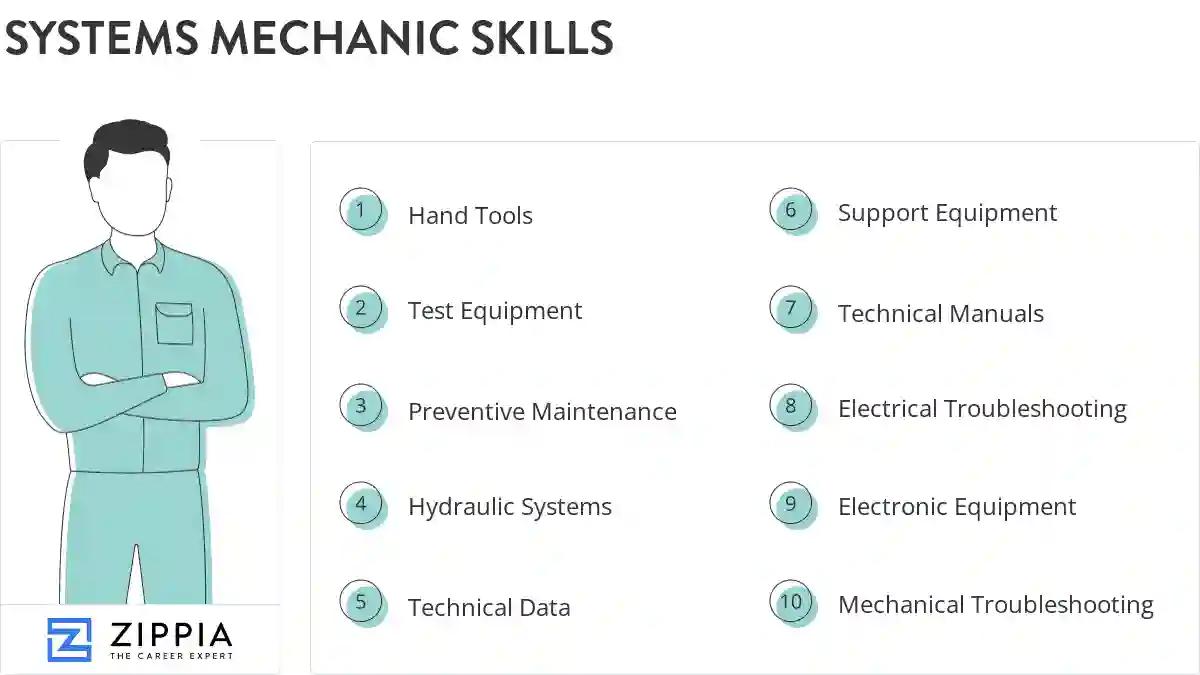
The most important skills for a systems mechanic resume and required skills for a systems mechanic to have include:
- Hand Tools
- Test Equipment
- Preventive Maintenance
- Hydraulic Systems
- Technical Data
- Support Equipment
- Technical Manuals
- Electrical Troubleshooting
- Electronic Equipment
- Mechanical Troubleshooting
- Safety Practices
- Engineering Drawings
- Unscheduled Maintenance
- Technical Orders
- Technical Publications
- Avionics Systems
- Switches
- Air Compressors
- Respirators
- Diesel Engines
- Ladders
- HVAC
- Radar
- Operational Checks
- Safety Rules
- Blowers
- Pulleys
- Flight Control
- System Components
- OSHA
- Provide Technical Assistance
- Transmitters
- Mechanical Systems
- Maintenance Actions
- Electrical Systems
- Plumbing
- Corrective Action
- Flight Line
- Electrical Components
- Diagnostic Equipment
- Routine Maintenance
- System Troubleshooting
- Soldering Irons
- Weapons Systems
- Hoists
- FAA
- Pneumatic Systems
Updated January 8, 2025
