What does a tapper do?
Tapper responsibilities
Here are examples of responsibilities from real tapper resumes:
- Maintain and wear all require PPE
- Maintain and wear all require PPE always due to the dangerous nature of the job.
- Work in a GMP environments to ensure proper guidelines and procedures are being follow as per government regulations.
- Produce high end, superb cards using various machines, from collating to hot stamping.
Tapper skills and personality traits
We break down the percentage of Tappers that have these skills listed on their resume here:
- Hand Tools, 88%
Clean anode butts with hand tools and/or air tools.
- Trouble Shoot, 12%
Tow Motor Hauling Material * Trouble shoot Product, Spec to Meet and Exceed Customer Expectations
Computer skills. One of the key soft skills for a tapper to have is computer skills. You can see how this relates to what tappers do because "metal and plastic machine workers must be able to use programmable devices, computers, and robots on the factory floor." Additionally, a tapper resume shows how tappers use computer skills: "maintain up-to-date working knowledge of appropriate production processes and forms as well as corning computer systems. "
The three companies that hire the most tappers are:
- Area Temps2 tappers jobs
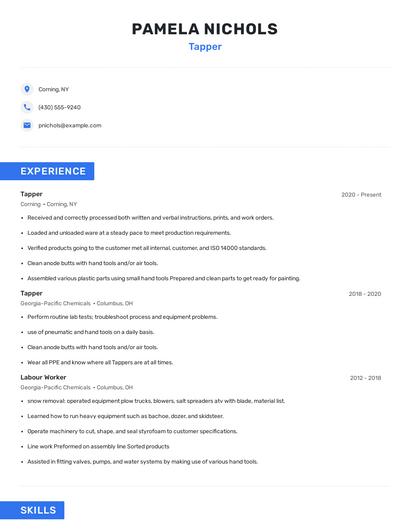
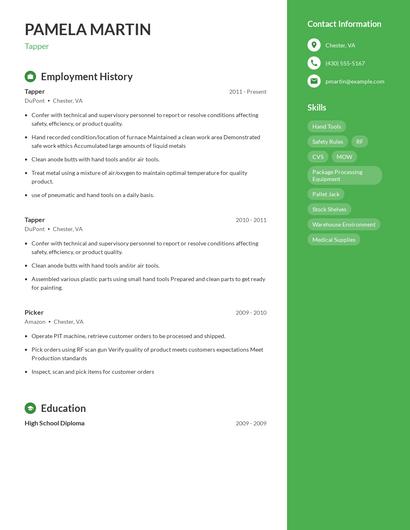
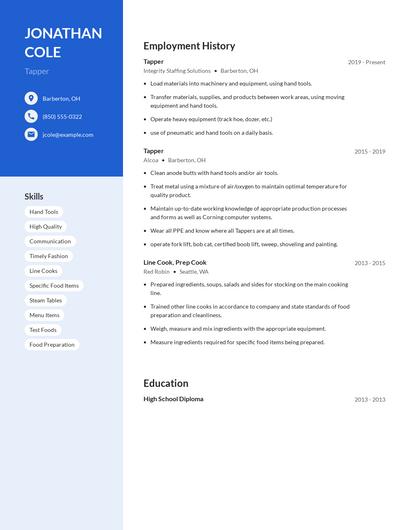
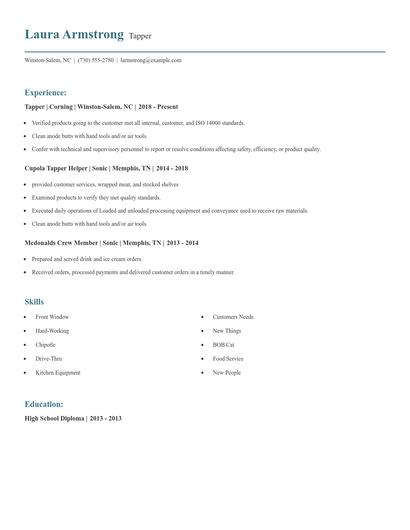
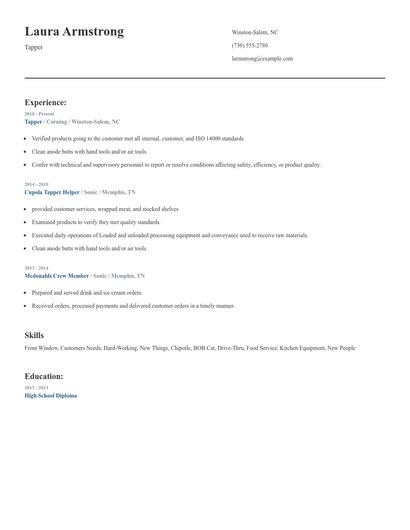
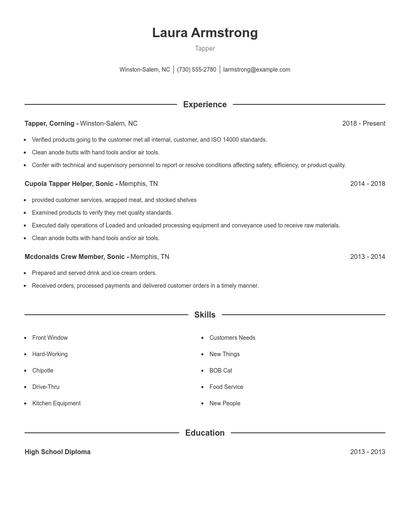
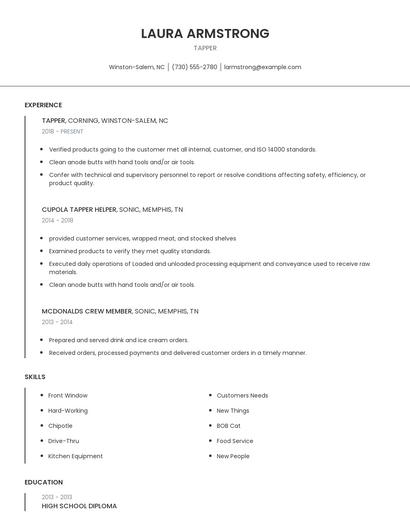
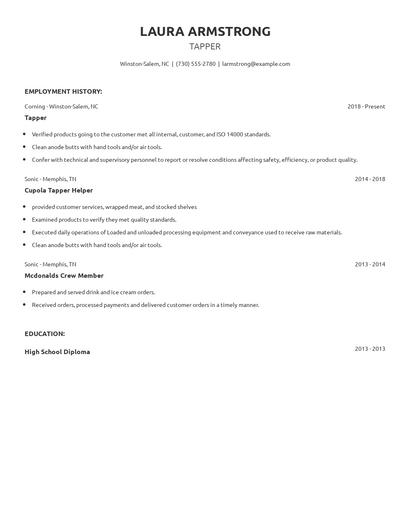
Choose from 10+ customizable tapper resume templates
Build a professional tapper resume in minutes. Our AI resume writing assistant will guide you through every step of the process, and you can choose from 10+ resume templates to create your tapper resume.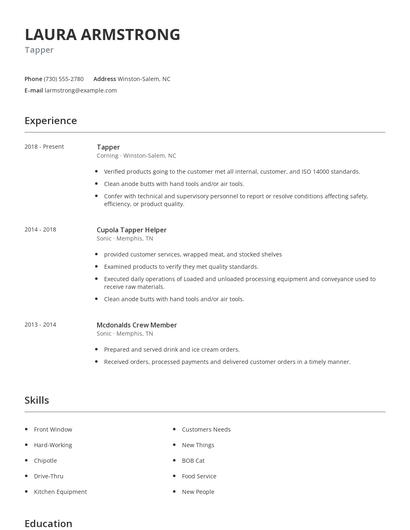
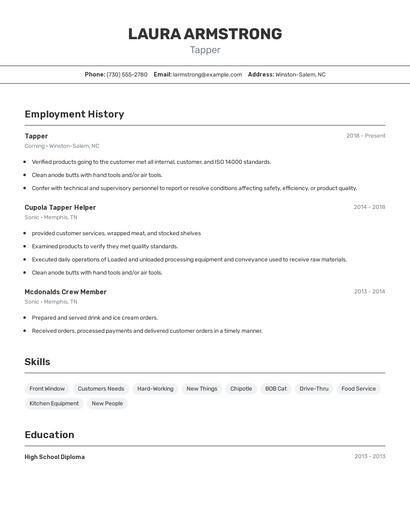
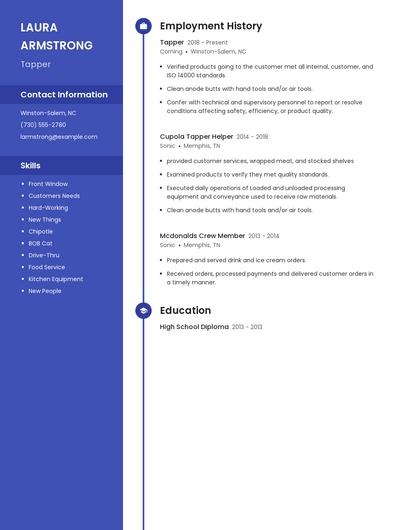
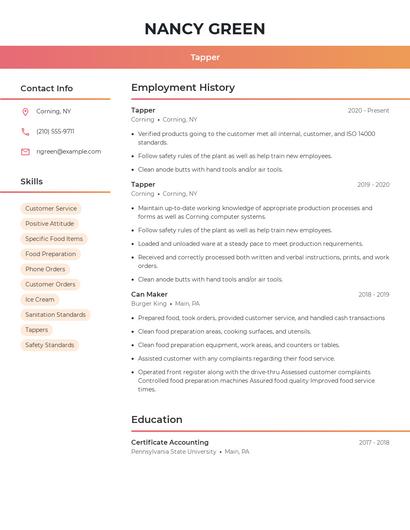
Compare different tappers
Tapper vs. Ammunition assembly labour
Professional utility workers have skills in customer service, safety procedures, and safety standards. Those in this career work to maintain a perpetually clean work area, comply with safety standards, inspect finished projects, repair and replace any broken equipment. A professional utility worker will also locate parts and tools to help improve workflows.
These skill sets are where the common ground ends though. The responsibilities of a tapper are more likely to require skills like "tapping machines," "safety practices," "taps," and "trouble shoot." On the other hand, a job as an ammunition assembly labour requires skills like "assembly line," "blueprint specifications," "work ethic," and "tape measure." As you can see, what employees do in each career varies considerably.
Ammunition assembly labours earn the highest salaries when working in the automotive industry, with an average yearly salary of $35,211. On the other hand, tappers are paid more in the technology industry with an average salary of $38,513.ammunition assembly labours tend to reach similar levels of education than tappers. In fact, ammunition assembly labours are 0.4% less likely to graduate with a Master's Degree and 0.0% less likely to have a Doctoral Degree.Tapper vs. Production utility worker
In a manufacturing setting, a production employee is in charge of assembling and processing products, ensuring efficiency and timelines. Their responsibilities include adhering to guidelines and blueprints, monitoring the products for any defects or inconsistencies, operating machines and equipment, keeping an eye on the assembly line, and maintaining the cleanliness of work areas. Furthermore, as a production employee, it is essential to maintain an active communication line with co-workers, coordinating every step of the way, and alerting managers should there be any problems.
Each career also uses different skills, according to real tapper resumes. While tapper responsibilities can utilize skills like "hand tools," "tapping machines," "safety practices," and "taps," production utility workers use skills like "production process," "pallets," "safety rules," and "basic math."
Production utility workers earn a lower average salary than tappers. But production utility workers earn the highest pay in the media industry, with an average salary of $35,119. Additionally, tappers earn the highest salaries in the technology with average pay of $38,513 annually.In general, production utility workers achieve similar levels of education than tappers. They're 1.0% less likely to obtain a Master's Degree while being 0.0% less likely to earn a Doctoral Degree.Tapper vs. Mill work
The required skills of the two careers differ considerably. For example, tappers are more likely to have skills like "hand tools," "tapping machines," "safety practices," and "taps." But a mill work is more likely to have skills like "production process," "safety procedures," "load trucks," and "augers."
Mill works typically earn similar educational levels compared to tappers. Specifically, they're 0.5% less likely to graduate with a Master's Degree, and 0.3% less likely to earn a Doctoral Degree.Tapper vs. Production employee
Types of tapper
Updated January 8, 2025
