
Automatically apply for jobs with Zippia
Upload your resume to get started.
Telemetry technician skills for your resume and career
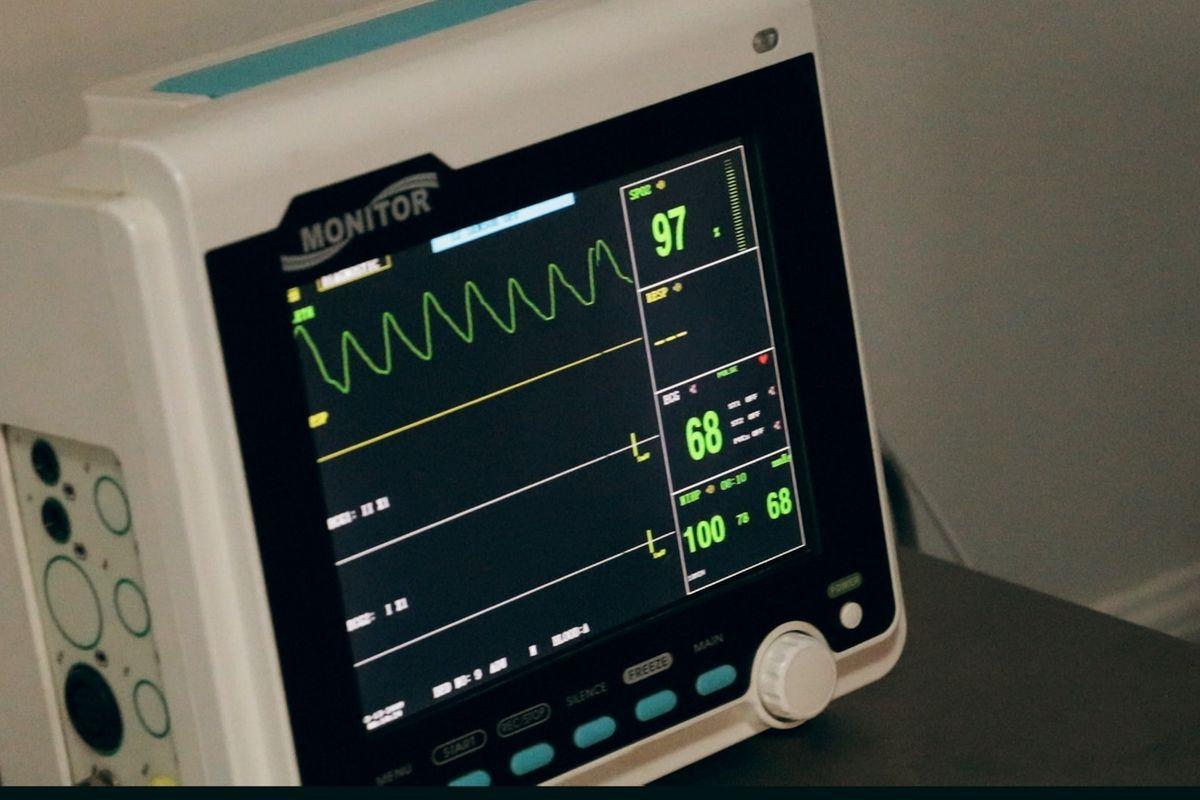
15 telemetry technician skills for your resume and career
1. Patients
- Provide continuous observation of monitored ECG rhythms for patients on telemetry and report pertinent information to appropriate nursing personnel.
- Performed Cardiac Telemetry Monitoring of patients and proper documentation for each patient.
2. EKG
- Preformed EKG interpretation, identifying any abnormalities and notifying nursing and medical staff.
- Monitored patients and administered EKG.
3. Patient Care
Patient care entails the diagnosis, recovery, and control of sickness as well as the maintenance of physical and emotional well-being through the use of healthcare providers' services. Patient care is described as services provided to patients by health practitioners or non-professionals under guidance.
- Deliver patient care by assisting individuals with daily living activities as delegated by and in conjunction with registered professional.
- Completed Winthrop University Patient Care Technician course.
4. Customer Service
Customer service is the process of offering assistance to all the current and potential customers -- answering questions, fixing problems, and providing excellent service. The main goal of customer service is to build a strong relationship with the customers so that they keep coming back for more business.
- Answer an average of fifty calls per day by addressing customer inquiries, solving problems and providing excellent customer service.
- Use excellent customer service and communication skills to greet and inform all incoming patients and visitors.
5. Rhythm Interpretation
- Collaborated with appropriate staff members for rhythm interpretation.
- Assist technicians with rhythm interpretation, relieve lunch breaks, scheduling, and ordering supplies for the unit.
6. ICU
ICU means intensive care units. It also has a name known as the critical care unit or intensive therapy unit. The ICU handles patients experiencing acute diseases or severe injuries that need specialized treatment procedures by specific professionals.
- Observed patients being monitored while in the ICU and the Med/Surge unit and reporting any abnormal findings to the RN.
- Worked under the direct supervision of an RN and performed duties according to protocol of the ICU unit.
Choose from 10+ customizable telemetry technician resume templates
Build a professional telemetry technician resume in minutes. Our AI resume writing assistant will guide you through every step of the process, and you can choose from 10+ resume templates to create your telemetry technician resume.7. ECG
An electrocardiogram (ECG) is a piece of medical equipment used to determine a person's heart rate. It is one way of monitoring and assessing the heart by conducting ECQ where a device called electrodes is connected to a machine by wires. This device is stick to the skin, particularly in the arm, chest, and leg part of the body.
- Identify and triage factors related to equipment operation and/or subject actions that interfere with ECG acquisition quality.
- Perform complete system check at the beginning of shift to include alarms, transmitter pouches, ECG electrodes and batteries.
8. Electrocardiogram
- Performed and monitored cardiac, electrocardiogram and cardiac screen and appraisals.
- Recognize changes in electrocardiogram for monitored patients and informs RN of changes.
9. Medical Terminology
- Exhibit an excellence understanding of medical terminology and medical treatment in general.
- Detailed knowledge of medical terminology, anatomy, and physiology.
10. CPR
Cardiopulmonary resuscitation or CPR is a medical procedure that involves chest compression to help a patient breathe. This artificial ventilation helps in keeping the brain function in place and regulates blood throughout the body. CPR is a lifesaving procedure that is used in emergencies.
- Assisted in code situations by providing cardiopulmonary resuscitation (CPR).
- Maintain CPR certification, with regular testing of Cardiac Rythms.
11. Arrhythmia
Arrhythmia refers to an irregular or abnormal rate of your heartbeat. This means that your heart beats either too quickly, beats too slowly, or beats with an irregular pattern. Some factors that can affect your heart's rhythm (arrhythmia) include having had a heart attack, smoking, congenital heart defects, stress, etc.
- Documented all cardiac rhythms and arrhythmia clearly and accurately.
- Document all arrhythmia's/significant events on report sheet.
12. QRS
- Interpret the atrial and ventricular rhythm, PR, QRS and QT interval.
- Measure PR, QRS, and At intervals.
13. Vital Signs
Vital signs are a set of values indicating different body systems' performance. They are measurements of the body's most basic functions. The four major vital signs used in medicine to assess a patient are body temperature, pulse rate, respiration rate, and blood pressure.
- Monitored cardiac patients' vital signs and troubleshoot as needed; notated patient charts and handled accounts payable/accounts receivable.
- Record a patient's medical history and obtain routine vital signs such as pulse and blood pressure.
14. Rhythm Strips
- Record and interpret rhythm strips every 4, 6, or 8 hours due to condition of patient.
- Interpreted rhythm strips; appointed staff liaison to staff members, patients, physician, and visitors.
15. Heart Rate
- Inform supervisor or nurse, changes of rhythm or abnormal heart rate and rhythm to initiate examination of patient.
- Monitor the patient's heart rate to make sure it is not irregular or get into cardiac arrest.
5 Telemetry Technician resume examples
Build a professional telemetry technician resume in minutes. Browse through our resume examples to identify the best way to word your resume. Then choose from 5+ resume templates to create your telemetry technician resume.

What skills help Telemetry Technicians find jobs?
Tell us what job you are looking for, we’ll show you what skills employers want.
What skills stand out on telemetry technician resumes?
Joan Cranford
Assistant Dean in Nursing, Clinical Professor, Georgia State University
-Knowledge of appropriate infection control standards i.e. use of personal protective equipment
-Critical care experience
-High level nursing skills
-Initiative
-Ability to deal and work in stressful situations
What type of skills will young telemetry technicians need?
Peggy McElgunn
Executive Director, ACVP - Alliance of Cardiovascular Professionals
One of the best ways to learn about the latest approaches and advancements is participation in the ONLY national association representing cardiovascular professionals: the Alliance of Cardiovascular Professionals (Visit ACP). Membership is a great way to build flexibility and learn about adaptations in practice.
List of telemetry technician skills to add to your resume
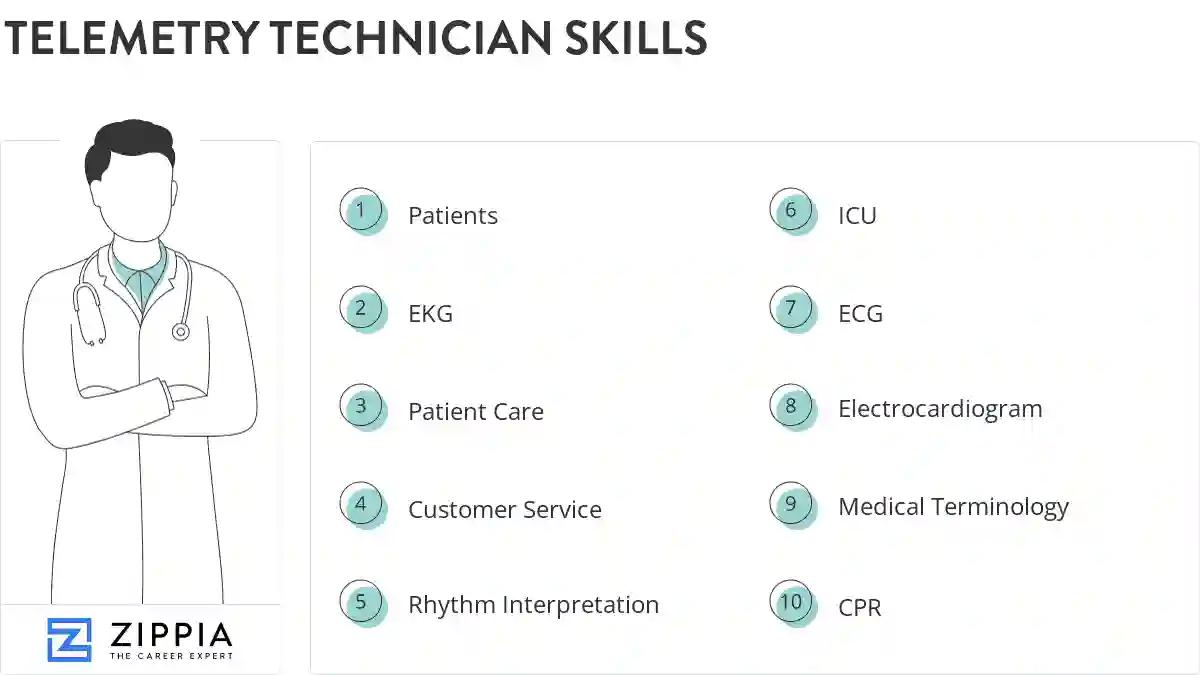
The most important skills for a telemetry technician resume and required skills for a telemetry technician to have include:
- Patients
- EKG
- Patient Care
- Customer Service
- Rhythm Interpretation
- ICU
- ECG
- Electrocardiogram
- Medical Terminology
- CPR
- Arrhythmia
- QRS
- Vital Signs
- Rhythm Strips
- Heart Rate
- Cardiac Monitors
- Patient Safety
- Blood Pressure
- Compassion
- Telemetry Tech
- Telemetry Equipment
- Cardiac Telemetry
- Emergency Situations
- Muse
- Troubleshoot
- Patient Charts
- Physician Orders
- Telemetry Monitors
- Lethal Rhythms
- EMR
- Transmitters
- Data Entry
- Transcription
- Report Changes
- Cardiac Arrhythmia
- Ekg Monitoring
- Computer System
- IV
- Telemetry Strips
- Heart Rhythm Pattern
- Stress Tests
- Interval Measurements
- Catheter
- Telemetry Leads
- Identify Abnormal Variation
- HIPAA
- Hippa
Updated January 8, 2025
