Explore jobs
Find specific jobs
Explore careers
Explore professions
Best companies
Explore companies
Job outlook for university relations directors in the United States
Are university relations director jobs in demand?
University relations director job and salary trends over time
University relations director jobs over time
University relations director job growth rate over time
| Year | # of jobs | % of population |
|---|---|---|
| 2021 | 424 | 0.00% |
| 2020 | 414 | 0.00% |
| 2019 | 404 | 0.00% |
| 2018 | 370 | 0.00% |
| 2017 | 344 | 0.00% |
Average university relations director salary over time
University relations director salary by year
| Year | Avg. salary | Hourly rate | % Change |
|---|---|---|---|
| 2025 | $95,885 | $46.10 | +4.1% |
| 2024 | $92,131 | $44.29 | +2.1% |
| 2023 | $90,258 | $43.39 | +3.2% |
| 2022 | $87,491 | $42.06 | +3.7% |
| 2021 | $84,377 | $40.57 | +3.1% |
University relations director jobs by state
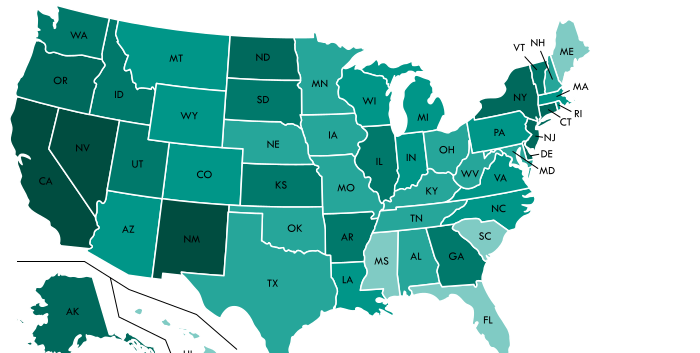
Most common states for university relations directors
| Rank | State | Population | # of jobs | Employment/ 1000ppl |
|---|---|---|---|---|
| 1 | District of Columbia | 693,972 | 268 | 39% |
| 2 | North Dakota | 755,393 | 188 | 25% |
| 3 | South Dakota | 869,666 | 188 | 22% |
| 4 | South Carolina | 5,024,369 | 763 | 15% |
| 5 | West Virginia | 1,815,857 | 272 | 15% |
| 6 | Alabama | 4,874,747 | 551 | 11% |
| 7 | Oklahoma | 3,930,864 | 443 | 11% |
| 8 | Louisiana | 4,684,333 | 491 | 10% |
| 9 | Hawaii | 1,427,538 | 145 | 10% |
| 10 | Mississippi | 2,984,100 | 282 | 9% |
| 11 | Massachusetts | 6,859,819 | 418 | 6% |
| 12 | Oregon | 4,142,776 | 230 | 6% |
| 13 | California | 39,536,653 | 1,894 | 5% |
| 14 | New York | 19,849,399 | 818 | 4% |
| 15 | Illinois | 12,802,023 | 508 | 4% |
| 16 | Washington | 7,405,743 | 321 | 4% |
| 17 | Connecticut | 3,588,184 | 137 | 4% |
| 18 | Utah | 3,101,833 | 114 | 4% |
| 19 | Delaware | 961,939 | 43 | 4% |
| 20 | Vermont | 623,657 | 25 | 4% |
Most common cities for university relations directors
| Rank | City | # of jobs | Employment/ 1000ppl | Avg. salary |
|---|---|---|---|---|
| 1 | Cambridge | 1 | 1% | $94,275 |
University Relations Director job outlook: Expert opinions
Our panel of university relations director experts
Randolph-Macon College
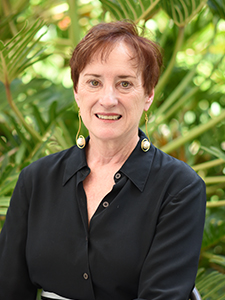
University of South Florida
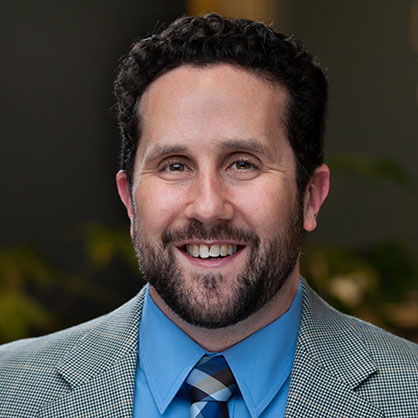
University of New Haven
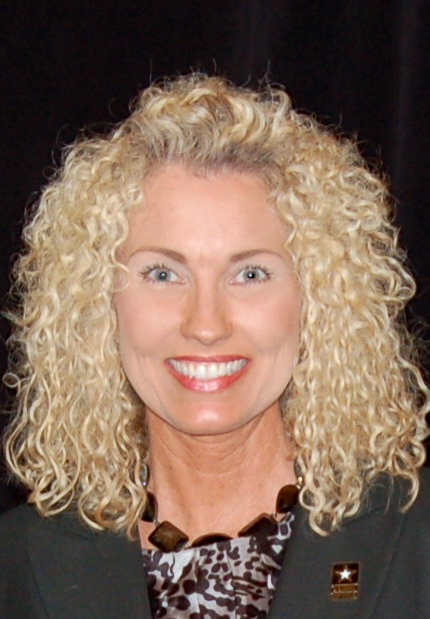
Bellarmine University
Saint Xavier University

University of Kentucky
M. Thomas Inge Ph.D.
Blackwell Professor of HumanitiesRandolph-Macon College
Film Studies Program
What are the biggest trends we'll see in the University Relations Director job market given the pandemic?
M. Thomas Inge Ph.D.: When I graduated from Randolph-Macon College in 1959, I was one of 600 students. I wanted to be a writer and literary critic, but the closest thing we had were majors in the liberal arts. Majors in English and Spanish opened my world view, but today more than 1200 view for places in the sciences and technology. Randolph-Macon has become a mega-college and conveyor of the latest information and research like no other in the United States. Books and language work side by side in laboratories and with computers to provide the best education possible.
"What can you do with a degree in the novel or medieval studies?" Just about anything if you attend a school that takes a full perspective on life.
What's a day at work look like for a University Relations Director?
Jody McBrien: If we look at a Spring 2021 graduate's work life, I have to say it remains highly unclear what the daily life will entail. Just last spring, we were all hopeful that we would move out of the pandemic later in 2020. But here we are, nearly a year after the beginning of this pandemic, and we are now fearing variants of the virus when we had hoped that a vaccine might allow us to move back to a more "normal" way of life by spring 2021. So it's just hard to say. I think that graduates need to be prepared for distanced jobs and technological savvy for the near future.
What experience really stands out on University Relations Director resumes?
Matt Caporale: In a nutshell, hands on and applied experiences stand out the most. What employers truly seek is not just what you know and what you did, but how you did it, where you did it, to what outcome, and what do you offer now because of those experiences. This isn't new, but employers are increasingly looking for details and level of specificity to a student's college experience - buzzwords won't suffice any more. The experiences that stand out are ones students can actively quantify and showcase success, hard skills, and soft skills.
These types of experiences include traditional experiences such as internships, research projects, study abroad, and campus leadership. But they more often now include diverse perspectives, interdisciplinary experiences, and roles in which students make a focused impact on the organization in which they served. Employers seek well rounded candidates with hard and soft skills; so, the experiences that stand out will need to be diversified, skill focused, and impactful.
For students in international relations, these experiences will include traditional internships and study abroad, but also Model UN, policy research and development, multi-cultural experiences (local and international), and data-based projects.
What type of skills will young University Relations Directors need?
Stacie Shain: I think graduates will need the very skills they have already learned: agility, flexibility, resiliency. Many in the workforce when the pandemic hit were expected to work from home and figure out how to keep doing their jobs and be productive. In some states, large segments of the population are still working from home and will continue to do so for some time. For those graduates getting their first jobs, they may be working from home as they start their careers. They will need to bring to the job the same skills they learned in their last semester (or semesters) in college. I believe business and industry will expect workers to be agile, flexible and resilient while also being productive and accountable.
Beyond that, for graduates with communication degrees, they will still need to be able to write and speak effectively, be able to shoot and edit video, and be proficient in social media. Students will need to have multimedia skills and not be a specialist or "one-trick pony." To be prepared to work in a communication job, the graduates must be well-rounded. They should be able to use Mac and PC systems, a myriad of software programs (from Office to the Adobe Suite) and all major social media platforms. Further, students must be able to understand when to use particular systems or social media platforms; for example, when is Facebook the best platform to use, and how is it best used?
Further, graduates must have soft skills, such as being able to think critically, solve problems, work as part of a team and make decisions. They need good interpersonal skills and intercultural awareness because they are likely to work with people across the country and around the world, especially now that all businesses and industries have learned they can function virtually.
What experience really stands out on University Relations Director resumes?
Stacie Shain: To me, real-world experience always sets one graduate apart from others. There is also plenty of research that supports this.** Any experience a student can gain doing real projects for real organizations is a bonus because it shows students can translate what they have learned in a classroom to a project for a business or nonprofit. It shows students can do the work when there is more than a course grade on the line and when many people will see their work and not only a professor or classmates.
In our program, all majors must complete at least one internship, and we encourage our students to complete more than one so they get different experiences. This not only builds their resumes and hones their skills but also allows them to learn what they like - or don't like - doing. Some students have been set on working in a particular field only to change their minds after an internship and decide they want to do something else.
Our marketing communication minors are required to take a practicum in which they work for a student-run agency doing work for area nonprofits. They are responsible for the client meetings, production, deadlines and client satisfaction. The projects range from graphic design to writing to social media planning to website design to video production. All of their work will be used by the organizations, so having these projects in their portfolios and on their resume showcases exactly what they can do. The students earn credit and get to show the work in their portfolios, and the nonprofits do not pay for the projects. It's a true win-win situation. Students may complete more than one semester in the practicum, and that gives them a wide range of work samples in their portfolio. I've known several students who had jobs before graduation, and they all said their work for clients helped them get the job because they already had professional experience.
Internships and working for a student-run agency will help students build those soft skills, too. They must collaborate, they must learn to work in a team setting, they must solve problems as they arise, and they must think critically about the projects and how they will complete them. Research shows that students with hard skills will get interviews, but students with soft skills will get the job and keep it ** because businesses value soft skills and not every applicant has them.
What experience really stands out on University Relations Director resumes?
Cyndi Grobmeier: Demonstrating leadership skills, either officially or even unofficially, is critical. Sometimes, students become leaders without being in an official role, like an officer of a club. Being able to tell that leadership story effectively becomes a critical piece. Storytelling has become such an essential part of our culture that telling a compelling story about any accomplishment can help graduates stand out from the crowd. The more an applicant can say to the level of something they specifically accomplished that connects to what the organization is looking for in that position, the more memorable they become. The days of the general resume are obsolete. The expectation will be an application (whether that be online, video, etc.) that tailors the applicant's knowledge, skills, experience, and qualities specific to the position and the organization.
What experience really stands out on University Relations Director resumes?
William Howe Ph.D.: Cover letters are perhaps the most critical piece of a resume and yet are often the most underdeveloped. Cover pages should clearly state who you are, what you have done, and where you want to go with the company. Within the resume itself, it should be easy to read and well organized.