
Automatically apply for jobs with Zippia
Upload your resume to get started.
Adoption worker skills for your resume and career
15 adoption worker skills for your resume and career
1. Mental Health
Mental health is the state of wellbeing in which an individual can cope with the regular stresses and tensions of life, and can work productively without having any emotional or psychological breakdown. Mental health is essential for a person of any age and helps them make the right decisions in their life.
- Case manage for children with a wide range of mental health and developmental challenges.
- Provided mobile therapy to adolescent and pediatric clients with mental health diagnosis.
2. Crisis Intervention
- Conducted outreach and crisis intervention to clients through counseling and solution based therapy and motivational interviewing for adolescents and family members.
- Develop individualized treatment plan for clients, provide crisis intervention, case management, visitation, and provide quarterly written documentation.
3. Protective Services
Protective services are services offered to vulnerable individuals or legal representatives to protect them against potential abuse, violence, or negligence. Protective services are offered to ensure that an individual's safety stays intact and they don't fall victim to crime or exploitation. Such services include, social casework, stated appointed witness protection, home care, legal assistance, day-care etc.
- Maintained effective working relationships between Child Protective Services staff and other community resources and officials.
- Investigated, delivered and/or coordinated protective services involving reports of neglected, abused, or exploited children.
4. Child Abuse
When a child who is under 18 is mistreated by an adult, it is considered child abuse. There are many forms of intentional harm and mistreatment for example physical abuse, sexual abuse, emotional abuse, medical abuse, and neglect in providing adequate basic life necessities.
- Responded to and investigated child abuse referrals.
- Evaluated and recommended appropriate actions necessary to resolve family emotional and/or physical stress situations, which cause child abuse or neglect.
5. State Agencies
State Agencies, also called government agencies, are organizations associated with the government that oversee various aspects of society. These handles often handle administrative paperwork to ensure all laws, rules, and regulations are followed. State agencies include the Tennessee Valley Authority, Washington State Department of Labor, and Texas Health and Human Services Commission.
- Coordinated with state agencies, lawyers, medical providers, foster agencies, and families to ensure child safety.
6. Child Protective
- Reviewed and authorized check disbursement to child protective units.
- Conducted Child Protective Service investigations following reports of abuse and/or neglect
Choose from 10+ customizable adoption worker resume templates
Build a professional adoption worker resume in minutes. Our AI resume writing assistant will guide you through every step of the process, and you can choose from 10+ resume templates to create your adoption worker resume.7. Foster Care
- Provided case management services and facilitated adoptions for children in foster care.
- Transported children to substitute placements, maintain monthly contact with children, foster care providers and parents.
8. Court Reports
- Complete Adoption Home Studies * Completed Adoption Placement and Finalization documents * Provide Post Placement Supervision, complete court reports.
- Provide Case Management Services, Court Testimony, Complete Court Reports and Assessment Reports; Child Social History Reports.
9. Child Placement
- Conduct quarterly visits and revalidation studies on licensed foster homes to ensure continued compliance with standards for child placement.
10. Certification Process
- Liaised, trained, and provided advocacy to foster parents during the adoption and certification process for fostering.
11. Adoption Process
Adoption process is the procedure by which a person or a couple assumes the parenting role of another individual, usually a child. The adoptive parents are different from the child's biological or birth parents. The adoption process transfers all the legal rights and responsibilities of a child to the adoptive parents from the biological parents.
- Assisted families in completing immigration paperwork facilitate their adoption process.
- Provided family and individual counseling to children and their adoptive families, specifically addressing issues related to the adoption process.
12. Foster Families
- Write Child Profiles, meet with children and foster families, assist in other areas as needed
- Recruit and recommend foster families to provide care for abused or neglected children.
13. Adoptive Families
- Advised adoptive families of renewal application statuses.
- Record keeping, File maintenance, court work/testimony, Accomplishments finalization of many children's adoptions with their permanent adoptive families.
14. Child Assessments
- Complete comprehensive child assessments for children legally available for adoption following termination of their parents' parental rights due to abuse/neglect.
- Conduct family and individual child assessments and placement studies.
15. Foster Parents
- Conducted recruitment and certification of foster parents for the temporary care of infants waiting eligibility of adoption.
- Arrange services after effectively assessing the needs of parents, children, relatives, and foster parents.
5 Adoption Worker resume examples
Build a professional adoption worker resume in minutes. Browse through our resume examples to identify the best way to word your resume. Then choose from 5+ resume templates to create your adoption worker resume.

What skills help Adoption Workers find jobs?
Tell us what job you are looking for, we’ll show you what skills employers want.
What adoption worker skills would you recommend for someone trying to advance their career?
Andrew Schoolnik
Assistant Professor, Bachelor of Social Work Program Director, Website
On a macro level, the more the social worker dialogues with all stakeholders (those in favor and those opposed) the more that person gains knowledge and goodwill. This is at the heart of compromise - winning being defined as doing the most good for the most people.
On a clinical level, social workers work mutually with their clients. Learning about a client's values begins with dialogue (even when our values are different) and creating treatment plans is often-based on compromise (agency policy/goals, and client goals).
List of adoption worker skills to add to your resume
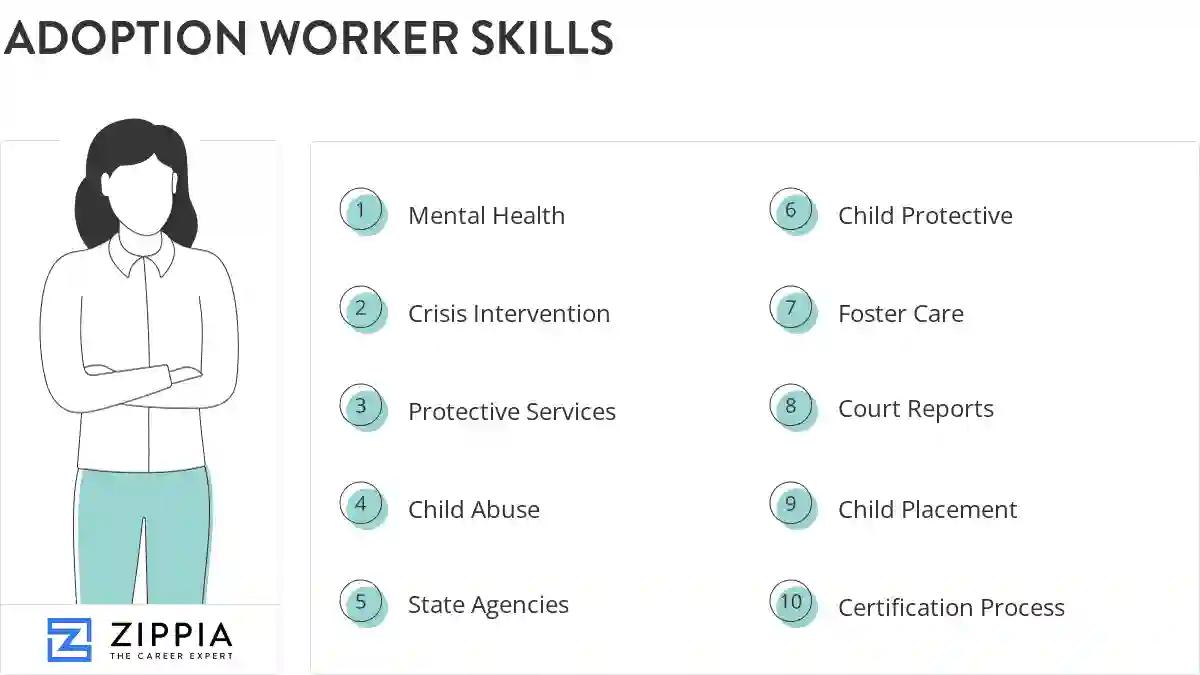
The most important skills for an adoption worker resume and required skills for an adoption worker to have include:
- Mental Health
- Crisis Intervention
- Protective Services
- Child Abuse
- State Agencies
- Child Protective
- Foster Care
- Court Reports
- Child Placement
- Certification Process
- Adoption Process
- Foster Families
- Adoptive Families
- Child Assessments
- Foster Parents
- Adoptive Parents
- Birth Parents
- Family Profiles
- Foster Children
- Medical Professionals
- Court Hearings
- Post-Placement Supervision
- Law Enforcement Officials
- DHS
Updated January 8, 2025
