Find a Job You Really Want In
Understanding the 2026 Job Market: Insights and Trends
The job market in 2026 presents a complex landscape for job seekers. While many industries have rebounded, the effects of previous economic disruptions continue to shape hiring trends. The competition remains fierce, and job seekers are left wondering: Are there enough opportunities available? What types of jobs are currently in demand? And how do these roles compare to those that were lost?
Utilizing data from the Bureau of Labor Statistics (BLS) and our extensive database of job listings, we’ve analyzed the current state of the job market and what it means for today’s job seekers.
Summary of Findings
- The retail, hospitality, and food service sectors experienced significant fluctuations, with unemployment rates peaking at an average of 27%, and hospitality alone seeing rates surpass 40% during challenging periods.
- Industries like energy, telecommunications, and insurance currently offer the highest number of job listings for unemployed workers.
- Education and government sectors are facing intense competition among laid-off workers seeking new roles.
- While service sectors were initially hit hard, a wave of layoffs in white-collar jobs quickly followed.
- Professional services experienced an unemployment increase of 8.6%, with only 106,000 job openings available for over 4 million job seekers.
- Many new job opportunities created post-pandemic are primarily in lower-paying positions.
How We Determined This
We analyzed the overall number of unemployed workers across various industries, including those who lost jobs before the pandemic, using data from the BLS. A higher number of job seekers within an industry leads to increased competition.
Our data includes over 3 million job listings, which we used to gauge the number of available jobs in each industry. Notably, our industry categories may differ from BLS classifications, leading us to combine hospitality, retail, and food services into one category for clarity.
Visual data representations of our findings are provided below.
Which Industries Have the Most Job Postings?
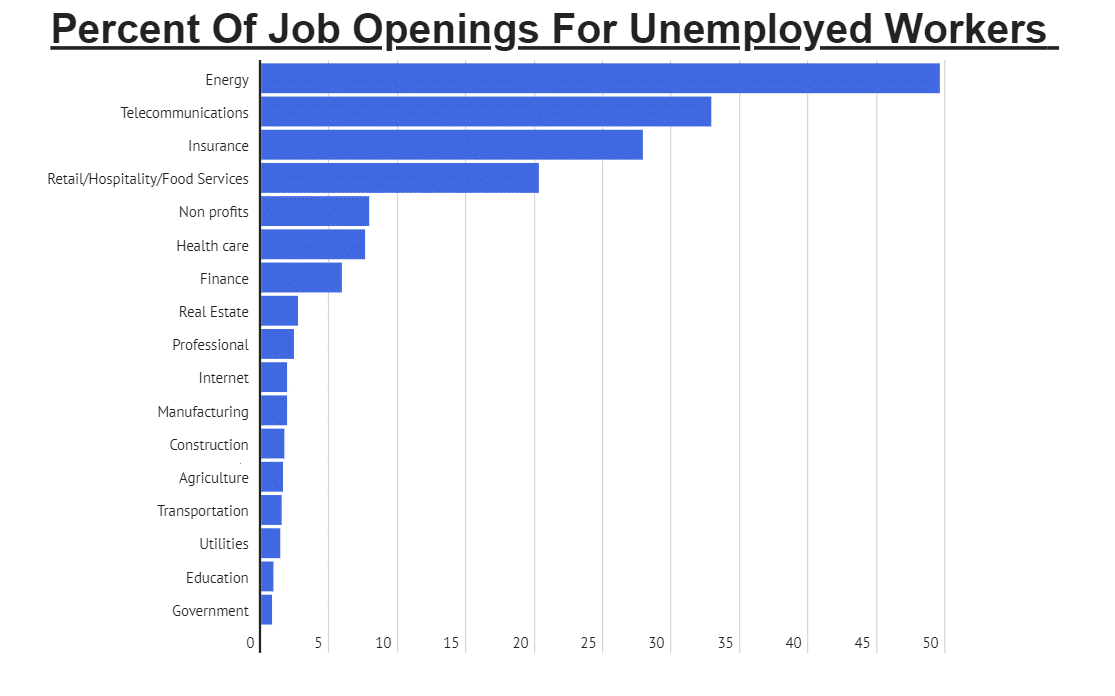
The energy, telecommunications, and insurance industries currently boast the highest number of job postings per worker. In contrast, government and education sectors show the lowest availability. No industry has sufficient job openings to accommodate all unemployed workers, with the energy sector having less than 0.5 jobs available for each unemployed worker.
Workers from industries severely affected may need to broaden their job search to other sectors. Additionally, geographic location plays a significant role in job availability, leading to a disparity in opportunities across different regions.
What This Looks Like in Big Numbers
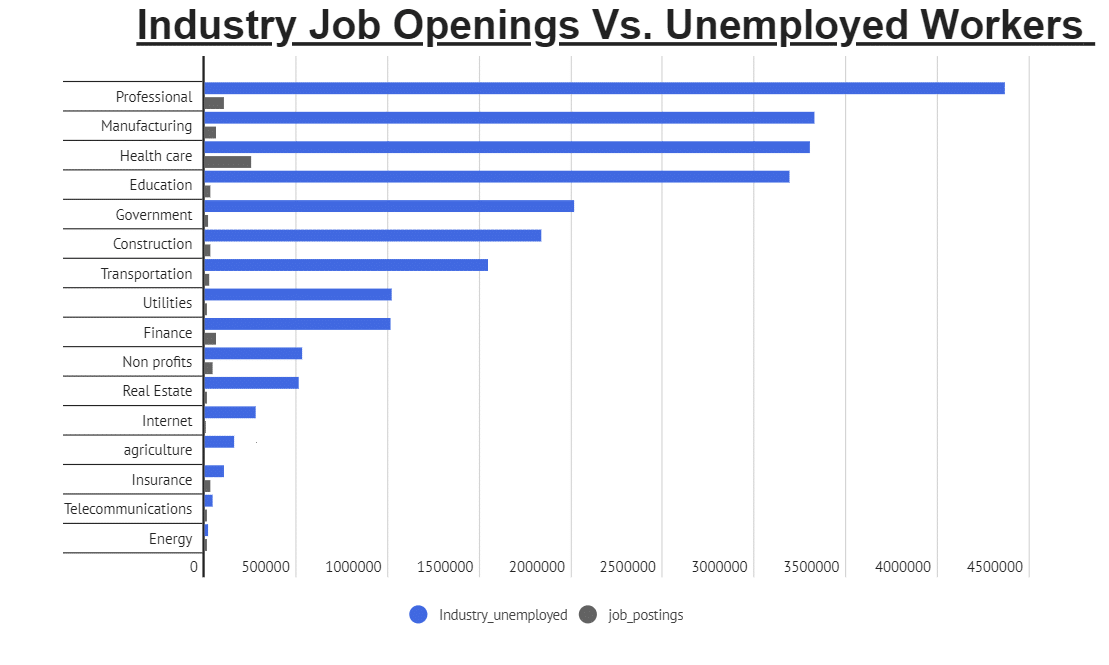
The chart above illustrates the primary industries, excluding hospitality, retail, and food services, which are depicted below due to their significant size. While no industry matches the number of job postings to unemployed workers, some are performing relatively better.
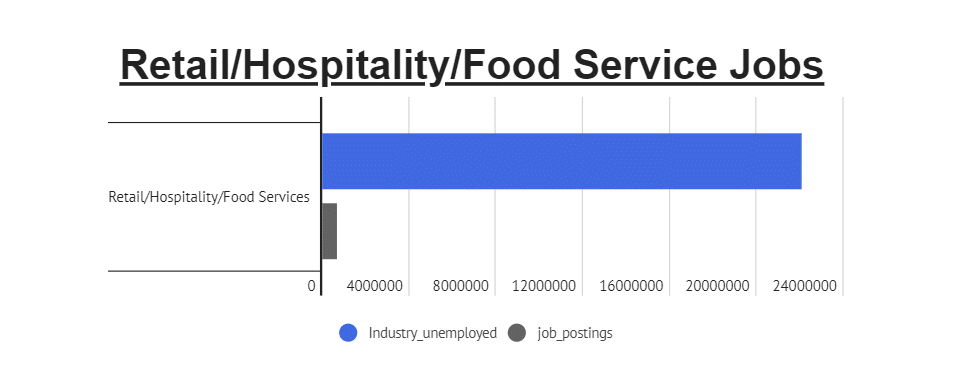
Many Industries Are Struggling
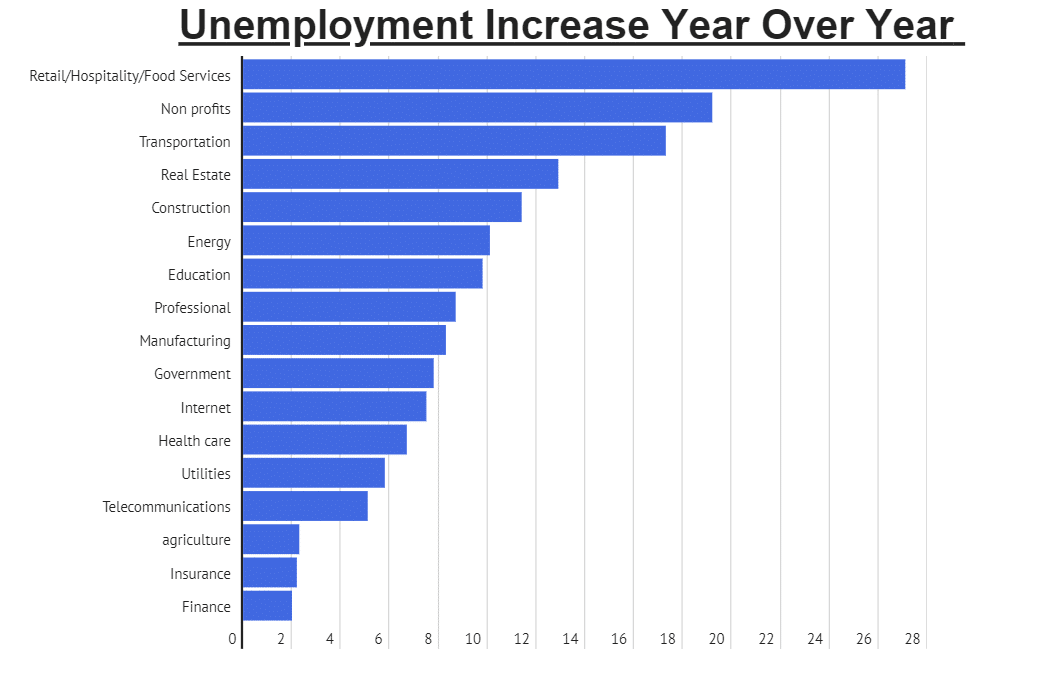
The increase in unemployment is not evenly distributed across sectors. Some industries, like retail, hospitality, and food services, have been significantly impacted, while others, such as insurance, have maintained a relatively stable unemployment rate and offer numerous job postings for unemployed individuals.
What Types of Jobs Are Available in 2026?
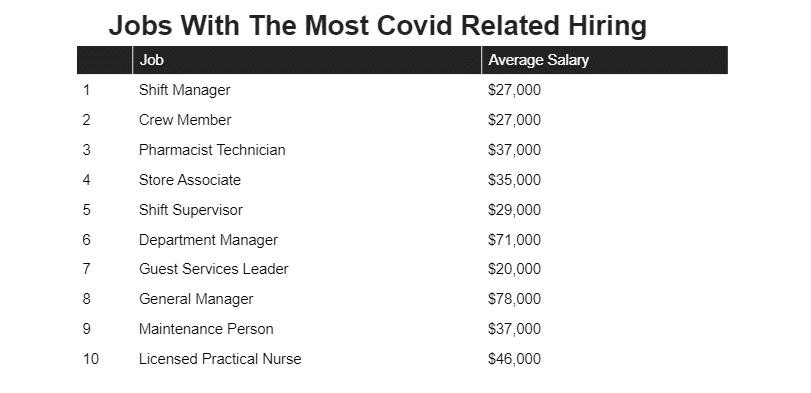
An examination of the job market reveals that many of the most readily available positions, such as crew member and shift manager, tend to be lower-paying roles. Workers laid off from higher-paying professional jobs may find these positions unappealing. The trend toward a predominance of lower-paying jobs raises concerns for middle-class workers seeking to re-enter the workforce.
Ultimately, job seekers may face challenges when transitioning to new industries or competing within their own fields. However, some may discover opportunities in sectors with a higher volume of job listings compared to others.
There Are More Job Seekers Than Jobs
The reality of more job seekers than available positions is evident to anyone observing current unemployment figures. It is crucial to recognize that not all job openings are publicly advertised, and new opportunities emerge daily.
Job seekers should stay hopeful and continue applying—often, it only takes one opportunity to change their trajectory. However, it is essential to approach potential roles with caution regarding salary, as a temporary pay cut can have long-term implications on future earnings.

Author

Kathy is the head of content at Zippia with a knack for engaging audiences. Prior to joining Zippia, Kathy worked at Gateway Blend growing audiences across diverse brands. She graduated from Troy University with a degree in Social Science Education.