Salary Survey: Half of Workers Are Willing to Share Their Salary—And the Other Half Are Missing Out
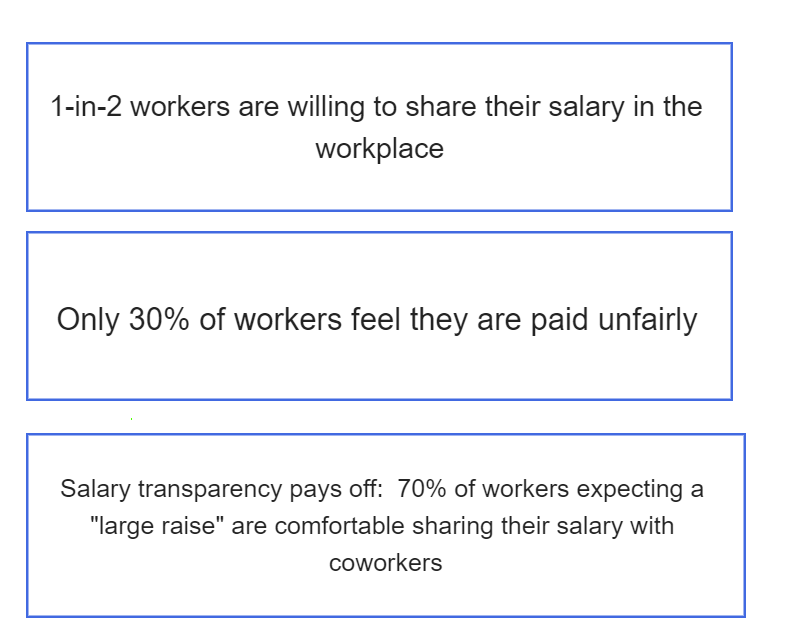
On average, 50% of workers are open to sharing their salaries at work.
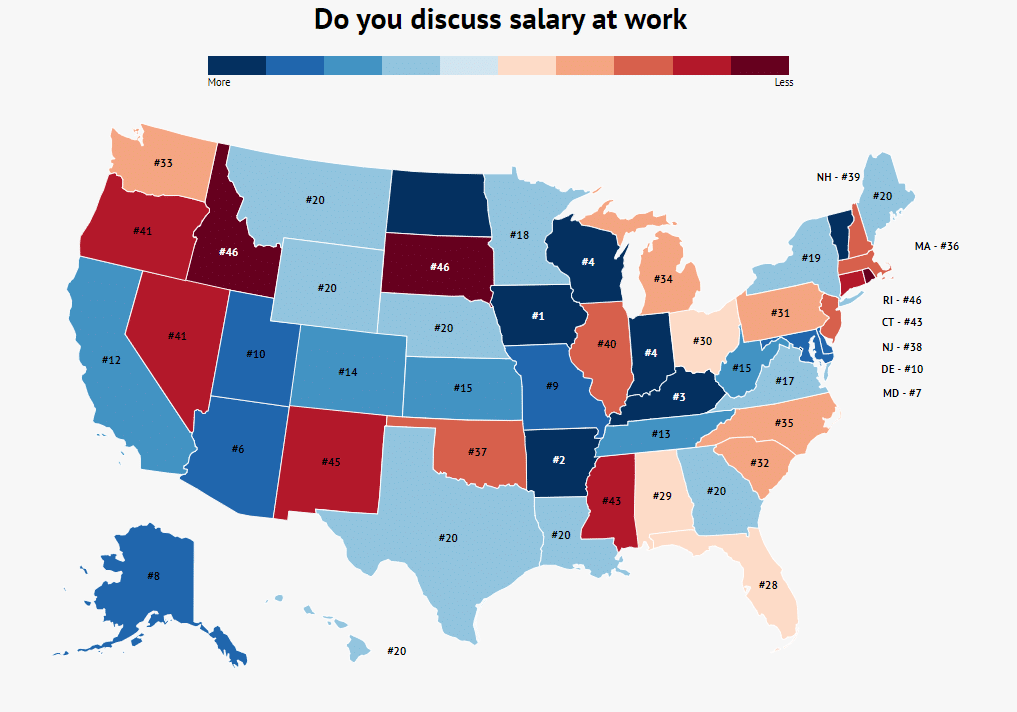
Salary sharing is most prevalent in Iowa, with 84.6% of workers willing to discuss their pay.
Workers in Idaho and Rhode Island report no salary sharing at all.
About 30% of workers are uncomfortable discussing their salaries.
How much do you earn?
If you’re like many American workers, this question may evoke discomfort, akin to asking someone their weight—it’s personal and sensitive. Understanding the dynamics of salary transparency in the workplace is essential, especially in today’s evolving labor landscape.
To investigate salary sharing behaviors, we conducted a survey of nearly 1,500 American workers. The findings reveal a clear link between salary transparency and financial well-being.
Key Findings
Other Notable Insights
-
20% of workers are unsure if they would share their salary information.
-
Only 45% of employees believe they are fairly compensated, while another 25% feel “somewhat” adequately paid.
-
Workers aged 25-34 are the most willing to share salary details, with 58% open to discussing their pay.
-
Conversely, individuals over 45 are the least likely to disclose their salaries.
-
Half of all workers indicated they would request a pay increase if they knew their coworkers earned more.
-
Building rapport helps: 29% of workers would only feel comfortable discussing salaries with close colleagues.
-
Getting salary information from supervisors is challenging—only 6% of workers would comfortably disclose their salary to someone they manage.
Which Age Group Is Most Open About Pay?
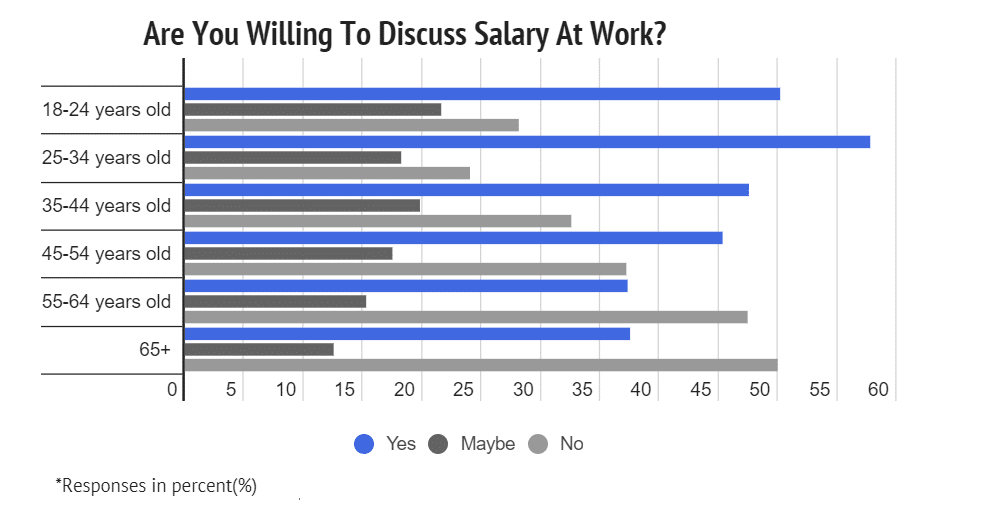
Workers aged 25-34 are the most comfortable discussing salary information, with 58% willing to share. In contrast, older workers, particularly those over 45, tend to be more reserved.
As this younger demographic matures and advances in their careers, their openness to discussing salaries may evolve. However, it is possible that as they rise in position, their willingness to share may decrease.
Does Salary Transparency Lead to Higher Pay?
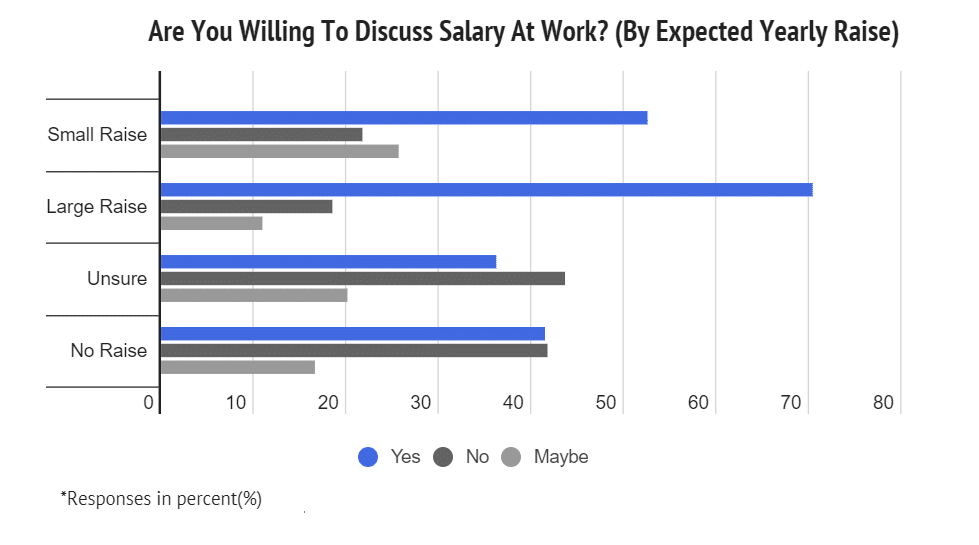
Workers anticipating a significant raise are more likely to express their willingness to share salary details without hesitation.
Knowledge truly is power—especially in salary negotiations. Given that 50% of respondents would seek higher pay if they knew colleagues earned more, this highlights the importance of transparency in compensation discussions.
Employees are more inclined to negotiate when they have access to insider information about company pay structures. Similarly, employers may be less proactive in granting substantial raises unless prompted.
Methodology
Zippia.com, a career resource platform, surveyed 1,438 American workers to explore salary transparency in the workplace. Participants were recruited through Amazon’s Mechanical Turk and asked demographic questions alongside seven simple inquiries about their thoughts on salary sharing.
Vermont and South Dakota were excluded from the analysis due to insufficient sample sizes.
Keeping Quiet Can Cost You
Discussing salary can be awkward.
Discovering that you earn more or less than a coworker can be socially uncomfortable and may lead to hurt feelings. However, engaging in these conversations can empower you to negotiate for a better wage and understand if you are underpaid.
Keeping salary information hidden primarily benefits employers. Even if you feel well-compensated, your colleagues may not share your fortune. A lack of transparency can exacerbate existing gender and racial pay disparities.
So, the next time a coworker inquires about your salary, consider being open. It could lead to improved financial well-being for everyone involved.
Percentage of Workers Who Discuss Salary at Work
| State | Percent |
|---|---|
| Alabama | 48.8% |
| Alaska | 59.1% |
| Arizona | 63.6% |
| Arkansas | 80.0% |
| California | 56.1% |
| Colorado | 54.8% |
| Connecticut | 22.2% |
| Delaware | 57.1% |
| Florida | 49.1% |
| Georgia | 50.0% |
| Hawaii | 50.0% |
| Idaho | 0.0% |
| Illinois | 30.0% |
| Indiana | 66.7% |
| Iowa | 84.6% |
| Kansas | 53.8% |
| Kentucky | 73.3% |
| Louisiana | 50.0% |
| Maine | 50.0% |
| Maryland | 62.5% |
| Massachusetts | 40.9% |
| Michigan | 45.5% |
| Minnesota | 52.4% |
| Mississippi | 22.2% |
| Missouri | 58.8% |
| Montana | 50.0% |
| Nebraska | 50.0% |
| Nevada | 28.6% |
| New Hampshire | 33.3% |
| New Jersey | 34.5% |
| New Mexico | 16.7% |
| New York | 51.3% |
| North Carolina | 41.9% |
| Ohio | 48.4% |
| Oklahoma | 35.3% |
| Oregon | 28.6% |
| Pennsylvania | 47.4% |
| Rhode Island | 0.0% |
| South Carolina | 46.9% |
| South Dakota | 0.0% |
| Tennessee | 56.0% |
| Texas | 50.0% |
| Utah | 57.1% |
| Virginia | 52.5% |
| Washington | 45.8% |
| West Virginia | 53.8% |
| Wisconsin | 66.7% |
| Wyoming | 50.0% |

Author

Kathy is the head of content at Zippia with a knack for engaging audiences. Prior to joining Zippia, Kathy worked at Gateway Blend growing audiences across diverse brands. She graduated from Troy University with a degree in Social Science Education.