- Job Seeker Statistics
- Career Change statistics
- Internship Statistics
- Job Search Statistics
- Average Number Of Jobs Applied
- Average Salary Increase When Changing Jobs
- Part Time Job Statistics
- Age Discrimination Statistics
- Networking Statistics
- Interview Statistics
- Average Number of Jobs In A Lifetime
- Resume Statistics
- Side Hustle Statistics
- Teacher Statistics
25+ Alarming Age Discrimination Statistics [2026]
Research Summary. Despite federal and state laws that protect older workers against age discrimination and harassment, ageism in the workplace remains a significant issue in 2026. Many employers continue to hold onto outdated stereotypes about older workers, even as evidence shows that they are just as capable, productive, and eager to work as younger employees.
Research indicates that older workers are often more productive, better educated, and display higher loyalty to their employers than their younger counterparts. Our data analysis team has gathered the following insights:
-
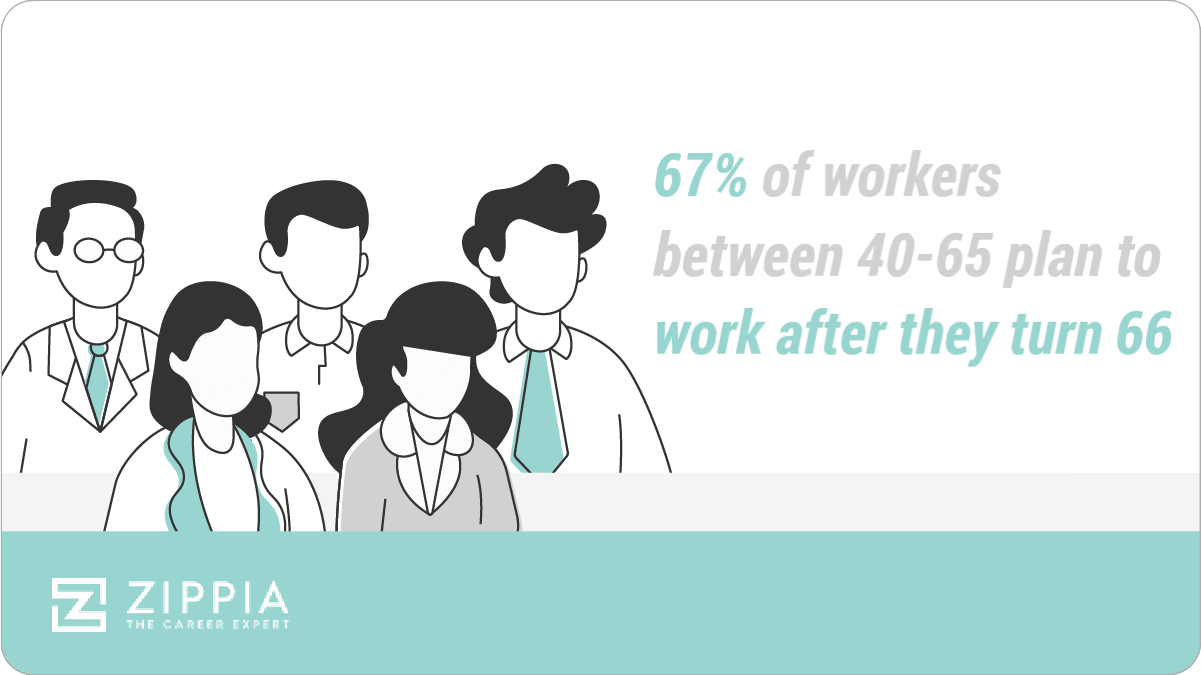
67% of workers aged 40-65 intend to continue working after they turn 66.
-
From 2011 to 2021, 207,315 U.S. workers filed age discrimination claims with the EEOC.
-
In 2021, there were 12,965 age discrimination charges filed with the EEOC.
-
Over 50% of coworkers who witnessed instances of age discrimination did not report it.
-
Age discrimination is widespread across industries, with as many as 70% of older workers in the technology sector reporting experiences of ageism.
-
Between 2020 and 2021, age discrimination charges comprised 21% of all charges filed with the EEOC.
-
Although older adults are interviewed at rates similar to younger applicants, they receive job offers 40% less frequently than younger candidates with equivalent qualifications.
What Is Age Discrimination?
Age discrimination occurs when an applicant or employee is treated unfavorably due to their age. This bias can manifest in various forms, including prejudicial attitudes, discriminatory actions, and institutional policies. One international study found that up to one in two people hold moderate to high levels of ageist beliefs.
Common stereotypes associated with workers over 50 include notions that they are:
-
Difficult to manage;
-
Resistant to change;
-
Technophobic;
-
Less innovative.
However, these stereotypes are often rooted in negative, inaccurate assumptions about aging and capability. Today’s older workforce is more diverse and educated than ever before.
Research has consistently shown that age does not correlate with ability, intellectual function, creativity, or overall job performance. Furthermore, older employees do not incur significantly higher costs than their younger peers, and age-diverse teams often demonstrate increased productivity and reduced turnover.
Ageism And Age Discrimination Statistics
-
Workers are remaining in the workforce longer than previous generations.
This trend is driven by factors like improved health, increased life expectancy, changes in eligibility for Social Security benefits, and the decline of traditional pension plans.
-
67% of workers aged 40-65 plan to continue working after they turn 66.
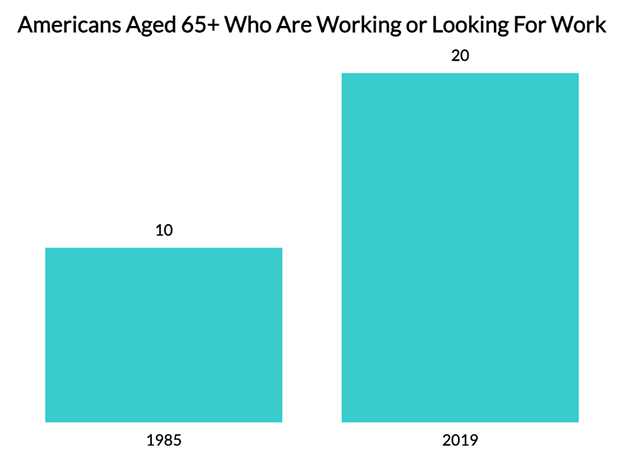
As of early 2023, over 20% of Americans aged 65 or older were engaged in the labor force. This figure is double what it was in 1985. Notably, the number of active workers aged 65 to 75+ is expected to grow by 75% through 2024.
Moreover, the proportion of workers aged 55 and older has doubled over the past 25 years, which is a positive indicator since workers over 50 often exhibit the highest levels of engagement and experience.
In contrast, the growth rate for workers aged 25 to 54 is projected to be only 2%.
Despite these encouraging statistics, 33% of full-time employees aged 45 or older report feeling insecure about job retention due to their age. Alarmingly, around half of full-time workers aged 50 to 54 have experienced involuntary job loss.
-
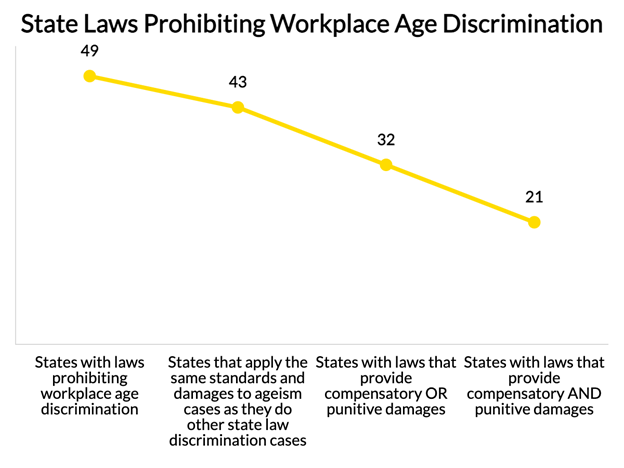
All U.S. states, except South Dakota, have laws prohibiting age discrimination.
Forty-three states apply the same standards and damages to age discrimination cases as they do for other discrimination cases. Thirty-two states allow for compensatory and punitive damages, with 21 states permitting both.
Consequently, most older workers pursue legal action under state law or a combination of both state and federal statutes.
-
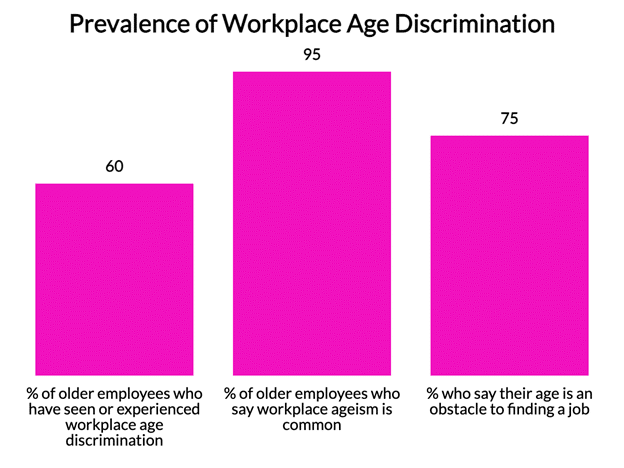
60% of older employees have encountered age discrimination in the workplace, with 90% to 95% of these individuals deeming it prevalent.
Approximately 25% of employees aged 45 and older have faced derogatory comments regarding their age from supervisors or colleagues.
-
Older workers typically stay on the job longer, providing employers with greater stability and ROI.
In contrast, Millennials tend to leave their jobs after an average tenure of three years.
-
Age-related resignations can lead to feelings of isolation and insecurity among older employees.
Experiencing age discrimination can make individuals feel older than they actually are and can lead to:
-
Decreased physical and mental health;
-
Shortened lifespan;
-
Increased social isolation and loneliness;
-
Reduced financial security;
-
Lower quality of life;
-
Increased instances of depression (with ageism contributing to an estimated 6.3 million global cases);
-
Potentially premature death.
Additionally, ageism incurs annual costs of approximately $63 billion due to excess expenses related to the eight most costly health conditions.
-
-
In 2018, ageist attitudes and actions cost the U.S. economy around $850 billion.
Age discrimination also imposes significant financial burdens on employers.
Since the implementation of the Age Discrimination in Employment Act in 1967, over $91 million has been recovered from ageism-related lawsuits.
Among the most substantial age discrimination lawsuits, companies have faced penalties ranging from $2.85 million to $250 million.
-
On average, 59% of white workers report experiencing age discrimination at work.
This figure rises to 77% for African American/Black employees, while it drops to 61% for Hispanic/Latino workers.
Between 1990 and 2017, the percentage of age discrimination claims filed by Black and Asian workers doubled.

-
The average median age of employees at 17 leading tech companies is 32.
For Google, the average median age is 29. Age discrimination in the tech sector extends beyond junior roles, with 37% of founders reporting perceived bias from investors based on their age.
-
In 1990, men filed nearly twice as many ADEA charges as women, a trend that reversed by 2010.
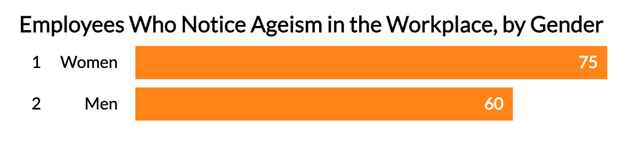
Currently, nearly 75% of women report noticing ageism in the workplace, compared to 60% of men.
Older women, in particular, experience higher rates of age discrimination during hiring compared to their male counterparts.
-
From 2011 to 2021, the number of age discrimination charges filed with the EEOC decreased by 44.75%.
The number of age discrimination claims dropped from over 23,400 in 2011 to just under 13,000 in 2021, indicating a nearly halved rate of claims.
However, despite this decline, age discrimination claims have consistently accounted for 20-25% of all discrimination charges over the past two decades.
-
Older applicants aged 64 to 66 face more age discrimination than those aged 49 to 51.
Individuals aged 25 or younger are half as likely to experience age discrimination.
Moreover, those over 45 are less frequently hired than their younger colleagues, often lacking the support necessary for career advancement and missing out on promotions and company activities.
-
Older workers endure longer periods of unemployment and more substantial pay cuts than younger age groups.
When older workers lose jobs, they often face the longest unemployment durations of their careers.
Reports indicate that half of older workers are prematurely pushed out of long-term positions, with 90% never regaining their previous earning levels.
This trend significantly impacts individual financial stability both in the short and long term.
-
Only 8% of companies have implemented diversity hiring strategies.
While older adults are interviewed at rates comparable to younger candidates, they are offered jobs 40% less frequently than their younger counterparts with similar qualifications.
To combat this issue, companies can incorporate age-diverse imagery and content on their websites, signaling a commitment to a multi-generational workforce.
Additionally, avoiding ageist language in job descriptions—such as terms like “tech-savvy” and “digital native”—can make a significant difference.
-
More than 50% of coworkers who observe age discrimination incidents do not report them.
This indicates that age discrimination in the workplace is likely significantly underreported.
-
Increasing awareness of ageism and fostering an inclusive culture can enhance reporting.
While only 40% of employees who experience or witness age discrimination file a formal complaint, this figure rises to 65% for those who have undergone age discrimination training.
Creating a workplace culture that values all employees, regardless of age, is crucial.

-
In 1990, workers aged 40-54 filed the majority of ADEA charges, while older workers filed relatively few.
By 2017, workers aged 55-64 filed more charges than younger workers, and the percentage of claims from those aged 65 and older had also doubled.
-
From 2011 to 2021, 207,315 U.S. workers filed age discrimination claims with the EEOC.
This averages to about 20,700 claims annually, accounting for roughly 20% of workplace discrimination claims. Notably, in 2021, only 1% of these cases resulted in successful conciliations.
In 2018, the organization filed a mere 10 age discrimination lawsuits.
-
If you win a federal age discrimination case, you will not receive compensation for pain and suffering.
Under federal law, the maximum damages awarded in an age discrimination case is twice the amount of lost back pay, plus attorney fees. This limited compensation can deter many victims from pursuing legal action.
What are some examples of age discrimination?
Examples of age discrimination include:
-
Speaking to an older employee in a condescending manner.
-
Hiring only candidates under a specific age.
-
Overlooking an older employee for a well-deserved promotion or challenging project.
-
Isolating an older employee or excluding them from team activities.
-
Pressuring or forcing an older employee into retirement or targeting them for layoffs.
-
Unjustly disciplining an older employee or placing them on an undeserving performance improvement plan.
Age Discrimination Statistics FAQ
-
How many age discrimination claims were made in 2020?
14,183 age discrimination claims were filed in 2020. These claims comprised 21% of the overall discrimination claims, which was a slight decrease from 21.4% (15,573 claims) filed in 2019. (Note that some claims involve multiple types of discrimination.)
Despite the number of claims, over 50% of employees who witnessed age discrimination did not report it, indicating that actual instances of age discrimination are likely much higher than reported.
This significant volume of age discrimination claims is not a new phenomenon; from 2010 to 2017, approximately 205,000 age discrimination claims were submitted to the EEOC.
These claims accounted for about 22% of all workplace discrimination claims during that period, although only 1% were substantiated as actual age discrimination.
Individuals filing age discrimination claims who go to court and win can only recover twice the amount of lost wages plus their legal fees, which discourages many from pursuing litigation.
-
What are the three types of age discrimination?
The three types of age discrimination include discrimination in job eliminations, promotions, and job advertisements.
Some employers may claim to eliminate a position due to age when they subsequently fill it with younger workers.
Additionally, older employees may be targeted for layoffs or coerced into early retirement, with the implication that they must choose between retiring early or facing termination.
Employers might also select younger, less experienced employees for promotions over older, more qualified candidates, often to pay the younger employee less.
Job advertisements may also contain language or experience limits that effectively disqualify older applicants, which is illegal and constitutes a form of age discrimination.
-
How can you prove discrimination based on age?
You can prove discrimination based on age through four essential steps:
-
Establish your status as a protected age class. If you are 40 or older, you automatically fall under this category, which should make this aspect easy to prove, as it is federally mandated.
-
Demonstrate that you perform your job competently. If younger coworkers or a manager are discriminating against you based on age, showing that you perform your job effectively can help eliminate any subjective claims about your performance.
-
Document adverse actions taken against you. After proving your job performance, you can provide evidence of discrimination, such as reduced hours, denied time-off requests, forced overtime, or discriminatory remarks.
-
Compare treatment with younger employees. The final step involves showing how a supervisor or coworker treats younger employees differently than you, despite your equivalent job performance. This evidence can be pivotal in establishing your case and securing the compensation you deserve.
-
-
Yes, employers can inquire about your age. However, they cannot discriminate against you based on your age. Certain positions may have maximum age requirements, particularly in federal law enforcement, but these are exceptions rather than the norm.
While it may be tempting to misrepresent your age to enhance your appeal as a candidate, doing so carries risks. If hired, employers may discover the truth and could terminate you for falsifying your application. In cases where applicants lie about their age for federally regulated jobs with age limits, the consequences can be severe, including potential imprisonment.
If you do not lie about your age and are not hired, believing it was due to your age, you may file an EEOC claim for age discrimination. Remember to ensure that age was indeed the factor and not your qualifications, as employers can justifiably eliminate candidates based on their qualifications.
-
What percentage of EEOC cases are for age discrimination?
21.1% of EEOC cases pertain to age discrimination. In 2021, there were 12,965 age discrimination claims filed. While many EEOC cases involve multiple discrimination charges, 21.1% of all claims were related to age discrimination.
This statistic has remained relatively stable for over a decade, with age discrimination claims accounting for 22% of all claims from 2010 to 2017 and 21.4% in 2019.
This indicates that nearly a quarter of all discrimination charges filed with the EEOC from 2010 to 2020 were age-related, suggesting a widespread perception of age discrimination. However, during the 2010-2017 period, only 1% of cases were confirmed as actual age discrimination, highlighting the challenges victims face in pursuing claims.
Moreover, only about 50% of coworkers who observe ageism report it, illustrating the underreporting of this serious issue.
-
What is the Age Discrimination in Employment Act?
The Age Discrimination in Employment Act (ADEA) was enacted to prohibit age discrimination in the workplace and promote employment opportunities for older workers.
This federal law defines two types of age discrimination:
-
Disparate treatment — Intentional unfavorable treatment of an individual due to discriminatory reasons.
-
Disparate impact — Unintentional discrimination resulting from neutral policies, practices, or rules.
Regardless of the type, the ADEA protects against age-related discrimination and harassment during hiring, termination, promotion, and layoffs, as well as concerning benefits and training opportunities.
-
Conclusion
Age discrimination remains a critical issue in the workplace, characterized by less favorable treatment of applicants or employees based on their age. Federal laws protect individuals aged 40 and older, yet age discrimination can occur at any stage of an employee’s career.
Despite its prevalence, many victims and witnesses of age discrimination fail to report these incidents to their employers or the government. Research indicates that raising awareness about ageism and implementing inclusive hiring practices can significantly increase reporting rates.
Compared to other forms of discrimination—such as those based on nationality, race, color, religion, disability, sex, and family status—age discrimination persists as a widespread issue across various industries, demographics, and job levels.
As the U.S. population ages and more older individuals choose to remain in or reenter the workforce, there is hope that ageist beliefs and practices will diminish. This progress will depend significantly on corporate commitment to training employees on age discrimination, fostering an inclusive workplace culture, and addressing biases in the hiring process.
References
-
U.S. Equal Employment Opportunity Commission. ‘’The State of Age Discrimination and Older Workers in the U.S. 50 Years After the Age Discrimination in Employment Act (ADEA)’’. Accessed on June 27, 2022.
-
American Association of Retired Persons. ‘’Age Discrimination Common in Workplace, Survey Says’’. Accessed on June 27, 2022.
-
SeniorLiving.org. ‘’Age Discrimination: 25 Crucial Statistics’’. Accessed on June 27, 2022.
-
Hiscox.com. ‘’2019 Hiscox Ageism in the Workplace Study’’. Accessed on June 27, 2022.
-
American Association of Retired Persons. ‘’Face-to-Face Job Interviews Can Trigger Age Bias’’. Accessed on June 27, 2022.
-
American Association of Retired Persons. ‘’Age Discrimination Costs the Nation $850 Billion, Study Finds’’. Accessed on June 27, 2022.
-
American Association of Retired Persons. ‘’Workplace Age Discrimination Still Flourishes in America’’. Accessed on June 27, 2022.
-
First Round. ‘’State of Startups 2018’’. Accessed on June 27, 2022.
-
American Association of Retired Persons. ‘’Age Bias That’s Barred by Law Appears in Thousands of Job Listings’’. Accessed on June 27, 2022.
-
American Association of Retired Persons. ‘’Age Bias Complaints Rise Among Women and Minorities’’. Accessed on June 27, 2022.
-
BuiltIn.com. ‘’The Cold, Hard Truth About Ageism in the Workplace’’. Accessed on June 27, 2022.
-
Brandon Gaille. ‘’27 Surprising Age Discrimination in the Workplace Statistics’’. Accessed on June 27, 2022.
-
American Association of Retired Persons. ‘’10 Things You Should Know About Age Discrimination’’. Accessed on June 27, 2022.
-
Aegis Law. ‘’Age Discrimination Statistics’’. Accessed on June 27, 2022.
-
U.S. Bureau of Labor Statistics. ‘’Is there age discrimination in hiring’’? Accessed on June 27, 2022.
-
World Health Organization. ‘’Ageism is a global challenge: UN’’. Accessed on June 27, 2022.
-
Embroker. ‘’Ageism in the Workplace and How to Fight It’’. Accessed on June 27, 2022.
-
Best Companies AZ. ‘’Revealing Age Discrimination Statistics’’. Accessed on June 27, 2022.
-
Sherman Law. ‘’What is Age Discrimination in the Workplace? [Examples FAQs]’’. Accessed on June 27, 2022.
- Job Seeker Statistics
- Career Change statistics
- Internship Statistics
- Job Search Statistics
- Average Number Of Jobs Applied
- Average Salary Increase When Changing Jobs
- Part Time Job Statistics
- Age Discrimination Statistics
- Networking Statistics
- Interview Statistics
- Average Number of Jobs In A Lifetime
- Resume Statistics
- Side Hustle Statistics
- Teacher Statistics

Author

Chris Kolmar is a co-founder of Zippia and the editor-in-chief of the Zippia career advice blog. He has hired over 50 people in his career, been hired five times, and wants to help you land your next job. His research has been featured on the New York Times, Thrillist, VOX, The Atlantic, and a host of local news. More recently, he's been quoted on USA Today, BusinessInsider, and CNBC.