- Application
- Email Communication
- Letter Communication
- Follow Up
- Job Application Tips
- About Me Page
- Answering Machine Messages
- What To Bring To A Job Fair
- Free Job Posting Sites
- Email Sign Offs
- Job Scams
- How Long Does It Take To Become A Doctor
- How Long Does It Take To Become A Vet
- Government Programs That Help Felons Get Jobs
- How Long Does It Take To Become A Dentist
- Relocation
- Job Search Spreadsheet
- Right To Work States
- How To Research A Company
- How To Change Careers
- What To Do If You Have No References
- Working For a Big Company Vs. A Small Company
- Writing Sample Format
- How Long Should A Writing Sample Be
- How To Get A Job Fast
- How Many Jobs Should I Apply For
- Reasons Your Not Getting HIred
- Job Search Mistakes
- Job Search Tips
- Overqualified For Job
- Job You're Not Qualified For
- Get A Job Without Connections
- Why It's Hard To Find A Job
- Military Requirements
Find a Job You Really Want In
Job interviews can be challenging. From researching the company to preparing for common interview questions and striving to make a positive first impression—all while managing the stress of hoping for a job offer—it’s no wonder the process can feel overwhelming.
However, receiving a rejection letter can be disheartening and can make the job search feel even more daunting. But here’s the good news: not landing a job doesn’t mean the end of your career journey. In fact, it can serve as a valuable opportunity to learn, refine your skills, and enhance your future applications.
Follow these steps to effectively ask for feedback on why you didn’t get hired and transform a disappointing situation into a constructive learning experience!
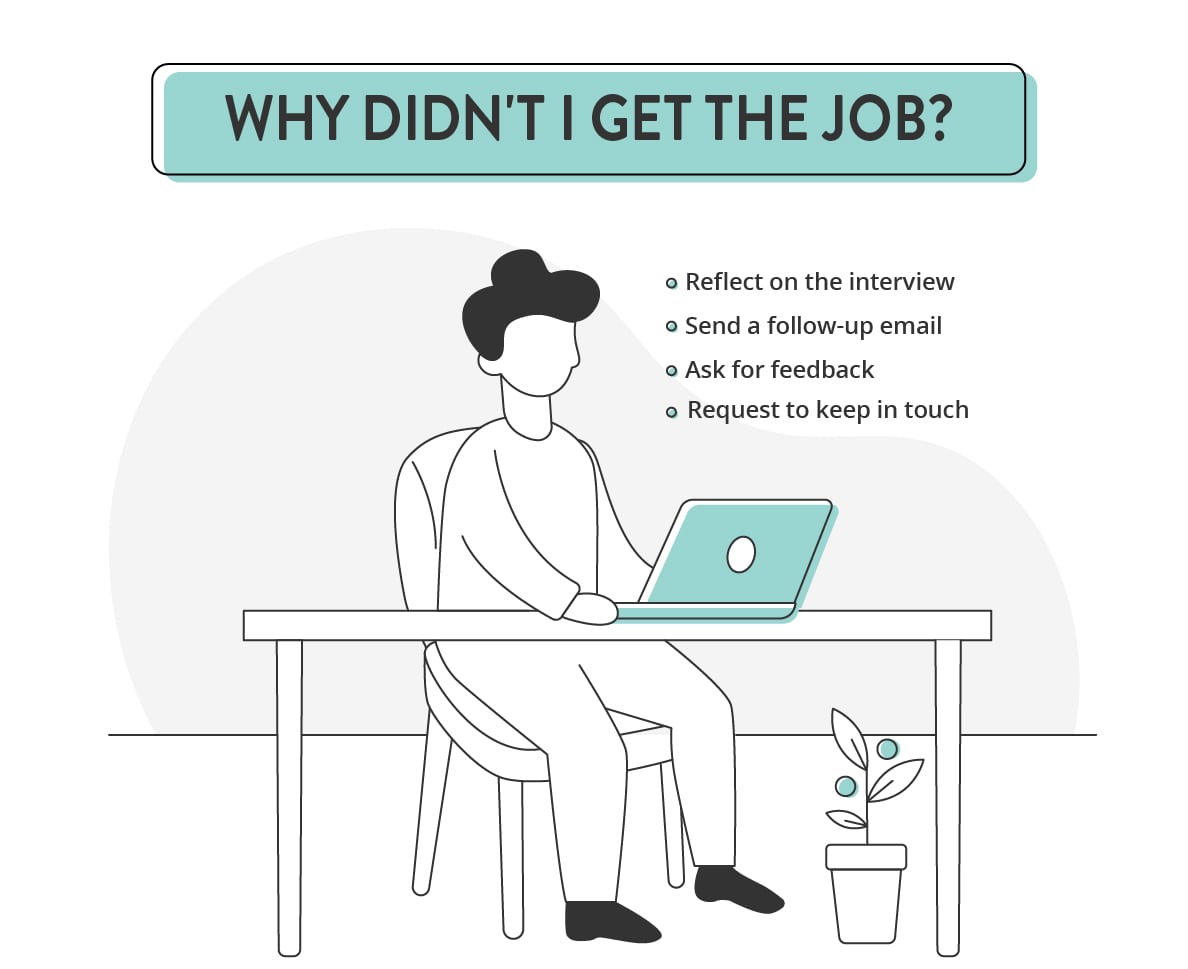
Step 1: Reflect on How the Interview Went
After a few days have passed since receiving your rejection, take a moment to reflect on your interview experience. Be honest with yourself and consider the following points:
- Did you meet the core qualifications for the role, or were there significant gaps?
- Were there specific skills or qualifications you lacked that you could acquire in the future?
- Which interview questions did you handle well, and which ones could use improvement?
- Were there relevant experiences you neglected to mention?
- Did you display proper interview etiquette and project confidence throughout the conversation?
While it may be tough to recognize areas for improvement, acknowledging your strengths and weaknesses can significantly enhance your interview skills and better prepare you for future opportunities.
Step 2: Send a Follow-up Email
Once you have processed your feelings about the rejection, it’s time to reach out to the interviewer. Sending a follow-up email about a week after receiving the rejection can be beneficial.
In your email, thank the interviewer for their time, acknowledge their decision, and express your interest in future opportunities. This approach signals that you’re gracious and still enthusiastic about the company, which can leave a lasting positive impression.
Step 3: Ask the Interviewer for Feedback
Incorporate questions into your follow-up email that invite constructive feedback. Avoid asking bluntly, “Why didn’t you hire me?” Instead, consider these questions:
- “What key qualifications did I lack for this position?”
- “Can you suggest ways I could improve my resume and cover letter?”
- “Were there any areas during the interview where I could improve?”
- “What aspect of my interview performance stood out positively?”
- “Are there any concerns regarding my candidacy that I should address?”
These inquiries demonstrate your desire to learn and grow, positioning you as a proactive candidate rather than a defensive one. Understanding where you fell short can help you enhance your skills and address previous interview mistakes.
Step 4: Request to Keep in Touch for Future Opportunities
If you’re particularly interested in the company, don’t hesitate to ask to stay connected with the recruiter or hiring manager. A few months after the interview, check in via email to express your continued interest and inquire about any new openings, while sharing any new skills or experiences you’ve gained.
Being proactive about maintaining the relationship can help keep you top of mind for future positions.
Example Emails for Requesting Feedback
Let’s combine all the steps into a well-crafted email to inquire about why you weren’t selected for the job. Show enthusiasm for the position, appreciation for the opportunity, and your willingness to apply for future roles.
While this may not lead to an immediate job offer, it will prepare you for future interviews and applications.
-
Example 1: Feedback Request
Subject: Junior Copywriter Position
Dear Michael Scott,
Thank you for the opportunity to interview for the Junior Copywriter position with Dunder Mifflin on January 1st, 2026. I appreciated our discussion and your timely communication regarding the hiring decision.
I value your expertise and would greatly appreciate any feedback on my interview performance that could help me improve for future opportunities.
If there are key qualifications or areas I could enhance, I would welcome your insights. Additionally, if any future openings arise that you believe would suit my skills, I would love to be considered.
Thank you once again for your time.
Best,
Michael Scarn
(555) 555-5555
scarn.michael@gmail.com -
Example 2: Phone Call Request
Subject: Joe Buck – Data Analyst Applicant
Dear Helen Carter,
Thank you for considering me for the Data Analyst position. I enjoyed our conversation and learning more about XYZ Corp. While I was disappointed not to be selected, I appreciate your prompt feedback.
Given your expertise in the hiring process, I would like to know which qualifications my background might be lacking. If possible, I would appreciate a brief phone call to discuss how I can improve my candidacy.
Thank you again for your consideration.
Sincerely,
Joe Buck
555-444-3333
joebuck@gmail.com -
Example 3: Further Interest
Subject: Dana Johnson – Marketing Position
Dear Ms. Besby,
Thank you for informing me about the decision regarding the Marketing Manager position. I truly appreciated our conversation and learning more about your company’s initiatives.
I would value any feedback you could share regarding my interview performance. Additionally, if there are roles that better match my profile in the future, I would be eager to learn more.
Thank you for your time and consideration.
Best regards,
Dana Johnson
345-678-9012
djohnson@gmail.com
Lastly, if the hiring manager reaches out to provide feedback, be sure to express your gratitude. Acknowledging their effort can help you remain on their radar for future opportunities.
Dear Ms. Besby,
Thank you for taking the time to provide such valuable feedback. I appreciate your suggestion to slow down during interviews, which I believe will significantly help me in future discussions. Your insights are invaluable for my growth as a candidate.
Thank you once again for considering me for the Marketing Manager position. Should any opportunities arise to collaborate with your team, I would love to apply.
Best,
Dana Johnson
345-678-9012
djohnson@gmail.com
Final Thoughts
Receiving a job rejection, especially for a position you were excited about, can be disappointing. However, seeking constructive feedback is a proactive way to enhance your interview skills and improve your candidacy for future roles.
Always acknowledge the company’s decision gracefully and maintain a positive tone. Showing genuine interest can lead to valuable insights and possibly open doors to future opportunities within the company.
Now that you know how to ask for feedback, take the initiative to improve, and elevate your future job prospects!
- Application
- Email Communication
- Letter Communication
- Follow Up
- Job Application Tips
- About Me Page
- Answering Machine Messages
- What To Bring To A Job Fair
- Free Job Posting Sites
- Email Sign Offs
- Job Scams
- How Long Does It Take To Become A Doctor
- How Long Does It Take To Become A Vet
- Government Programs That Help Felons Get Jobs
- How Long Does It Take To Become A Dentist
- Relocation
- Job Search Spreadsheet
- Right To Work States
- How To Research A Company
- How To Change Careers
- What To Do If You Have No References
- Working For a Big Company Vs. A Small Company
- Writing Sample Format
- How Long Should A Writing Sample Be
- How To Get A Job Fast
- How Many Jobs Should I Apply For
- Reasons Your Not Getting HIred
- Job Search Mistakes
- Job Search Tips
- Overqualified For Job
- Job You're Not Qualified For
- Get A Job Without Connections
- Why It's Hard To Find A Job
- Military Requirements

Author

Maddie Lloyd was a writer for the Zippia Advice blog focused on researching tips for interview, resume, and cover letter preparation. She's currently a graduate student at North Carolina State University's department of English concentrating in Film and Media Studies.