Survey: Here’s Why Your Coworkers Might Be Making You Sick
Research Summary. It’s alarmingly common for American workers to show up to the office while sick. Whether it’s due to insufficient paid time off (PTO), overwhelming workloads, or seasonal allergies, employees often bring their germs to work. To shed light on this troubling trend, we surveyed 1,000 American workers and our findings reveal:
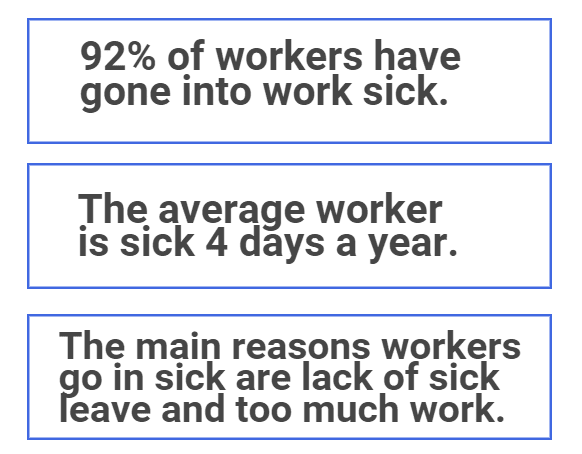
92% of all workers report going to work while sick.
62% of workers cite lack of PTO and excessive workloads as the primary reasons they show up sick.
56% of workers fear disapproval from their employer for taking a sick day.
On a brighter note, 40% of workers go to work sick because they don’t feel contagious.
Unfortunately, attending work while ill remains a significant issue, especially in the context of lessons learned from the COVID-19 pandemic. For an in-depth exploration of the various motivations behind this behavior, read on.
Key Facts
Why Workers Go Into Work Sick
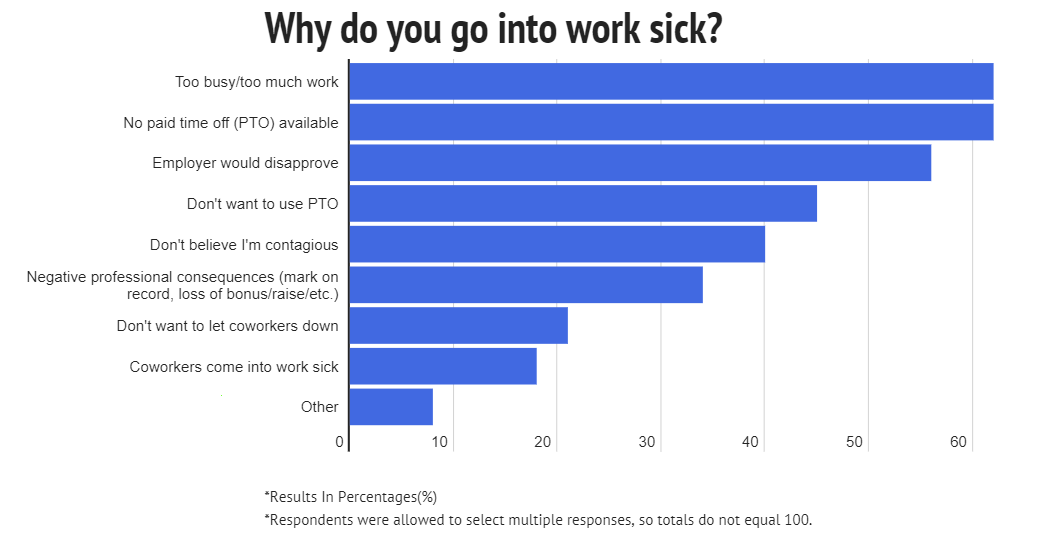
| Rank | Reason for going into work sick | Share of workers |
|---|---|---|
| 1 | Too busy/too much work | 62% |
| 2 | No paid time off (PTO) available | 62% |
| 3 | Employer would disapprove | 56% |
| 4 | Don’t want to use PTO | 45% |
| 5 | Don’t believe I’m contagious | 40% |
| 6 | Negative professional consequences | 35% |
| 7 | Don’t want to let my coworkers down | 21% |
| 8 | Coworkers come into work sick | 18% |
| 9 | Other | 8% |
Ultimately, there isn’t a single reason why employees choose to come to work while ill. Most respondents selected multiple reasons for their decision. The predominant factors were “too much work” and “lack of sick leave,” with 62% of respondents identifying these as key motivators. Other reasons included the fear of disapproval from employers and the desire to conserve limited PTO for more serious illnesses.
Employers aiming to reduce the spread of illness within the workplace can take proactive steps by offering generous sick leave policies and fostering a workplace culture that allows employees to navigate personal health challenges without fear of repercussions.
Curious about the 8% of “other” reasons? So were we! Here’s a summary of the most frequently mentioned responses:
Other Common Reasons
-
Feeling capable of working/don’t perceive their illness as serious
-
Finding it easier to go to work than stay home
-
A strong work ethic
-
Reserving days off for more severe sickness
In conclusion, while these reasons may vary, they all stem from a common sentiment: workers often feel they lack the flexibility to take sick leave and perceive it as socially unacceptable.
Methodology
Zippia.com, a career resource website, conducted a study involving 1,000 workers across the United States to gain insights into why employees report to work while sick.
Each participant was asked a uniform set of questions.
The survey was conducted in September 2021, utilizing Clickworker’s Survey platform.
What’s A Little Germs Between Coworkers?
While minor illnesses might seem trivial, they can have significant repercussions for business operations. Sick employees are often less productive and can inadvertently spread illness to their healthy coworkers, potentially leading to widespread absenteeism and decreased morale.
Without substantial federal sick leave legislation and cultural shifts within organizations, employee behavior is likely to remain unchanged. So, the next time you hear the telltale cough of a colleague who should be resting at home, consider advocating for better sick leave policies and a healthier work-life balance in your workplace.

Author

Kathy is the head of content at Zippia with a knack for engaging audiences. Prior to joining Zippia, Kathy worked at Gateway Blend growing audiences across diverse brands. She graduated from Troy University with a degree in Social Science Education.